
Rhyming skills Building Vocabulary Worksheets for Ages 5-9
3 filtered results
Difficulty Level
Grade
Age
-
From - To
Subject
Activity
Standards
Enhance your child's language development with our engaging Rhyming Skills Building Vocabulary Worksheets, designed for ages 5-9. These worksheets provide fun, interactive activities that help kids recognize and create rhymes, expanding their vocabulary and phonemic awareness. Through exercises like matching, filling in blanks, and coloring, children will grasp essential language concepts while enjoying the learning process. Perfect for teachers, parents, or homeschoolers, these resources support early literacy and critical thinking skills. Watch your child's confidence grow as they explore the world of words through rhymes, fostering a lifelong love for reading and language. Start building strong language skills today!
Favorites
With answer key
Interactive
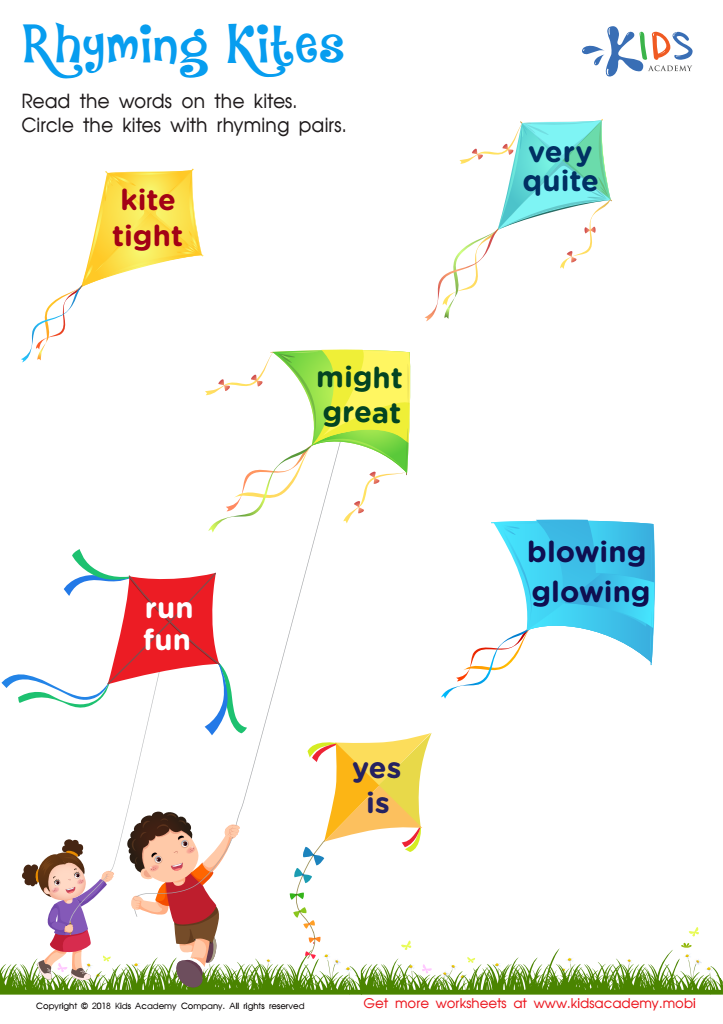
Rhyming Kites Worksheet
On a spring day, fly a kite! Kids Academy has a rhyming worksheet to boost your child's skills. Read the pairs of words aloud. Circle the kites if they rhyme, leave them blank if they don't. Listen carefully and find all the rhyming word pairs to complete this sheet!
 Assign to My Students
Rhyming Kites Worksheet
Worksheet











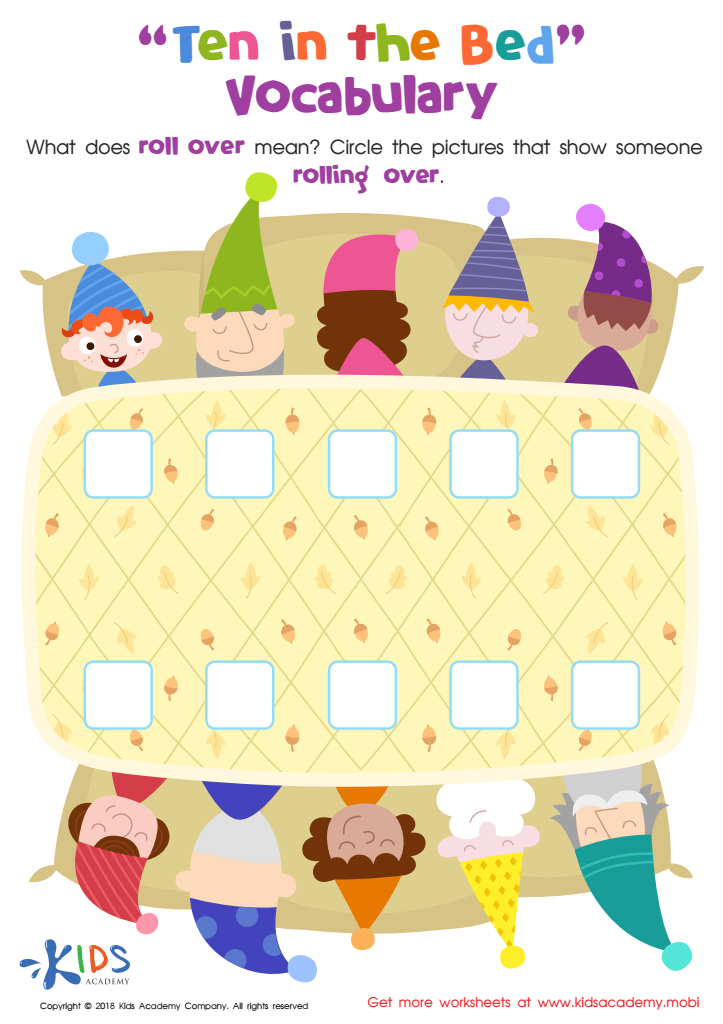
Ten in the Bed: Vocabulary Worksheet
It's essential for emerging readers to be proficient in positional and directional words. This worksheet uses cheerful faces to help students identify who has "rolled over". Knowing these words is an essential part of reading and writing for pre-K and Kindergarteners. It also helps them to follow directions and use precise language.
Ten in the Bed: Vocabulary Worksheet
Worksheet
Join Kids Academy for Free
Who is primarily going to use this learning content?








Rhyming skills are essential for children aged 5-9 as they lay the groundwork for language development and literacy. When children engage with rhymes, they enhance their phonemic awareness, which is the ability to hear and manipulate sounds in words. This skill is critical for learning to read and write, as it helps them recognize patterns in language, phonics, and spelling.
Furthermore, rhyming activities often expose children to new vocabulary. As they explore different words that share similar sounds, their linguistic repertoire expands. This exposure increases their ability to express themselves and understand the nuances of language. Teachers and parents can utilize nursery rhymes, songs, and poetry to make vocabulary acquisition enjoyable and engaging.
Additionally, rhyming fosters creativity and memorization. Children who play with sounds and words are exercising cognitive skills that enhance their ability to think critically and problem-solve. A strong foundation in rhyming enables better literacy skills in later grades, improving academic performance overall. Ultimately, fostering rhyming skills in early learners is a crucial investment in their educational journey, setting the stage for successful reading, writing, and effective communication in the future.








