Understanding prepositions Building Vocabulary Worksheets for Ages 5-9
5 filtered results
-
From - To
Discover our "Understanding Prepositions Building Vocabulary Worksheets for Ages 5-9," crafted to enhance young learners' grasp of prepositions. These engaging worksheets employ fun and interactive activities designed to build a strong foundation in vocabulary. Ideal for children aged 5-9, they focus on understanding spatial and relational concepts, making language learning enjoyable. Through vivid illustrations and practical exercises, kids effortlessly learn how to use prepositions in sentences, improving their reading and grammar skills. Ideal for classroom and homeschooling, our worksheets turn language challenges into exciting learning adventures. Start building essential skills today with Kids Academy!
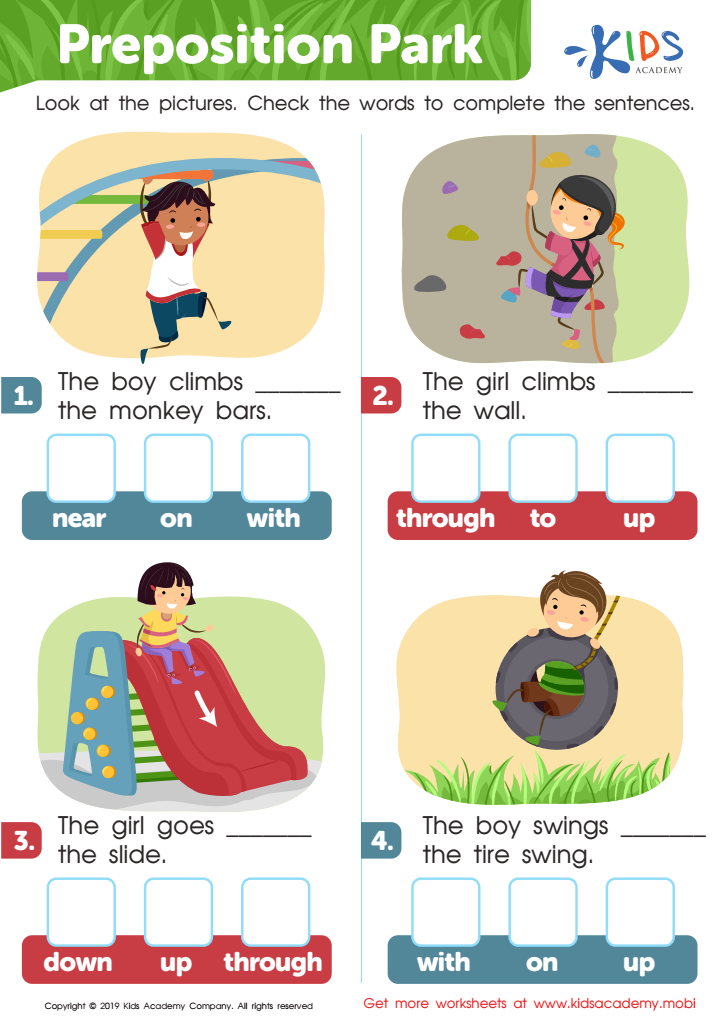
Preposition Park Worksheet
 Assign to My Students











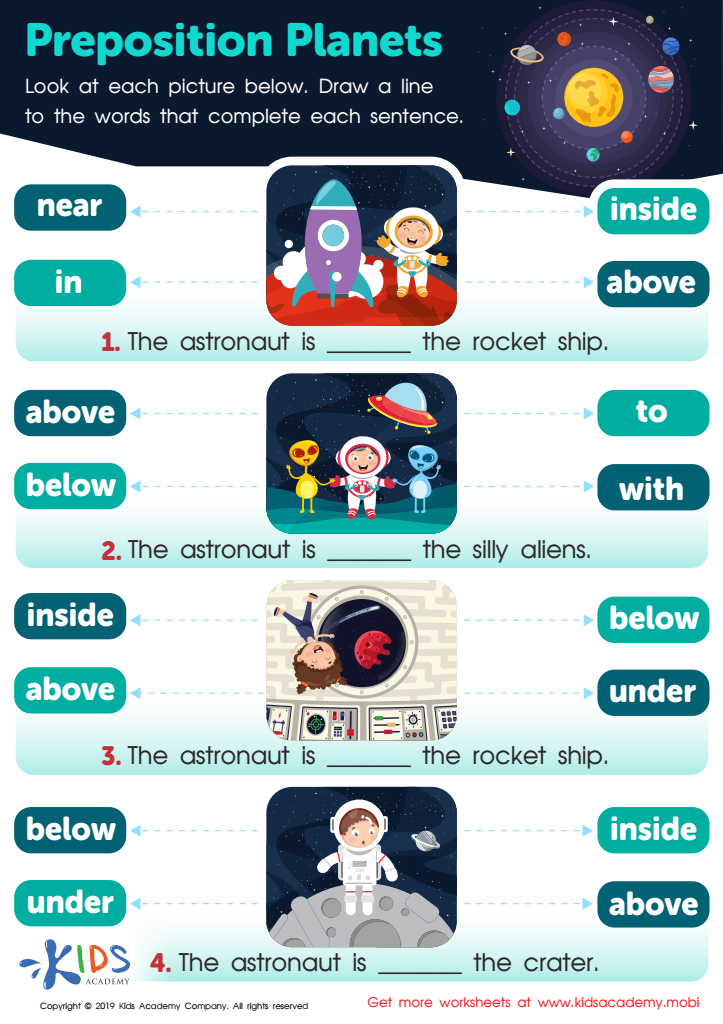
Preposition Planets Worksheet
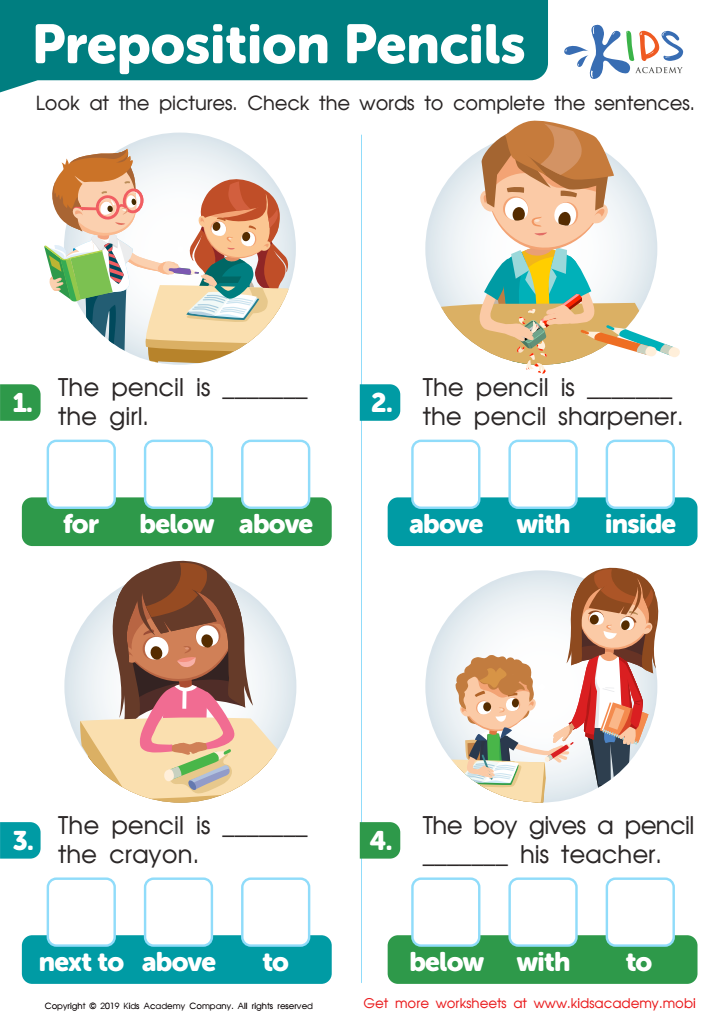
Preposition Pencils Worksheet
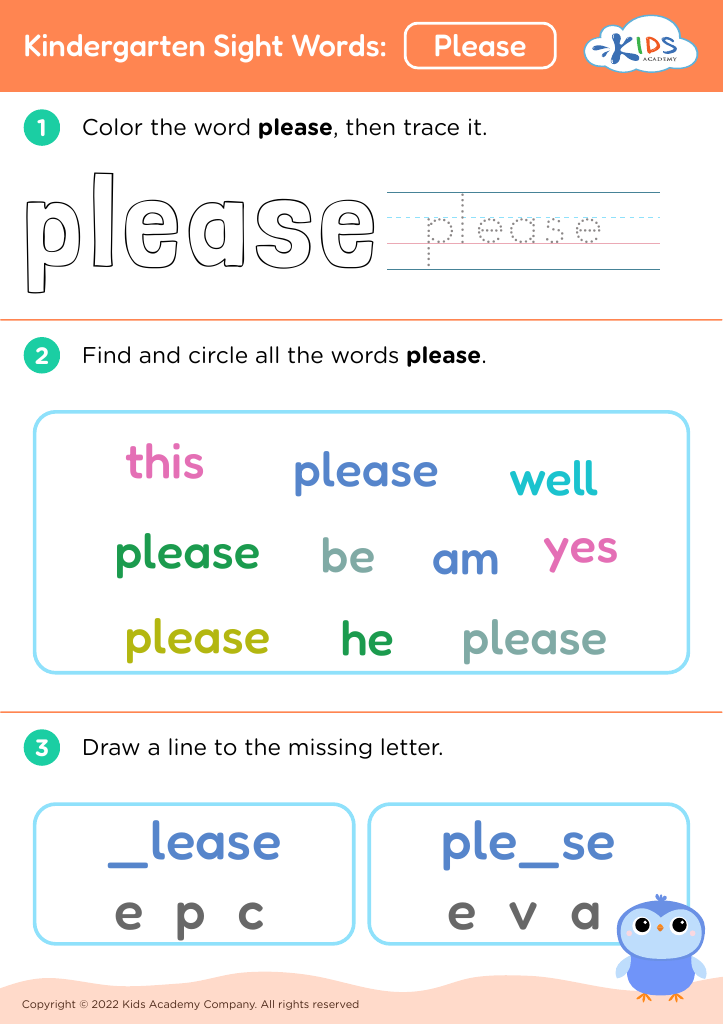








Understanding prepositions and building vocabulary during the ages of 5-9 are crucial aspects of early childhood education that parents and teachers should care about for several compelling reasons. Prepositions serve as fundamental building blocks in language, helping children describe relationships between objects, people, and locations. Mastery of prepositions enhances a child's ability to construct coherent sentences and effectively communicate their thoughts, needs, and emotions.
Building a robust vocabulary is equally crucial. The more words children know, the better they can express themselves and comprehend what others are saying. This not only aids in social interactions but also fosters academic success. A rich vocabulary is directly linked to improved reading comprehension and writing skills, enabling children to excel in various subjects as they progress through their education.
Investing time in understanding prepositions and expanding vocabulary during these formative years sets the foundation for lifelong learning. It boosts cognitive development, enhances critical thinking, and cultivates a love for reading and learning. Therefore, adopting strategies like interactive reading, engaging storytelling, and playful language activities, can make learning these essential language components enjoyable and effective for young children. Parents and teachers who prioritize this will help their children develop strong communication skills, emotional intelligence, and academic readiness.








