Analytical thinking Reading Fiction Worksheets for Ages 5-9
4 filtered results
-
From - To
Boost your child’s analytical thinking skills with our engaging Reading Fiction Worksheets designed for ages 5-9! These interactive activities encourage children to delve into stories, fostering comprehension and critical thinking. As they explore diverse narratives, kids will learn to identify themes, make connections, and draw conclusions. Our worksheets are colorful and age-appropriate, making learning fun and accessible. Ideal for home or classroom use, these resources not only enhance literacy but also develop essential cognitive skills necessary for academic success. Unlock the joys of reading and critical analysis with enjoyable exercises that will inspire young minds to think deeper and smarter!
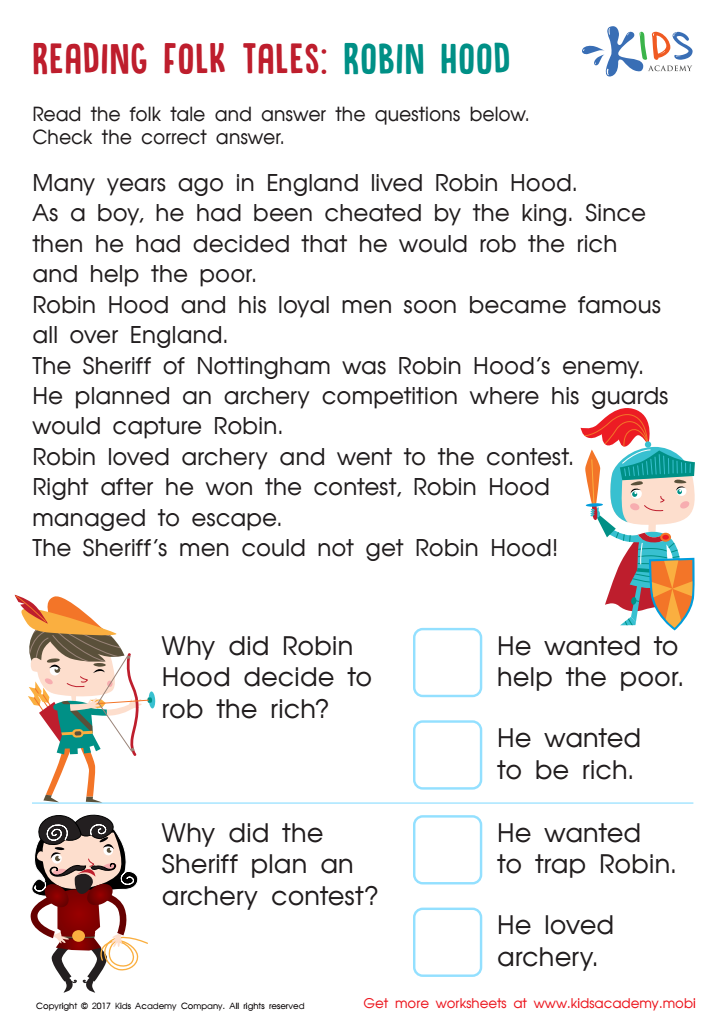
Robin Hood Folktale Worksheet
 Assign to My Students
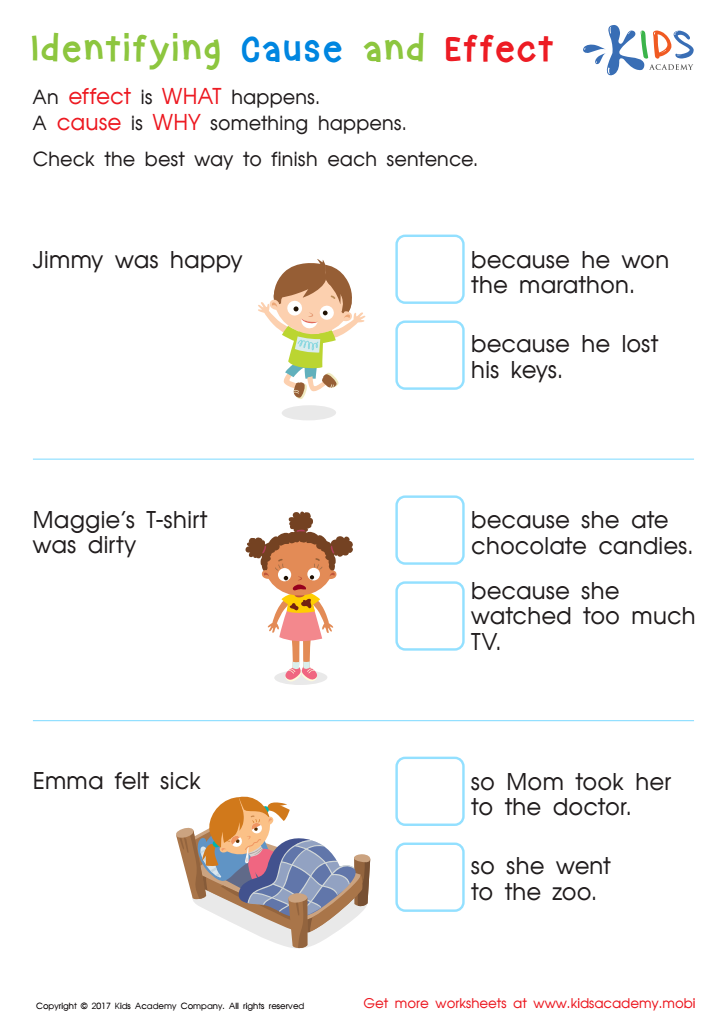
Indentifying Cause and Effect Worksheet
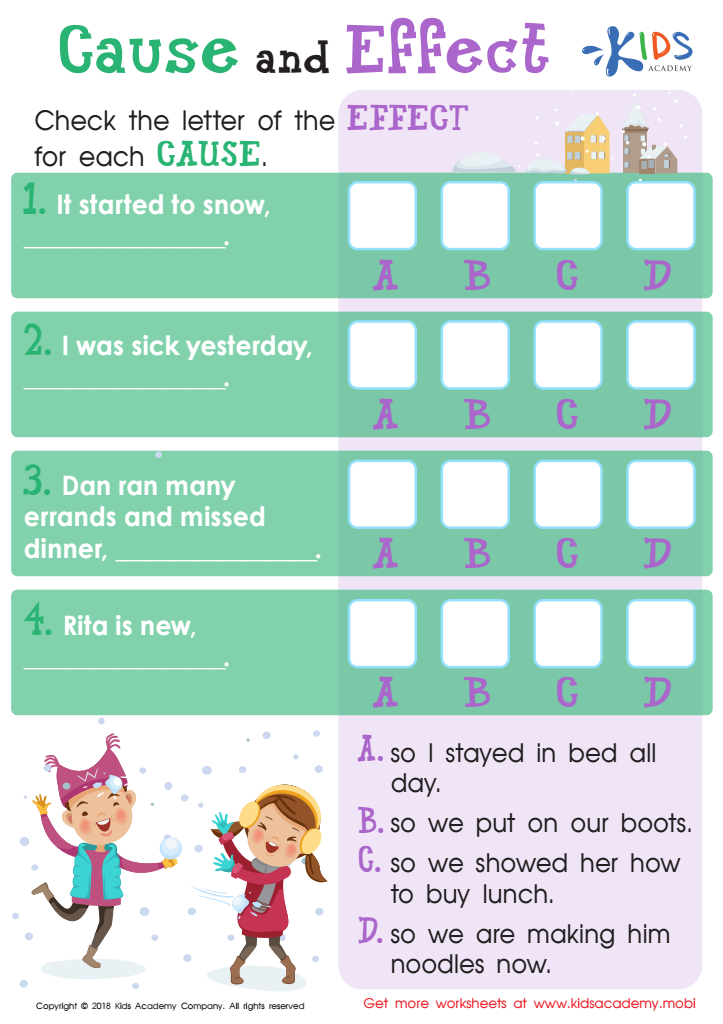
Cause and Effect Worksheet
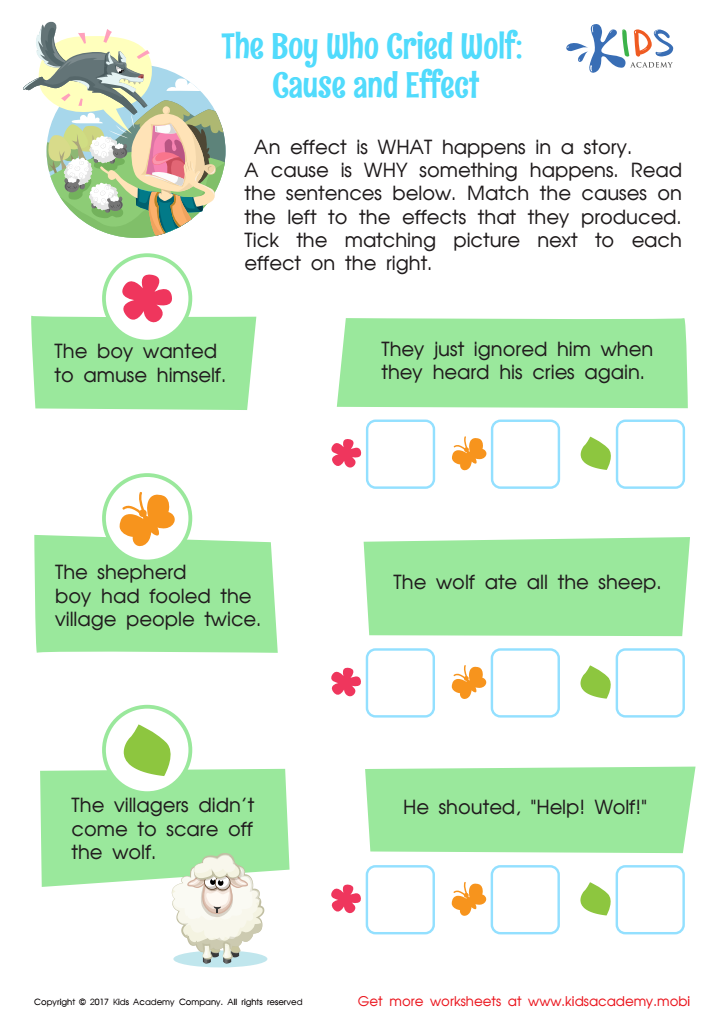
The Boy Who Cried Wolf: Cause and Effect Worksheet





.jpg)

Parents and teachers should prioritize analytical thinking skills through reading fiction for children aged 5-9 because these skills lay the foundational groundwork for critical reasoning, problem-solving, and creativity. At this age, children develop the ability to analyze characters, plot, and themes, which fosters a deeper understanding of narrative structures and enhances comprehension. Engaging with fiction encourages kids to ask questions, make predictions, and draw connections between stories and their own experiences, promoting an inquisitive mindset.
Moreover, analytical thinking instills emotional intelligence as children identify with fictional characters and evaluate characters’ choices and feelings. This capacity to empathize deepens relationships and promotes a sense of understanding among peers. Furthermore, fiction can instigate discussions about complex topics and moral dilemmas, enabling children to consider multiple perspectives and the consequences of actions.
Incorporating analytical thinking into reading sessions also enhances literacy skills, as children learn to encode and decode information actively. As they dissect a story, identifying cause and effect or making inferences, they practice skills that are transferable across subjects. Ultimately, nurturing these skills at a young age empowers children to become confident, thoughtful learners, equipping them for future academic and social challenges.








