Cognitive Development Reading Fiction Worksheets for Ages 5-9
4 filtered results
-
From - To
Enhance your child's cognitive development with our Reading Fiction Worksheets designed for ages 5-9! These engaging, age-appropriate resources are crafted to cultivate critical thinking, comprehension, and imagination through the joy of storytelling. Our worksheets encourage younger readers to analyze characters, plot, and themes while developing essential skills like inference, prediction, and summarization. With a variety of activities that promote interactive learning, your child will not only improve reading proficiency but also boost creativity and problem-solving abilities. Nurture a lifelong love for reading in your child while fostering their cognitive skills with our fun and educational worksheets!
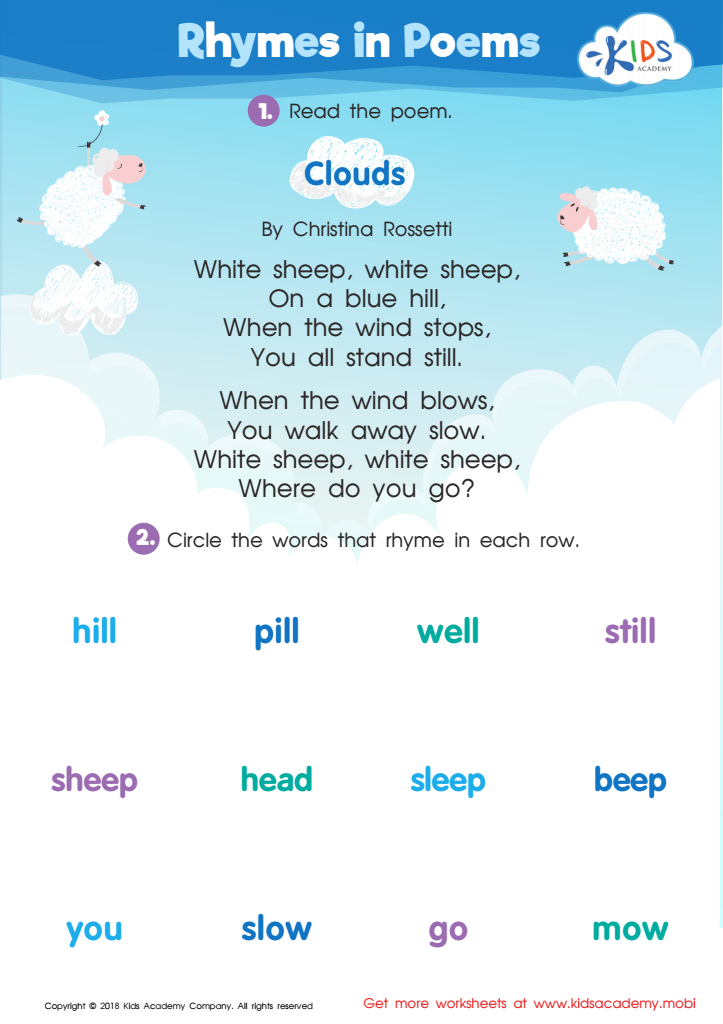
Rhymes in Poems Worksheet
 Assign to My Students
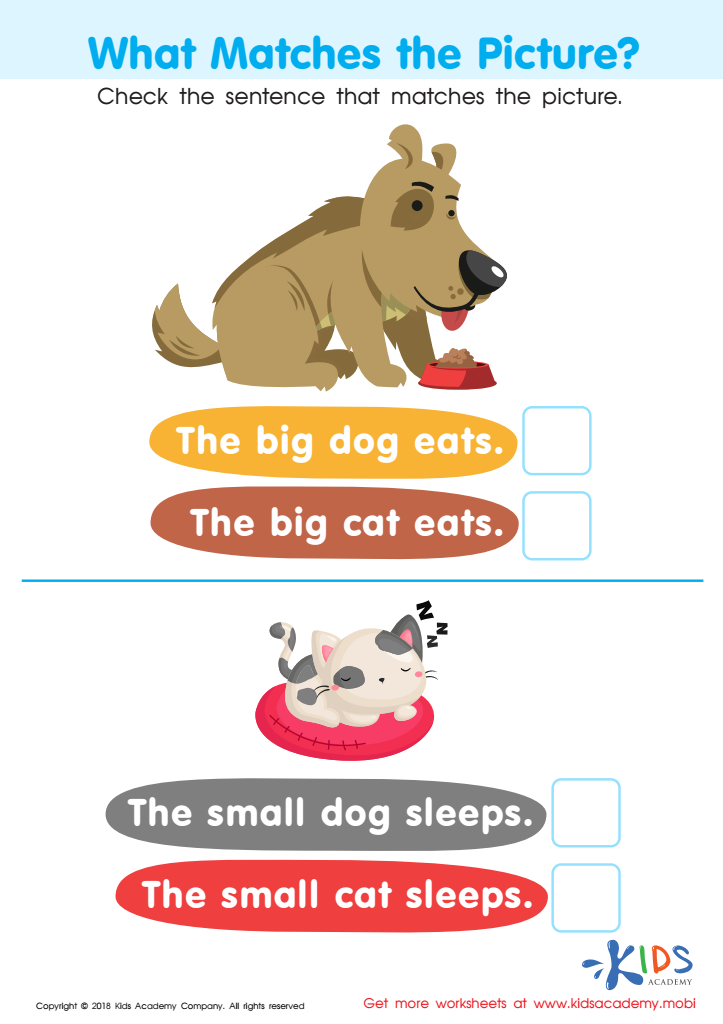
What Matches the Picture? Worksheet
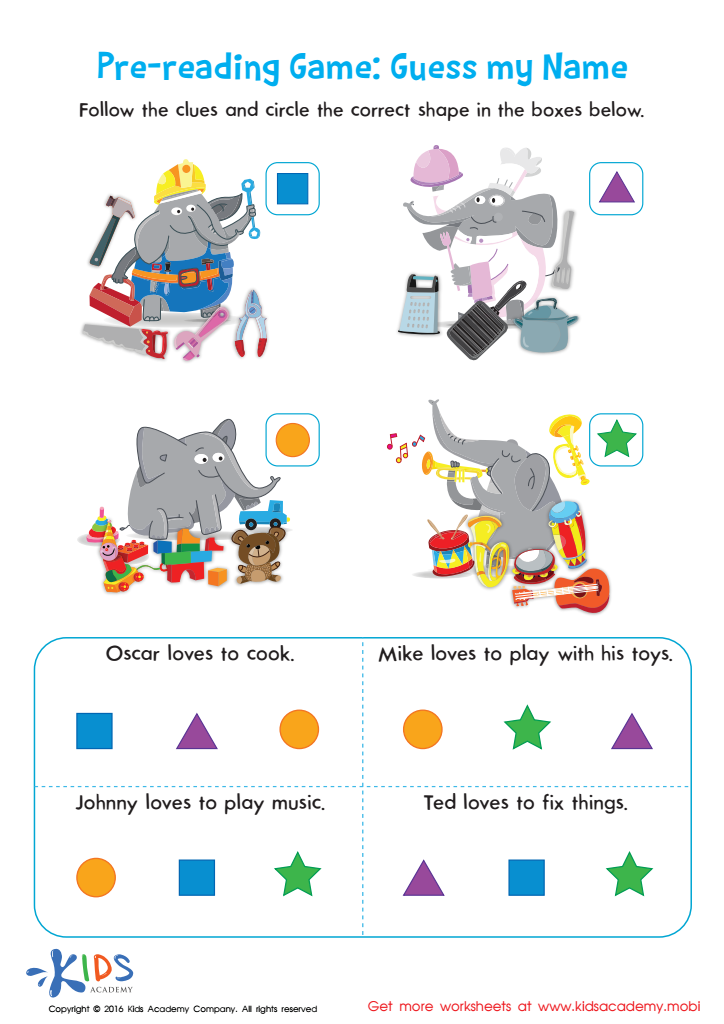
Pre Reading Worksheet Guess My Name
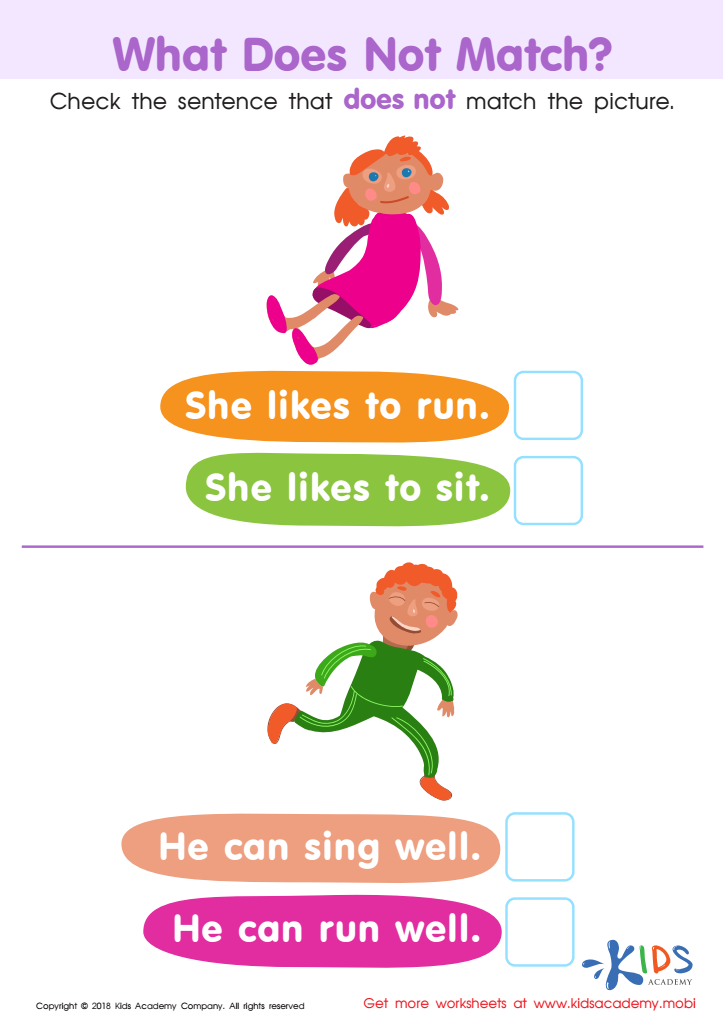
What Does Not Match? Worksheet




.jpg)


Cognitive development during ages 5-9 is a critical period in a child's life, and reading fiction plays an essential role in this process. When children engage with fictional stories, they encounter new ideas, perspectives, and emotions, fostering imagination and creativity. This engagement aids in developing critical thinking skills by prompting them to analyze characters' motives and draw conclusions from the narrative.
Furthermore, reading fiction enhances language skills and vocabulary acquisition. Young readers are exposed to diverse language structures and word choices, enriching their communication abilities. These improvements not only apply to verbal interaction but also contribute to higher literacy skills essential for academic success.
In addition, fiction fosters empathy and social understanding. As children navigate different characters and circumstances, they learn to comprehend and appreciate feelings and experiences beyond their own. This emotional intelligence is pivotal in resolving conflicts and building relationships in and outside of the classroom.
Lastly, regular reading can spark a lifelong love for literature, promoting a habit that supports lifelong learning. Parents and teachers should prioritize reading fiction as it cultivates critical cognitive skills, enhances emotional growth, and ultimately empowers children to become well-rounded individuals.








