Rhyme recognition Reading Fiction Worksheets for Ages 5-9
3 filtered results
-
From - To
Unlock children's reading potential with our "Rhyme Recognition Reading Fiction Worksheets for Ages 5-9!" These engaging worksheets promote fun and effective learning by helping young readers identify and appreciate rhyme patterns in captivating fictional stories. Perfect for early learners, our worksheets enhance phonological awareness, boosting reading fluency and comprehension skills. Each activity is thoughtfully designed to encourage kids to recognize rhymes, anticipate word patterns, and develop a love for reading fiction. Ideal for both classroom and home use, these resources are a valuable addition to any child’s educational toolkit. Start their reading adventure today!
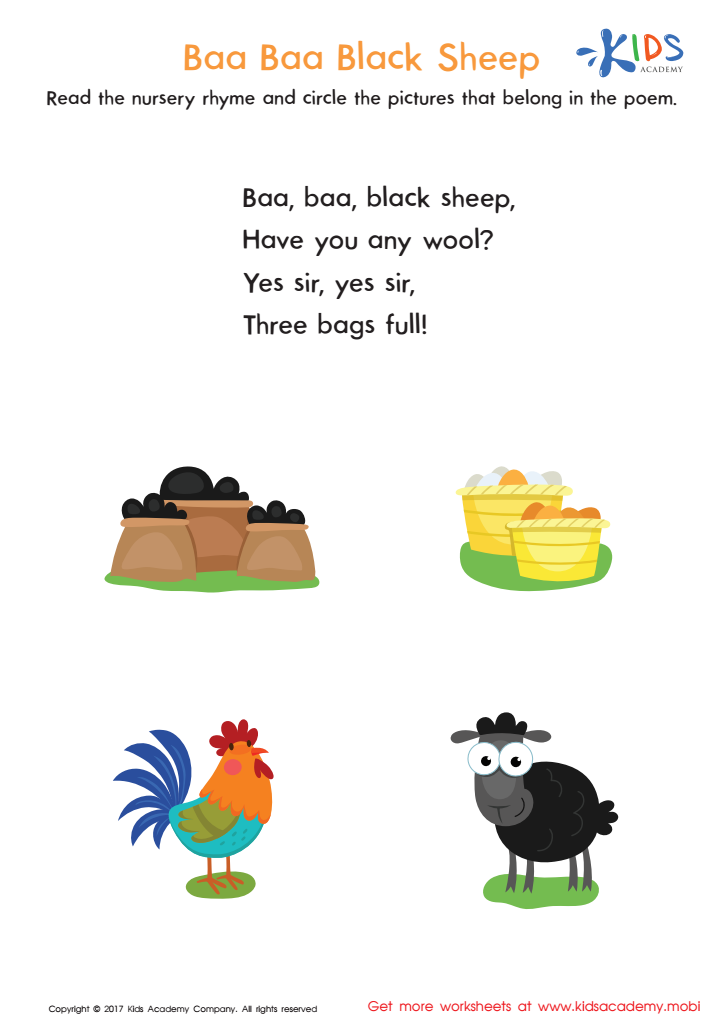
Baa Baa Black Sheep Printable
 Assign to My Students
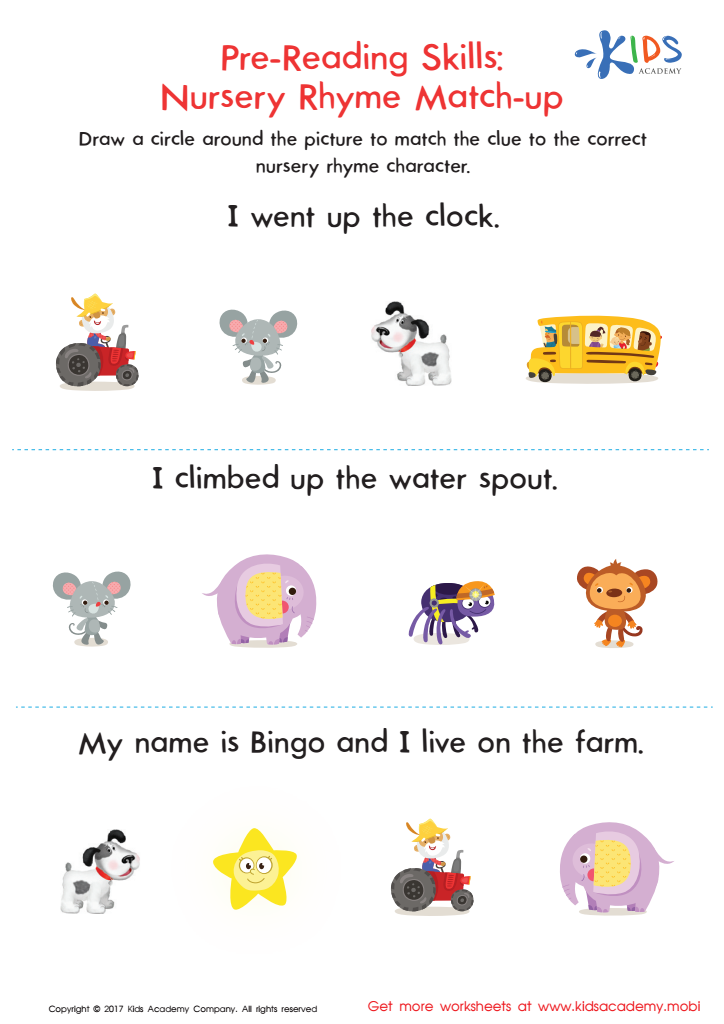
Nursery Rhyme Match–Up Worksheet
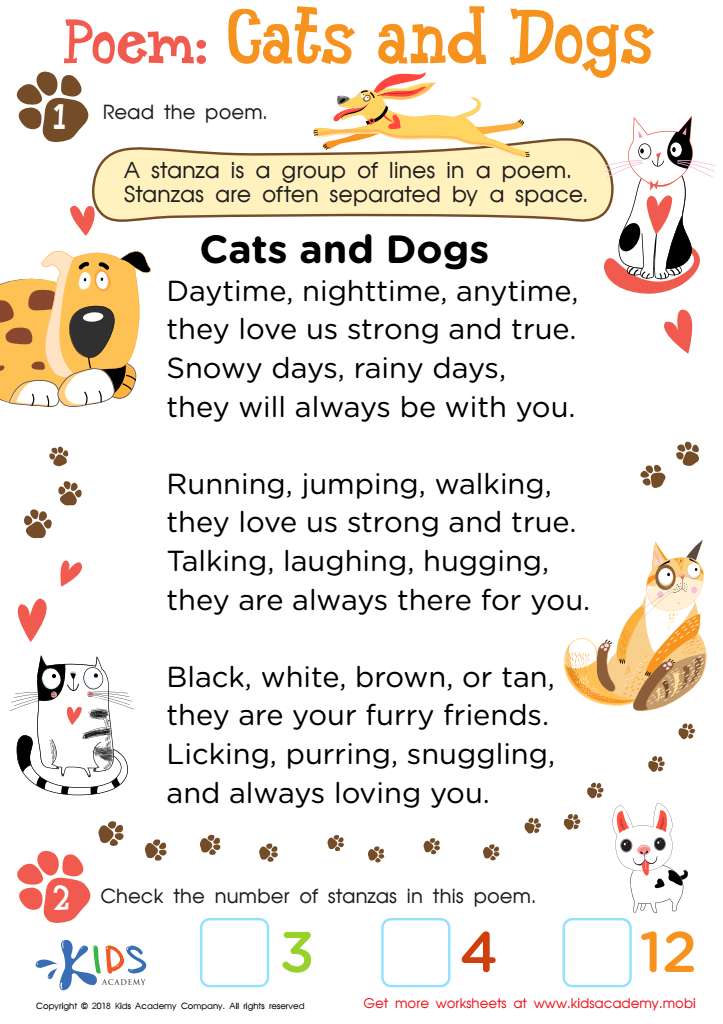
Poem: Cats and Dogs Worksheet


.jpg)





Rhyming is a foundational element in early childhood literacy and plays a crucial role in the cognitive and language development of children ages 5-9. When parents and teachers encourage rhyme recognition, they are not just engaging kids in playful activities but nurturing essential language skills. Rhyming helps children recognize patterns in words, fostering phonological awareness — the understanding that words are composed of sounds that can be manipulated and explored. This is a precursor to decoding skills necessary for reading.
Reading fiction that incorporates rhyme introduces children to rich and varied vocabulary within a memorable and enjoyable context. Rhyming stories naturally emphasize word endings and sound similarities, making it easier for young readers to predict and understand the storyline. This boosts both their confidence in reading and their comprehension skills. Fictional stories also spark imagination and creativity, enhancing a child's ability to think critically and empathize with different characters and situations.
Moreover, engaging with rhyming texts can heighten a child’s attention and focus, fostering a love for reading that extends beyond the early learning years. Rhyming helps to develop rhythmic and auditory memory, which are important not just in literacy but in overall academic success. Parents and teachers, as guiding influences, therefore, play a critical role in embracing rhyme recognition and fiction-reading as fun yet powerful tools for learning.








