
Color recognition Reading Non-Fiction Worksheets for Ages 5-9
3 filtered results
Difficulty Level
Grade
Age
-
From - To
Subject
Activity
Standards
Discover our engaging "Color Recognition Reading Non-Fiction Worksheets" designed for kids ages 5-9! These worksheets combine fun activities with informative texts to enhance color identification skills while fostering an early love for reading. Each worksheet features vibrant visuals and interesting facts that captivate young learners' attention. Perfect for classrooms or home use, these resources encourage children to explore the world of colors through important real-life applications. Help your child develop critical skills in reading comprehension and observational learning. Dive into a world of colorful discoveries and make learning an enjoyable journey with our expertly crafted non-fiction worksheets!
Favorites
With answer key
Interactive
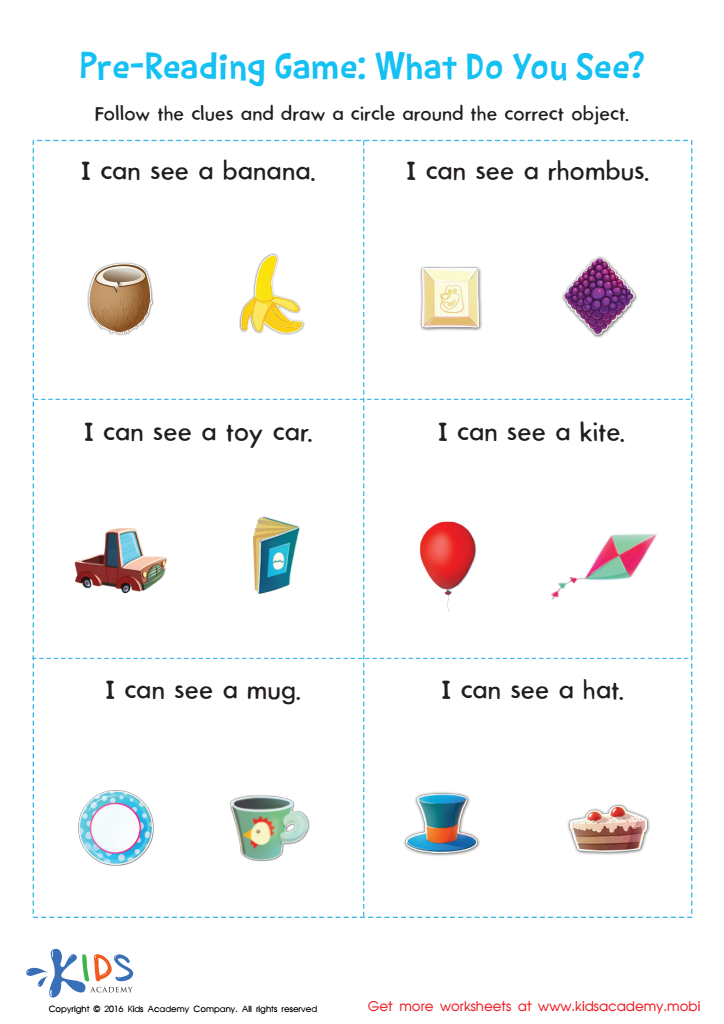
Pre–reading Worksheet: What Do You See?
Get started with this pre-reading worksheet to build your child's early literacy skills. Model, read aloud, and provide consistent repetition for successful learning.
 Assign to My Students
Pre–reading Worksheet: What Do You See?
Worksheet
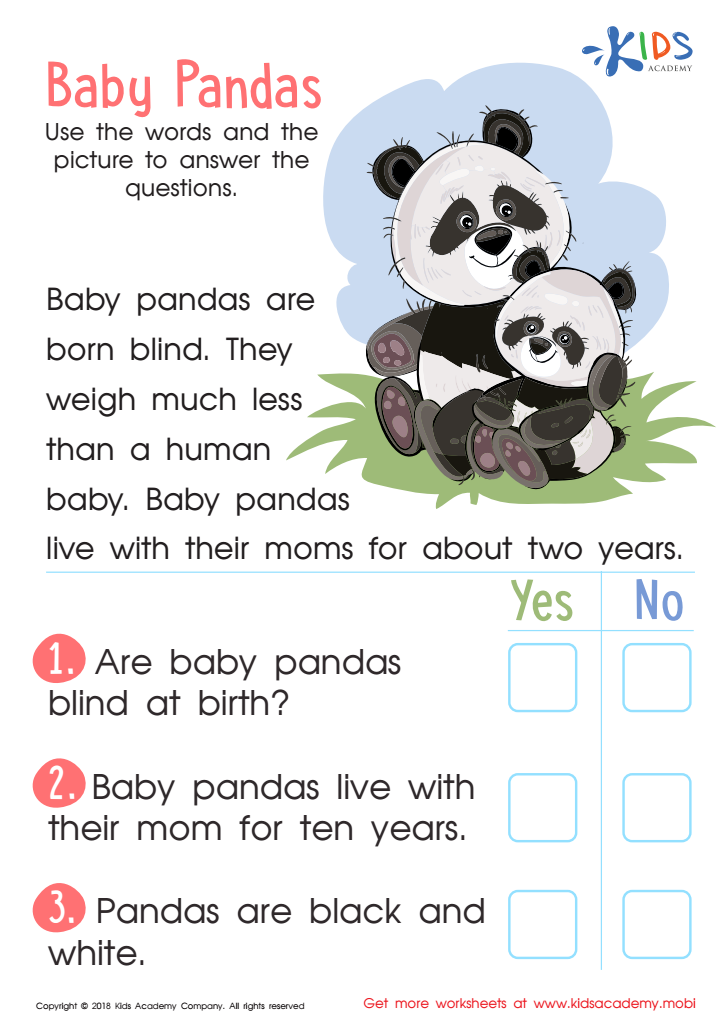
Baby Pandas Worksheet
Kids can't usually see pandas in person, but they can learn more about them with this fun worksheet! It includes a passage and picture, plus questions at the end to check kids' reading comprehension. Just ask them to read the text, check the "yes" and "no" boxes, and enjoy the fascinating facts about baby pandas!
Baby Pandas Worksheet
Worksheet
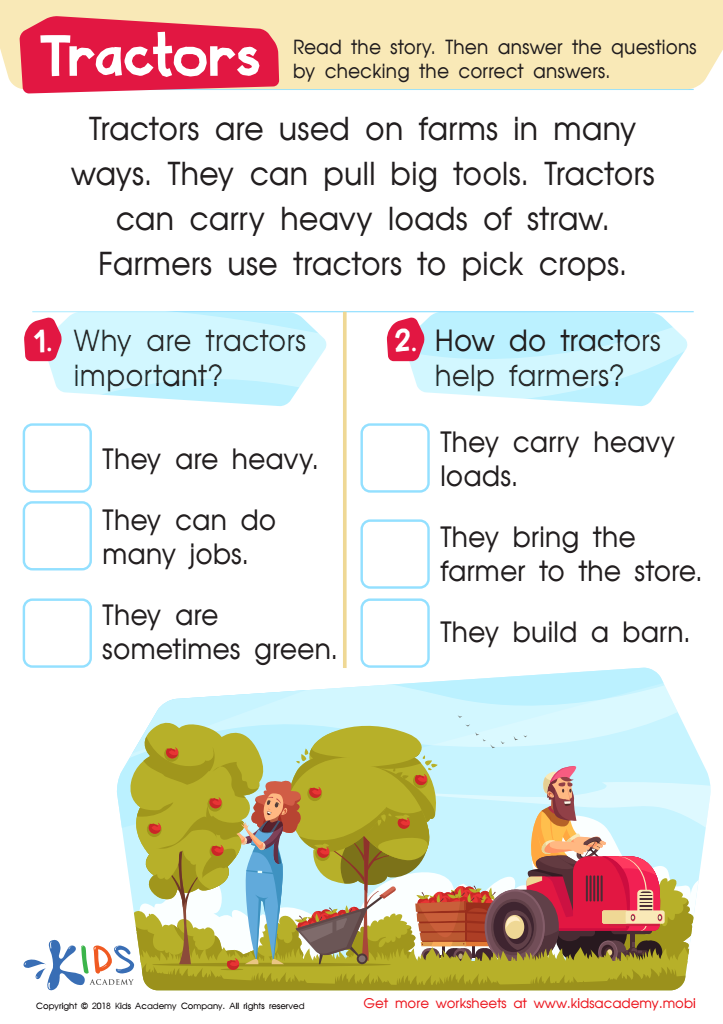
Tractors Worksheet
Kids love tractors! Let them read about what they do, what they use, and who uses them with this free worksheet. After reading, they can answer reading comprehension questions to test their knowledge; multiple choices make it easy! Little do they know, they're boosting their literacy skills along the way!
Tractors Worksheet
Worksheet
Join Kids Academy for Free
Who is primarily going to use this learning content?








Parents and teachers should prioritize color recognition in reading non-fiction for ages 5-9 because it plays a pivotal role in early childhood literacy and cognitive development. Recognizing colors not only enhances a child's ability to identify and describe objects but also aids in memory retention and categorization skills. Non-fiction texts, especially those rich in images and graphics, often use colors to convey information, make connections, and organize concepts. By helping children understand and articulate colors, adults can enhance comprehension and engagement with such content.
Furthermore, reading non-fiction exposes young learners to factual information, cultivating curiosity and critical thinking. When children can recognize and associate colors with real-world items they observe and read about, they develop stronger language skills and expand their vocabulary. This exploration enriches their understanding of the natural world and communicates important ideas.
Additionally, fostering color recognition through non-fiction reading encourages interactive discussions, allowing children to express their thoughts and observations. This promotes language development, social skills, and boosts their confidence in articulating ideas. In sum, an emphasis on color recognition in non-fiction literary experiences supports holistic developmental benefits for young learners, setting a strong foundation for future educational success.








