Problem-Solving Skills Sight Words Worksheets for Ages 5-9 - Page 2
25 filtered results
-
From - To
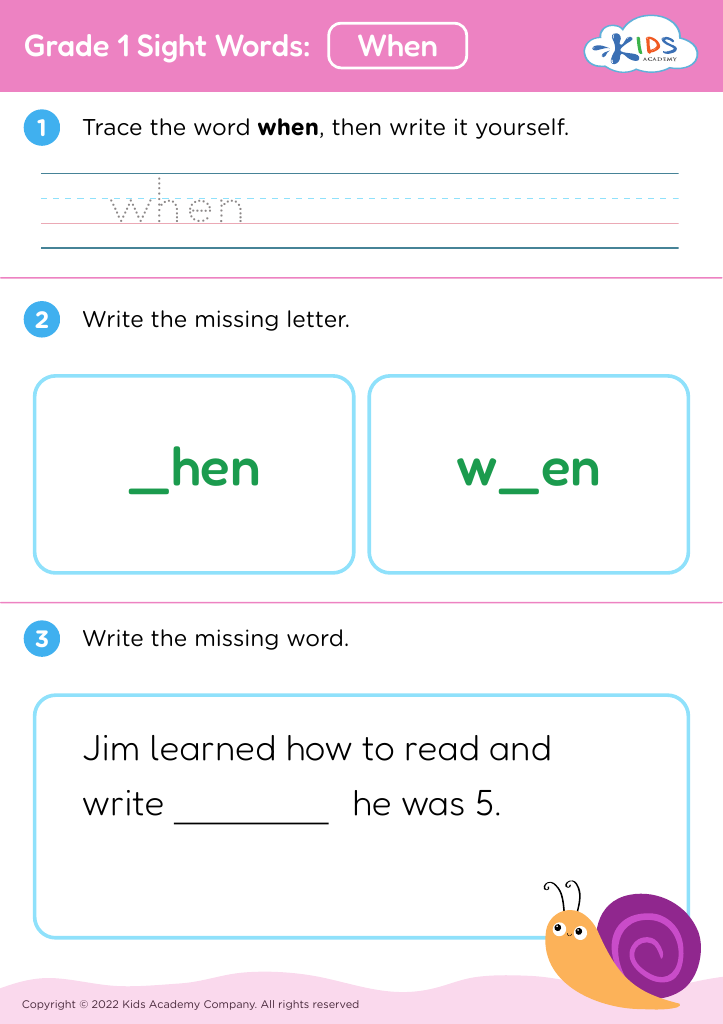













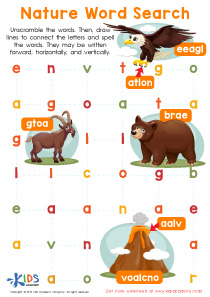
Problem-solving skills and sight words are critical components of early literacy that significantly influence children's educational development. For children aged 5-9, mastering sight words—common words that appear frequently in texts—enhances reading fluency and comprehension. This foundational skill allows young readers to recognize words instantly, reducing the cognitive load and enabling them to focus on understanding the meaning of texts instead of decoding individual words.
Problem-solving skills, on the other hand, encourage children to think critically, approach challenges methodically, and develop resilience. These skills foster independence and initiative, qualities that are vital not only in literacy but also across all areas of learning and life. Teaching children to solve problems helps them navigate social situations, engage in mathematical reasoning, and tackle projects with confidence.
Parents and teachers should emphasize the intertwining nature of sight words and problem-solving in literacy instruction. By building these skills together, adults can support children's overall development, boost their academic success, and instill a lifelong love for learning. Engaging children in activities that link sight word recognition with problem-solving promotes active learning and critical thinking—a crucial foundation as they grow and face increasingly complex challenges.