Animal Classification Animals Worksheets for Ages 5-9
7 filtered results
-
From - To
Enhance your child's learning with our engaging "Animal Classification Worksheets for Ages 5-9" available at Kids Academy! These beautifully designed printable worksheets help young learners identify and classify animals based on various characteristics. Perfectly suited for budding scientists, our resources cover topics like mammals, birds, reptiles, and more. Each activity fosters critical thinking and understanding through fun and interactive exercises, games, and quizzes. Ideal for both classroom and at-home learning, our worksheets make science education exciting and accessible. Discover a world of wild learning and ignite your child's curiosity about the animal kingdom today!
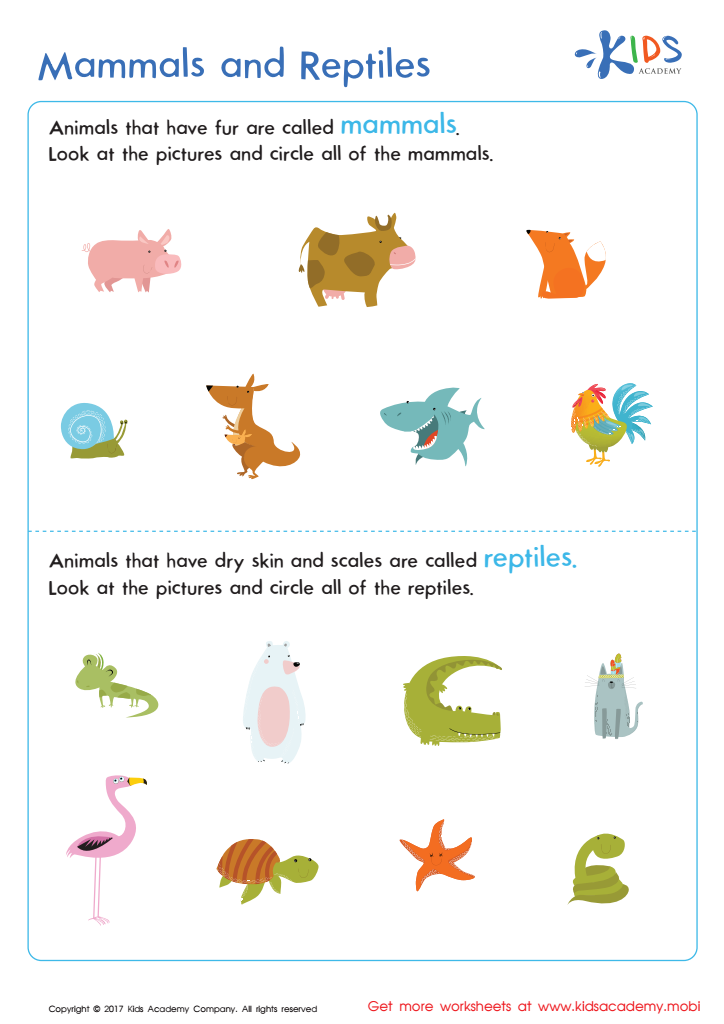
Mammals and Reptiles Worksheet
 Assign to My Students
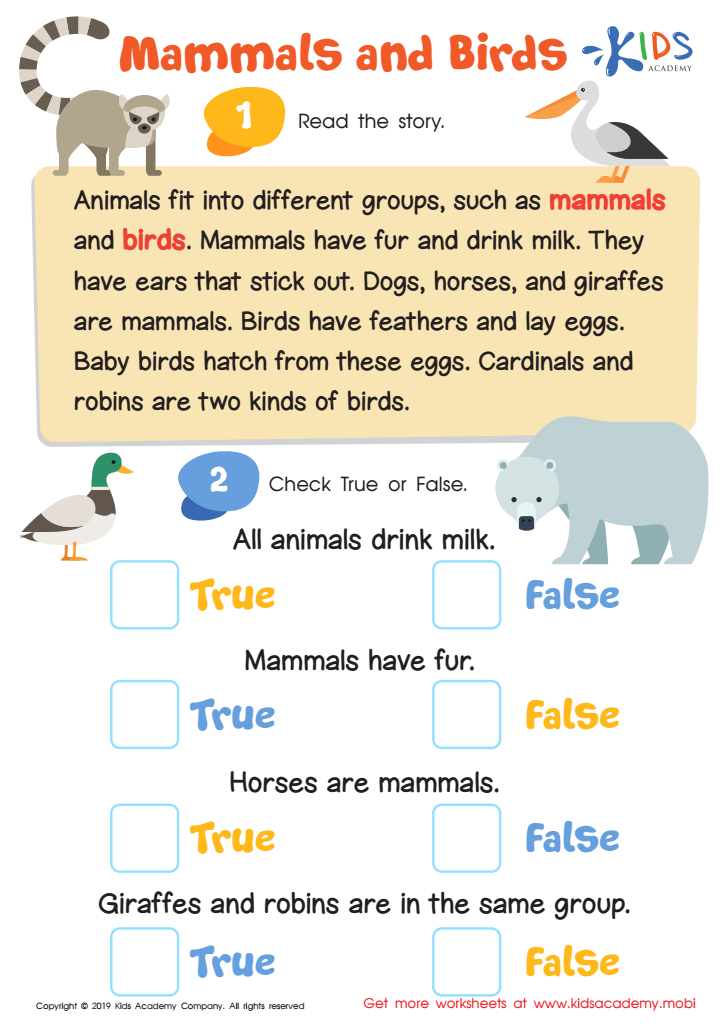
Mammals and Birds Worksheet
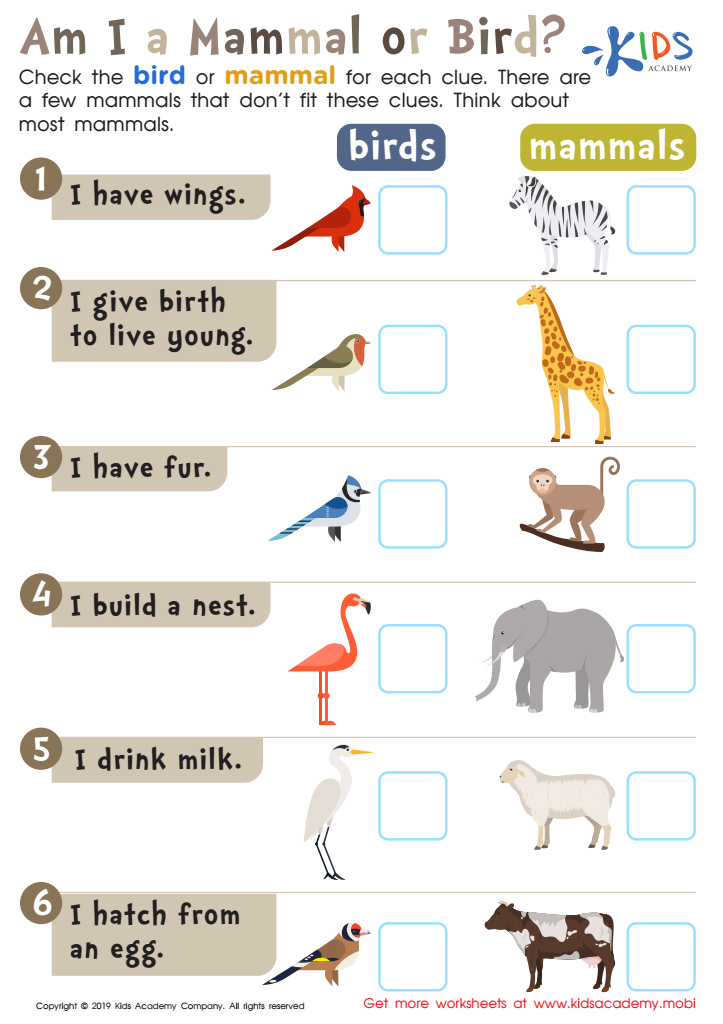
Am I a Mammal or Bird? Worksheet
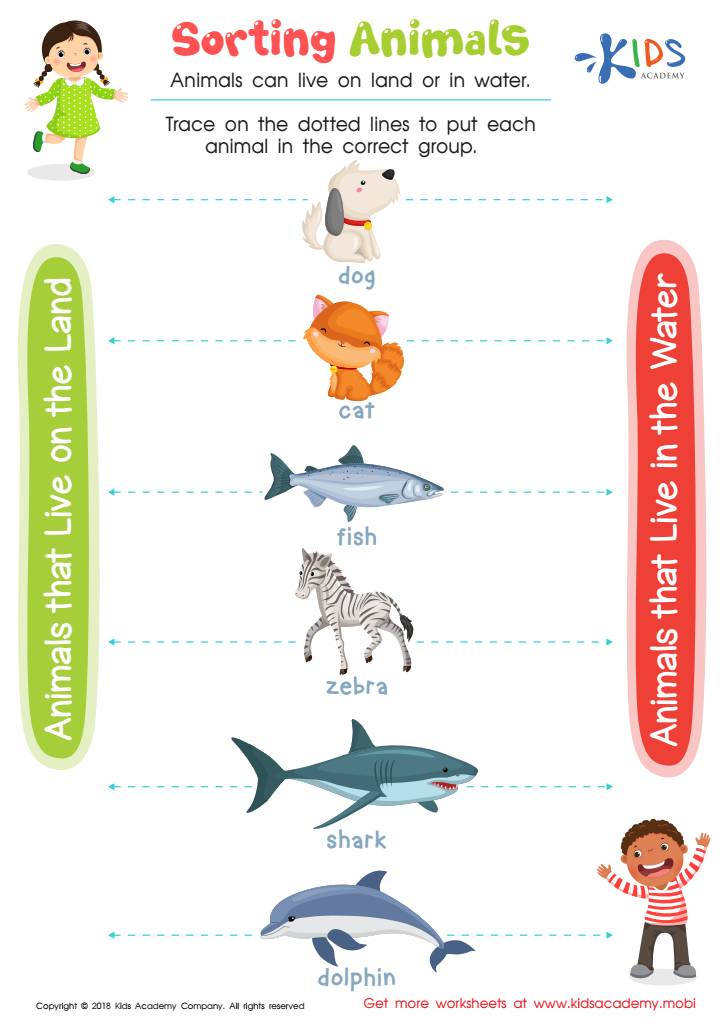
Sorting Animals Worksheet
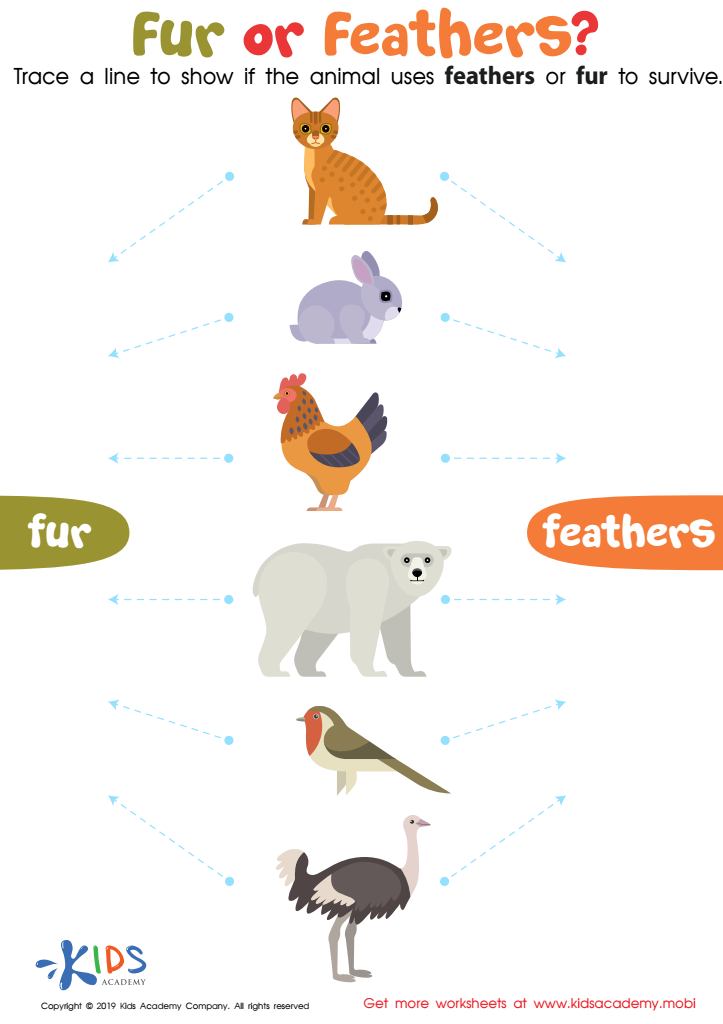
Fur or Feathers? Worksheet
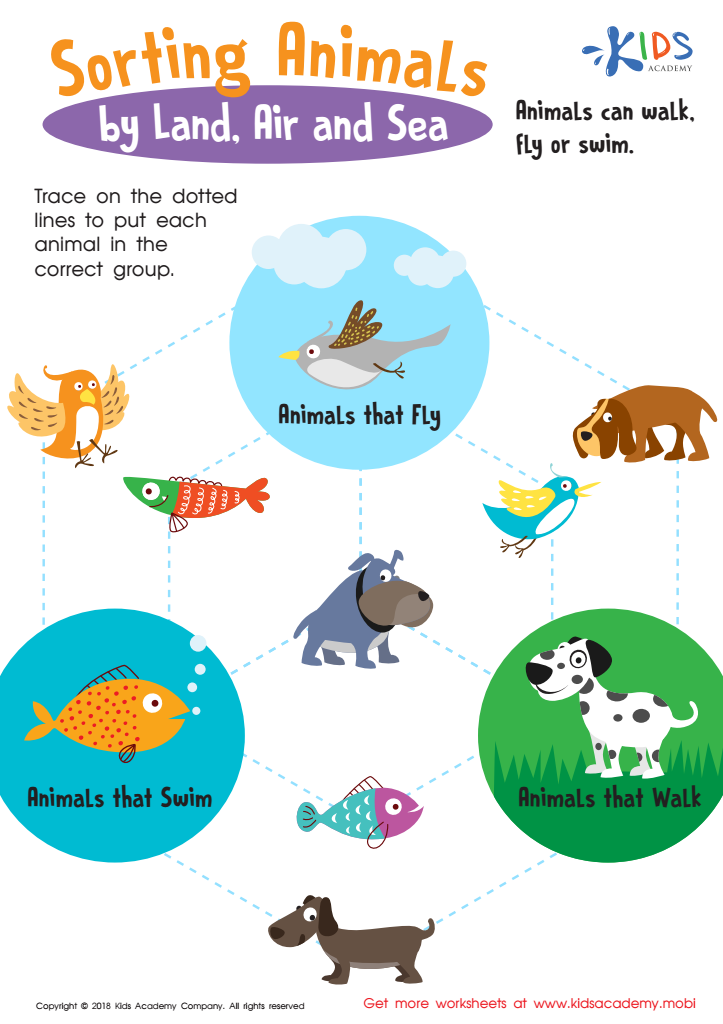
Sorting Animals by Land, Air and Sea Worksheet
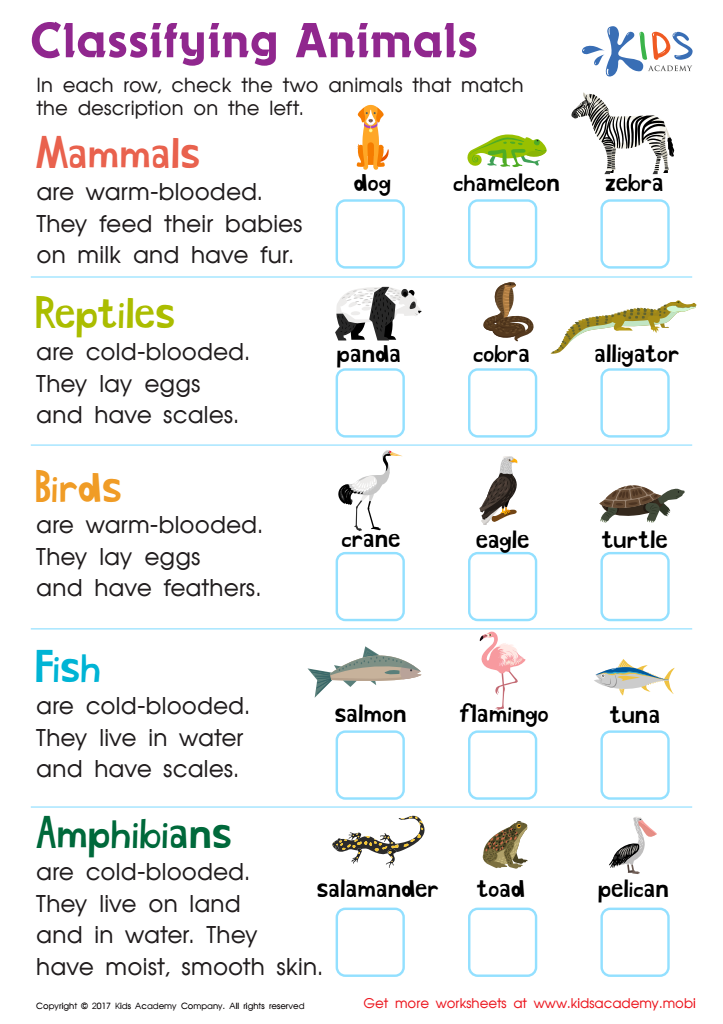
Classifying Animals Worksheet







%20(1).jpg)
Learning about animal classification is crucial for children between the ages of 5 and 9 for several important reasons. Firstly, understanding animal classification helps young learners develop critical thinking and organizational skills, reinforcing their ability to group and categorize the world around them. This foundational skill translates to various academic subjects and daily life.
Parents and teachers should care about this subject because it fosters curiosity and a love for nature. When children know how to distinguish animals by characteristics such as habitat, diet, and physical traits, they gain a better appreciation for biodiversity and ecological balance. This awareness can promote empathy toward animals and teach valuable lessons about the importance of conservation.
Moreover, discussing animal classifications, like mammals, birds, reptiles, amphibians, and fish, introduces children to basic scientific terms and concepts. It enhances their vocabulary while sparking their interest in biology and environmental science, laying the groundwork for more complex studies in the future.
Additionally, animal classification activities can engage children in various ways—through visual aids, hands-on activities, and field trips to zoos or aquariums. This multi-sensory learning helps retain their attention and makes the process fun and interactive, ensuring a lasting educational impact. Therefore, including animal classification in early education offers numerous developmental benefits that parents and teachers should not overlook.








