Number Recognition Animals Worksheets for Ages 5-9
3 filtered results
Difficulty Level
Grade
Age
-
From - To
Subject
Activity
Standards
Our Number Recognition Animals Worksheets for ages 5-9 use the captivating world of animals to make learning fun and engaging. Designed to bolster early math skills, these worksheets help children effortlessly recognize and write numbers while exploring various animals. Perfect for young learners, each worksheet blends educational activities with delightful animal themes, encouraging children to practice number identification through coloring, matching, and counting exercises. These playful yet educational sheets are ideal for use at home or in the classroom, providing a stimulating and interactive way to enhance number recognition skills in an enjoyable and motivating environment.
Favorites
With answer key
Interactive
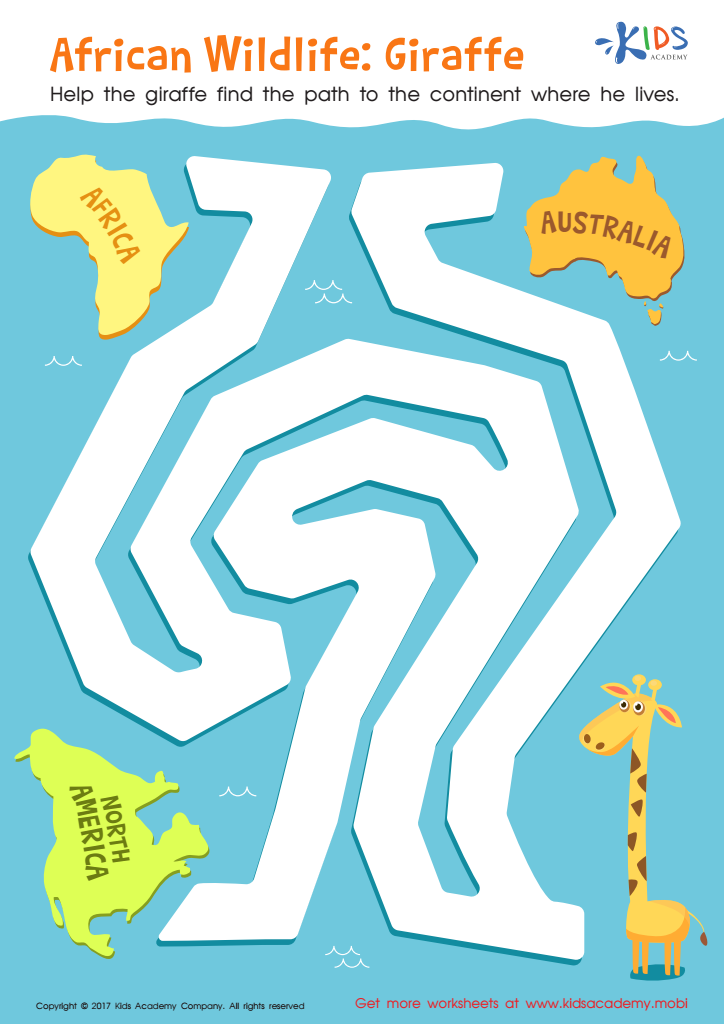
African Wildlife: Giraffe Worksheet
Help the giraffe get home! This African wildlife giraffe worksheet will boost your child's logical reasoning skills while they complete a maze to help the giraffe navigate choppy waters. Learn about different continents and their unique climates, practice problem solving and expand knowledge of the world and its habitats. Perfect for inspiring little learners!
 Assign to My Students
African Wildlife: Giraffe Worksheet
Worksheet
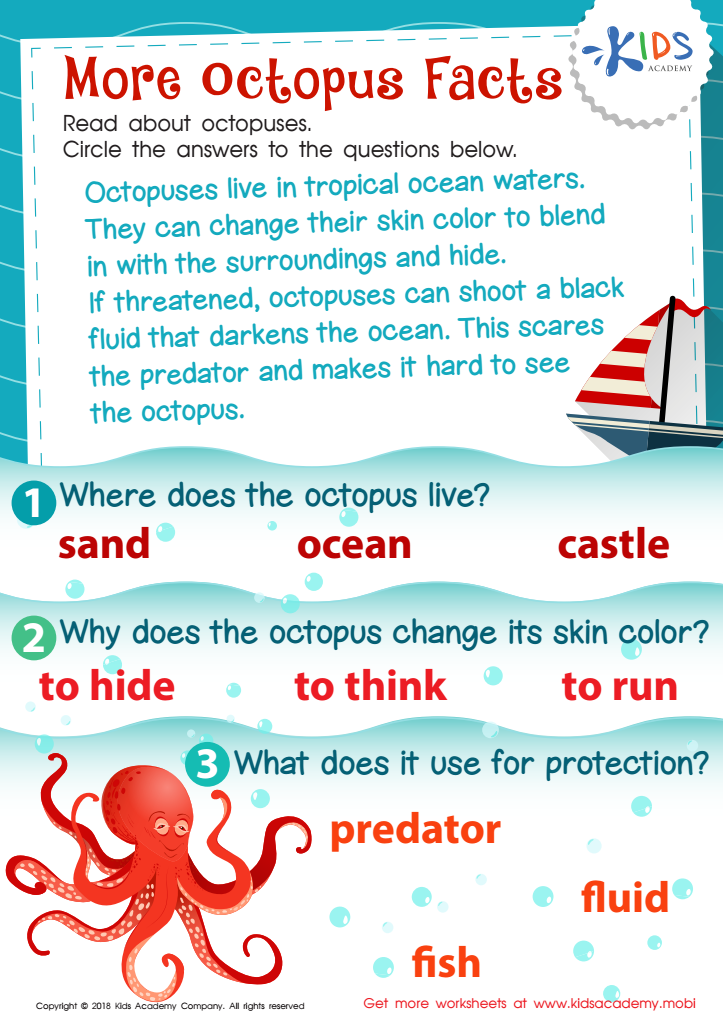
More Octopus Facts Worksheet
This worksheet will help your kids learn about the Octopus. Read the text carefully and have kids read with you. Now, ask them questions based on it and help them answer them by circling the right choices. Teaching your kids facts about animals will help them in the long run.
More Octopus Facts Worksheet
Worksheet
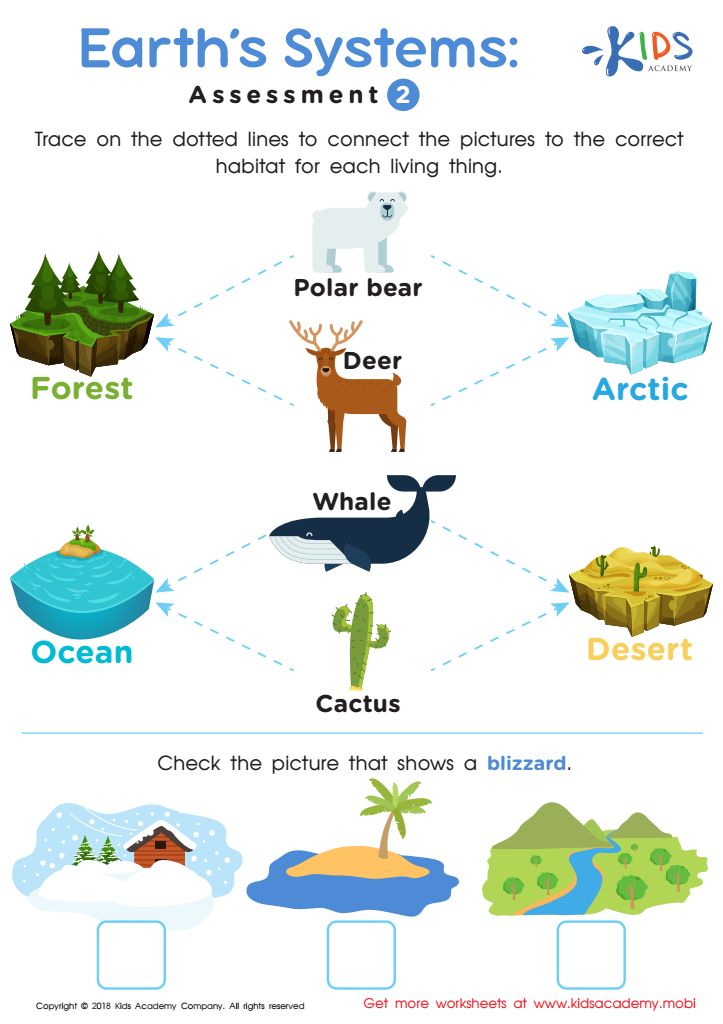
Earth's Systems: Assessment 2
Kids will love this free printable worksheet to assess their knowledge of habitats and the living creatures found in them. They'll trace the dotted lines to connect the pictures of plants and animals to their respective habitat and identify the type of weather depicted. No, polar bears don't live in the ocean, but they do like to swim in icy waters! With this fun activity, your little learner will master earth science basics.
Earth's Systems: Assessment 2
Worksheet
Join Kids Academy for Free
Who is primarily going to use this learning content?








Number Recognition Animals are educational tools that transform learning numbers into an engaging and enjoyable activity for children aged 5 to 9. Both parents and teachers should prioritize these resources because they combine foundational math skills with imaginative play. For young learners, cultivating an early familiarity with numbers is crucial, as it sets the stage for more complex mathematical concepts they will encounter later.
The inclusion of animals captivates children’s attention, making the learning process less intimidating and more inviting. When children associate numbers with their favorite animals, they are more likely to feel motivated and enthusiastic about learning. This enthusiasm can lead to better retention and faster recall of numerical information.
Additionally, Number Recognition Animals support cognitive development in areas beyond mathematics. By relating numbers to visual and auditory cues through animal names, children simultaneously improve their memory, language skills, and categorization abilities. Teachers and parents, acting as guides, can foster their curiosity and encourage collaborative activities that greatly enhance social skills.
Furthermore, integrating play-based learning tools like Number Recognition Animals reassures young learners that math can be fun and not something to be feared. This positive early experience can influence their attitude toward STEM subjects in later years, laying a solid foundation for academic success.