Vocabulary development Animals Worksheets for Ages 5-9
4 filtered results
-
From - To
Enhance your child's vocabulary with our engaging Animals Worksheets designed for kids aged 5-9! These fun, interactive printables introduce young learners to a variety of animal-related words, fostering a love for language and nature. Each worksheet is crafted to improve children's reading skills, comprehension, and expression as they explore different habitats, species, and characteristics. Through exciting activities like matching, fill-in-the-blanks, and creative drawing prompts, children will learn to identify and describe animals while expanding their vocabulary. Perfect for homeschooling or classroom use, our worksheets make vocabulary development enjoyable and effective. Download now and watch your child's language skills soar!
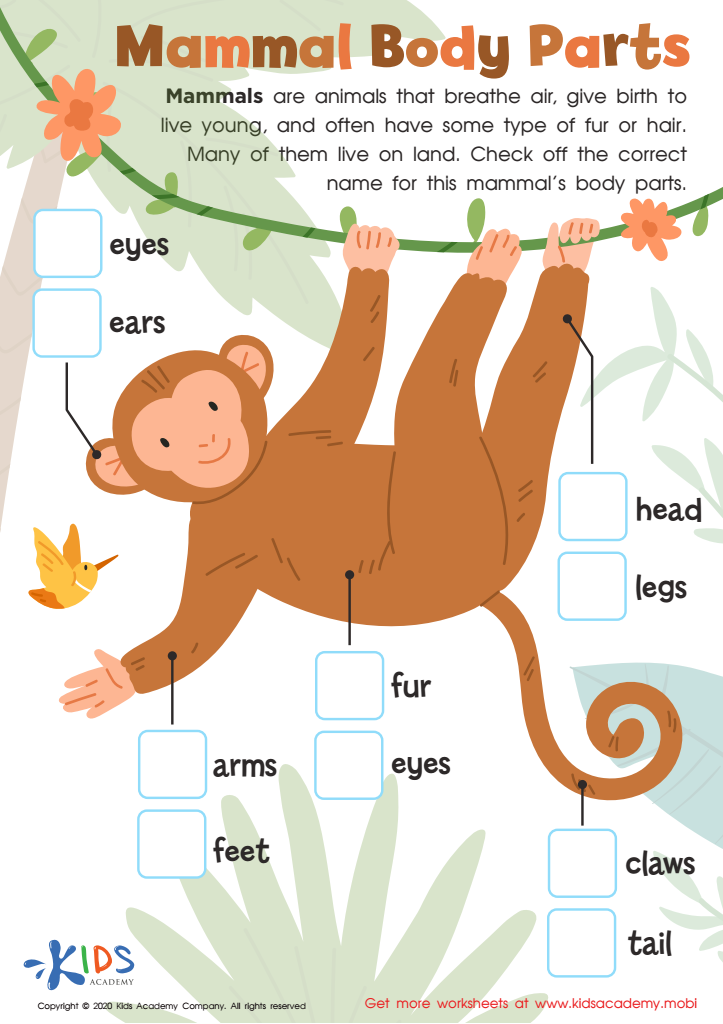
Mammal Body Parts Worksheet
 Assign to My Students
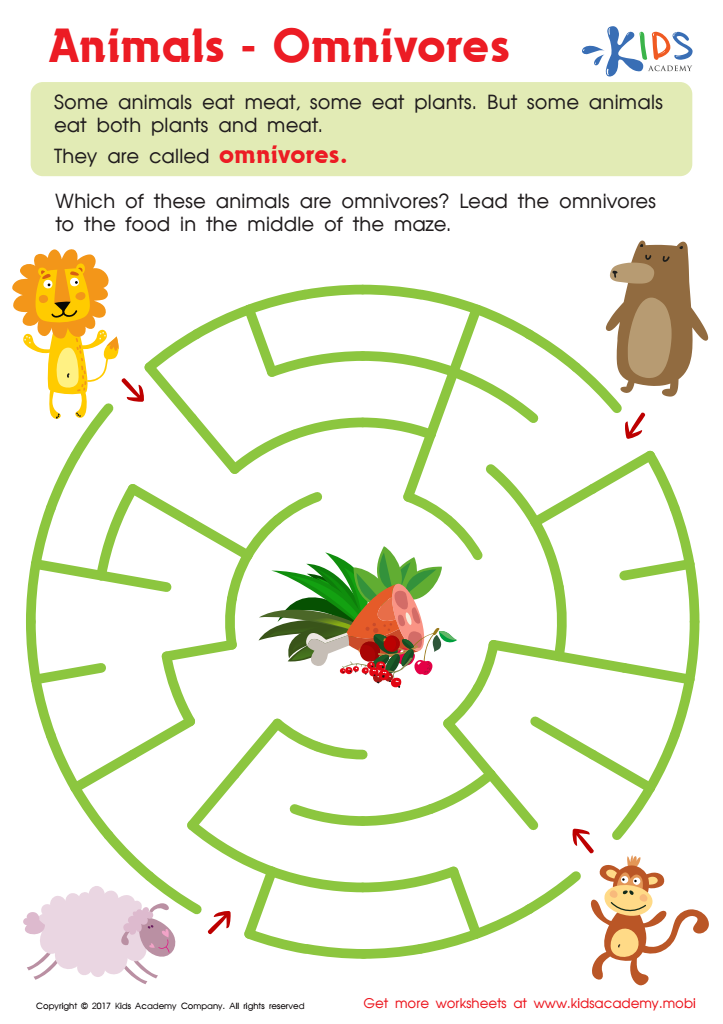
Omnivores Animals Worksheet
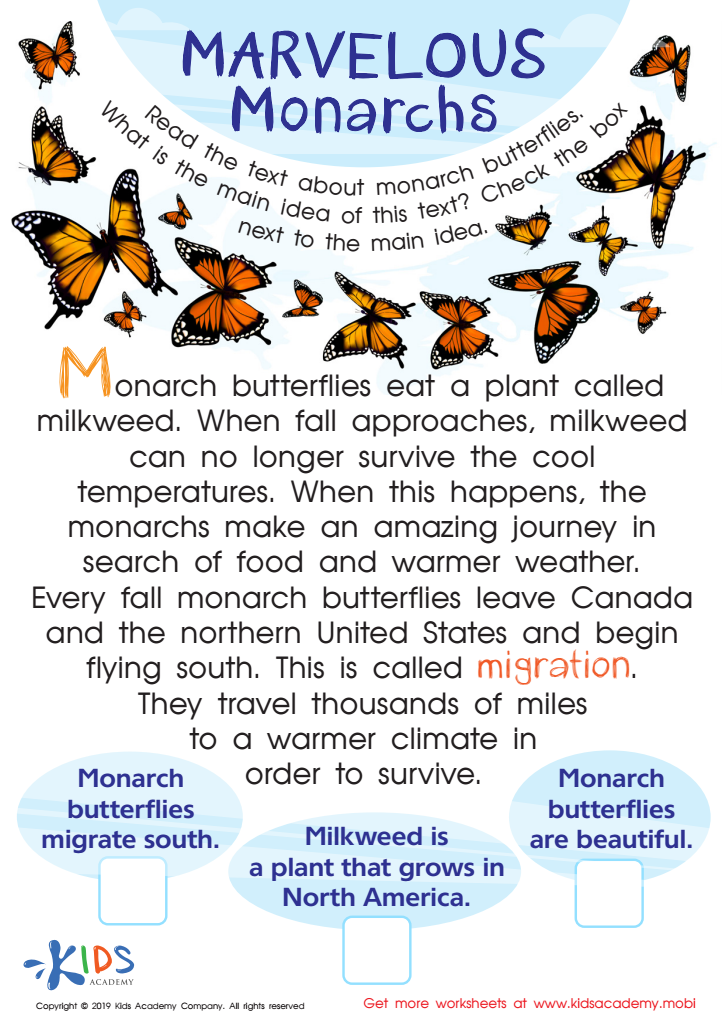
Marvelous Monarchs Worksheet
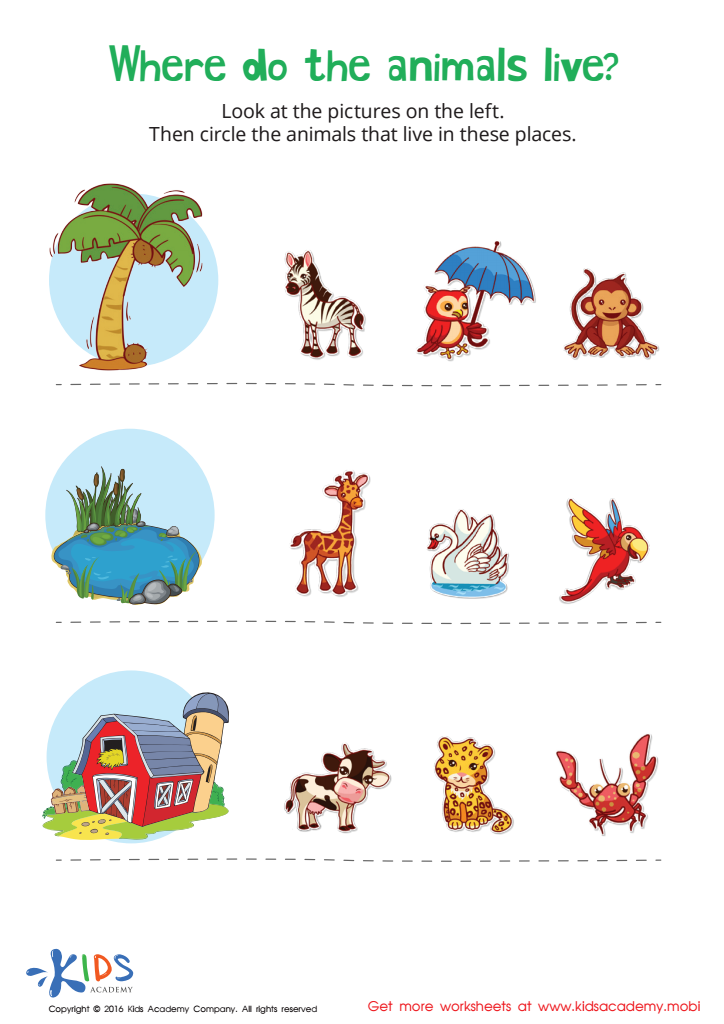
Where Animals Live Worksheet








Vocabulary development is crucial for children aged 5-9, and understanding animals is an engaging way to enhance their language skills. This age group is naturally curious, making topics like animals ripe for exploration. Developing a rich vocabulary around animals helps children express themselves more effectively, enhances their comprehension of stories and conversations, and improves their ability to articulate thoughts and feelings.
When discussing various animal names, characteristics, and habitats, children learn not just new words but also context. They encounter scientific terms, adjectives, and verbs that describe animal behaviors, promoting language diversity. This vocabulary foundation is predictive of later academic success—children with strong language skills often excel in reading and writing.
Moreover, discussing animals can foster empathy and understanding of the natural world, teaching important lessons about ecosystems and conservation. As parents and teachers use animal vocabulary in stories, games, and discussions, children develop critical thinking and imaginative skills.
Ultimately, investing in vocabulary development around relatable and exciting subjects like animals empowers children, enriching their educational journey and preparing them for effective communication in diverse areas of their lives. Thus, parents and teachers should prioritize and embrace this aspect of language development.