Sound identification Elementary Phonics Worksheets for 5-Year-Olds
4 filtered results
-
From - To
Enhance your 5-year-old's phonics skills with our engaging Sound Identification worksheets! Designed specifically for early learners, these printable resources help young children recognize and categorize sounds associated with letters, fostering a solid foundation in reading. Through fun activities, kids will explore sounds associated with different letters, building their confidence and improving their listening skills. Our worksheets incorporate colorful images and interactive exercises that make learning enjoyable and effective. Perfect for home or classroom use, these worksheets support early literacy development, paving the way for lifelong learning success. Start your child's phonics journey today and watch them thrive!
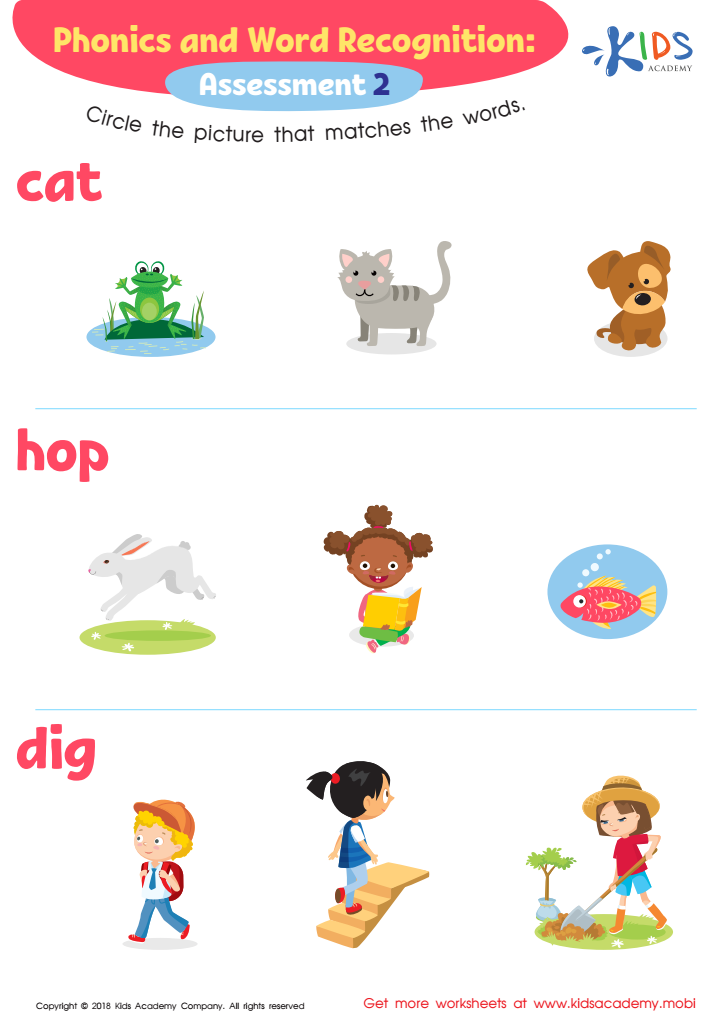
Phonological Awareness: Assessment 2 ELA Worksheet
 Assign to My Students
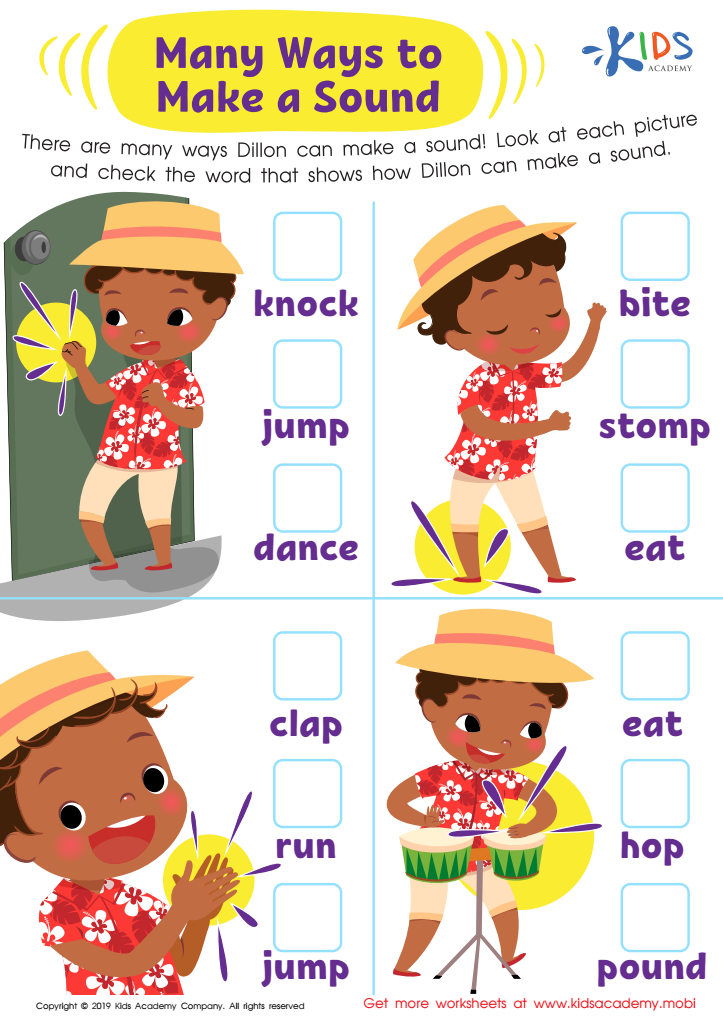
Many Ways to Make a Sound Worksheet
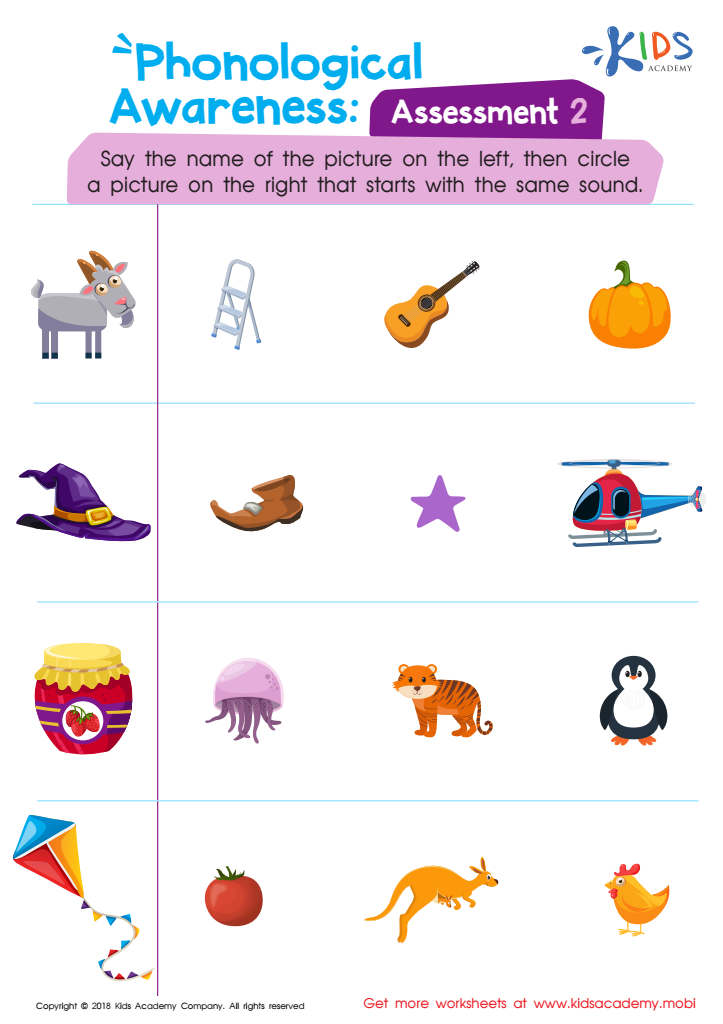
Phonological Awareness: Assessment 2 Worksheet
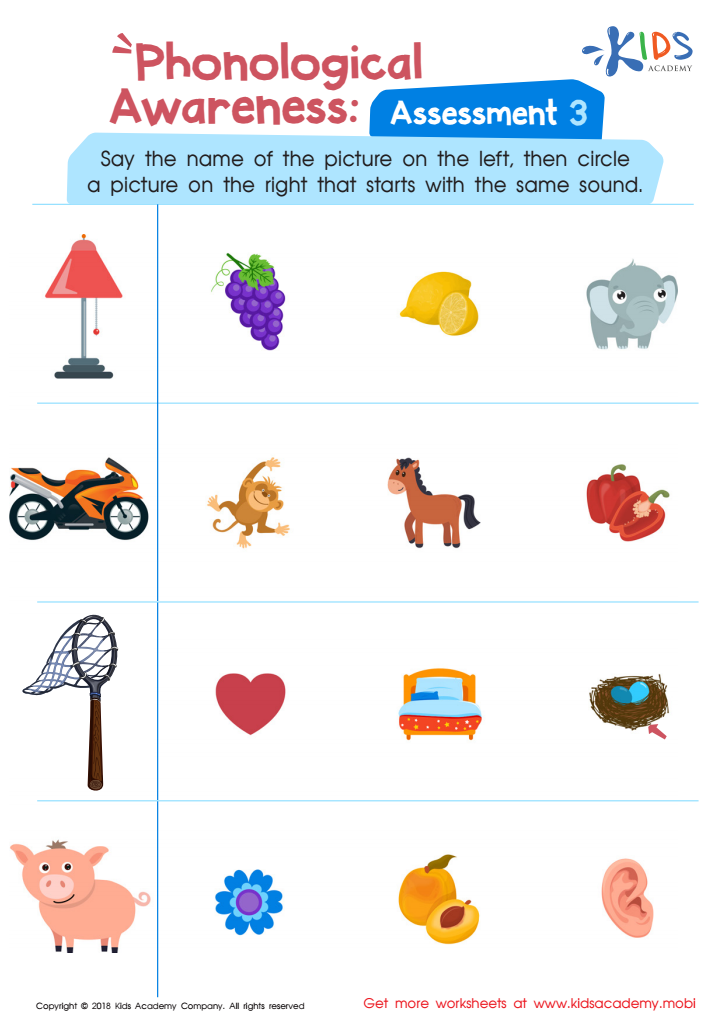
Phonological Awareness: Assessment 3 Worksheet




Sound identification is a crucial component of early literacy development, particularly in a phonics-based approach for 5-year-olds. Parents and teachers should care about this foundational skill because it directly impacts a child's reading and writing abilities. At this age, children are mastering the sounds that correspond to letters, which serves as the building block for decoding words and understanding language.
By focusing on sound identification, educators and parents empower children to recognize and manipulate sounds within words, facilitating phonemic awareness. This skill enables children to blend sounds together to read simple words, enhancing their confidence and motivation for learning. Moreover, sound identification fosters a love for reading as children begin to explore stories independently.
Additionally, strong phonics skills can lead to better academic performance in later years. Research indicates that children who receive effective phonics instruction are more likely to succeed in reading comprehension and writing tasks. Therefore, by prioritizing sound identification in early education, parents and teachers set the stage for lifelong literacy success, helping children develop critical communication skills necessary for their overall development and future learning.







