
Vocabulary development Elementary Phonics Worksheets for 5-Year-Olds
3 filtered results
Difficulty Level
Grade
Age
-
From - To
Subject
Activity
Standards
Boost your child's vocabulary with our engaging Elementary Phonics Worksheets tailored for 5-year-olds! Designed to make learning fun and effective, these worksheets help young learners master the alphabet, phonics, and essential vocabulary. Each activity ignites curiosity and enhances reading and writing skills through hands-on practice and interactive elements. Perfect for both classroom settings and at-home learning, our expertly crafted worksheets support your child's educational journey by building critical literacy foundations. Explore a wide variety of exercises today and set your 5-year-old on the path to reading success!
Favorites
With answer key
Interactive
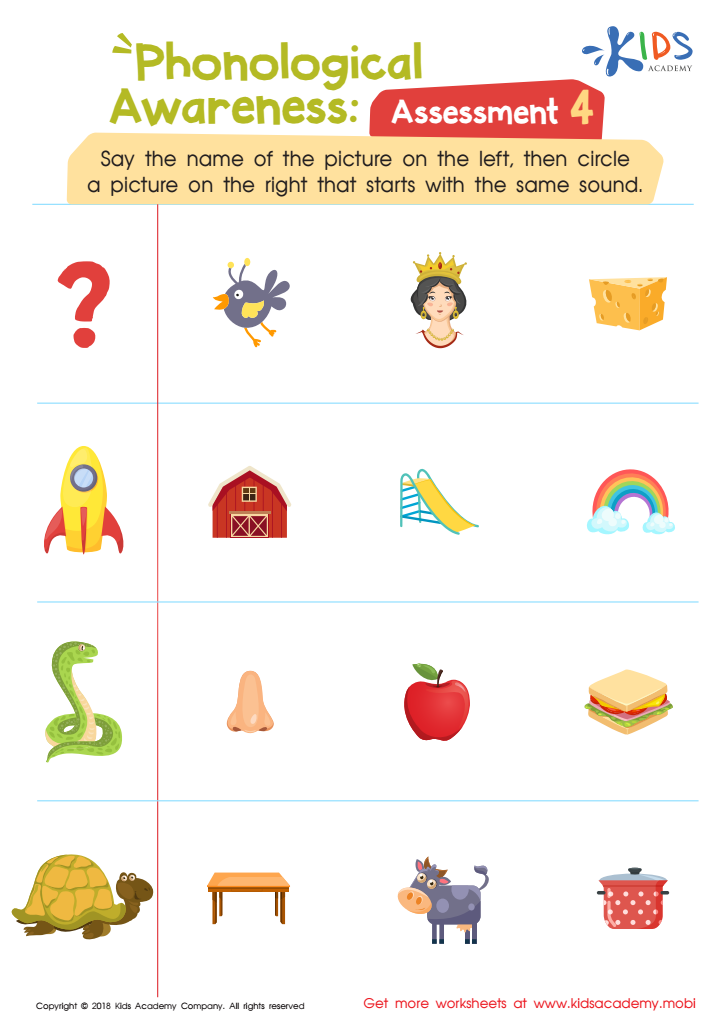
Phonological Awareness: Assessment 4 Worksheet
It can be tricky for young readers to differentiate between sounds in words. Make it fun with this downloadable worksheet! Ask your child to name each picture on the left and match the starting sound with an image on the right. This helps assess their phonics skills and make learning enjoyable.
 Assign to My Students
Phonological Awareness: Assessment 4 Worksheet
Worksheet
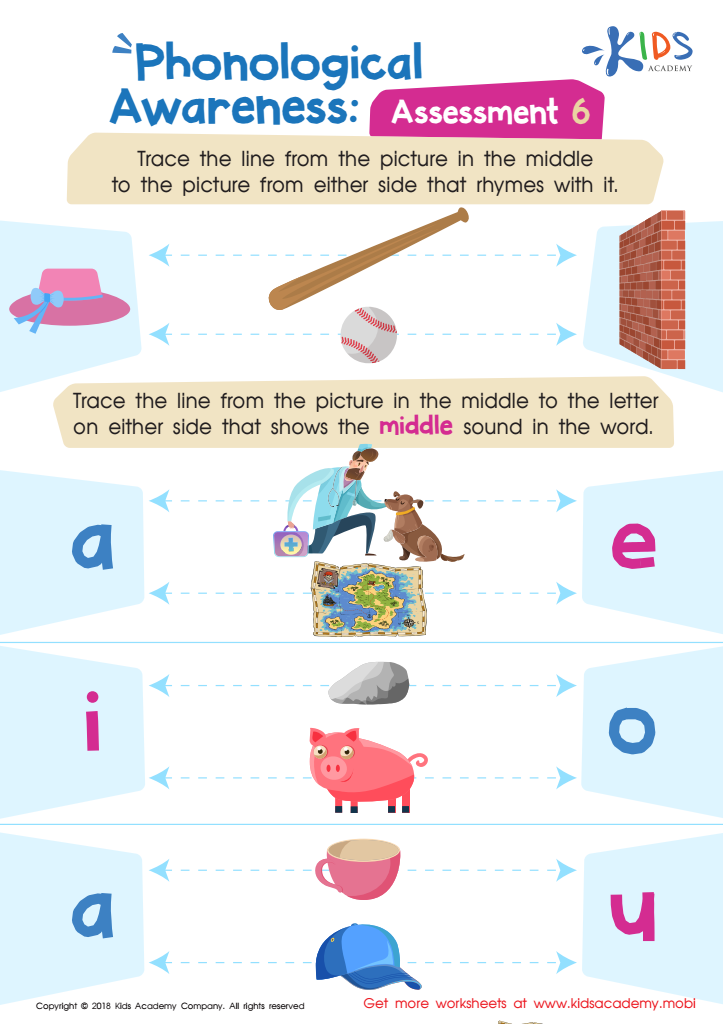
Phonological Awareness: Assessment 6 Worksheet
Check your child's ability to recognize middle word sounds using this free worksheet. Help them learn phonics by practicing with rhyming. Trace the line from the image to its rhyming match then encourage them to name each image aloud to identify which letter matches the sound. It's a great way to assess letter and sound recognition.
Phonological Awareness: Assessment 6 Worksheet
Worksheet
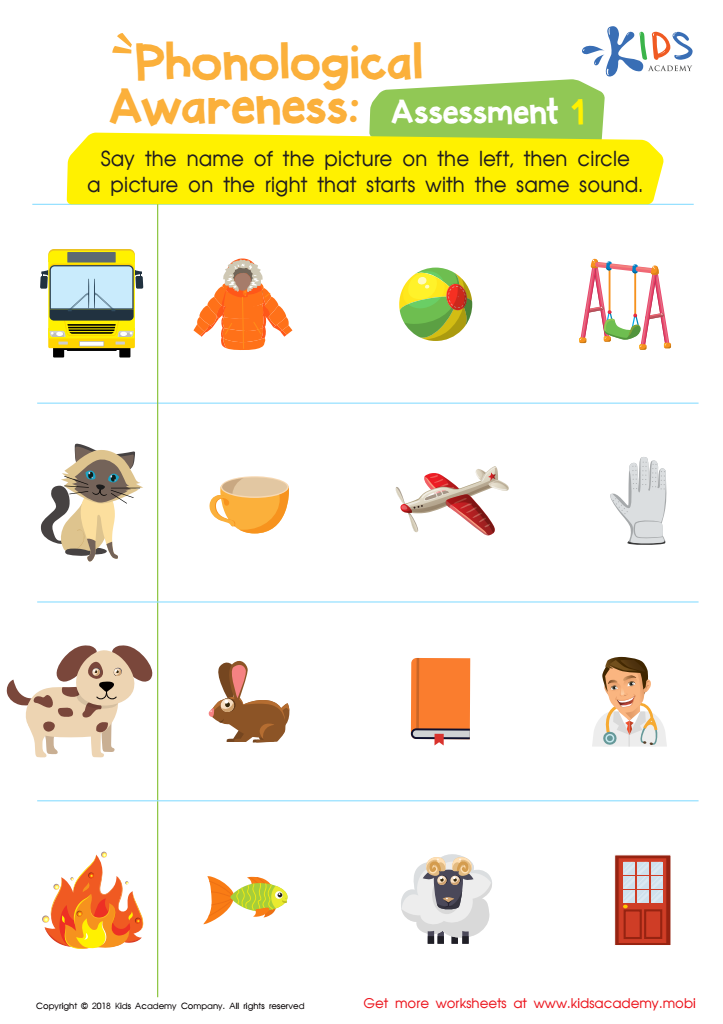
Phonological Awareness: Assessment 1 Worksheet
This worksheet helps kids build key phonics skills for pre-reading. They say each picture name aloud, focusing on the starting sound. Then, they match the sound with an image in the same row. Use as a checkpoint for kindergarten or grade 1 phonics readiness.
Phonological Awareness: Assessment 1 Worksheet
Worksheet
Join Kids Academy for Free
Who is primarily going to use this learning content?




Vocabulary development and elementary phonics are foundational pillars for the overall cognitive and academic progress of 5-year-olds. By fostering a robust vocabulary at an early age, children enhance their ability to understand and process new information effectively. When parents and teachers focus on vocabulary development, they equip children with the tools to express themselves clearly and confidently, which is vital for social interactions and emotional development.
Early exposure to phonics, which involves learning the relationship between sounds and their corresponding letters, is crucial for reading proficiency. Mastery of phonics helps children decode words, making reading less daunting and more enjoyable. This early reading success leads to increased motivation and a positive attitude towards lifelong learning.
Words are the building blocks of thought; the richer a child's vocabulary, the better they can think and express complex ideas. This linguistic foundation is strongly correlated with academic performance across all subjects, not just reading and language arts. Furthermore, strong early literacy skills set the stage for future success, closing achievement gaps before they widen.
Therefore, attention to vocabulary and phonics at the age of 5 is not just about learning to read—it’s about creating a platform for effective communication, critical thinking, and future academic success. Educators and parents play a crucial role in this developmental phase, making their involvement both essential and impactful.







