Sound-letter correlation Alphabet Worksheets for 5-Year-Olds
3 filtered results
-
From - To
Explore our engaging Sound-Letter Correlation Alphabet Worksheets designed specifically for 5-year-olds! These interactive resources help young learners connect spoken sounds with their corresponding letters, laying the foundation for strong reading skills. Our worksheets feature playful activities that stimulate curiosity and enhance phonemic awareness, making learning both fun and effective. With colorful illustrations and age-appropriate exercises, children will enjoy recognizing letters and their sounds while building confidence in their reading abilities. Perfect for homeschooling or classroom use, these worksheets are an excellent tool for early education. Dive in and watch your child’s literacy skills bloom!
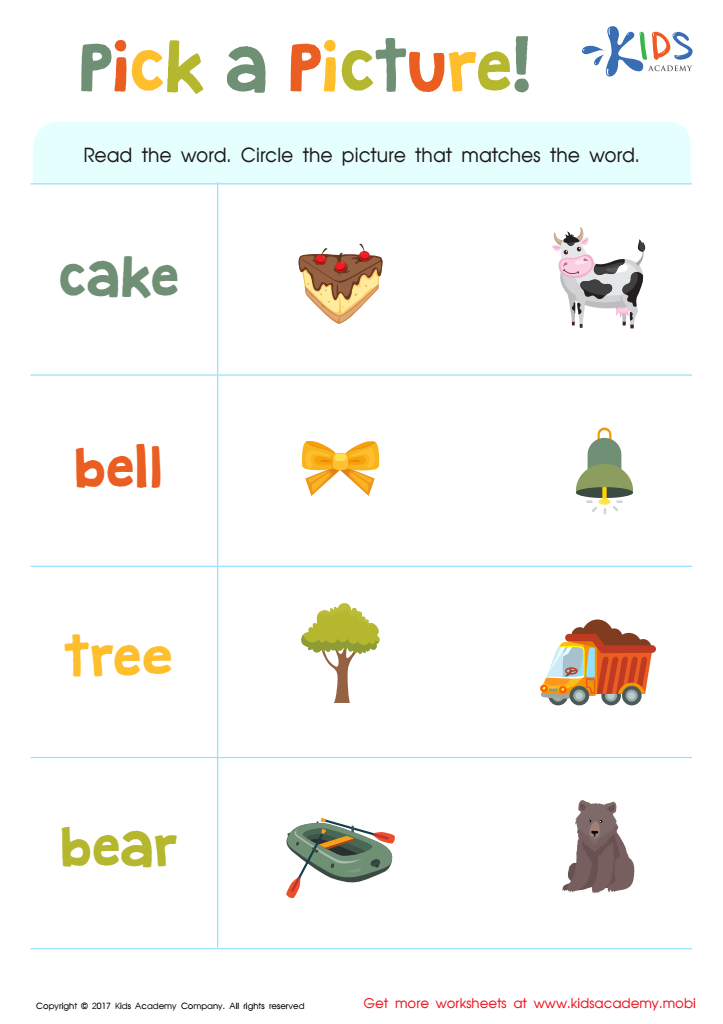
Pick a Picture Word Recognition Worksheet
 Assign to My Students
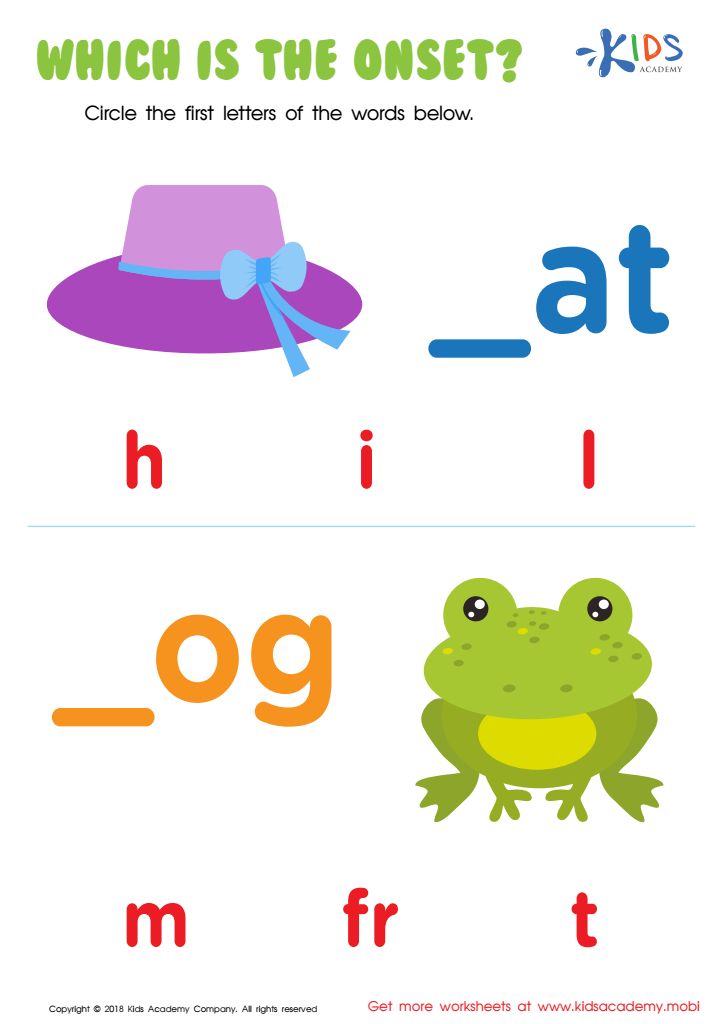
Which Is the Onset? Worksheet
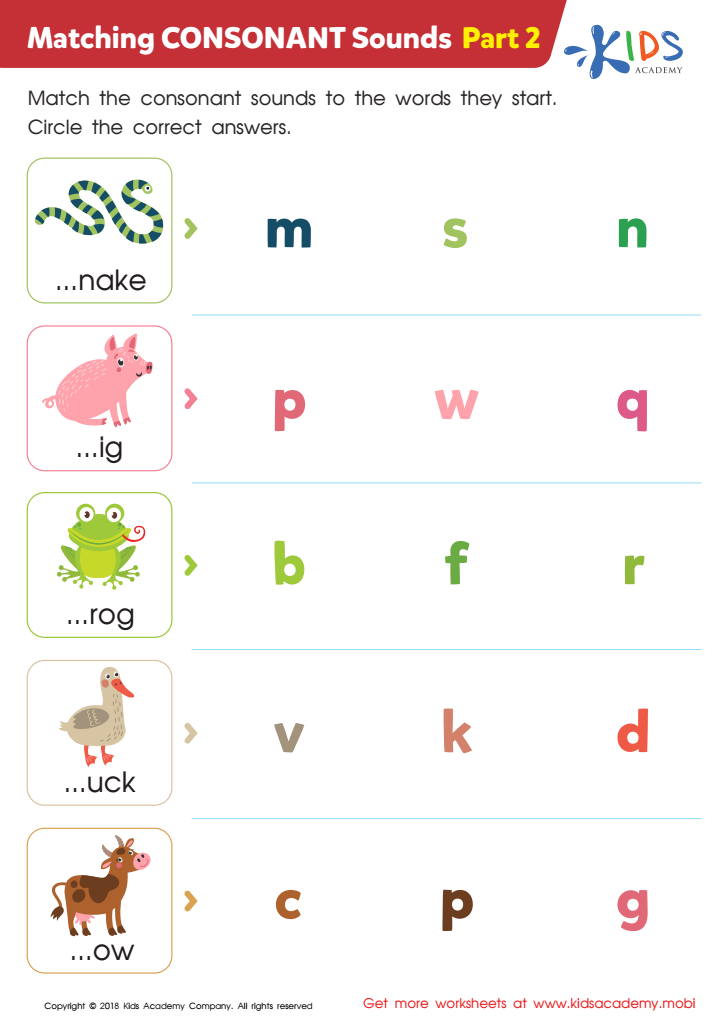
Matching Consonant Sounds: Part 2 Worksheet







Sound-letter correlation, or phonemic awareness, is fundamental for 5-year-olds as it forms the basis of reading and writing skills. At this stage, children begin to understand that letters represent sounds, allowing them to decode words, make connections between spoken and written language, and ultimately read independently.
Parents and teachers should care about this correlation because it directly impacts a child's literacy development. Strong sound-letter recognition leads to improved reading fluency and comprehension. When children can sound out words, they become more confident readers, which fosters a love for books and learning.
Additionally, early exposure to sound-letter correlation aids in vocabulary expansion and spelling skills. By understanding that letters function as symbols for sounds, children can experiment with writing their thoughts and ideas, enhancing their communication skills.
Moreover, consistent practice of sound-letter correlation can help identify and support children who may struggle with reading early on, providing targeted intervention before challenges grow into significant obstacles.
In essence, cultivating sound-letter correlation equips 5-year-olds with essential literacy tools that not only support academic success but also contribute to lifelong learning and personal growth. Therefore, prioritizing this aspect of early education benefits children profoundly.







