Alphabet Recognition Letter I Worksheets for 5-Year-Olds
3 filtered results
Difficulty Level
Grade
Age
-
From - To
Subject
Activity
Standards
Introduce your 5-year-old to the wonderful world of learning with our “Alphabet Recognition Letter I Worksheets!” These engaging resources are designed specifically to help children recognize, trace, and write the letter I. Each worksheet features fun activities like coloring, matching, and identifying the letter I in various words and pictures. Perfect for little learners, our worksheets combine play with education, enhancing fine motor skills and reinforcing alphabet recognition in an enjoyable way. Give your child a head start in literacy with our interactive and delightful materials crafted to make learning the alphabet a joyful experience!
Favorites
With answer key
Interactive
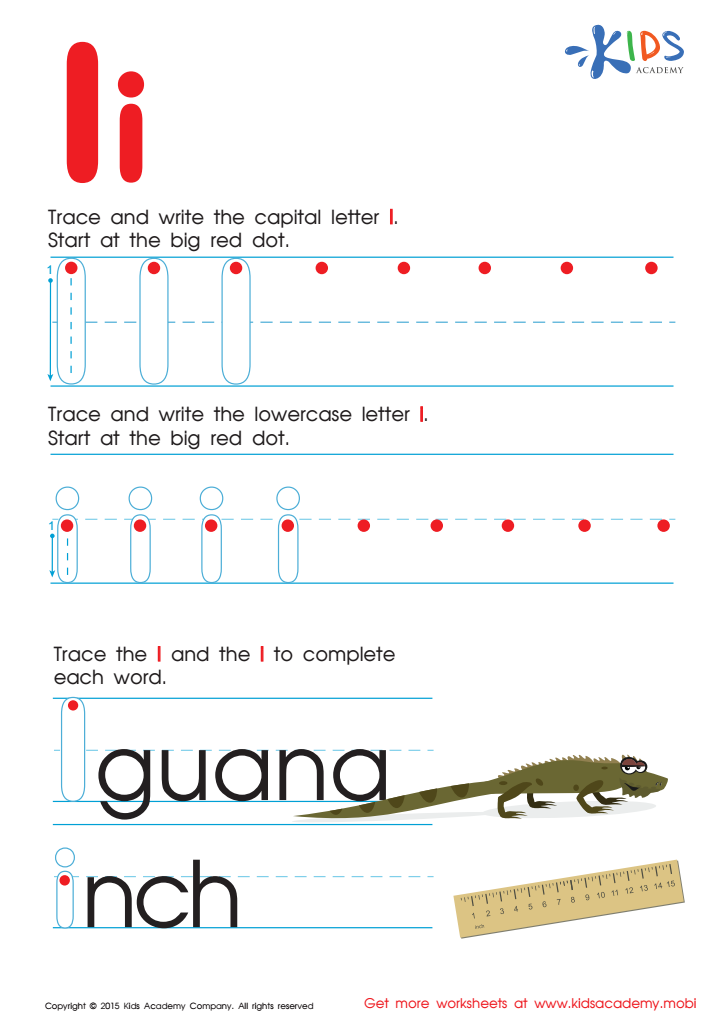
Letter I Tracing Page
Trace and write "I" uppercase and lowercase. An iguana's tail looks like the uppercase "I" and the lowercase "i" is as small as an inch. Make learning fun with Kids Academy worksheets.
 Assign to My Students
Letter I Tracing Page
Worksheet
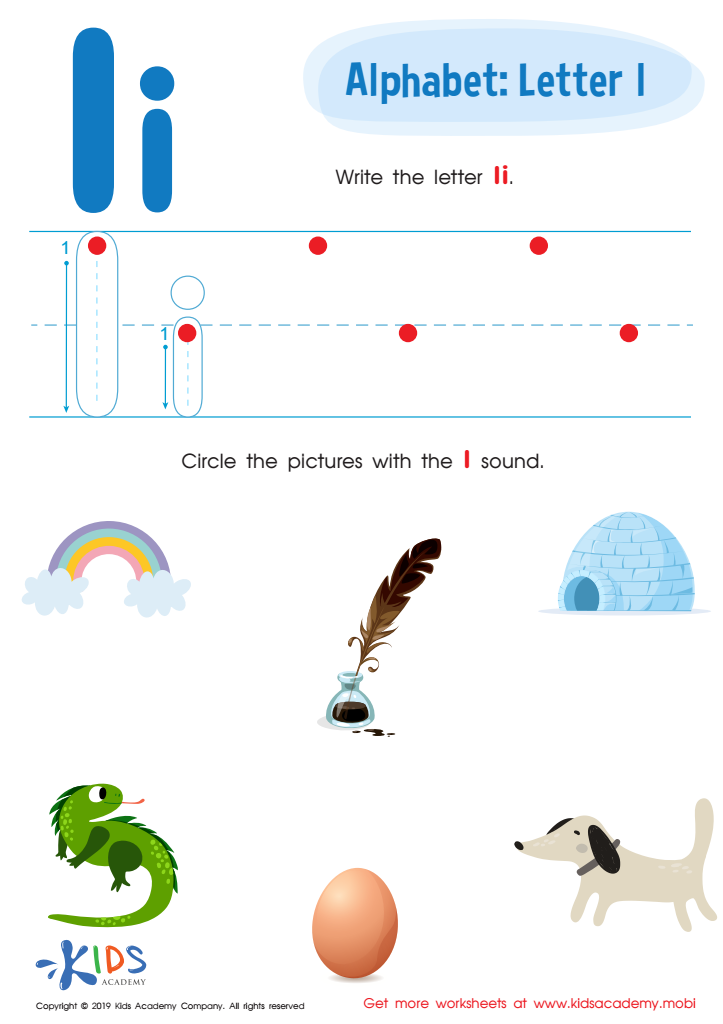
Letter I Tracing Worksheet
Kids can hone tracing, writing and identifying skills for the letter 'I' with this worksheet. Whether visual or reading/writing learners, every child can benefit from the tasks - tracing, writing and circling objects beginning with 'I'. This free sheet will soon get preschoolers confident with the 'I' letter!
Letter I Tracing Worksheet
Worksheet
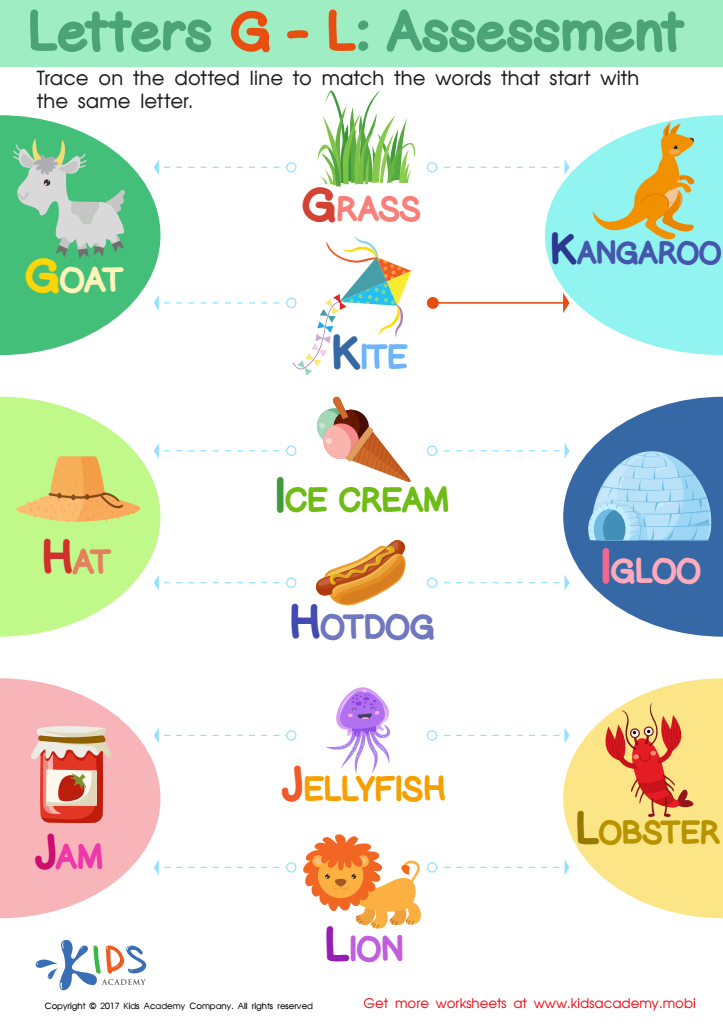
Letters G-L Worksheet
This fun worksheet helps preschoolers develop reading and phonics skills. It gets kids to match G-L words that start with the same letter, making it engaging and educational.
Letters G-L Worksheet
Worksheet
Join Kids Academy for Free
Who is primarily going to use this learning content?







Alphabet recognition, particularly the letter "I," plays a critical role in the foundational literacy development of 5-year-olds. At this tender age, children often experience significant brain development, making it the ideal time to introduce fundamental elements of reading and writing. Recognizing the letter "I" equips them with essential skills for forming words and sentences. This letter often appears in basic words such as "it," "is," and "in," making up common phrases that are central to early reading materials.
For parents and teachers, ensuring children can identify the letter "I" translates to smoother progress through language milestones. Early recognition fosters confidence, bolstering a child’s eagerness to explore more complex reading tasks. In contexts of social interaction, being able to recognize and use the letter "I" helps children articulate their ideas and feelings more clearly. When children are adept at recognizing alphabets, they are better prepared to understand sounds and develop phonemic awareness, which underpins spelling and initial reading capabilities.
Moreover, emphasizing the letter "I" can help in teaching its varying roles, such as pronouns and articles, nurturing comprehensive language understanding from the ground up. Bridging the gap between identifying letters and forming coherent speech happens step by step, and every letter—including "I"—functions as a crucial piece in this educational puzzle.