Alphabet Recognition Letter J Worksheets for 5-Year-Olds
3 filtered results
Difficulty Level
Grade
Age
-
From - To
Subject
Activity
Standards
Introducing our fun and educational Alphabet Recognition Letter J Worksheets for 5-Year-Olds! These expertly designed worksheets help young learners identify, trace, and pronounce the letter J through engaging activities. Featuring colorful illustrations and creative exercises, these printables make learning enjoyable and effective. By focusing on this essential pre-reading skill, your child will improve their letter recognition, phonemic awareness, and fine motor skills. Perfect for home or classroom use, our worksheets are a fantastic resource to enhance your child's early literacy journey. Download today and watch your little one master the letter J effortlessly!
Favorites
With answer key
Interactive
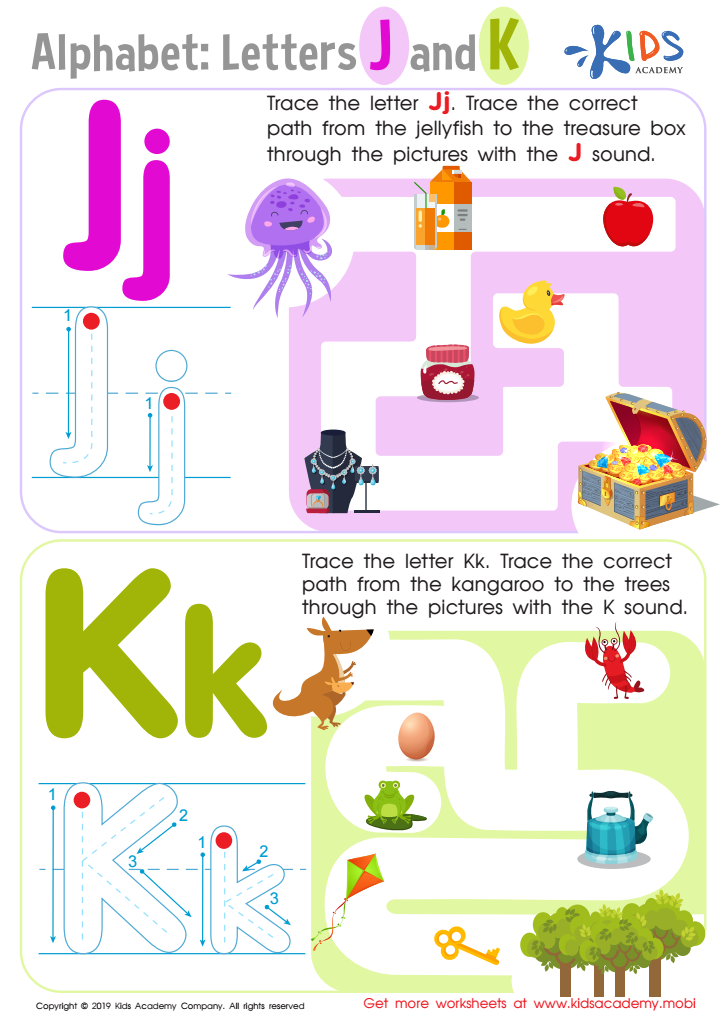
Letters J and K Tracing Worksheet
Tracing the letters «J» and «K» is the first step. Help the jellyfish find a path to the treasure chest with pictures of the «J» sound, and assist the kangaroo in finding a path to the trees with pics of «K». Fun, educational and enjoyable for children!
 Assign to My Students
Letters J and K Tracing Worksheet
Worksheet
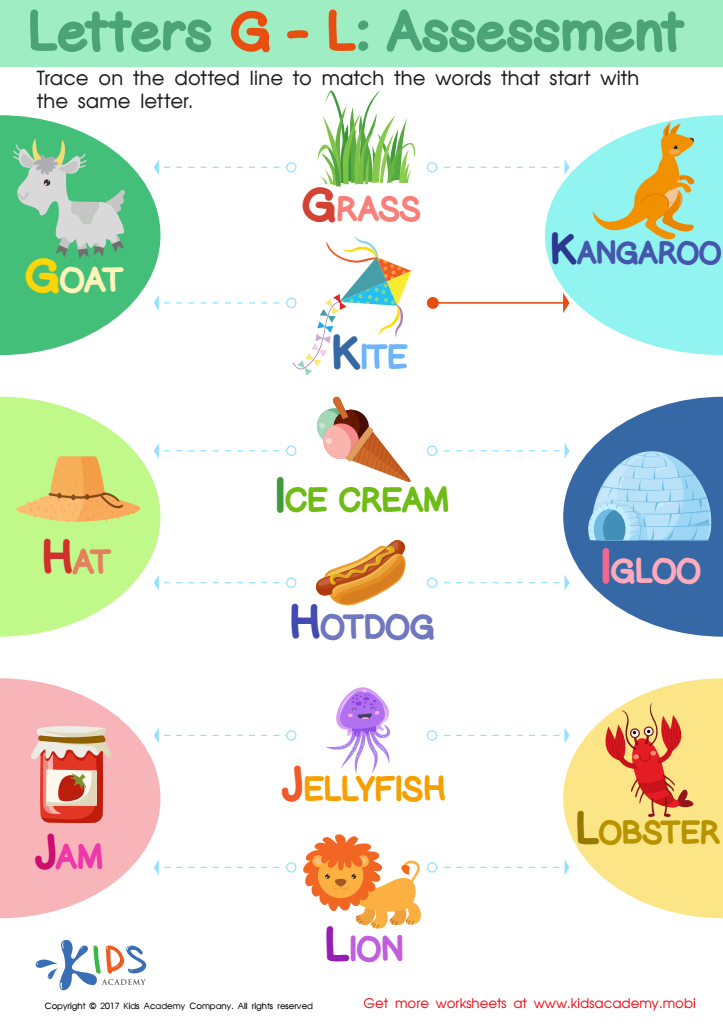
Letters G-L Worksheet
This fun worksheet helps preschoolers develop reading and phonics skills. It gets kids to match G-L words that start with the same letter, making it engaging and educational.
Letters G-L Worksheet
Worksheet
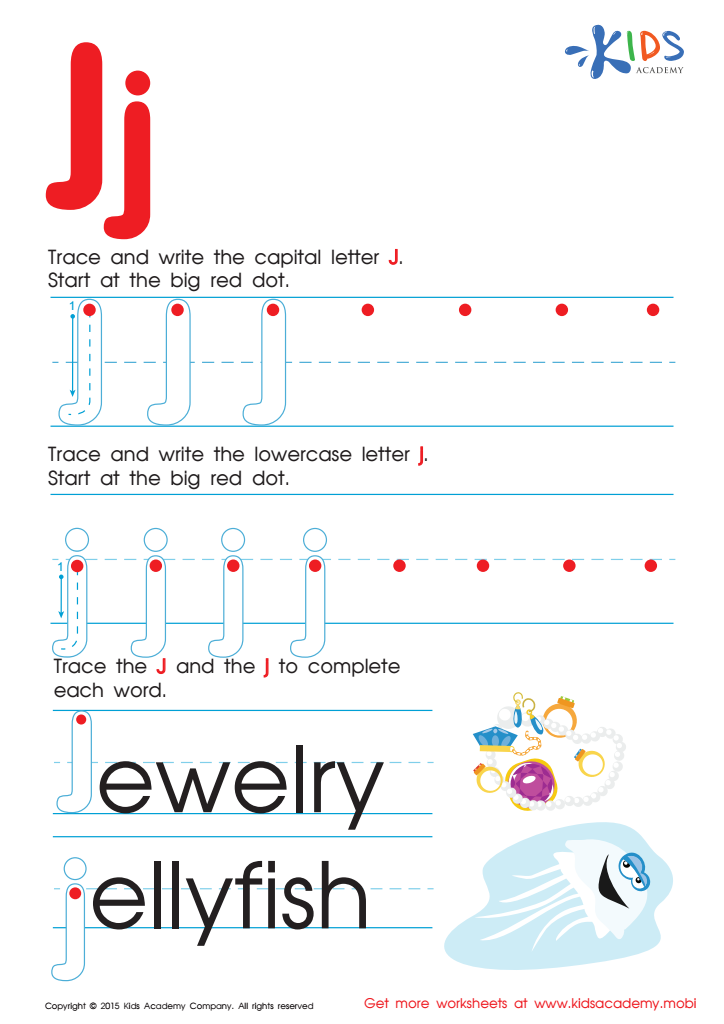
Letter J Tracing Page
Trace and write the letter "J" with our ABC worksheet - start at the big red dot! Have fun completing words like jewelry, jellyfish and more. Check out our kindergarten activities for more alphabet practice.
Letter J Tracing Page
Worksheet
Join Kids Academy for Free
Who is primarily going to use this learning content?




Alphabet recognition, including the letter J, is fundamental for 5-year-olds as it lays a strong foundation for literacy development. For parents and teachers, understanding the significance of letter recognition at this age is crucial for several reasons.
Firstly, recognizing the letter J and its corresponding sound is essential for children to form words and begin the reading process. Familiarity with letters and their sounds allows children to decode words, enhancing their reading fluency and comprehension. Early mastery of letter recognition helps in smoother transitions to more advanced literacy skills.
Secondly, practicing alphabet recognition, like focusing on the letter J, aids in cognitive development. By identifying letters, children develop critical thinking and memory skills. It also nurtures their ability to differentiate between various symbols and shapes, which is an important skill set for overall academic growth.
Moreover, early knowledge of letters, including J, boosts a child's confidence. Successfully identifying letters and linking them to words can enhance their self-esteem and eagerness to learn more. This positivity can lead to a lifelong interest in reading and learning.
Therefore, both parents and teachers need to engage with 5-year-olds in playful, interactive activities that emphasize alphabet recognition, ensuring children are well-prepared for future academic challenges.