Phonics practice Letter Recognition Worksheets for 5-Year-Olds
3 filtered results
-
From - To
Our Phonics Practice Letter Recognition Worksheets for 5-Year-Olds are perfect for young learners beginning their reading journey. Designed to make learning fun and engaging, these worksheets help children recognize and practice each letter of the alphabet through various interactive activities. Featuring colorful images and easy-to-follow instructions, these sheets foster solid foundational skills in phonics and letter recognition. Ideal for both classroom and at-home practice, they pave the way for strong literacy development and a love for reading. Start your child's educational adventure today with our expertly crafted worksheets!
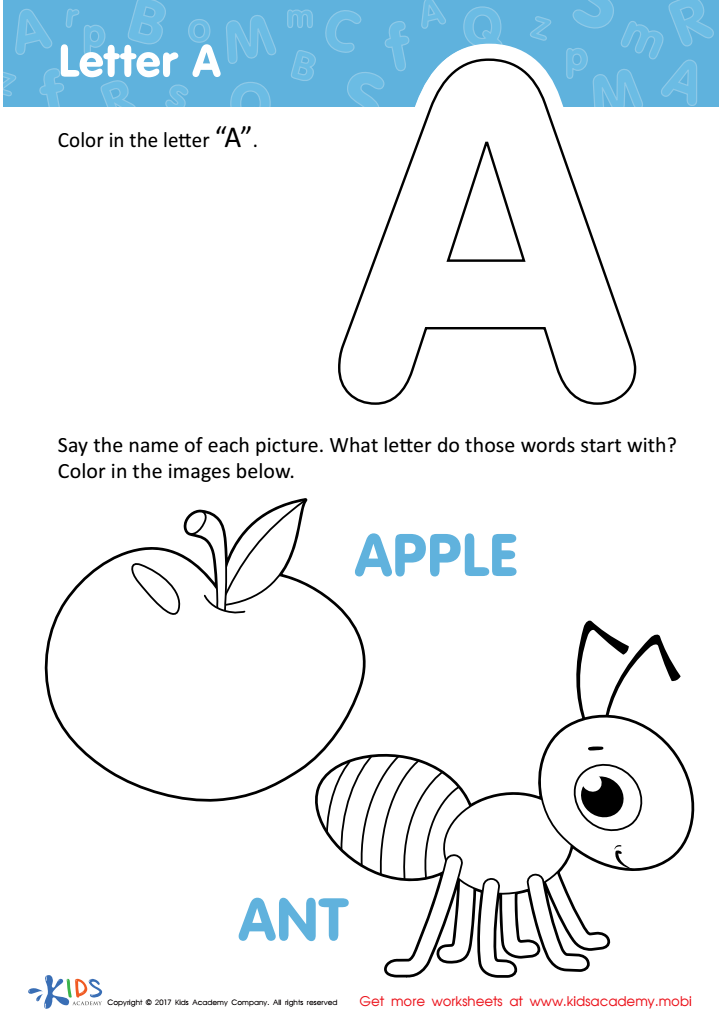
Letter A Coloring Sheet
 Assign to My Students
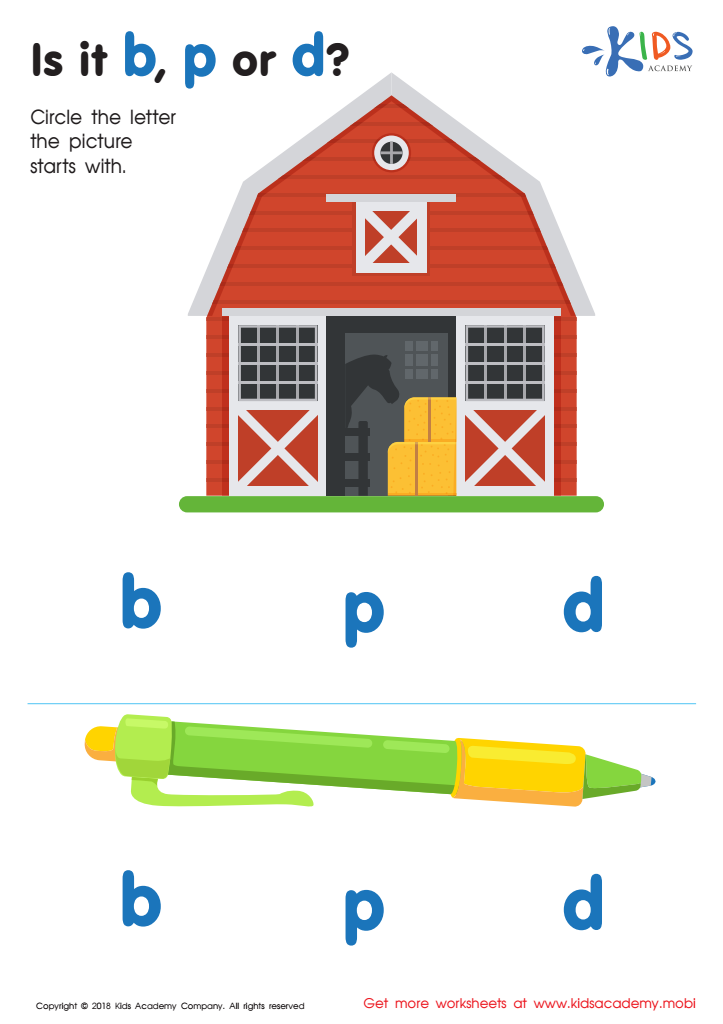
Is it b, p or d? Worksheet
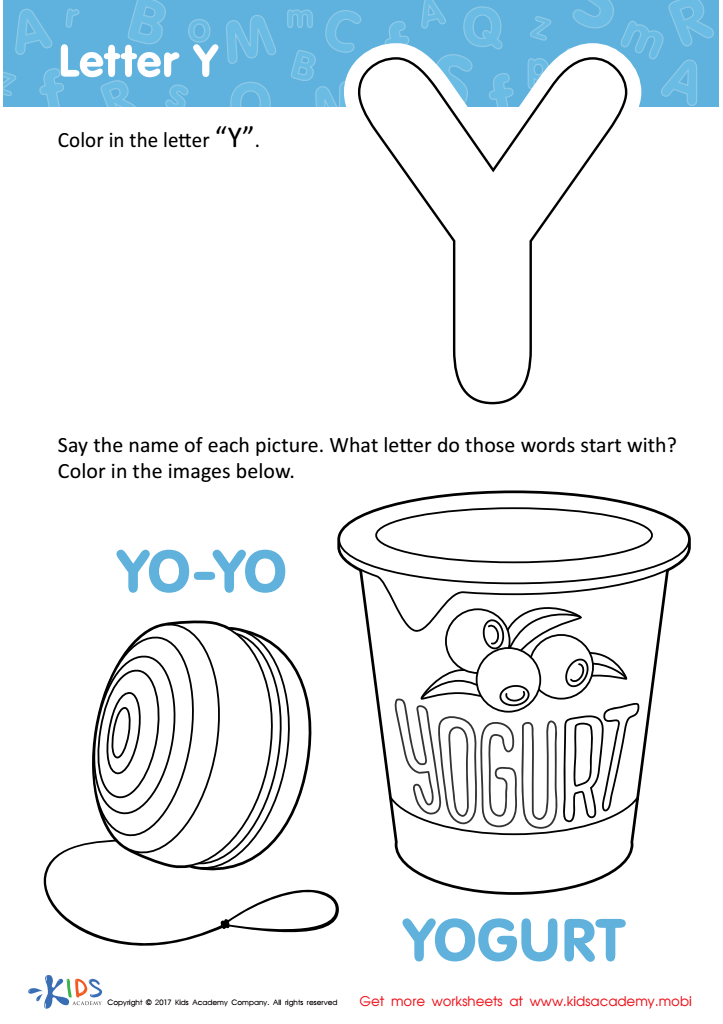
Letter Y Coloring Sheet
Assign to My Students








Phonics practice and letter recognition are fundamental aspects of early literacy that significantly influence a child's reading ability and overall academic success. At the age of five, children are at a crucial developmental stage where they are particularly receptive to learning language and sound patterns.
Phonics helps children understand the relationship between letters and their corresponding sounds, a skill essential for decoding words while reading. This foundational knowledge empowers children to sound out words, enabling them to read independently and confidently. When children master phonics, they can more easily recognize words in print, which enhances their reading fluency and comprehension.
Letter recognition goes hand-in-hand with phonics and forms the building blocks of literacy. Knowing the shapes and names of letters helps children decode written language and develop spelling skills. When children practice letter recognition, they are better equipped to spell words correctly and learn new vocabulary.
Phonics and letter recognition support cognitive development, nurturing skills like memory, attention, and listening. These practices also foster a sense of achievement and boost self-esteem, which promotes a positive attitude towards learning. Involving parents in phonics practice at home creates a supportive learning environment, reinforcing the skills taught at school and contributing to a child's long-term academic success.







