
Visual discrimination Letter Recognition Worksheets for 5-Year-Olds
5 filtered results
Difficulty Level
Grade
Age
-
From - To
Subject
Activity
Standards
Enhance your child's letter recognition skills with our specially designed visual discrimination worksheets for 5-year-olds. These engaging sheets from Kids Academy make learning the alphabet fun and interactive by helping kids to distinguish between similar letters. Perfect for preschool and kindergarten students, our worksheets focus on developing keen observation skills, a key component in early reading success. Children will improve their ability to spot differences and similarities between letters, paving the way for confident and accurate reading. Download our visually stimulating letter recognition worksheets today and give your child a head start in literacy!
Favorites
With answer key
Interactive
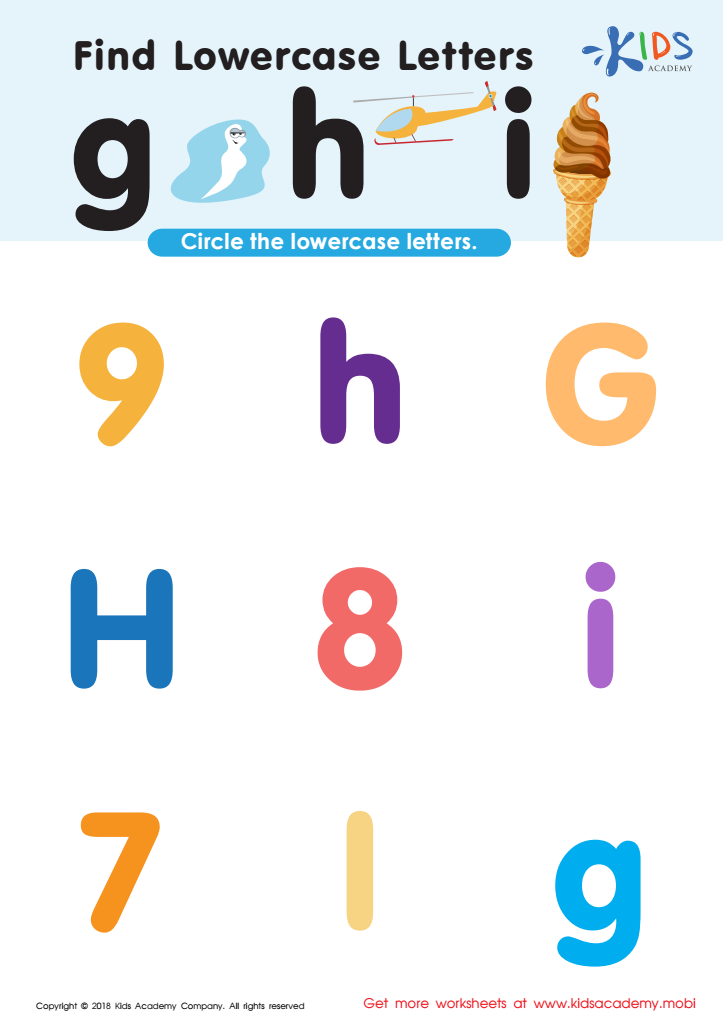
Find Lowercase Letters g h i Worksheet
Turn learning into a fun journey with your child! Use this free worksheet to find and circle the lowercase letters hidden amongst uppercase letters and numbers. Your child will understand what you're teaching them as they enjoy the search.
 Assign to My Students
Find Lowercase Letters g h i Worksheet
Worksheet
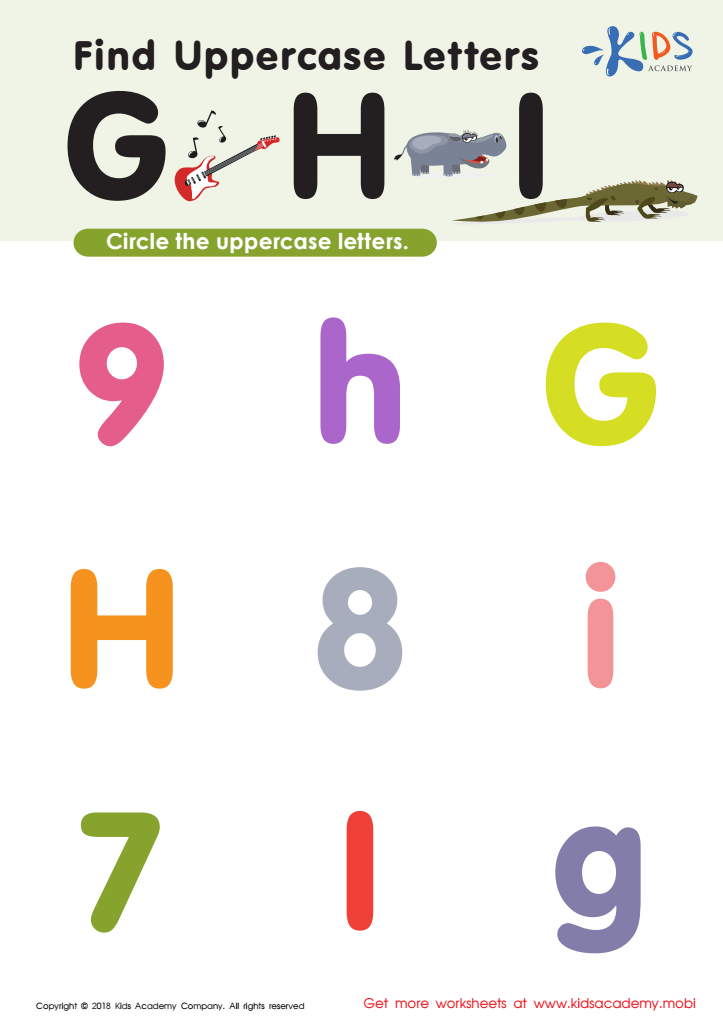
Find Uppercase Letters G, H, and I Worksheet
Find G, H, and I in uppercase with this downloadable worksheet! Numbers are included to challenge your kindergartener's letter recognition skills. Plus, practice G, H, and I sounds using the cute graphics. Perfect for learning letter case recognition!
Find Uppercase Letters G, H, and I Worksheet
Worksheet
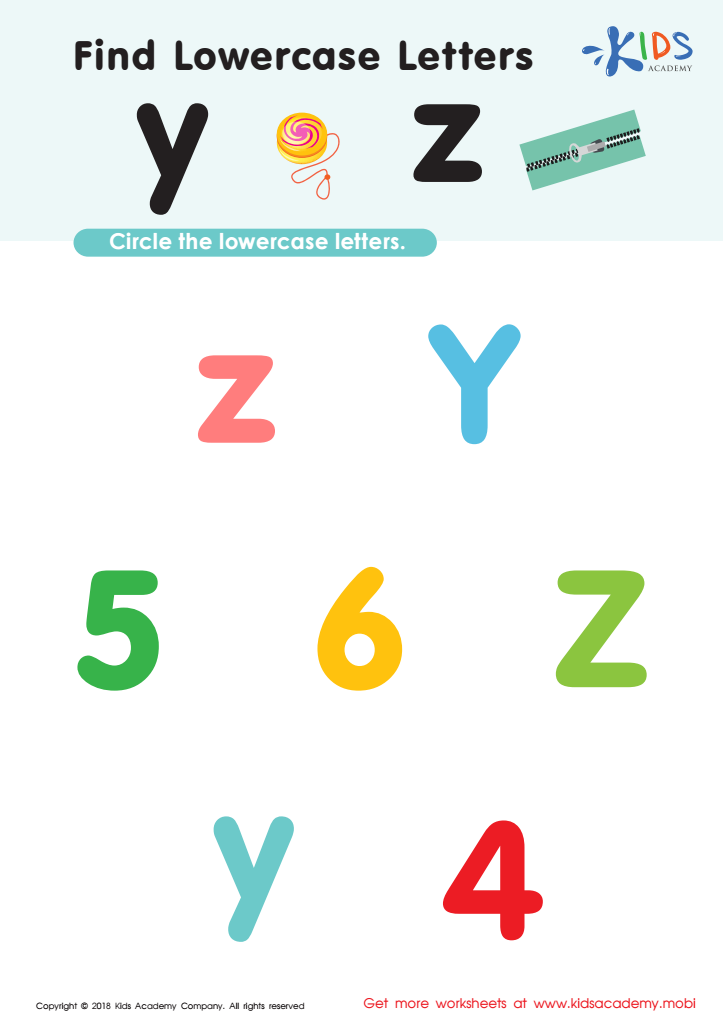
Find Lowercase Letters y z Worksheet
Help your kid learn the alphabet. Before they can move on to words and reading, they must first know the lower and uppercase letters. Show them how to find the letters y and z in this worksheet, which is filled with uppercase letters and numbers. Together, find and circle them.
Find Lowercase Letters y z Worksheet
Worksheet
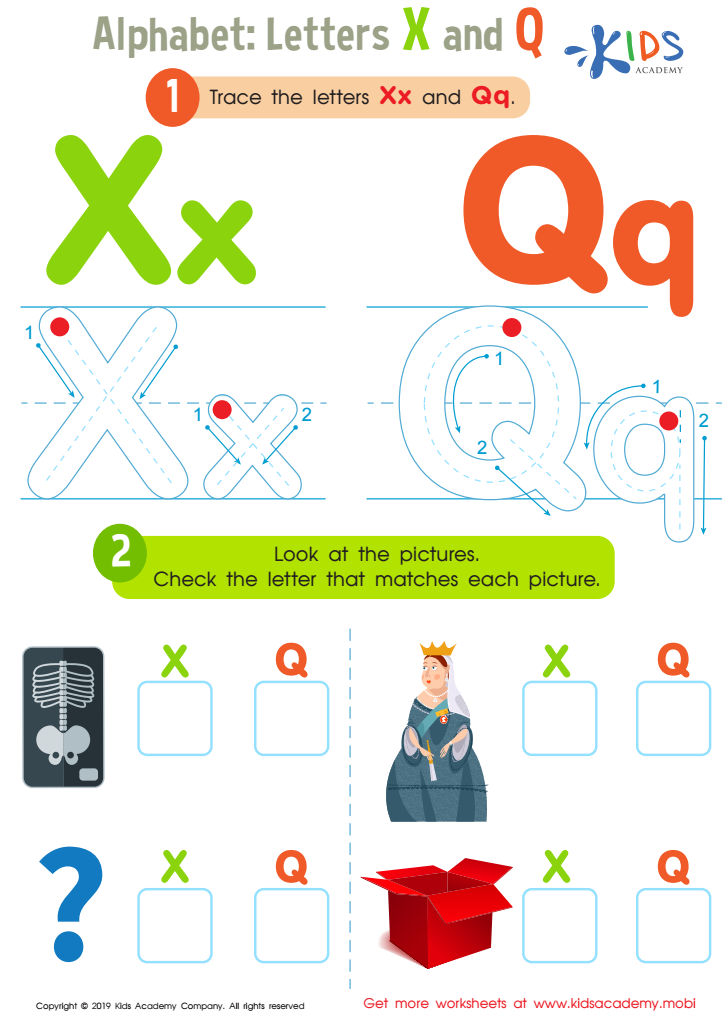
Letters X and Q Tracing Worksheet
Do you want your students to improve writing and letter recognition? This worksheet is a great place to start! Kids can trace the letters «X» and «Q» and identify pictures that match each letter. With a little encouragement, they'll do a great job!
Letters X and Q Tracing Worksheet
Worksheet
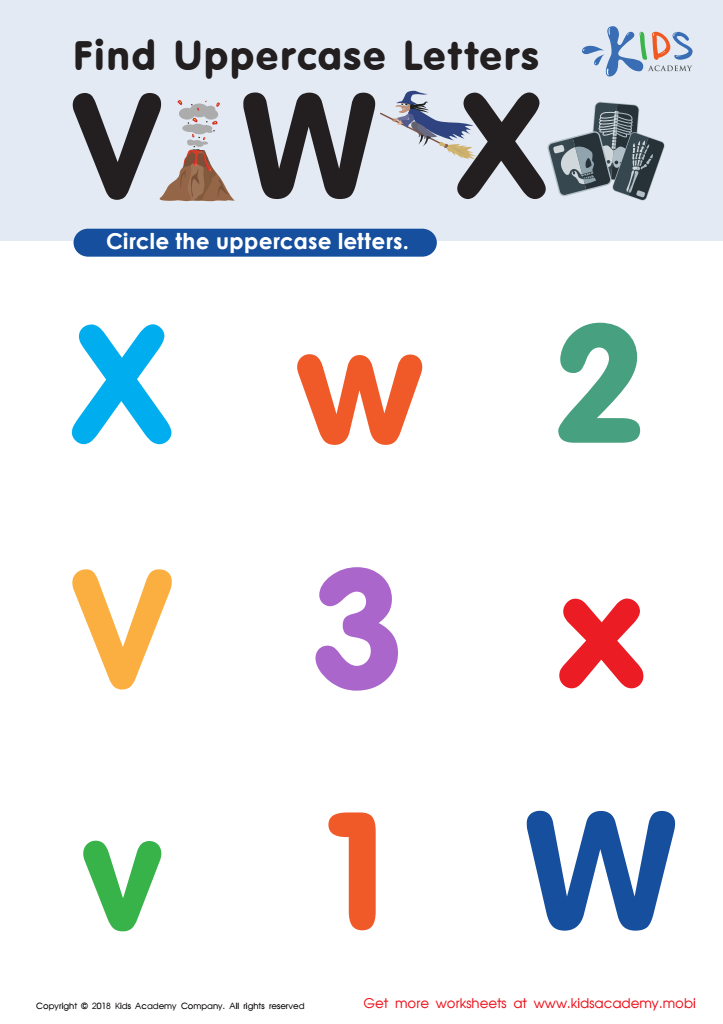
Find Uppercase Letters V, W, X Worksheet
Ask your kids if they can spot the uppercase letters V, W and X hidden in the lowercase letters and numbers, then have them circle them. After that, ask them to give you examples of words beginning with those letters. This worksheet will help them get started.
Find Uppercase Letters V, W, X Worksheet
Worksheet
Join Kids Academy for Free
Who is primarily going to use this learning content?








Visual discrimination and letter recognition are critical skills for 5-year-olds, as they form the foundation of early literacy. Parents and teachers should care deeply about developing these abilities in children for several reasons.
Firstly, visual discrimination is the ability to notice and compare the features of different items and symbols. For young children, this means recognizing distinctions between visually similar letters, such as 'b' and 'd' or 'p' and 'q'. Refining this skill minimizes confusion and errors in reading and writing, ensuring children can more accurately decode words and understand printed material.
Secondly, letter recognition is the capacity to identify letters and understand their corresponding sounds, which is essential for learning to read and write. Proficiency in letter recognition enables children to more easily grasp the alphabetic principle—the understanding that letters and combinations of letters represent sounds in spoken language. This skill is a critical precursor to developing phonemic awareness, spelling, and eventually reading comprehension.
Beyond these cognitive benefits, early success in letter recognition and visual discrimination can foster a love of reading and learning, boost self-esteem, and promote positive attitudes towards school. Therefore, investing time in these foundational skills can set children on a path towards academic achievement and lifelong literacy.







