Filters

6 filtered results

Clear all filters
Favorites
With answer key
Interactive

6 filtered results

Difficulty Level

Grade


Introduce your 5-year-old to the fascinating world of phonics with our engaging Letter Sounds Worksheets! Designed specifically for young learners, these worksheets help children effortlessly learn letter sounds, an essential foundation in early reading skills. Each activity blends fun graphics with effective exercises, ensuring that your child remains engaged and motivated. By curating our content with age-appropriate challenges, we create a perfect balance between learning and play. So, embark on this learning adventure and watch your child transform into a confident reader with our meticulously crafted phonics worksheets tailored just for them!

Check out this FREE Trial Lesson on Letter Sounds for age 5!

The Letter C Sound

Favorites
With answer key
Interactive
  • 5
  • Phonics Skills
  • Letter Sounds
Letter Q Sounds Worksheet

Letter Q Sounds Worksheet

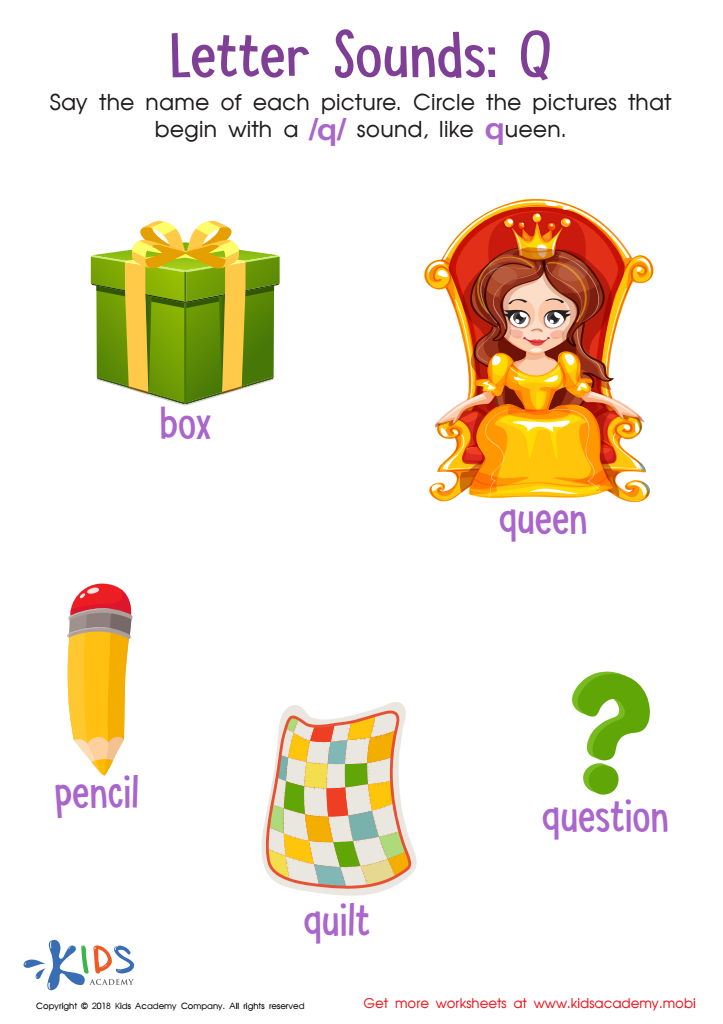
Kids can get confused between "K" and "Q" sounds. Help them learn with this phonics worksheet. They'll name each image and read the word underneath. Point out that words with "Q" also have a "U" which affects how it sounds. Have them circle the matching pictures and watch as they learn this unique letter sound.
Letter Q Sounds Worksheet
Worksheet
Letter B and C Sounds Worksheet

Letter B and C Sounds Worksheet

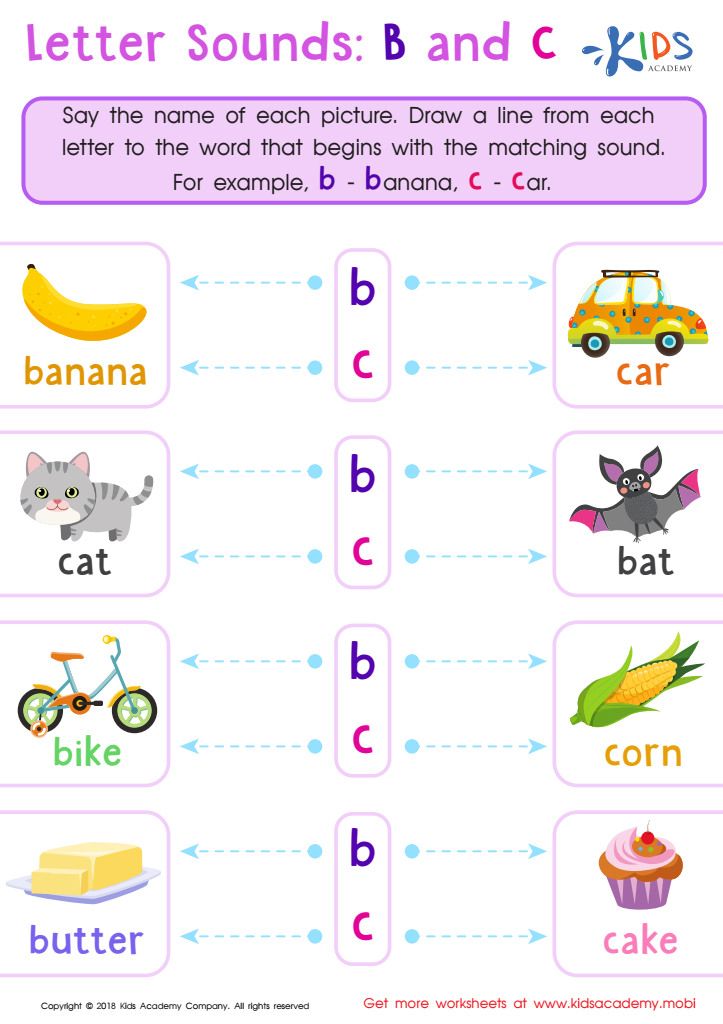
This fun worksheet offers bright, engaging pictures and helps kids learn to distinguish between the sounds of "B" and "C". With the use of pictures and familiar items, kids will trace lines to the correct initial consonant sound, while also developing fine-motor skills. It's a great way to build decoding ability!
Letter B and C Sounds Worksheet
Worksheet
Letter f sounds worksheet

Letter F Sounds Worksheet

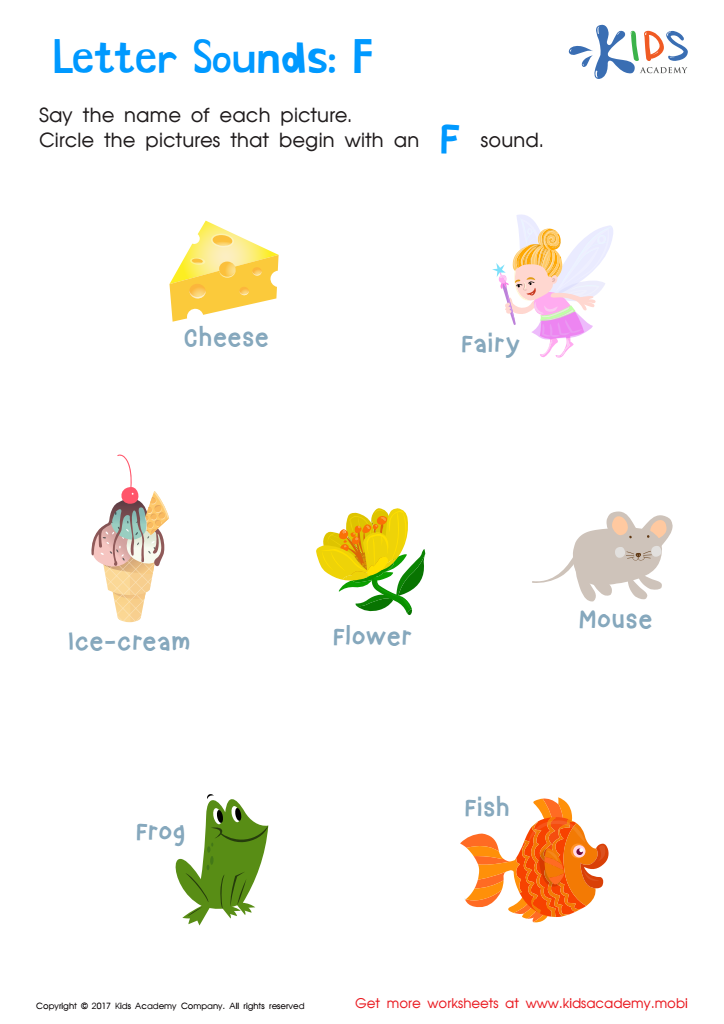
Kids will practice identifying 'f' words, tracing, and coloring the letter F for a great way to learn phonics. Help your child discover the wonders of the letter 'F' with this fun worksheet! Kids will practice identifying 'F' words, tracing and coloring the letter, and building early reading skills. Stimulate their learning and let them connect letter sounds to words they know. An enjoyable way to practice phonics!
Letter F Sounds Worksheet
Worksheet
Letter t sounds worksheet

Letter T Sounds Worksheet

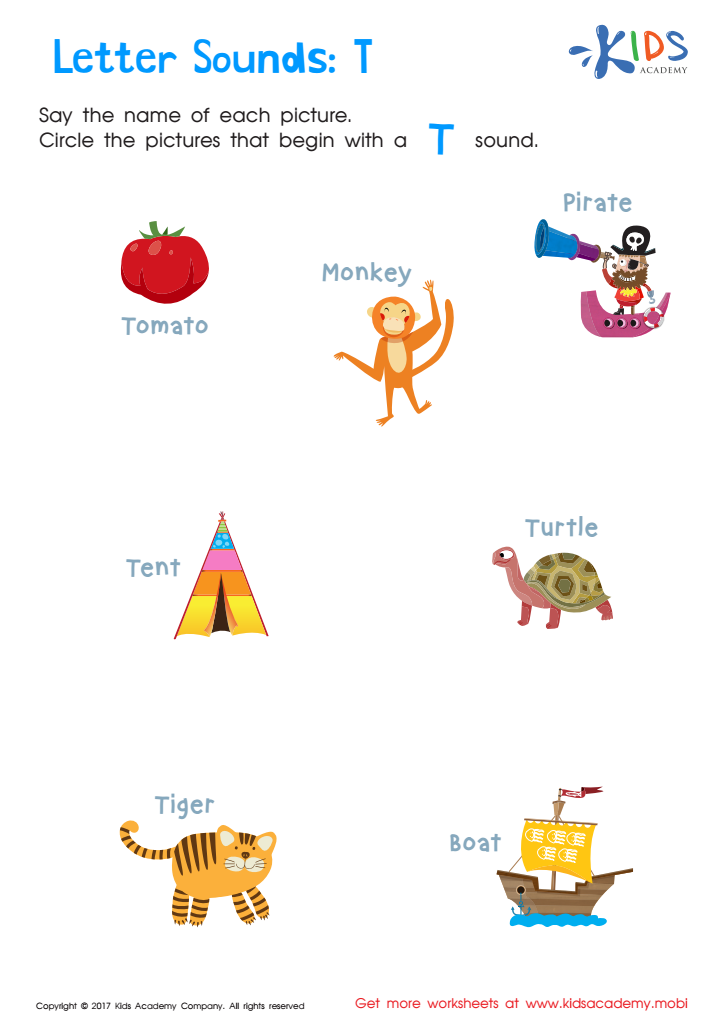
This worksheet is a fun way to help kids learn the t sound. It has familiar pictures and an easy-to-follow format, so kids can quickly recognize and learn the letter t.
Letter T Sounds Worksheet
Worksheet
Letter X Sounds Worksheet
Letter X Sounds Worksheet

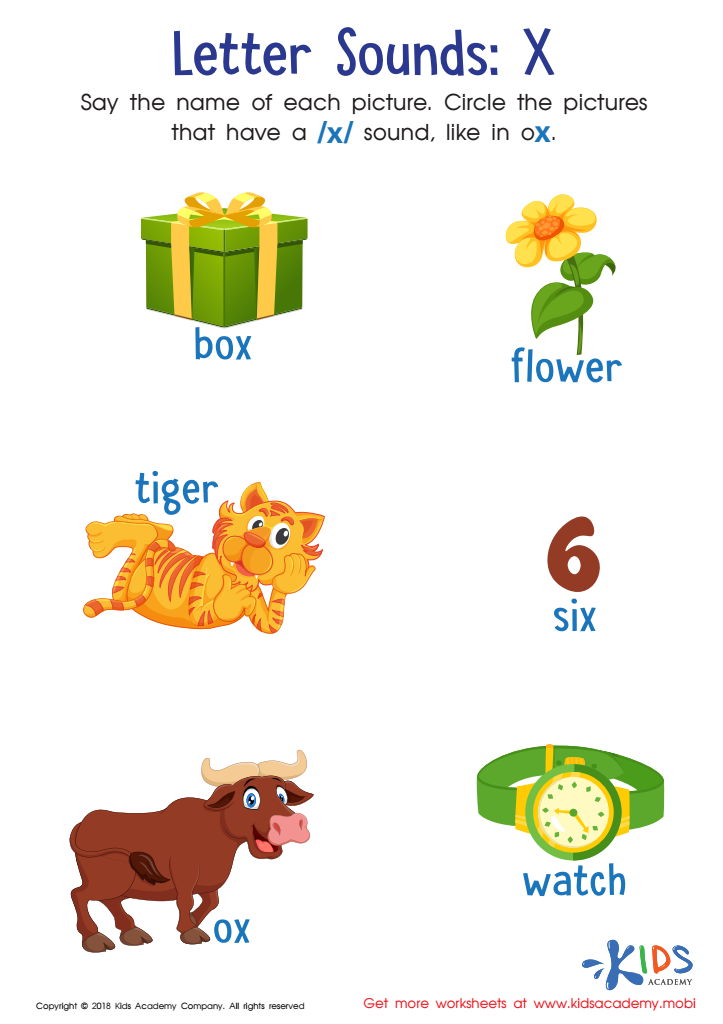
Help your early learner master the letter X sound with this fun, illustrated phonics worksheet. Have kids name the pictures, listening for the pronunciation of each. Have them circle only the pictures with the X sound, then double check by looking for the letter in the word below.
Letter X Sounds Worksheet
Worksheet
Letter l and M Sounds Worksheet


Letter l and M Sounds Worksheet

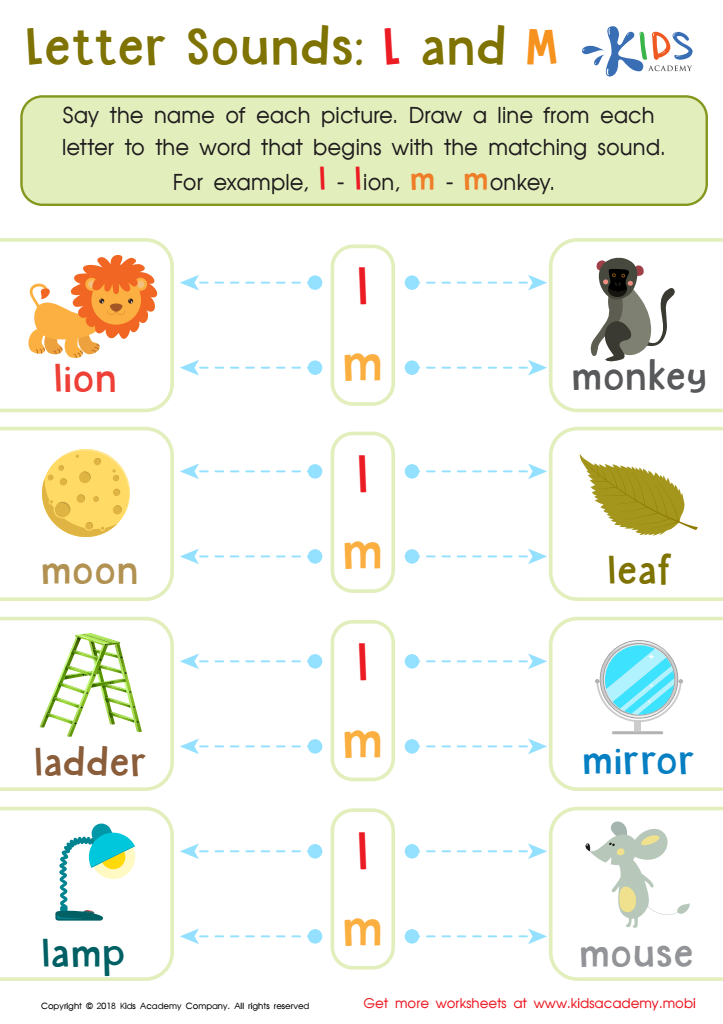
Our Kids Academy phonics practice pages give clear instructions and captivating pictures to pique children's interest. This fun worksheet helps kids identify a picture, then match its beginning sound. Listen and say each word - does it start with "L" or "M"? Trace the dotted line from the letter to the correct match and listen closely to the sound it makes.
Letter l and M Sounds Worksheet

Worksheet


Phonics skills and letter sounds are fundamental building blocks for early literacy, making them crucial for 5-year-olds as they begin their educational journey. Understanding phonics—the relationship between letters and the sounds they represent—facilitates essential reading and writing skills. For starters, phonemic awareness, the ability to hear, identify, and manipulate phonemes, is a key predictor of a child's reading success. When 5-year-olds learn letter sounds, they start to decode words, transforming a seemingly complex language into manageable pieces, thereby enhancing reading fluency.

Additionally, developing phonics skills boosts spelling abilities. When children understand that sounds map to specific letters, they can spell out words more accurately. This foundational knowledge supports vocabulary growth, which is vital for comprehension as they encounter more complex texts. Moreover, early literacy skills fostered through phonics are critically linked to academic success in later years, impacting not only language arts but across all subjects, from mathematics to social studies.

For both teachers and parents, prioritizing phonics ensures that children build the confidence necessary for learning. Children with strong phonics skills are more likely to enjoy reading, setting up a positive learning path. Therefore, investing time and effort into phonics instruction is invaluable for laying a robust educational foundation, shaping confident and capable readers.