Lowercase identification Lowercase/Small Letters Worksheets for 5-Year-Olds
5 filtered results
-
From - To
Boost your child's literacy with our "Lowercase Identification Lowercase/Small Letters Worksheets for 5-Year-Olds." Specially designed for young learners, these engaging worksheets help children master lowercase letter recognition through fun and interactive activities. Each worksheet encourages children to identify, trace, and write small letters, reinforcing their understanding of the alphabet. Ideal for building foundational reading skills, these resources offer a playful approach to learning, ensuring that your child feels confident and excited about their progress. Perfect for at-home practice or classroom use, our worksheets set your child on a successful academic journey.
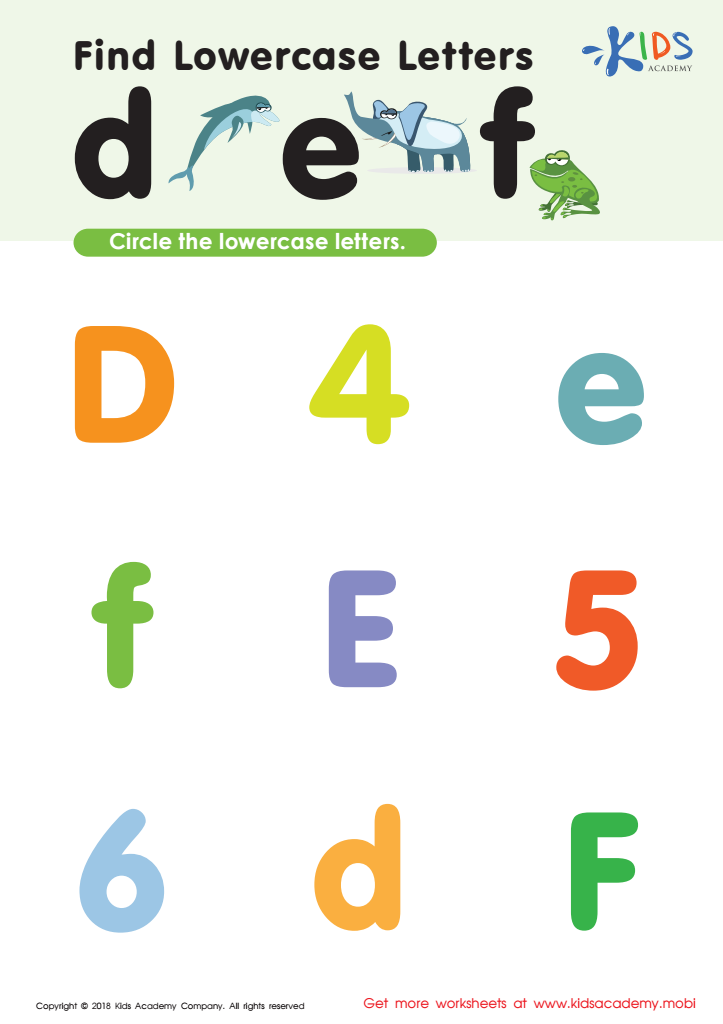
Find Lowercase Letters d e f Worksheet
 Assign to My Students
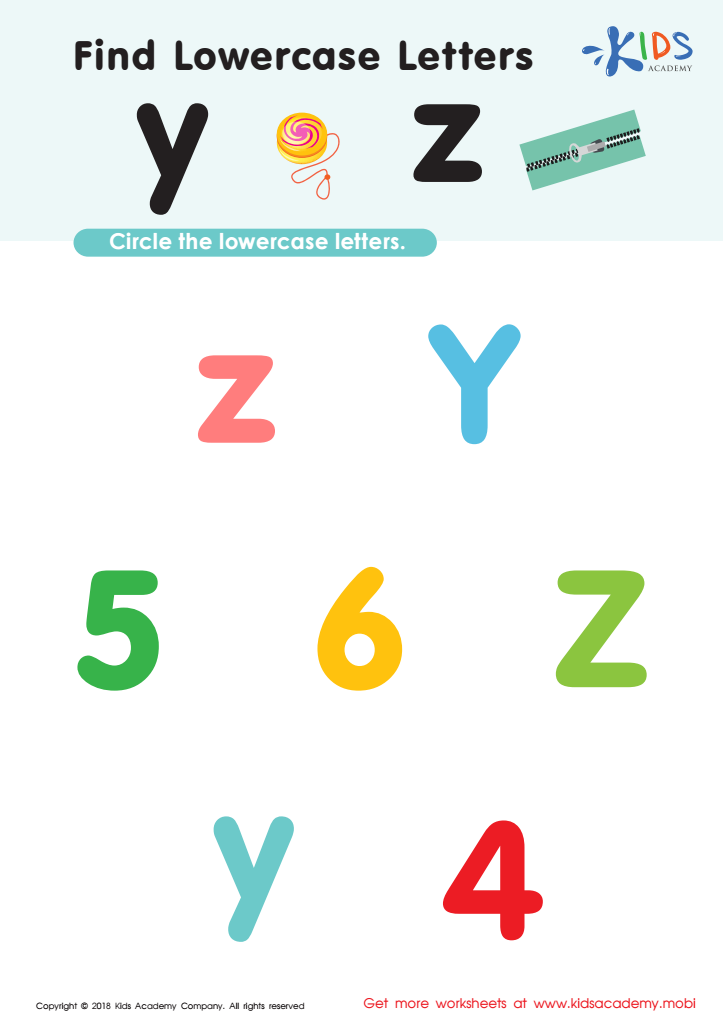
Find Lowercase Letters y z Worksheet
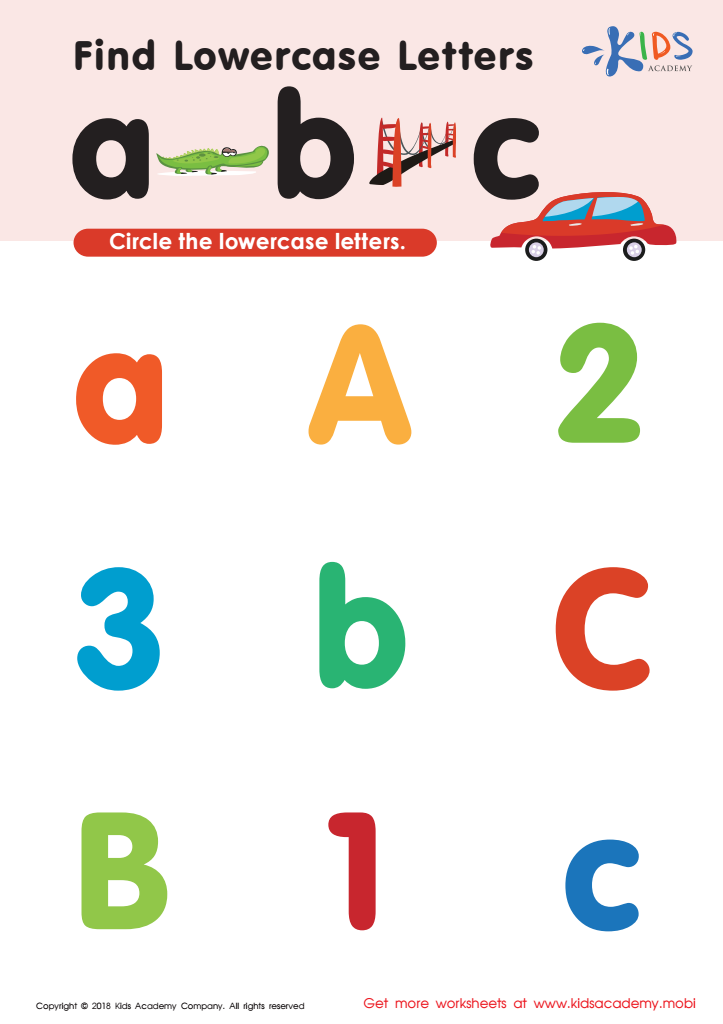
Find lowercase letters a b c Worksheet
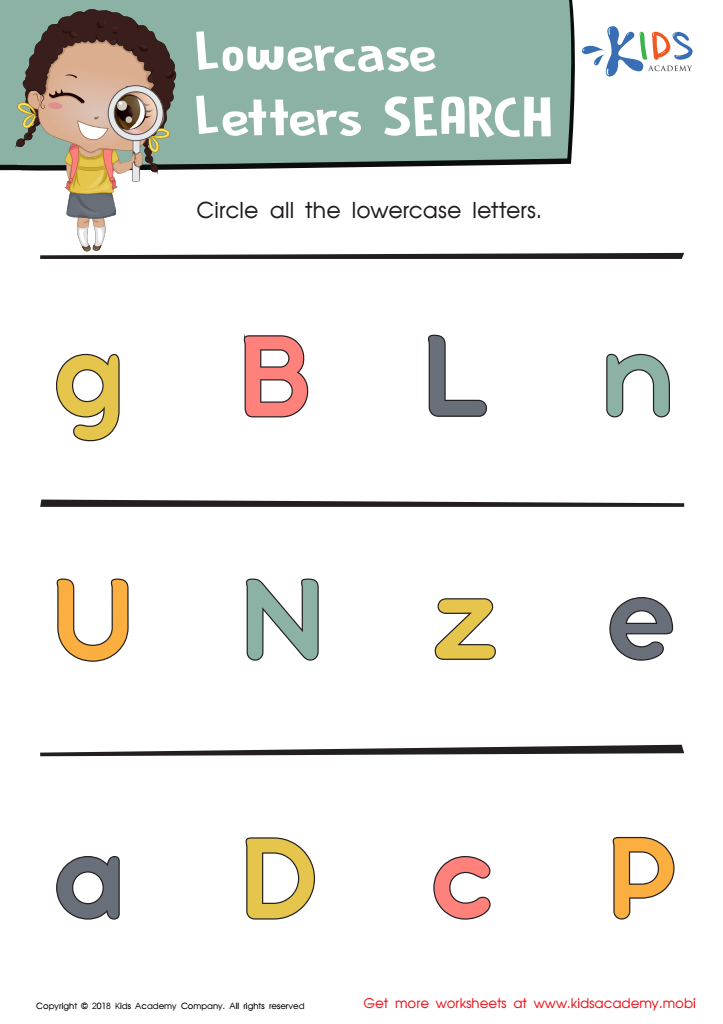
Lowercase Letters Search: Assessment Worksheet
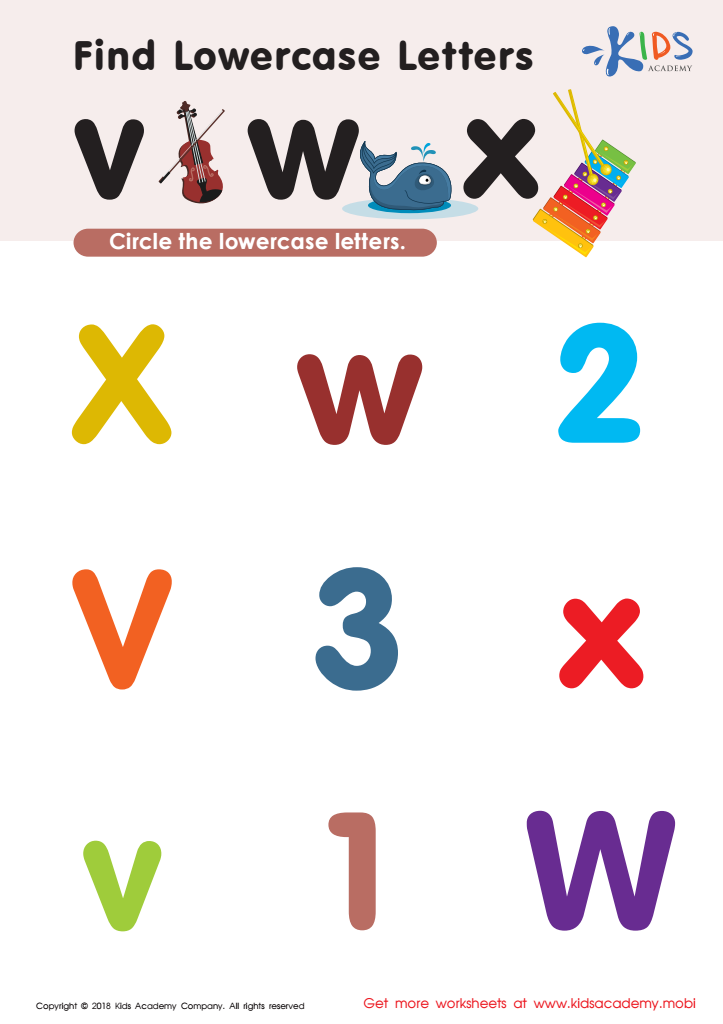
Find Lowercase Letters v w x Worksheet


Understanding and identifying lowercase letters is crucial for 5-year-olds as they lay the foundation for literacy and effective communication. Young children are often first introduced to uppercase letters because they are easier to recognize and write, but lowercase letters make up the majority of written text they will encounter, from storybooks to classroom worksheets. This exposure is essential for young learners transitioning to independent reading and writing.
Mastery of lowercase letter identification supports early reading skills. When children can effortlessly recognize lowercase letters, they become more efficient at decoding words, a fundamental component of fluent reading. Additionally, learning lowercase letters broadens their understanding of letter-sound relationships, an integral part of phonemic awareness. This, in turn, aids in spelling, vocabulary building, and overall language comprehension.
For teachers and parents, reinforcing the recognition of lowercase letters can also foster a positive attitude toward learning. Encouraging proficiency in both uppercase and lowercase letters provides a sense of achievement and confidence in young learners as they begin to realize they can understand and produce written language.
Investing time and resources in lowercase letter identification ensures that children develop the necessary skills for academic success, enhances their ability to communicate, and ultimately sets a strong foundation for continued educational development.