Vowel Recognition Missing Vowels Worksheets for 5-Year-Olds
5 filtered results
-
From - To
Boost your 5-year-old's reading skills with our engaging "Vowel Recognition Missing Vowels Worksheets." Specifically designed for young learners, these worksheets offer a fun, interactive way to master vowel sounds and improve phonemic awareness. Through charming illustrations and age-appropriate exercises, children fill in the missing vowels in familiar words, reinforcing their understanding of A, E, I, O, and U sounds. Ideal for both classroom and at-home learning, our worksheets keep kids entertained while developing essential reading foundations. Download our free printable vowel recognition sheets today and watch your child's confidence and literacy skills soar!
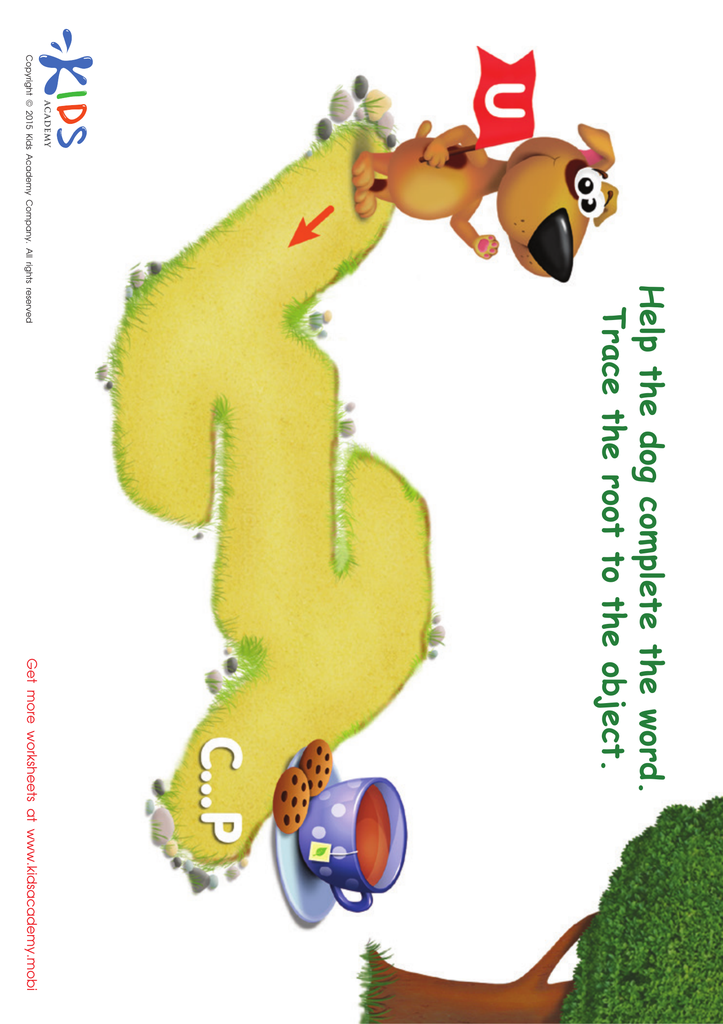
Short Vowel Sound U Worksheet Worksheet
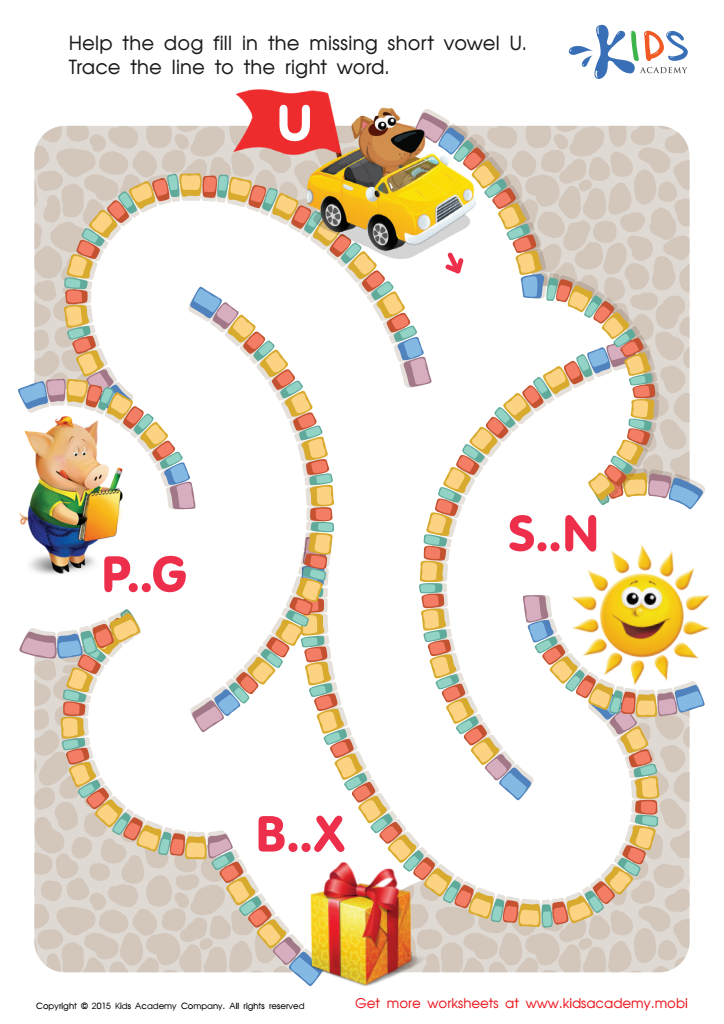
Short Vowel Sound U Worksheet
 Assign to My Students
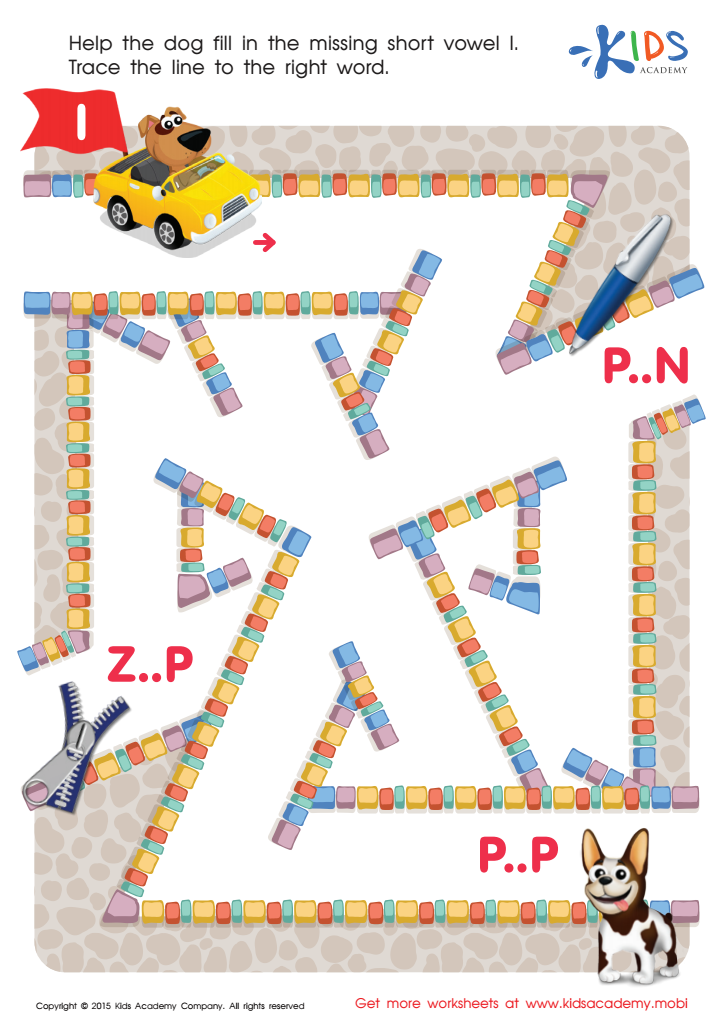
Short Vowel Sound I Worksheet
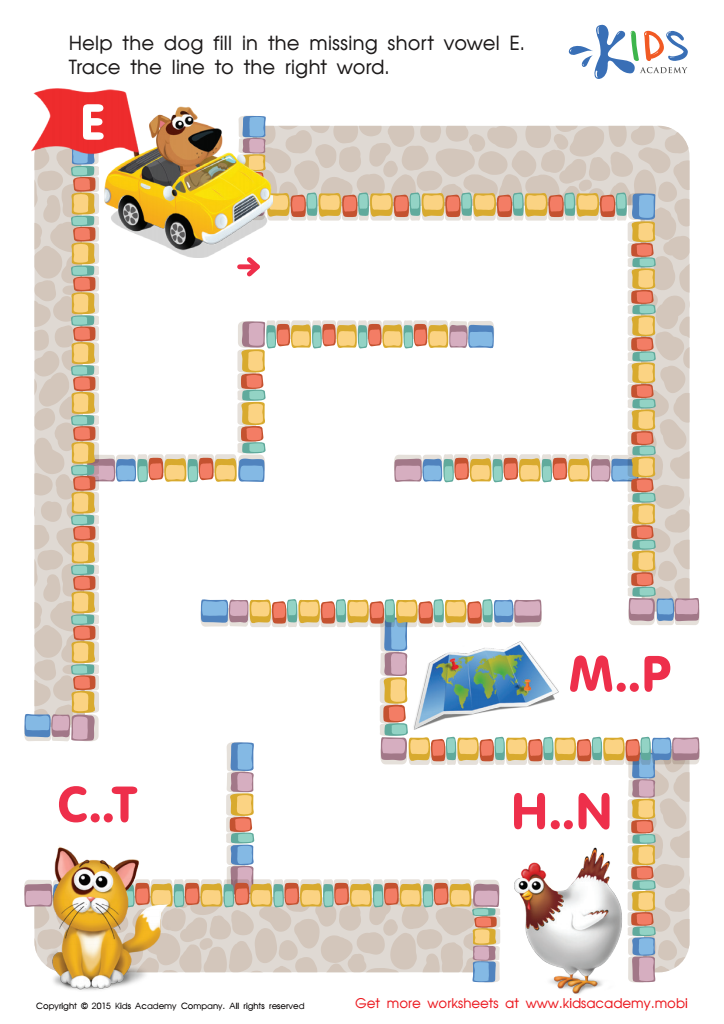
Short Vowel Sound E Worksheet
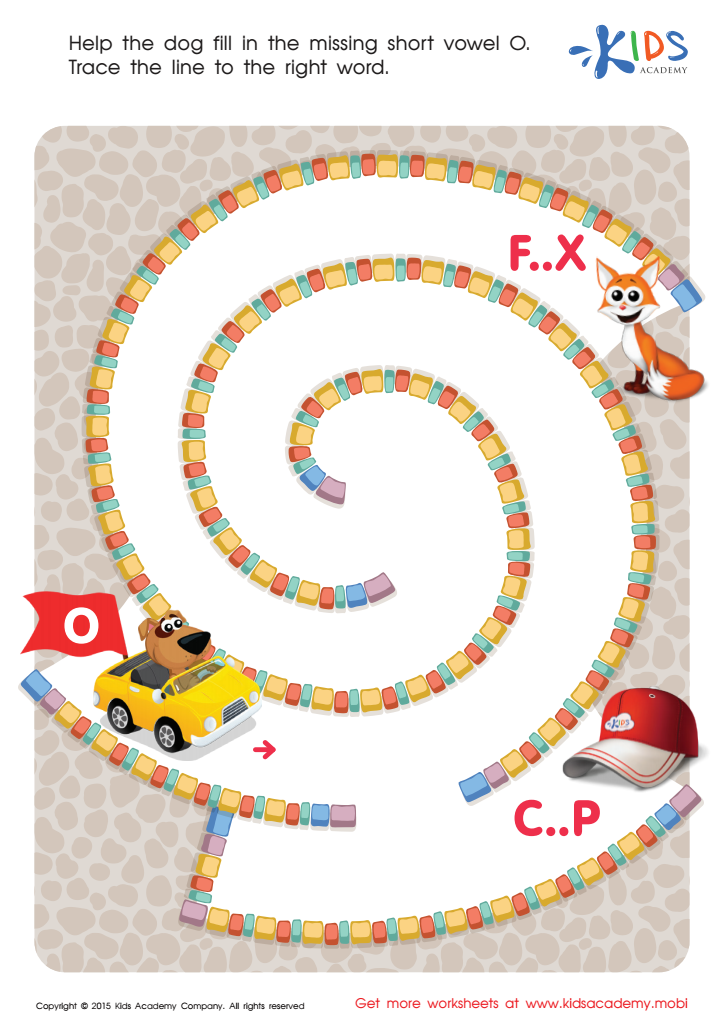
Short Vowel Sound O Worksheet


Vowel recognition and the ability to identify missing vowels are critical developmental milestones for 5-year-olds and can profoundly impact their future reading and writing abilities. For early learners, vowels are the building blocks of language and play a crucial role in forming words and syllables. When children recognize vowels and learn to identify missing vowels in words, they develop phonemic awareness, which is the understanding that words are made up of individual sounds or phonemes. This awareness is foundational for effective decoding skills, enabling children to read unfamiliar words by breaking them down into smaller, manageable parts.
Improving vowel recognition also aids in spelling, as it helps children grasp the concept of sound-symbol correspondence, where they learn that specific letters match specific sounds. This understanding is key to spelling words correctly by identifying each sound within the word. Moreover, these skills enhance listening comprehension and verbal communication, as children become more adept at hearing and distinguishing the sounds in spoken language.
Engaging 5-year-olds in vowel recognition activities provides them with the critical skills needed for literacy, fostering a positive attitude towards learning. Prioritizing these early literacy skills sets the stage for academic success, confidence, and a lifelong love of reading and writing. Parents and teachers who support this development give children a substantial advantage in their educational journey.