Color Identification Phonics Worksheets for 5-Year-Olds
3 filtered results
-
From - To
Enhance your child's learning experience with our engaging Color Identification Phonics Worksheets designed specifically for 5-year-olds! These worksheets combine vibrant colors with phonics practice, making learning fun and interactive. Children will develop essential color recognition skills while reinforcing their understanding of letters and sounds. Each worksheet is thoughtfully created to captivate young learners, promoting active participation through various activities and exercises. Ideal for at-home learning or classroom use, our resources support early literacy development in a colorful and imaginative way. Download our Color Identification Phonics Worksheets today and watch your child's confidence and skills flourish! Perfect for budding young learners!
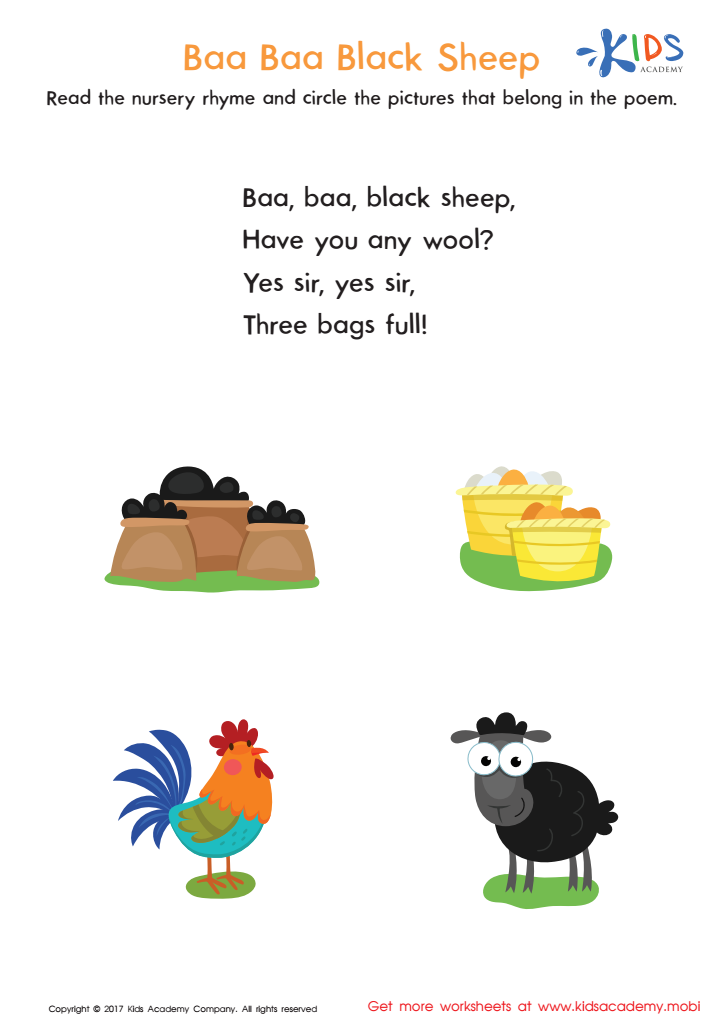
Baa Baa Black Sheep Printable
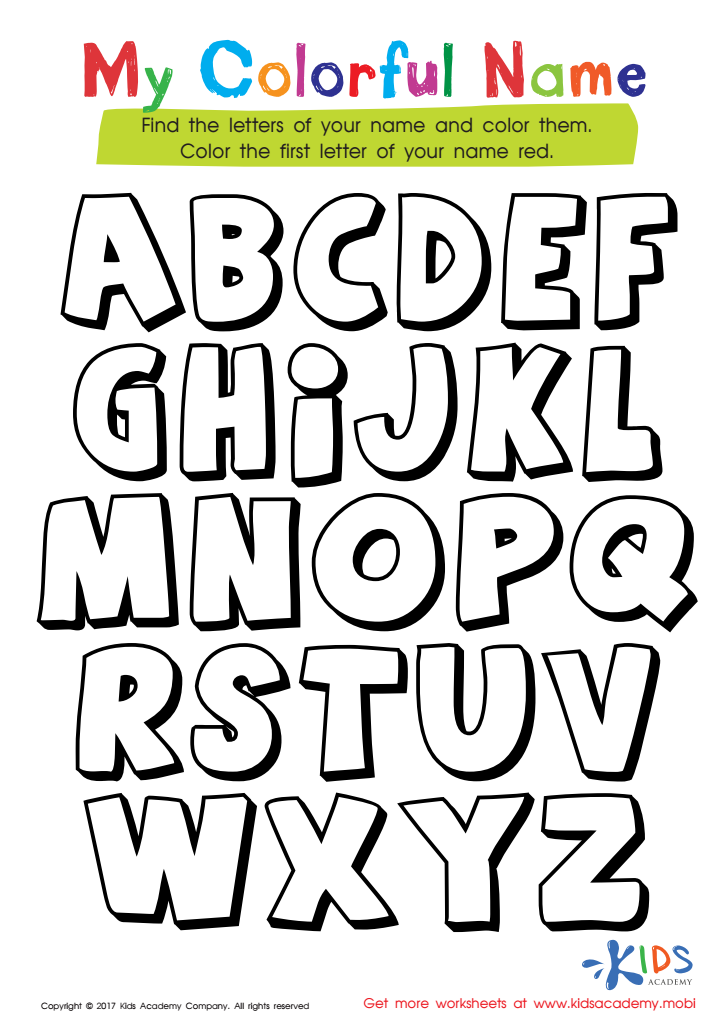
My Colorful Name Worksheet
 Assign to My Students
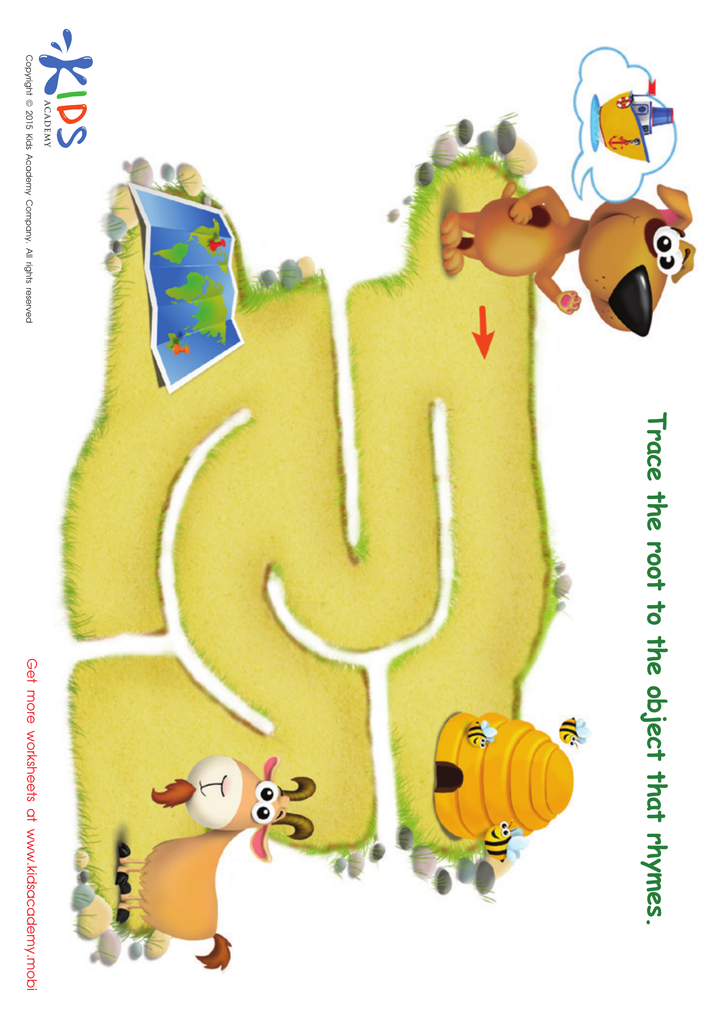
Boat Rhyming Words Worksheet








Color Identification Phonics is an essential tool for fostering early literacy in 5-year-olds, bridging visual recognition with phonetic understanding. Learning about colors while engaging with phonics not only makes educational experiences vibrant and memorable but also caters to multiple learning styles. For teachers and parents, it provides an opportunity to combine visual stimuli with auditory components, enhancing overall cognitive development.
Understanding colors aids in establishing an organized mental framework. Teaching phonics through color identification helps children associate sounds with their corresponding letters more effectively, making the learning process more tangible and enjoyable. For instance, using red for the letter "R" not only aids in color recognition but reinforces the foundational sound of that letter.
Furthermore, engaging activities centered around colors can motivate children, fostering their enthusiasm toward learning. This integrated approach cultivates critical skills like fine motor coordination, attention to detail, and observational skills that are fundamental for later academic success.
Investing time in Color Identification Phonics empowers children to connect their creative world with literacy, preparing them for a future where reading becomes an integral and enjoyable part of their lives. Understanding this connection is crucial for parents and teachers who aim to nurture well-rounded and eager young learners.







