Letter-sound correlation Phonics Worksheets for 5-Year-Olds
6 filtered results
-
From - To
Discover our engaging Letter-Sound Correlation Phonics Worksheets designed specifically for 5-year-olds! These resources support early literacy development by helping children recognize the connection between letters and their corresponding sounds. Enhance phonemic awareness with fun, interactive activities that promote reading readiness. Our worksheets feature colorful illustrations to capture your child's attention while reinforcing essential skills. Easy to print and use at home or in the classroom, these worksheets are perfect for young learners to practice letter identification and sound matching. Foster a love for reading and build a strong foundation for future success with our phonics worksheets tailored for early learners!
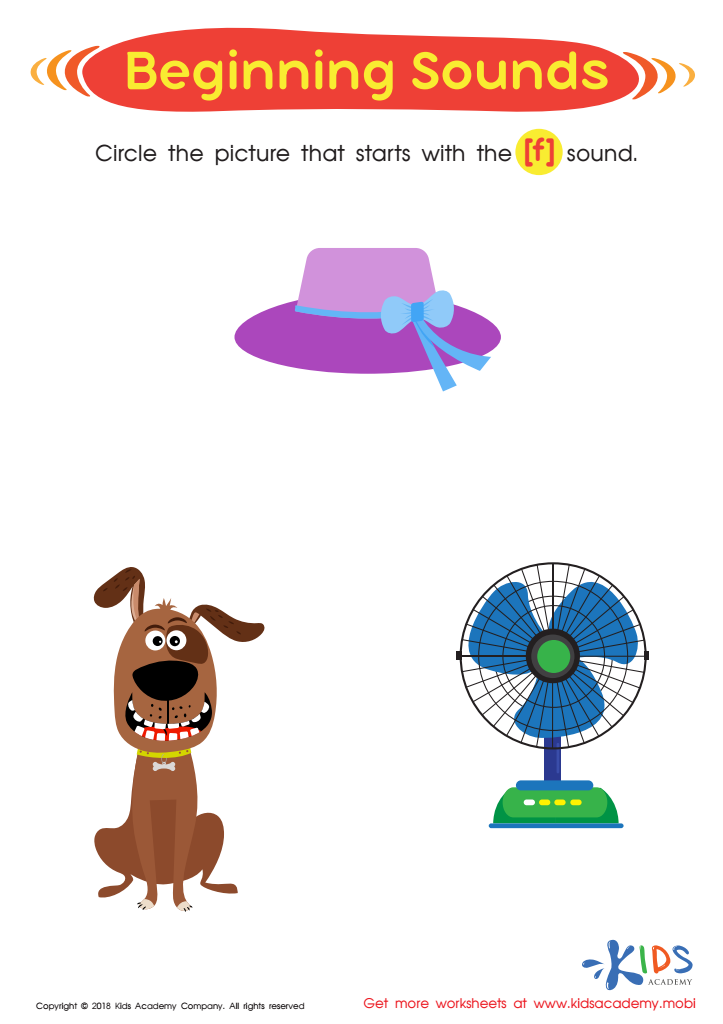
Beginning Sounds Assessment Printable
 Assign to My Students
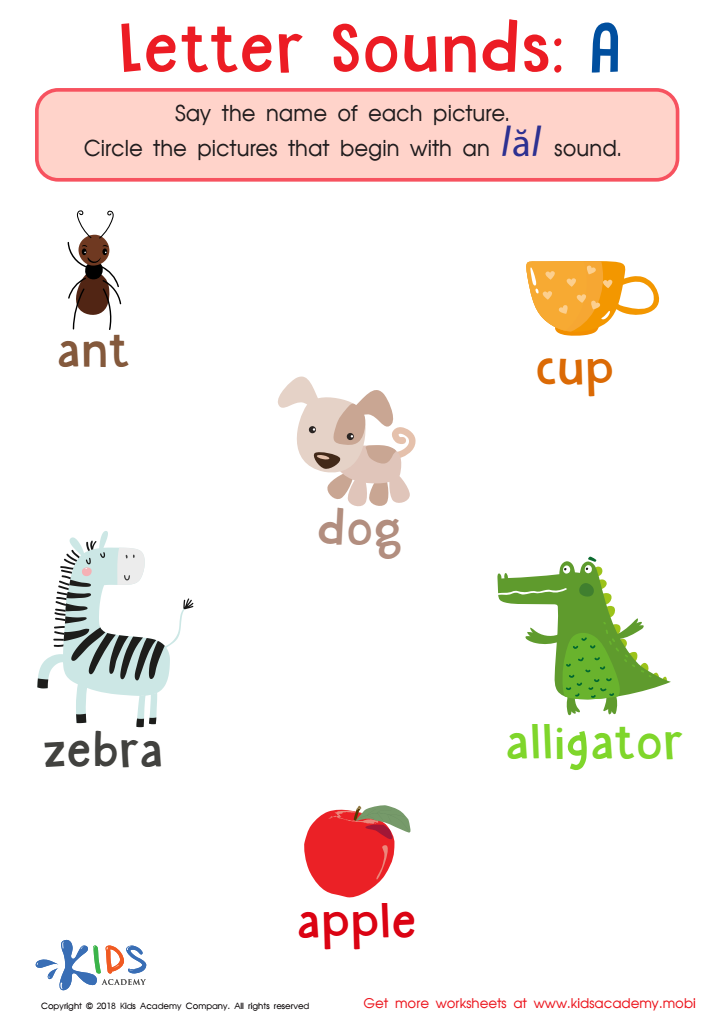
Letter A Sounds Worksheet
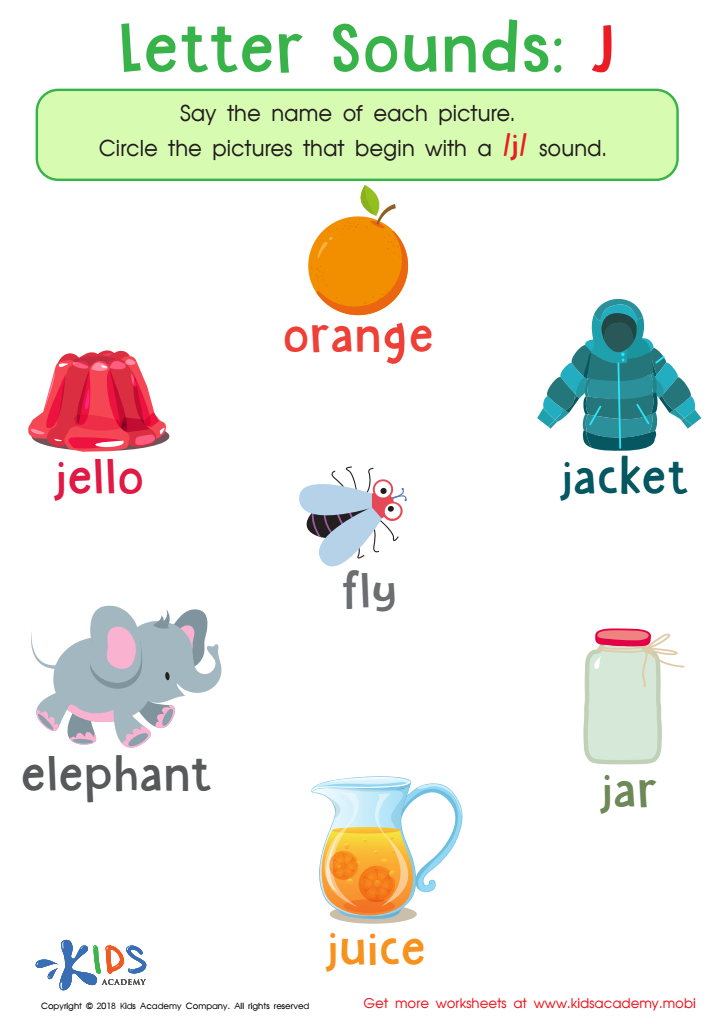
Letter Sounds: J Printable Worksheet
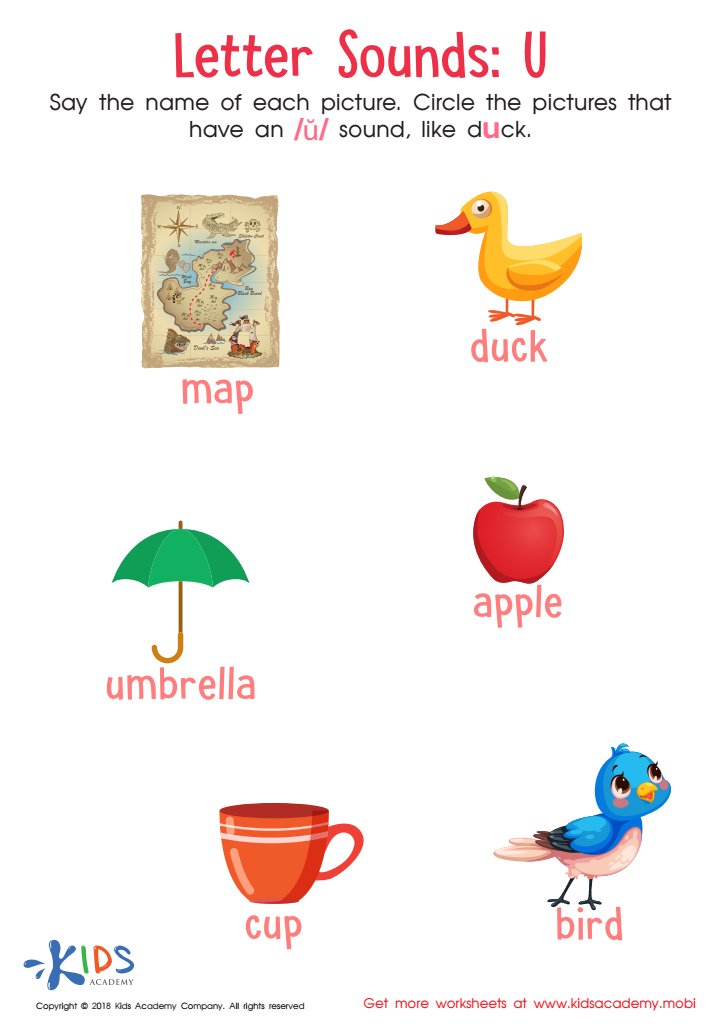
Letter U Sounds Worksheet
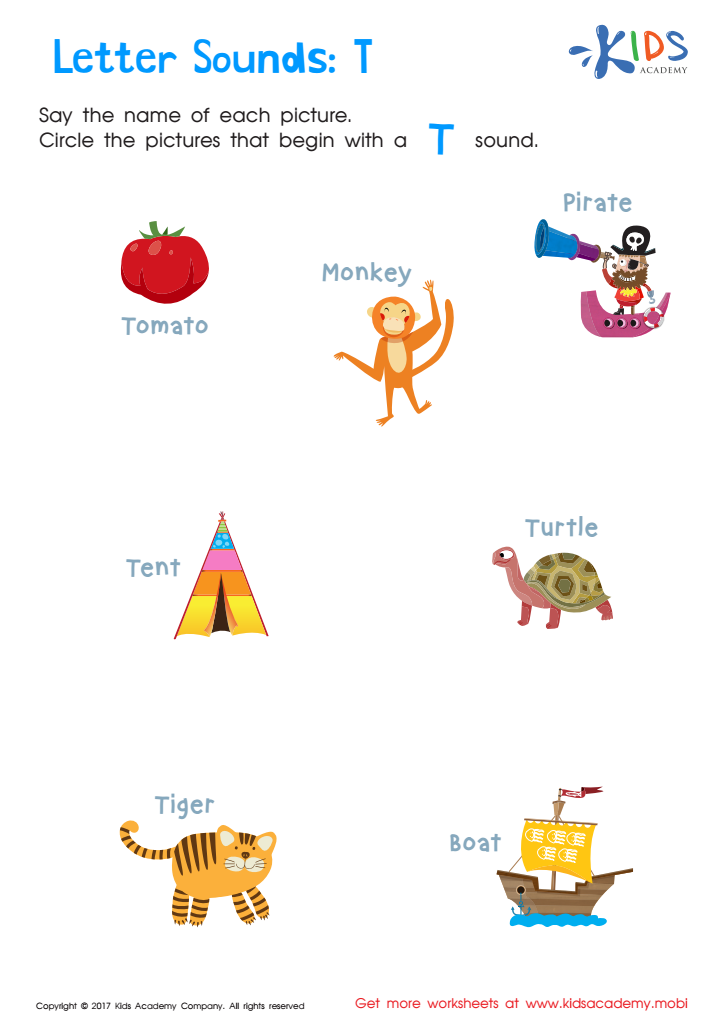
Letter T Sounds Worksheet
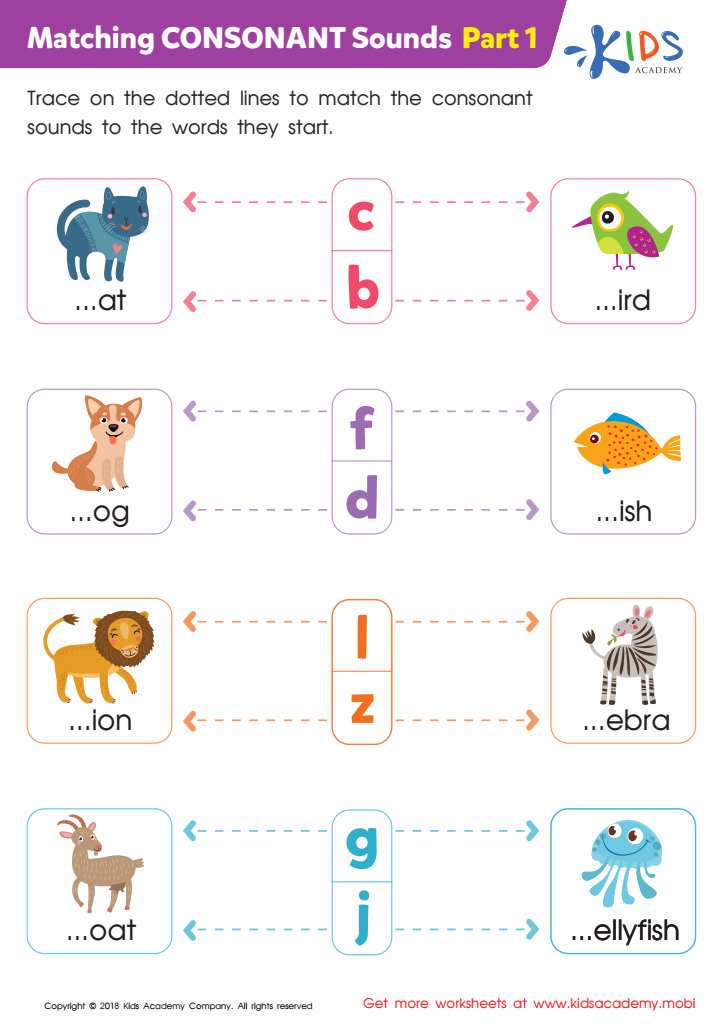
Matching Consonant Sounds: Part 1 Worksheet








Parents and teachers should prioritize letter-sound correlation, or phonics, for 5-year-olds as it lays the foundation for literacy development. Phonics instruction teaches children how letters are linked to sounds, enabling them to decode words and read independently. This skill is crucial as it allows young learners to approach new words with confidence, fostering a love for reading and learning.
Early exposure to phonics significantly impacts a child's ability to comprehend and communicate effectively. Children equipped with a strong phonics understanding are often better readers and writers, which positively influences their overall academic performance. Moreover, these skills are vital for successful participation in more complex literacy tasks as they progress through school.
Furthermore, phonics education can promote critical thinking. Children who grasp phonics can build their vocabulary by sounding out unfamiliar words, cultivating curiosity and engagement with language.
Involving parents in phonics-based activities, like reading together and playing sound games, strengthens the home-learning connection, reinforcing skills taught in the classroom. By emphasizing letter-sound correlation, parents and teachers collaboratively nurture confident, capable readers, ensuring a brighter educational future for young learners.







