Reading skills development Phonics Worksheets for 5-Year-Olds
5 filtered results
-
From - To
Enhance your child's reading skills with our engaging Phonics Worksheets designed specifically for 5-year-olds! Our resources focus on blending sounds, recognizing letters, and building vocabulary through interactive and fun activities. These worksheets promote early literacy by helping children comprehend phonetic concepts in a playful manner. With a variety of exercises tailored to young learners, your child will develop crucial reading skills, setting the foundation for a lifelong love of reading. Dive into a world of colorful worksheets that make learning enjoyable while ensuring your little one gains confidence in their reading abilities. Start their phonics journey today!
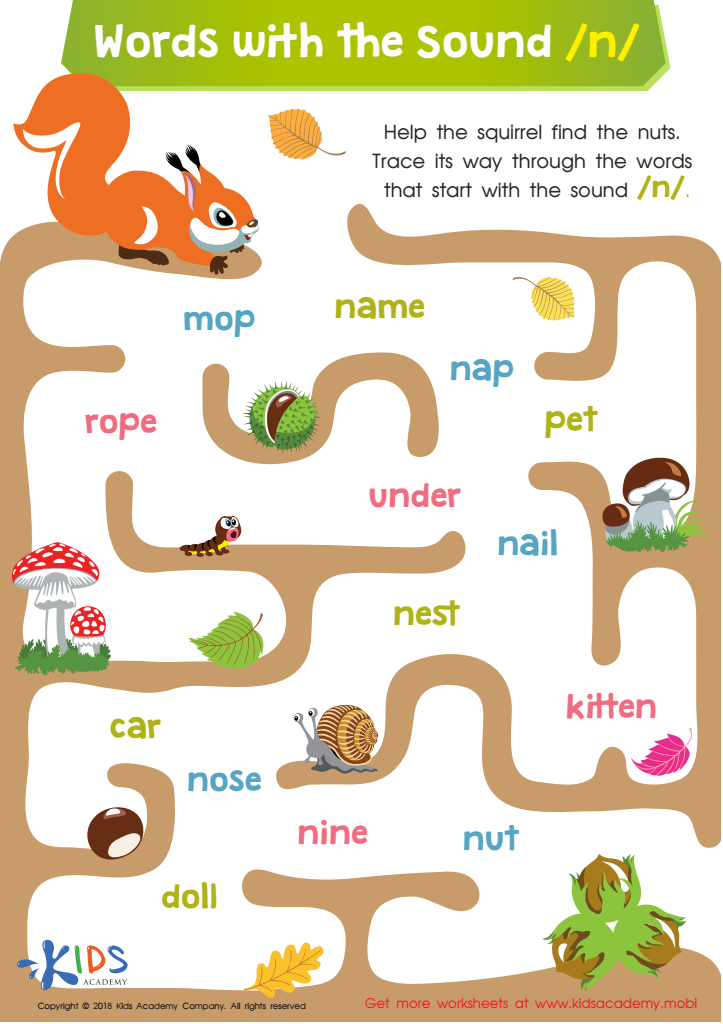
Words with Sound N Reading Worksheet
 Assign to My Students
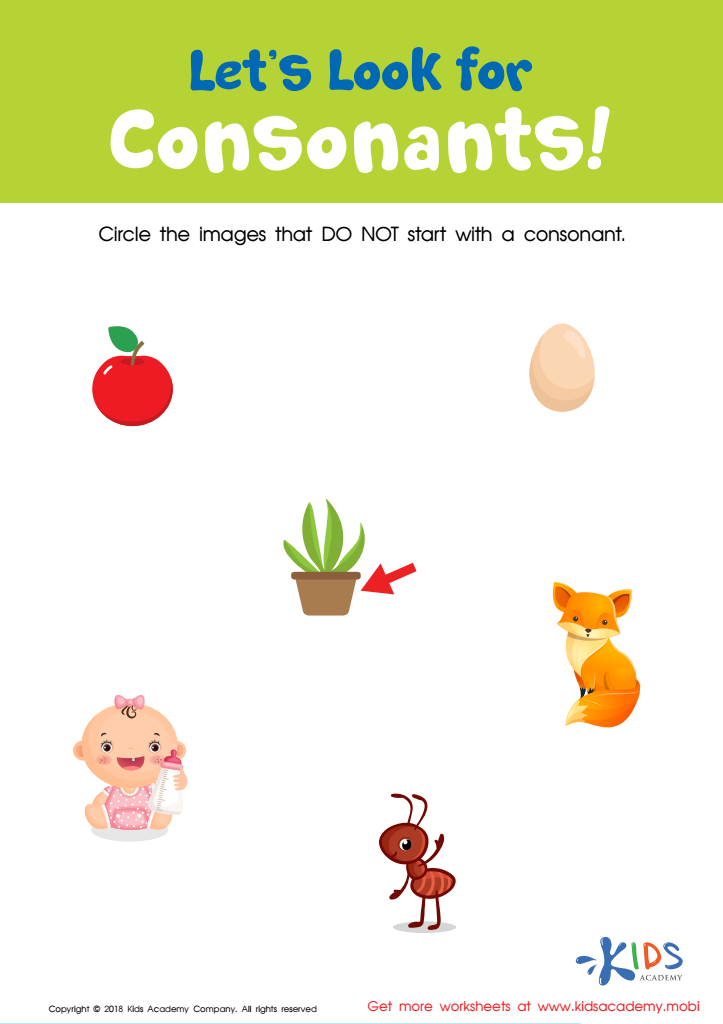
Let's Look for Consonants Worksheet
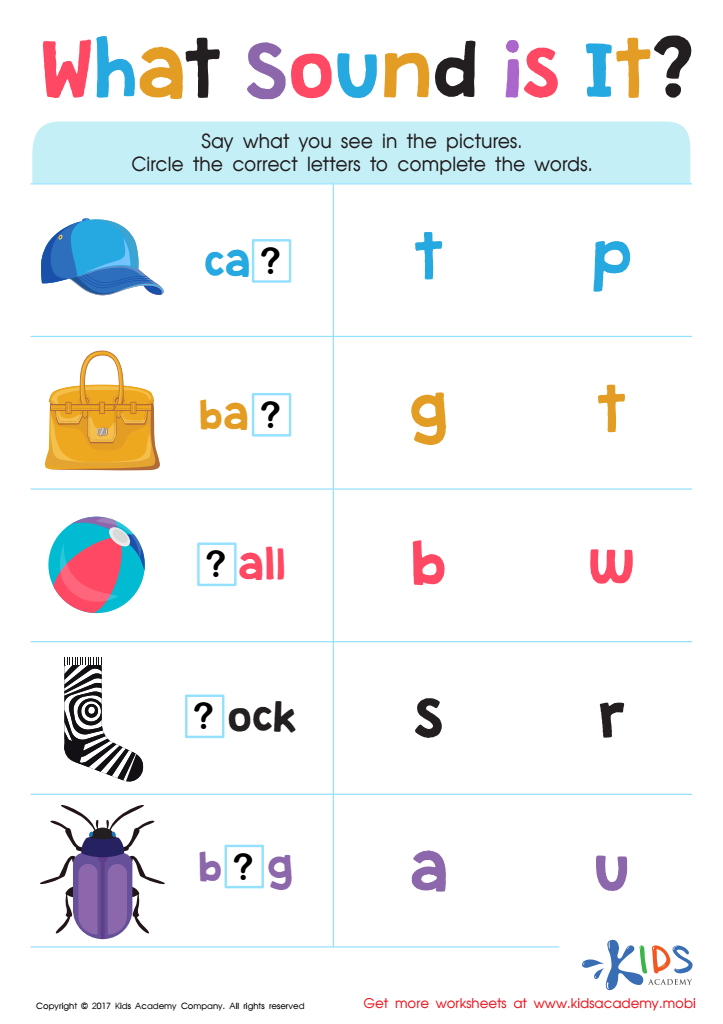
What Sound Is it? Worksheet
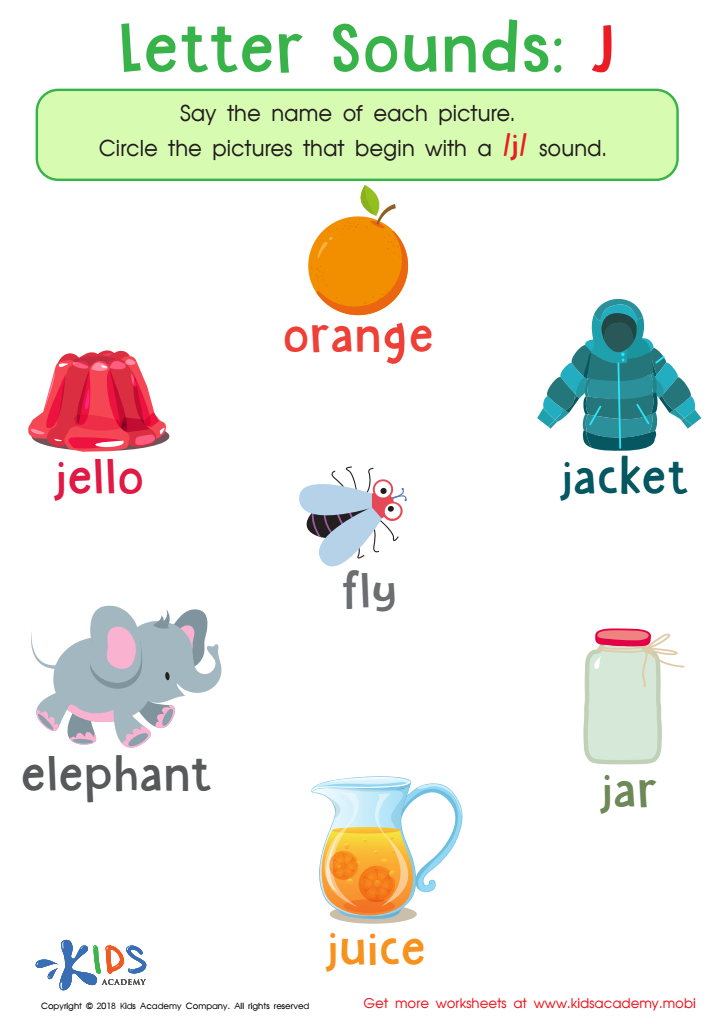
Letter Sounds: J Printable Worksheet
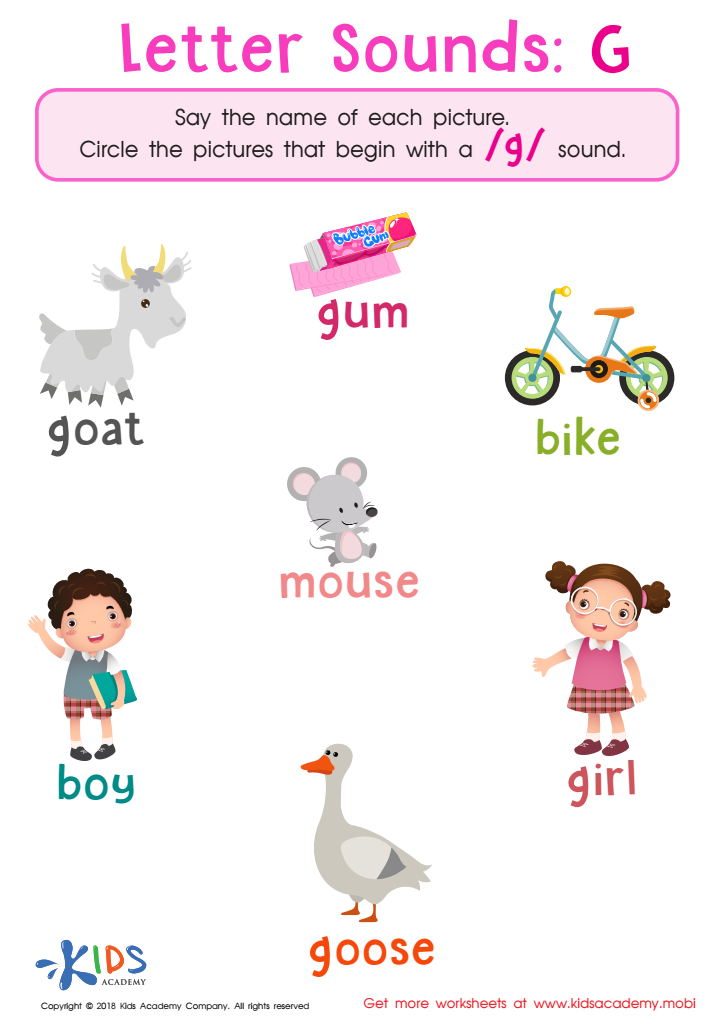
Letter G Sounds Worksheet








Reading skills, especially phonics, are fundamental for 5-year-olds as they lay the groundwork for successful literacy development. Phonics, the method of teaching reading by correlating sounds with letters or groups of letters, helps young learners decode words. It enhances their ability to read independently, fostering confidence and a love for books.
Parents and teachers should prioritize phonics instruction because it enables children to make connections between sounds and written language, an essential skill for reading fluency. A solid phonics foundation leads to improved comprehension, allowing kids to engage more deeply with texts and develop critical thinking skills. By mastering these skills early, children become enthusiastic readers, which is linked to academic success and lifelong learning.
Moreover, phonics development addresses varying learning styles and needs. Some children may struggle with traditional literacy methods, while phonics offers a structured approach that can be adapted to different learning rates. Engaging and interactive phonics activities can also make learning enjoyable, thus encouraging more participation.
Ultimately, emphasizing phonics in early education not only equips children with vital reading skills but also cultivates a love for learning that can positively influence their overall educational journey. Both parents and teachers play crucial roles in fostering this essential component of literacy.







