Letter recognition Tracing Letters Worksheets for 5-Year-Olds - Page 2
26 filtered results
-
From - To
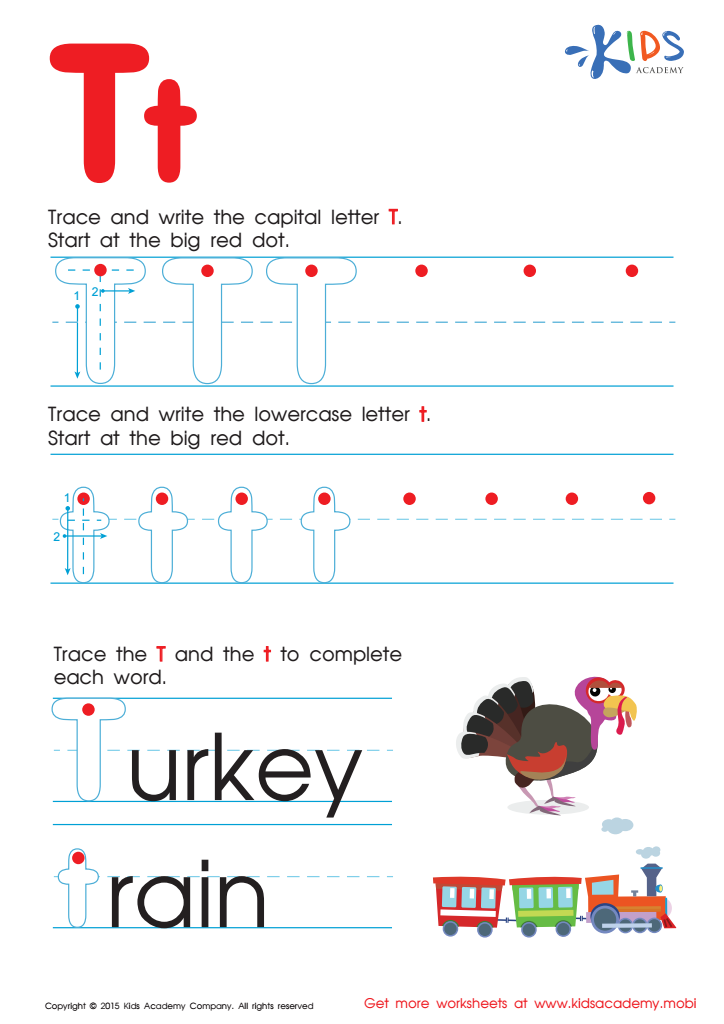
Letter T Tracing Page
 Assign to My Students

Letter D Tracing Page







Parents and teachers should care deeply about letter recognition and tracing letters for 5-year-olds because these skills are foundational to literacy development. At this critical age, children are just beginning to grasp the basics of reading and writing, and mastering letter recognition sets the stage for future academic success. Recognizing letters helps children connect visual symbols to their respective sounds, an essential skill for phonemic awareness and word formation.
Tracing letters, meanwhile, is a vital exercise for developing fine motor skills, hand-eye coordination, and muscle memory. By physically tracing the letters, children not only learn their shapes but also gain the muscle control needed to write them independently. This tactile activity helps in reinforcing neural pathways related to reading and writing.
Moreover, activities involving letter recognition and tracing are often engaging and interactive, which keeps young learners motivated. As children successfully identify and trace letters, they build confidence in their learning abilities and develop a sense of achievement. This positive reinforcement inspires a love for reading and writing, attributes essential for lifelong learning. In essence, investing time in these foundational skills equips children with the tools they need to excel in their future educational journey.








