Alphabet familiarity Upper & Lowercase Letters Worksheets for 5-Year-Olds
7 filtered results
-
From - To
Enhance your child's alphabet familiarity with our engaging Upper and Lowercase Letters Worksheets, designed specifically for 5-year-olds! These interactive worksheets facilitate learning through colorful and playful activities, making the identification of uppercase and lowercase letters fun and enjoyable. Each worksheet provides opportunities for tracing, matching, and recognition, ensuring a strong foundation in letter comprehension. By incorporating visual elements and hands-on practice, children will improve their letter recognition skills, boost their confidence, and prepare for future literacy learning. Explore our collection and watch your little ones thrive as they embark on their alphabetical journey! Perfect for homeschooling, enrichment activities, or classroom use.
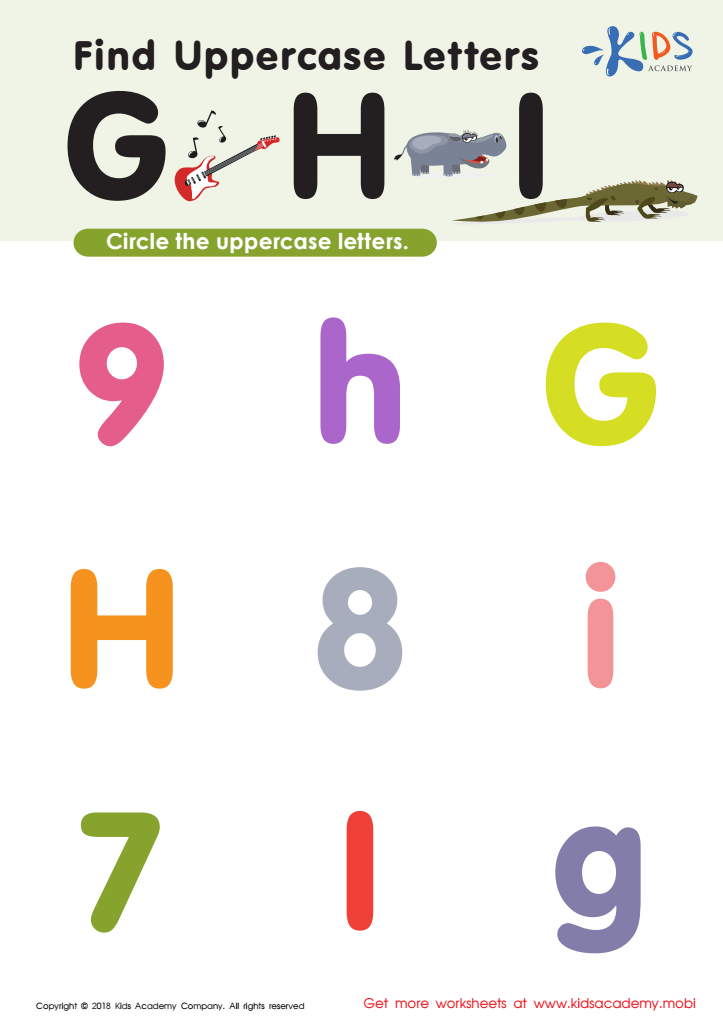
Find Uppercase Letters G, H, and I Worksheet
 Assign to My Students


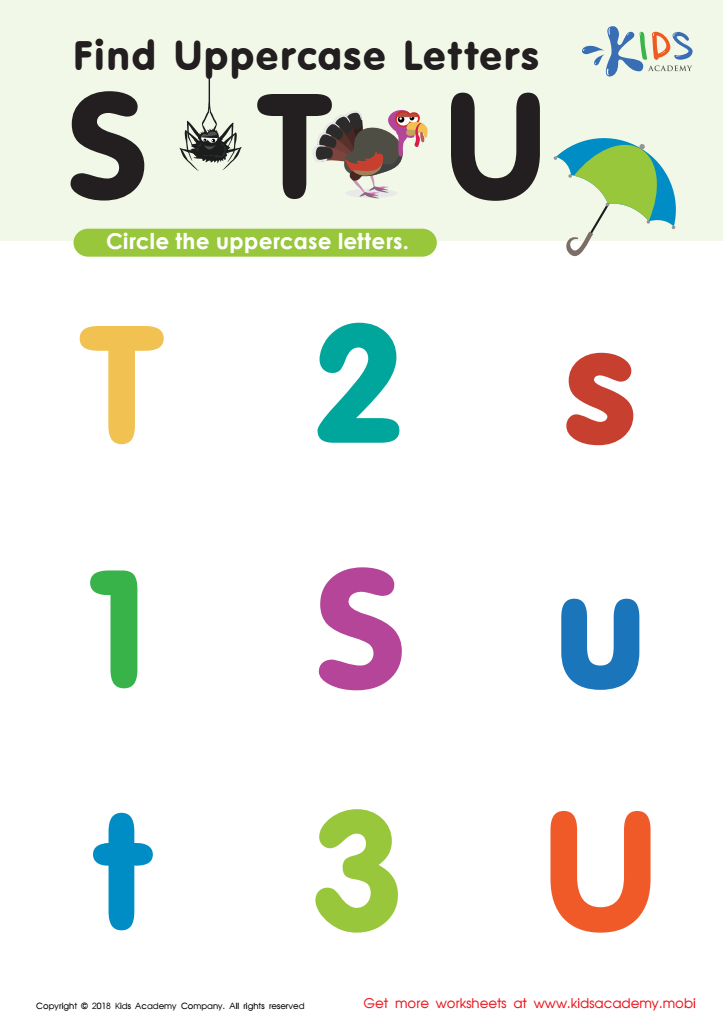
Find Uppercase Letters Worksheet
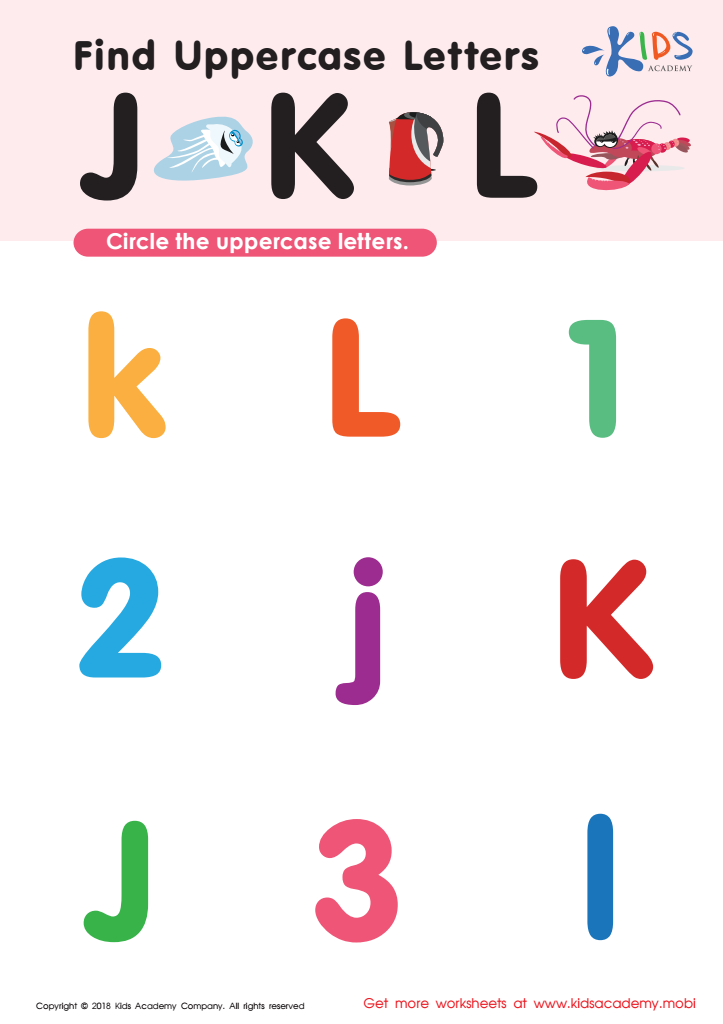
Find Uppercase Letters J, K, and L Worksheet
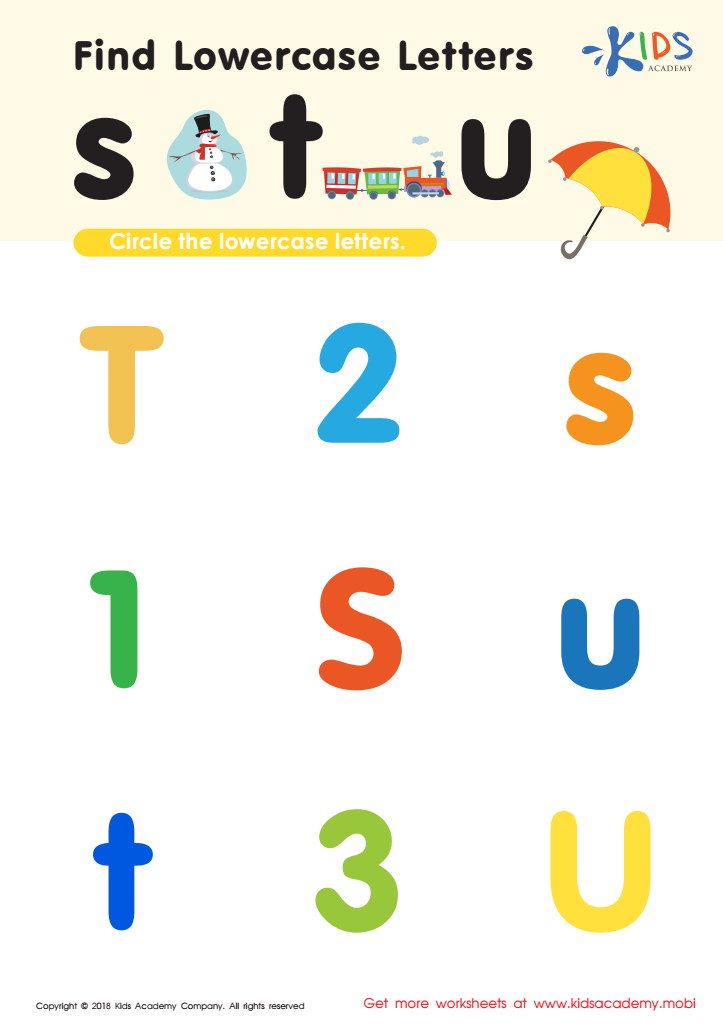
Find lowercase Letters s t u Worksheet
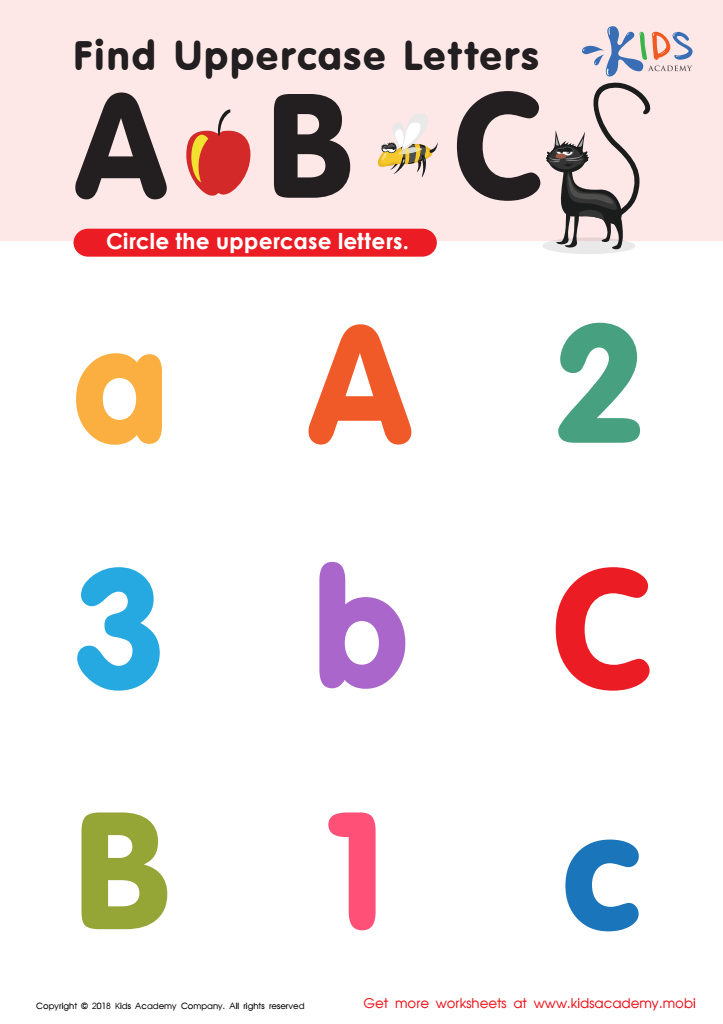
Find Uppercase Letters A, B, and C Worksheet
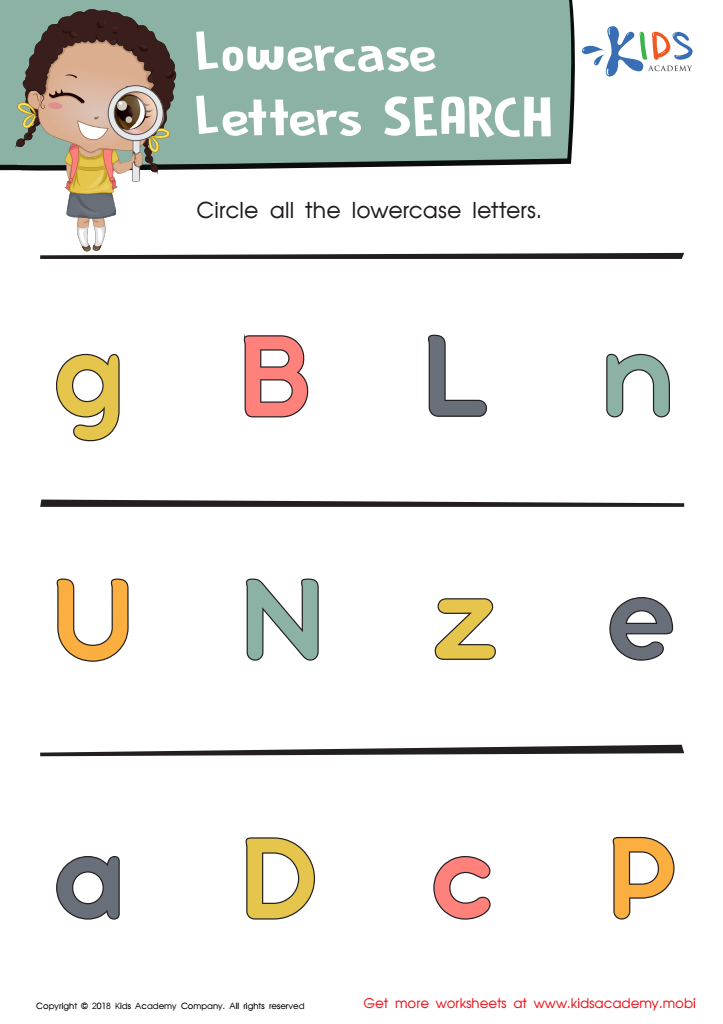
Lowercase Letters Search: Assessment Worksheet
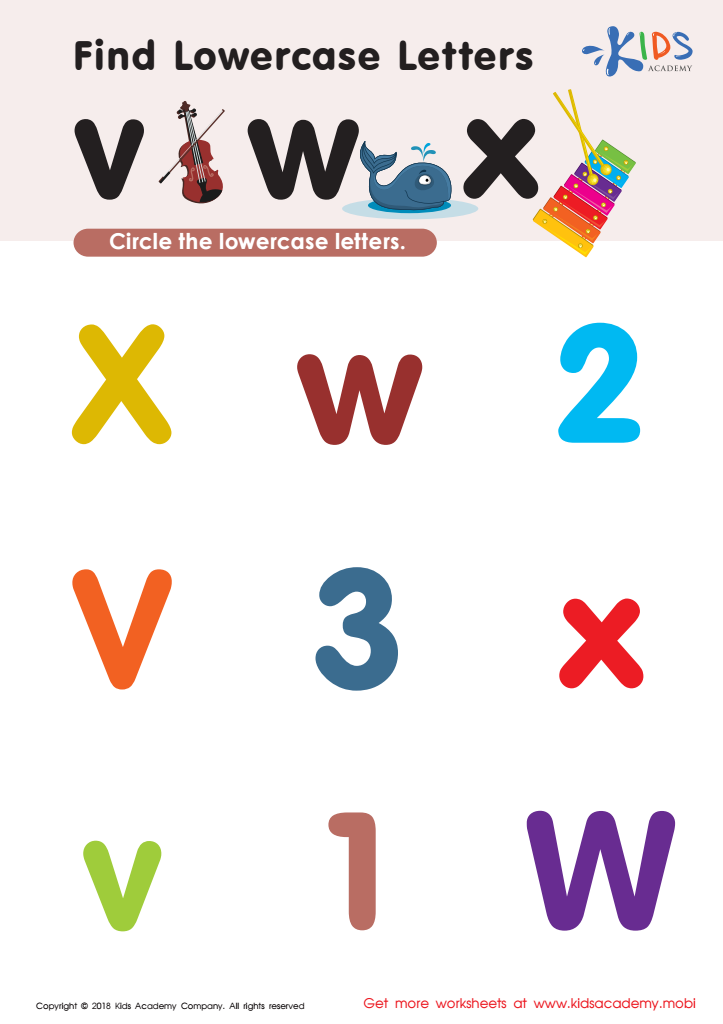
Find Lowercase Letters v w x Worksheet






Alphabet familiarity, encompassing both uppercase and lowercase letters, plays a pivotal role in early childhood literacy and cognitive development for 5-year-olds. At this age, children are at a critical juncture in their learning journey, as they begin to associate letters with sounds, laying the groundwork for reading and writing. Understanding the differences between uppercase and lowercase letters is essential, as this knowledge supports early writing skills, enabling children to properly form words and recognize their names in various contexts, such as books, signs, or artwork.
Additionally, familiarity with letters fosters confidence and encourages children to engage in more complex literacy activities. For teachers and parents, nurturing this understanding can significantly enhance a child's willingness to participate in reading-related games and tasks, thereby boosting their overall interest in literacy. Given that much of communication relies on written language, establishing a strong foundation of alphabet knowledge will serve children well in their academic journeys and beyond.
Furthermore, mastery of both uppercase and lowercase letters supports social-emotional development, as students experience a sense of achievement when they can read, write, and express themselves. Thus, prioritizing these skills in early education unlocks numerous pathways for learning and engagement, making it a worthwhile focus for caregivers and educators alike.







