Visual discrimination skills Upper & Lowercase Letters Worksheets for 5-Year-Olds
4 filtered results
-
From - To
Enhance your child's visual discrimination skills with our engaging Upper & Lowercase Letters Worksheets designed for 5-year-olds! These worksheets provide fun and interactive activities that help young learners differentiate between uppercase and lowercase letters. By incorporating colorful illustrations and creative exercises, children will strengthen their ability to recognize and distinguish letter forms, an essential skill for early literacy development. Perfect for parents and educators aiming to cultivate a solid foundation in reading and writing, our worksheets make learning enjoyable and effective. Explore the world of letters together and support your child's educational journey with these valuable resources! Join the fun today!

Find Uppercase Letters A, B, and C Worksheet
 Assign to My Students

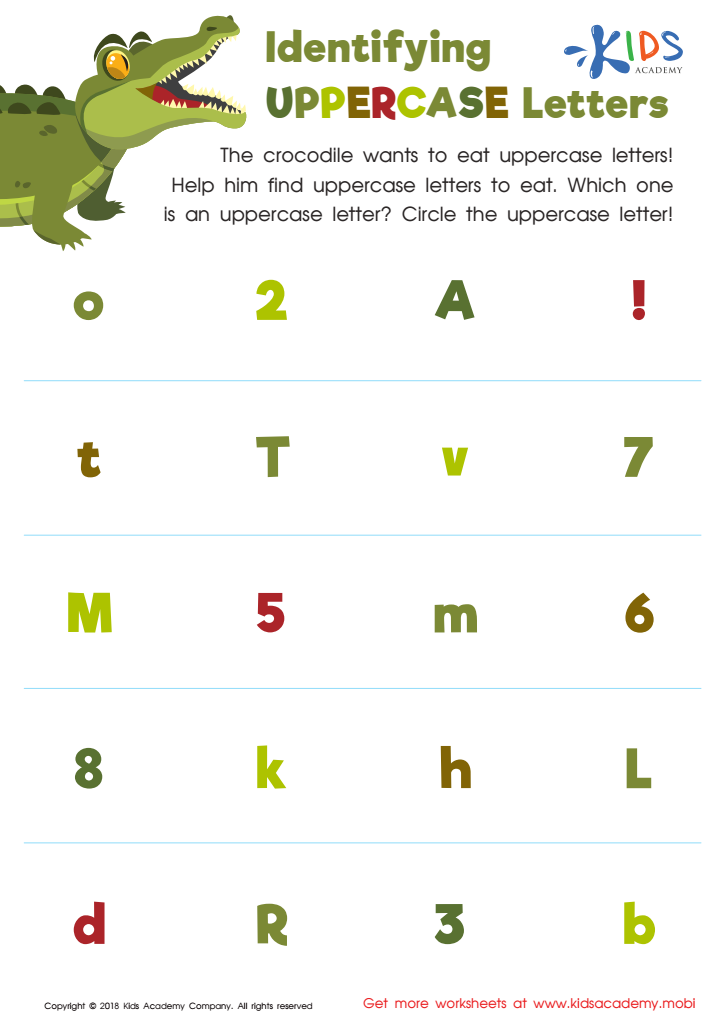
Identifying Uppercase Letters Worksheet
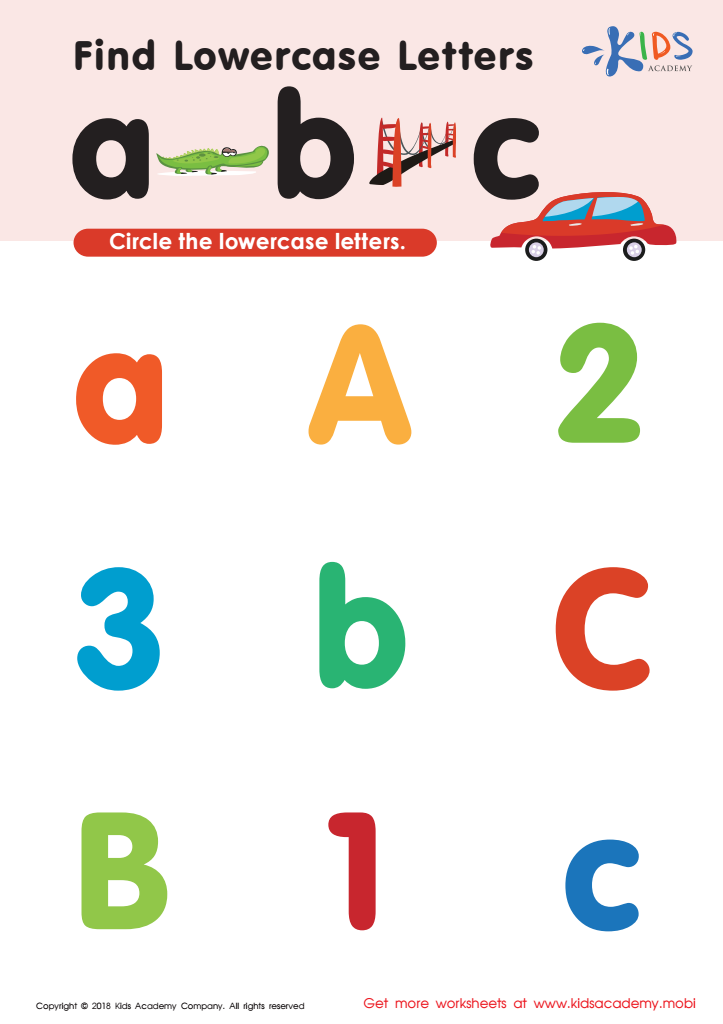
Find lowercase letters a b c Worksheet
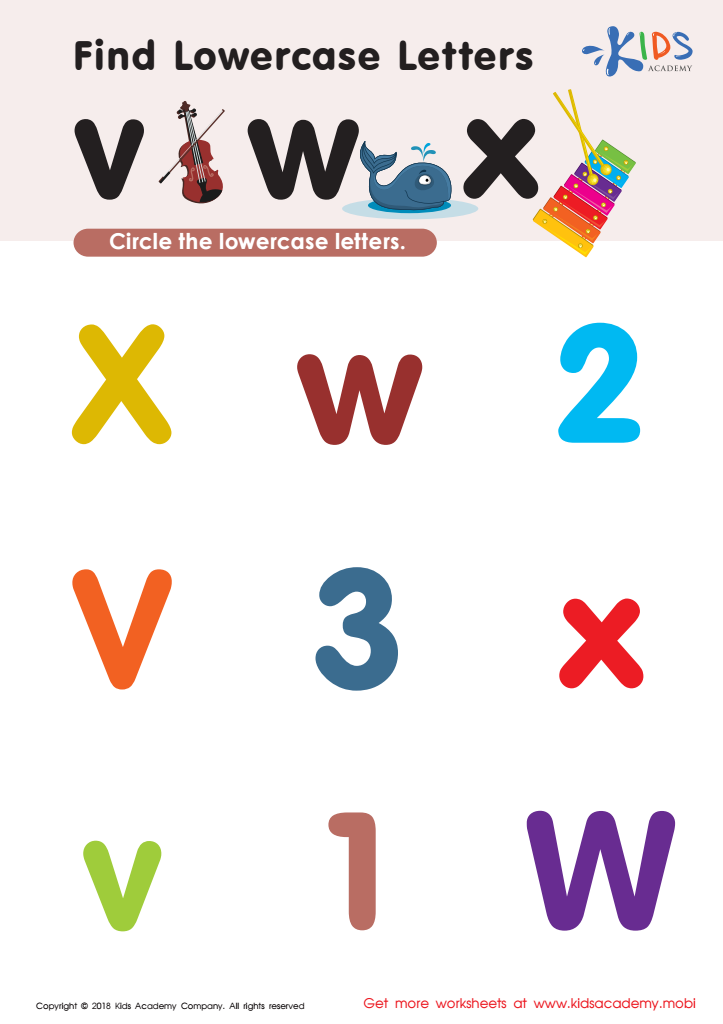
Find Lowercase Letters v w x Worksheet






Visual discrimination skills are essential for young learners, particularly when it comes to recognizing upper and lowercase letters. At the age of five, children are laying the groundwork for literacy, and strong visual discrimination skills help them differentiate between similar-looking letters, which is critical in reading and writing. For instance, confusing 'b' and 'd' or 'p' and 'q' can lead to significant challenges in developing reading fluency and writing accuracy.
When parents and teachers prioritize these skills, they significantly enhance a child's ability to decode words and comprehend texts, fostering confidence in their reading abilities. Additionally, having a firm grasp on letter recognition aids in spelling and phonics, further supporting overall literacy development.
Visual discrimination cultivates attention to detail—a skill that transcends literacy and benefits other academic areas. By engaging in activities that promote these skills, such as letter matching games or sorting exercises, children can develop the necessary foundation for future reading success. Thus, both parents and teachers play a vital role in nurturing these capabilities, ultimately influencing a child's educational journey and love for learning.







