Fine Motor Skills Color Words Worksheets for 5-Year-Olds
4 filtered results
-
From - To
Enhance your child's development with our Fine Motor Skills Color Words Worksheets for 5-Year-Olds! Specifically designed for young learners, these engaging worksheets help improve fine motor skills while teaching essential color words. Perfect for kids learning English as a second language, each fun activity combines coloring, tracing, and writing to make learning enjoyable and effective. Boost hand-eye coordination, dexterity, and language skills simultaneously. Suitable for home or classroom use, these printable worksheets are a great resource for parents and teachers aiming to build foundational skills in a playful and interactive way. Download now from Kids Academy!
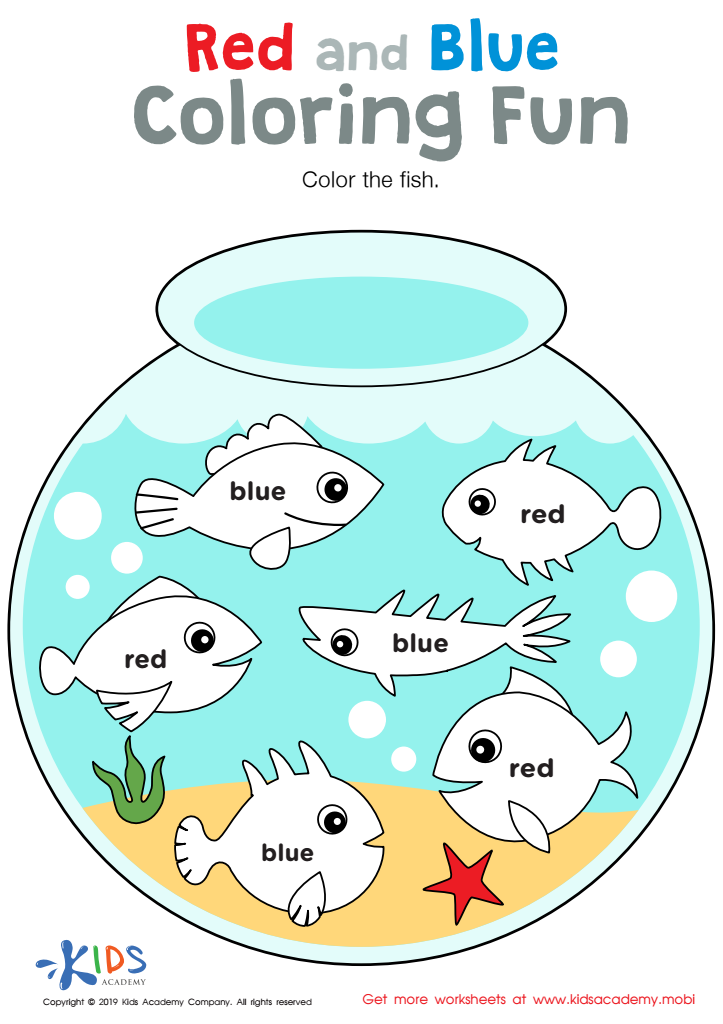
Red and Blue Coloring Fun Worksheet
 Assign to My Students
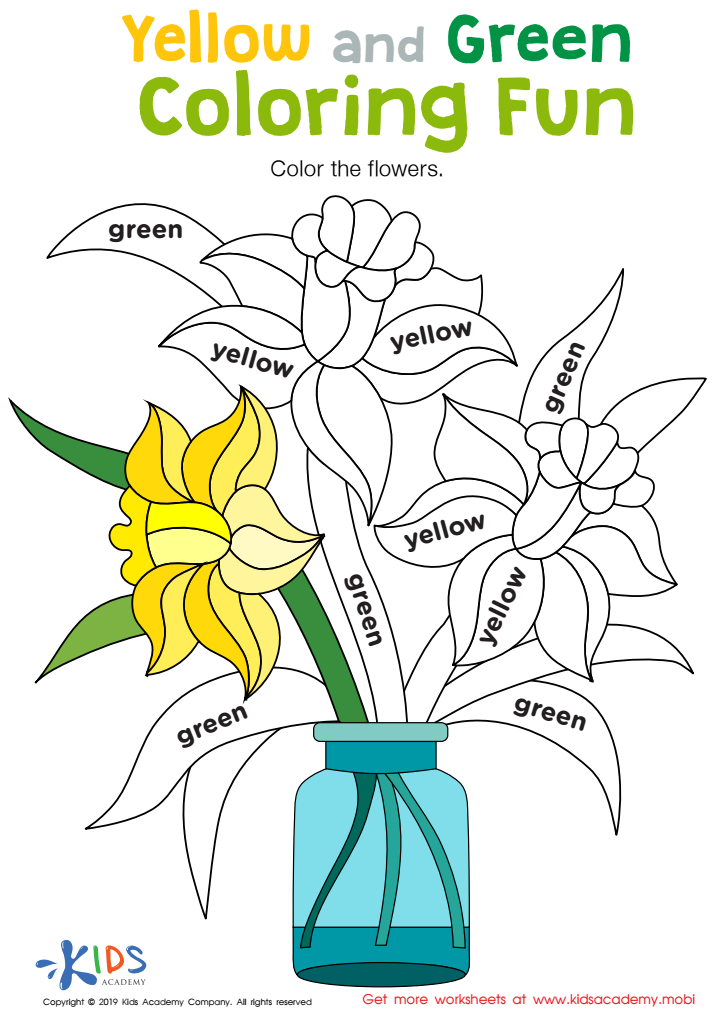
Yellow and Green Coloring Fun Worksheet
Assign to My Students
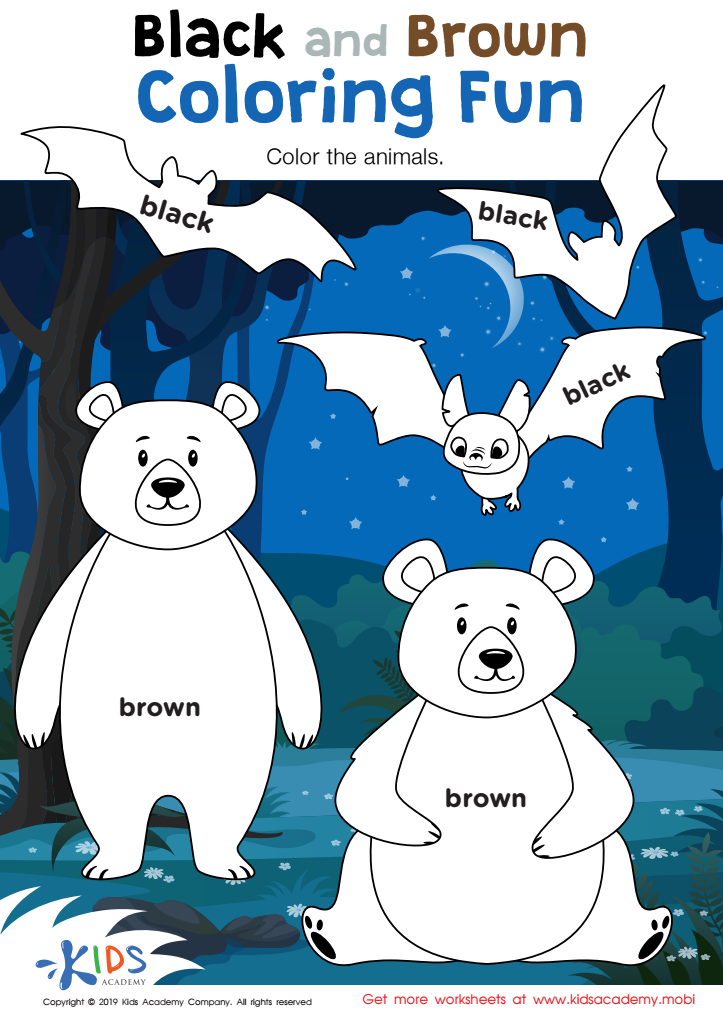
Black and Brown Coloring Fun Worksheet
Assign to My Students
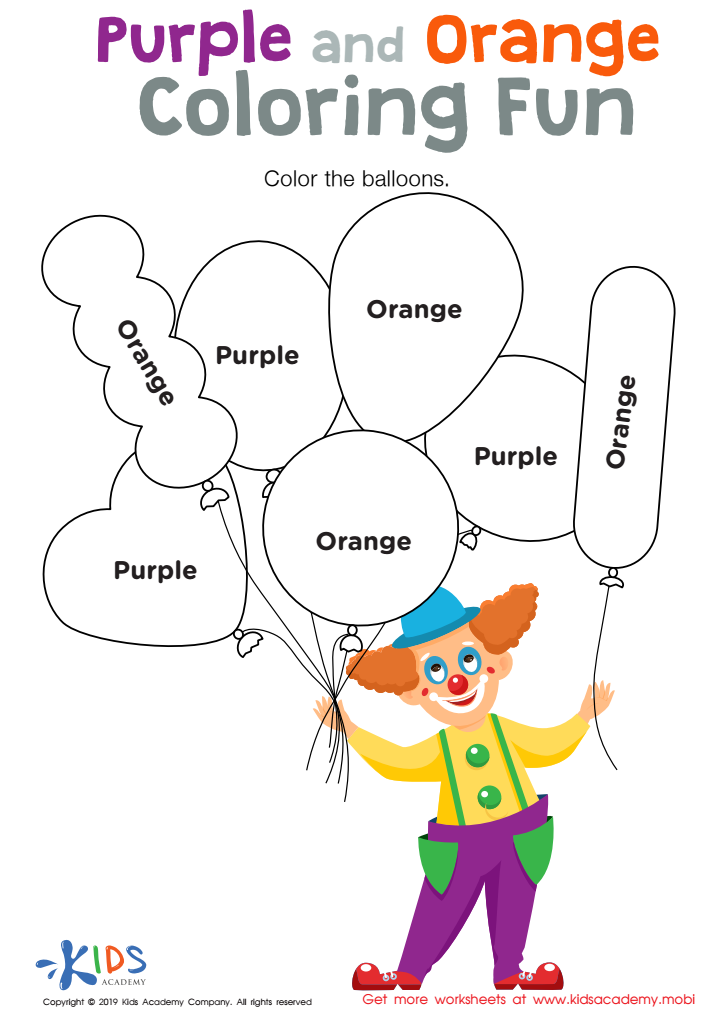
Purple and Orange Coloring Fun Worksheet
Assign to My Students



Fine motor skills and color recognition are fundamental components of early childhood development that significantly impact a young child's learning trajectory. For 5-year-olds, mastering fine motor skills such as gripping a pencil, cutting with scissors, and manipulating small objects is crucial for activities like writing, buttoning clothes, and drawing. These abilities are essential not just for academic tasks but also for fostering independence and self-confidence in daily life. Encouraging these skills at an early age helps children build the hand-eye coordination and muscle strength needed for more complex tasks later on.
Simultaneously, recognizing and naming colors is more than a simple cognitive exercise; it enhances a child's descriptive language, aids in categorization and differentiation, and stimulates other cognitive processes like memory and attention. Teaching color words enriches vocabulary and language proficiency, which are critical for effective communication and reading comprehension.
When parents and teachers prioritize the development of fine motor skills and color recognition, they lay a solid foundation for a child's holistic growth. These combined skills foster creativity, encourage structured learning, and prepare children for more intricate academic and life activities. Hence, paying attention to these areas ensures that children do not just succeed in school but also thrive in their broader day-to-day interactions.








