Letter Tracing Practice English for Beginners Worksheets for 5-Year-Olds
3 filtered results
-
From - To
Our "Letter Tracing Practice English for Beginners Worksheets for 5-Year-Olds" are designed to support young learners in mastering the alphabet. These engaging worksheets focus on developing fine motor skills, letter recognition, and proper letter formation. Ideal for beginner learners, each worksheet provides step-by-step tracing guides that transform learning to write into a delightful experience. Perfect for both classroom and home use, these worksheets ensure a solid foundation in English literacy. Ignite your child's passion for learning with fun, educational exercises that pave the way to academic success and a lifetime of confident writing skills.
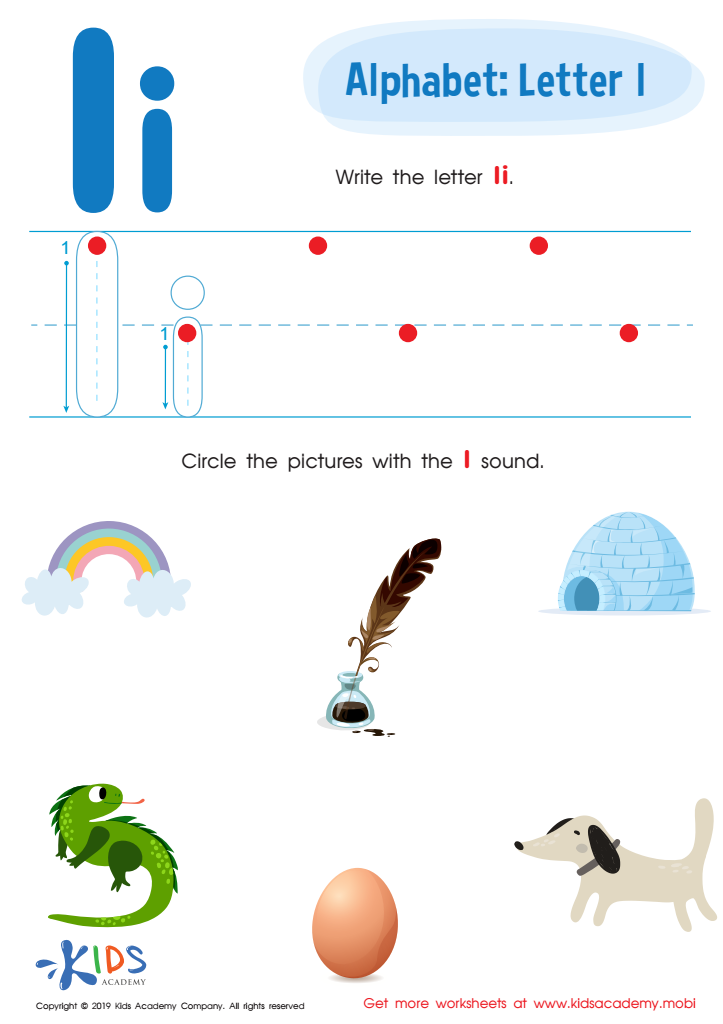
Letter I Tracing Worksheet
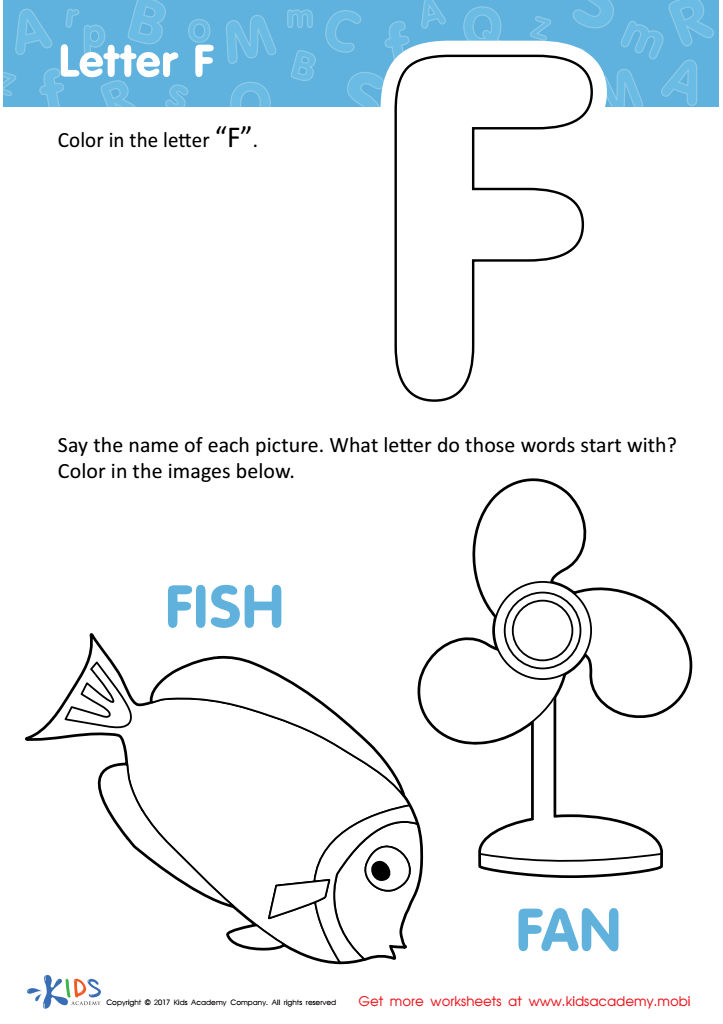
Letter F Coloring Sheet
 Assign to My Students
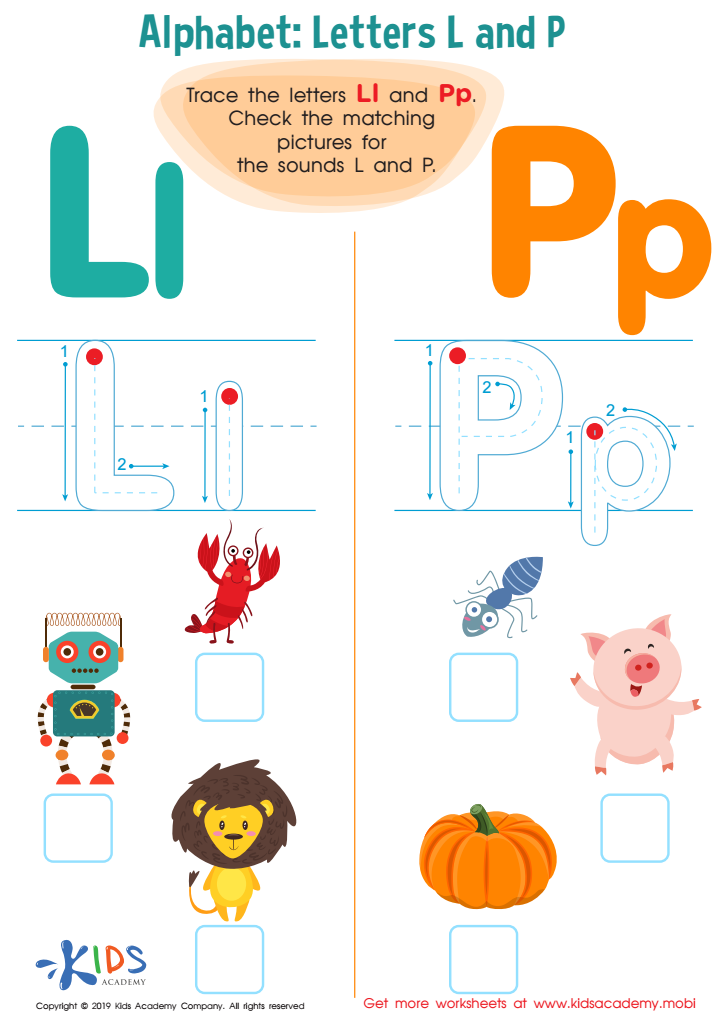
Letter L and P Tracing Worksheet





Letter Tracing Practice English for Beginners is essential for 5-year-olds as it sets the foundation for literacy, a critical skill for overall academic success and effective communication. At this developmental stage, children are rapidly expanding their fine motor skills; guiding them through the practice of tracing letters helps them develop the dexterity and hand-eye coordination necessary for writing. Furthermore, repeated exposure to letter shapes in a structured form reinforces letter recognition, phonemic awareness, and leads to better retention, which is crucial for early reading skills.
Parents and teachers who focus on letter tracing also nurture a child's ability to follow instructions, concentrate, and maintain attention on a task—all important aspects of cognitive development. Engaging in this practice in a supportive setting builds confidence and a positive attitude towards learning. In addition, by using playful and diverse tracing activities, educators and parents can create a stimulating and enjoyable learning environment, turning potential frustration into motivation and curiosity.
Overall, letter tracing serves as the inaugural step towards alphabet familiarity and writing proficiency. Given its profound impact on future learning and communication abilities, prioritizing this practice for beginners ensures a smoother transition into more complex literacy and academic skills. It illustrates a commitment to equipping children with the essential tools needed for their educational journeys.