Alphabetical order Worksheets for 5-Year-Olds
3 filtered results
-
From - To
Discover our engaging Alphabetical Order Worksheets designed specifically for 5-year-olds! Through fun and interactive activities, children will learn to organize letters and words alphabetically, enhancing their language skills and cognitive development. These worksheets include colorful images, playful exercises, and easy-to-follow instructions, keeping young learners excited and motivated. Ideal for both classroom and home settings, our resources support early reading proficiency and sequential thinking. Foster your child’s educational journey with our printable Alphabetical Order Worksheets and watch them thrive in their learning adventure. Browse now to provide the best foundational skills for your little ones!
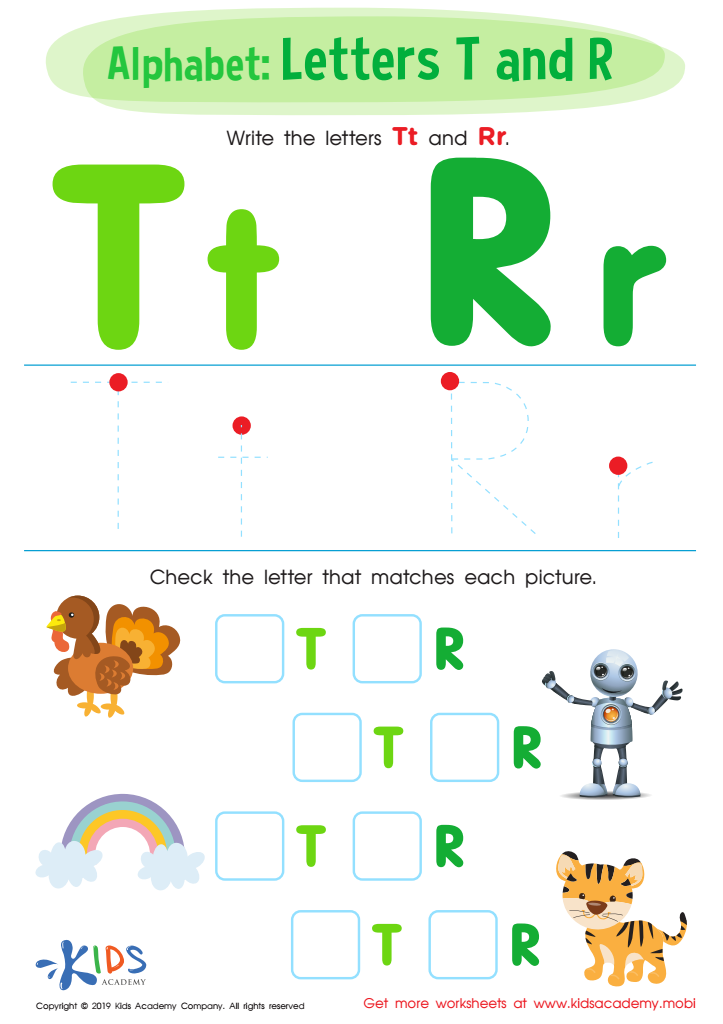
Letters T and R Worksheet
 Assign to My Students
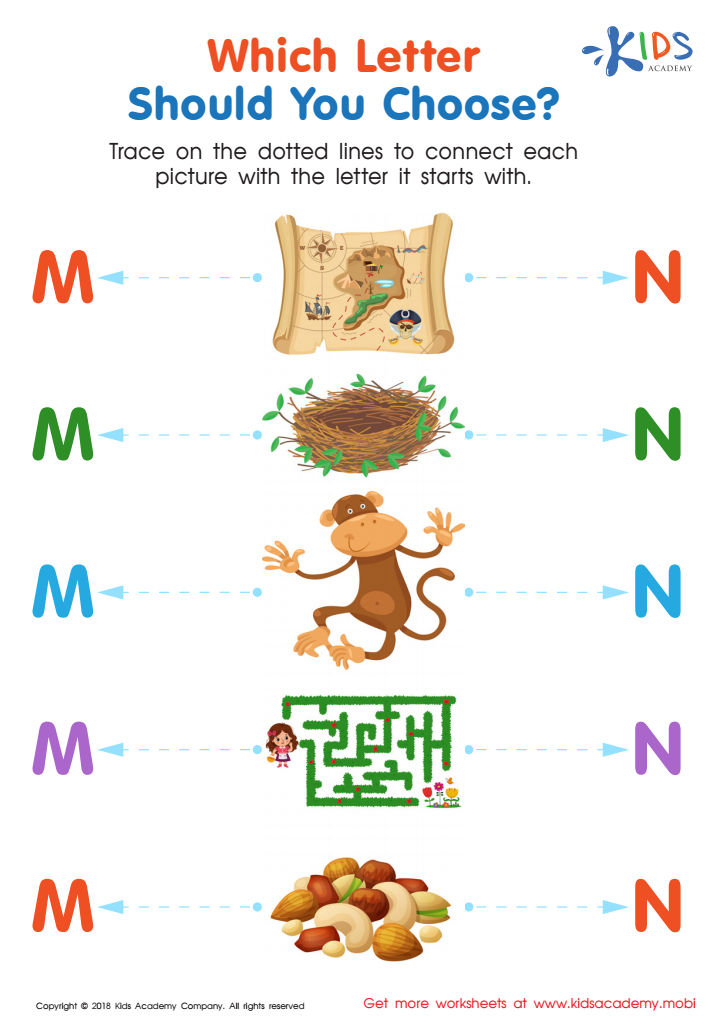
Which Letter Should you Choose? Worksheet
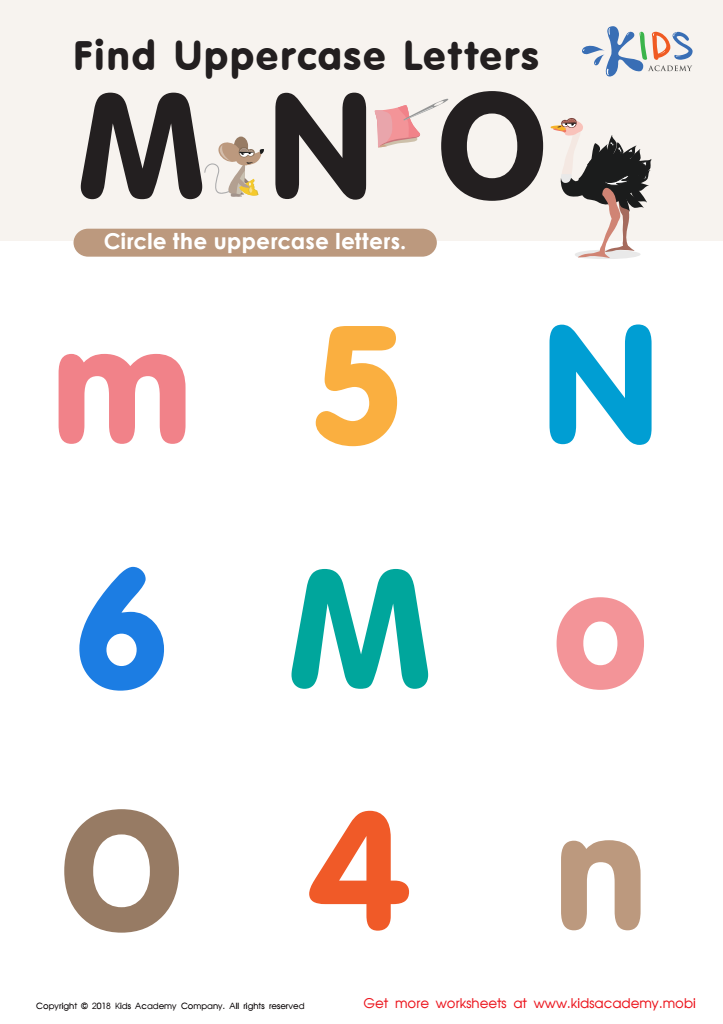
Find Uppercase Letters M, N, and O Worksheet








Teaching alphabetical order to 5-year-olds holds significant value for their early learning and development. Initially, it helps children recognize and memorize the sequence of letters, which is a foundational skill for literacy. As they become familiar with alphabetical order, it supports their understanding of organizing information systematically, which is crucial for cognitive development.
Alphabetical order also enhances language skills. When children learn to arrange words alphabetically, they improve their vocabulary and spelling. This skill assists in better comprehension of reading materials, as they can swiftly locate information in word lists, dictionaries, or storybooks.
Additionally, teaching alphabetical order fosters critical thinking and problem-solving abilities. Children learn to categorize and sort items, which hones their attention to detail and precision. These are essential skills not only for academic success but for everyday tasks as well.
Moreover, mastering alphabetical order in early years lays a groundwork for technological literacy. It aids children in navigating digital interfaces like apps and websites that often list options or files alphabetically.
Overall, prioritizing alphabetical order for 5-year-olds builds a strong educational foundation, boosting their confidence and competence in subsequent learning stages. It's a straightforward yet powerful tool to facilitate smoother, integrated knowledge growth in young learners.








