
Number tracing Worksheets for 5-Year-Olds
3 filtered results
Difficulty Level
Grade
Age
-
From - To
Subject
Activity
Standards
Discover the joy of learning with our Number Tracing Worksheets specifically designed for 5-year-olds! These interactive and engaging sheets help young learners familiarize themselves with numbers through tracing, enhancing their handwriting skills while promoting cognitive development. With fun illustrations and clear layouts, children will enjoy perfecting their number formation while boosting their confidence in mathematics. Our worksheets cater to various skill levels, making them suitable for both beginner and advanced learners. Foster a love for numbers early on—print our Number Tracing Worksheets today and watch your child thrive as they embark on their mathematical journey!
Favorites
With answer key
Interactive
 Assign to My Students
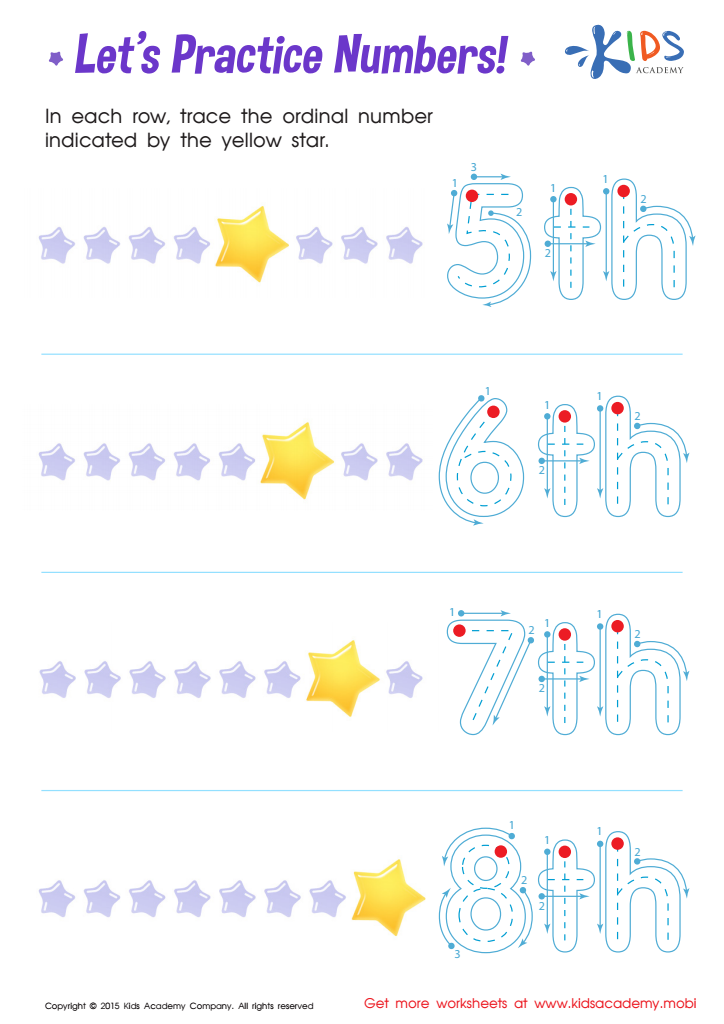
Ordinal Numbers: Let's Practice Numbers Printable
Worksheet
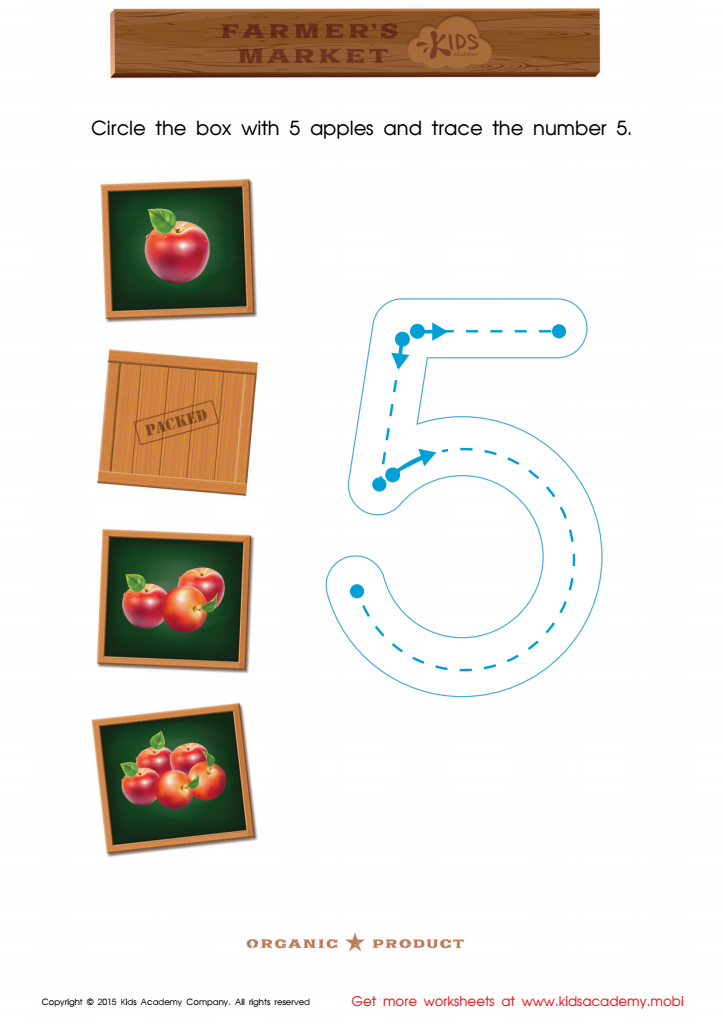
Count the Apples and Trace the Number 5 Printable
Count the juicy apples in each box, find the one with 5 and trace the number 5 following the arrows. Practice makes perfect! Print and get your little mathematician counting.
Count the Apples and Trace the Number 5 Printable
Worksheet
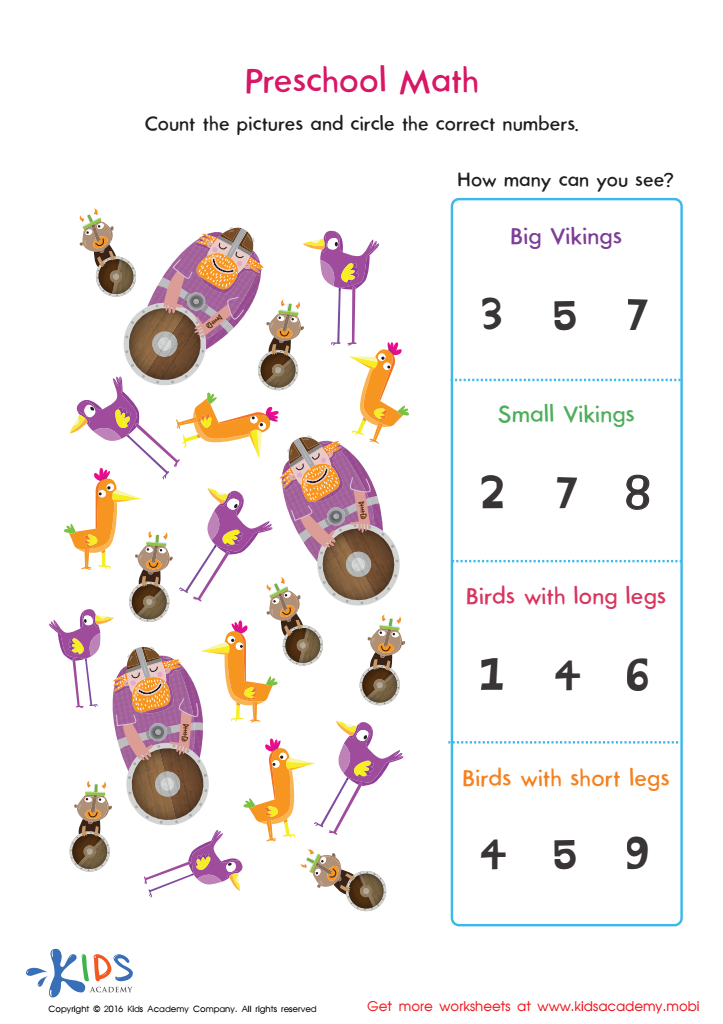
Counting Worksheet: Preschool Math
Worksheet
Join Kids Academy for Free
Who is primarily going to use this learning content?







Number tracing is an essential activity for 5-year-olds that parents and teachers should prioritize. This skill serves as a foundation for early math development, facilitating preschoolers' understanding of numerals and their significance. Tracing helps improve fine motor skills—an important precursor to writing—that reinforces hand-eye coordination and dexterity.
As children trace numbers, they engage in repetitive practice, which enhances memory retention. Through the tactile experience of tracing, children develop stronger associations with the shapes and forms of numbers, paving the way for easier recognition later on. This activity often evokes excitement and creativity, making mathematics enjoyable rather than intimidating.
Additionally, early exposure to number tracing can boost preschoolers’ confidence when inputting numbers in various contexts—whether counting objects or preparing for early elementary math. It also lays the groundwork for more advanced concepts such as addition and subtraction.
Furthermore, engaging in number tracing can be a quality bonding activity, allowing parents and teachers to participate in meaningful interactions. It fuses learning with support, setting a positive tone for lifelong math engagement. Encouraging number tracing helps 5-year-olds build essential cognitive skills while experiencing the joy of learning, making it a vital task during these formative years.








