
Observation skills Worksheets for 5-Year-Olds
6 filtered results
Difficulty Level
Grade
Age
-
From - To
Subject
Activity
Standards
Enhance your child's cognitive development with our expert-designed observation skills worksheets for 5-year-olds. These engaging, age-appropriate activities are crafted to sharpen young minds through fun and interactive tasks. By focusing on visual discrimination, pattern recognition, and attention to detail, our worksheets help children build crucial learning skills. Perfect for both parents and educators, these printable resources foster concentration and analytical thinking, preparing little learners for academic success. Explore a variety of exercises that turn everyday observations into educational adventures, encouraging curious minds to observe, analyze, and discover the world around them. Unlock your child's potential with our comprehensive observation skills worksheets!
Favorites
With answer key
Interactive
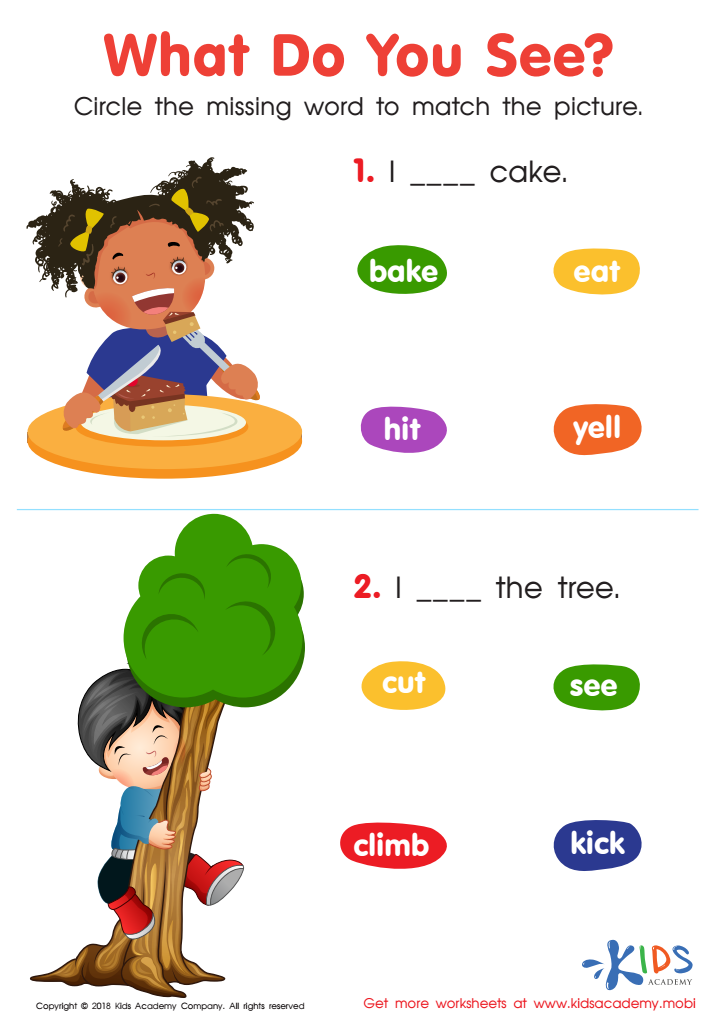
What Do You See? Reading Worksheet
New readers can use the attractive pictures and high-frequency words on this worksheet to practice expressive language skills and decode as they fill in the blanks. As they circle the correct words, they'll feel like reading superstars!
 Assign to My Students
What Do You See? Reading Worksheet
Worksheet
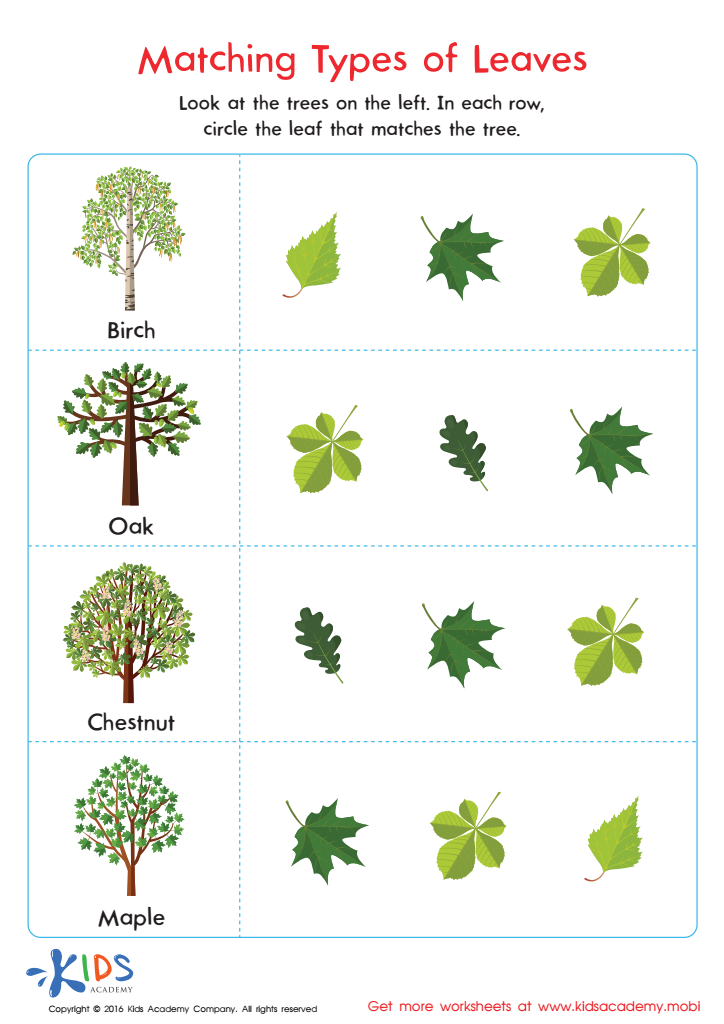
Matching Types of Leaves Printable
Trees are beautiful and essential to life. Show your child the joy of learning about them with this leaf worksheet. It teaches tree identification and encourages observing nature. Expand the learning with additional activities about trees!
Matching Types of Leaves Printable
Worksheet
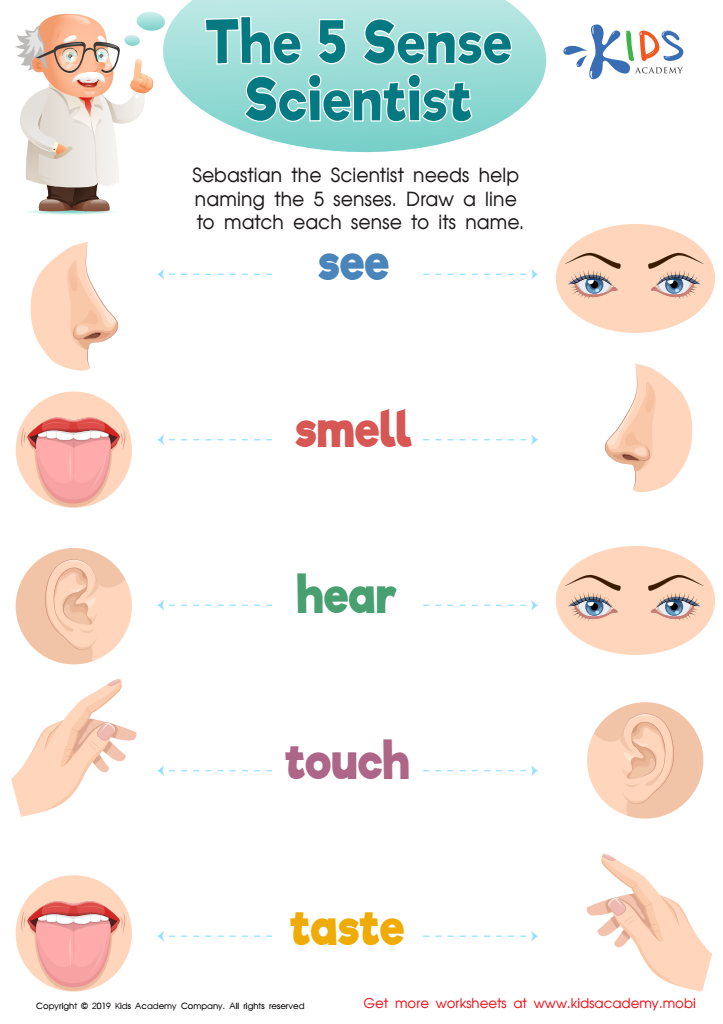
The 5 Sense Scientist Worksheet
Our young children will have fun learning about their five senses with this free Sense Scientist worksheet. Helping Sebastian the Scientist, they'll name the five senses and use traceable lines to connect each picture with its correct sense. Colorful words and pictures will create a memorable picture representation.
The 5 Sense Scientist Worksheet
Worksheet
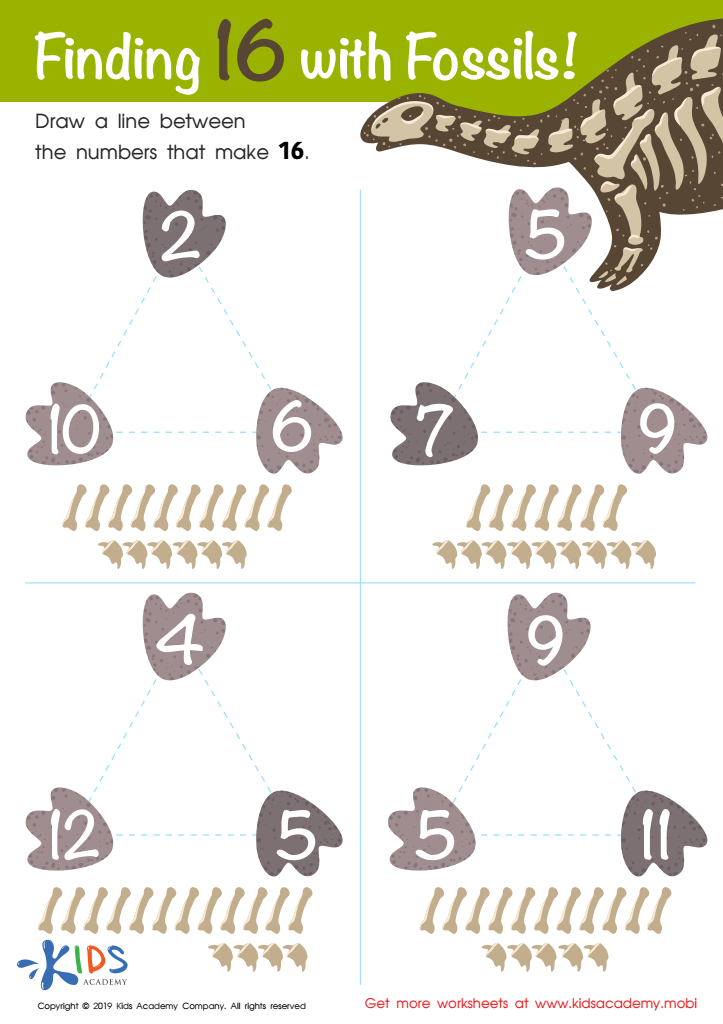
Finding 16 With Fossils Worksheet
Experts hunt for fossils, dig them up, and study them to learn more about past life forms - how they lived, what they looked like, and when they lived. Show kids the picture in this worksheet and point out the fossils. Help them count the bones and draw a line between the numbers that add up to 16 in each triangle.
Finding 16 With Fossils Worksheet
Worksheet
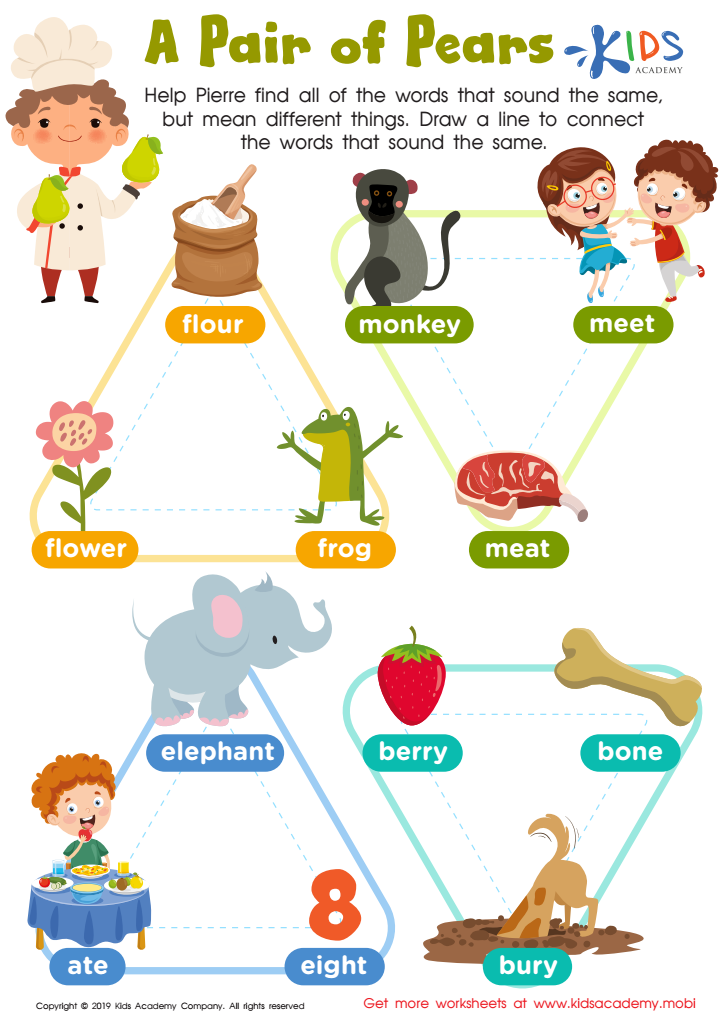
Pair Pears Worksheet
Young readers can have difficulty knowing when to use the right homophone. This free worksheet helps them use familiar imagery to understand better by connecting words that sound similar but are spelled and mean different things. Students will trace the lines to form a picture and have a reference image to differentiate between the different homophones.
Pair Pears Worksheet
Worksheet
Join Kids Academy for Free
Who is primarily going to use this learning content?





Observation skills are foundational for the cognitive and emotional development of 5-year-olds, and it's essential for parents and teachers to nurture these abilities. At this developmental stage, children are naturally curious and primed to learn by observing their environment. Strong observation skills help in absorbing, analyzing, and recalling details from their surroundings, which leads to better learning across various subjects. For instance, observing different shapes and colors in a playground aids in grasping basic geometry and art concepts.
Moreover, when children develop acute observation skills, they enhance their vocabulary and communication abilities by describing what they see. This is crucial for language development. Observation fosters critical thinking; children learn to distinguish between important details and less significant ones, aiding in problem-solving situations whether in social interactions or learning new tasks.
Emotionally, being observant helps children become more empathetic and socially aware. They start recognizing others' emotions and body language, leading to healthier peer interactions. For educators and parents, encouraging keen observation not only supports academic and socio-emotional growth but also cultivates a lifelong habit of paying attention to and learning from the world around them. Hence, sharpening these skills lays a robust foundation for a child's overall development.








