Recognize shapes Worksheets for 5-Year-Olds
4 filtered results
-
From - To
Unlock your child’s potential with our "Recognize Shapes Worksheets for 5-Year-Olds"! Perfectly designed for young learners, these fun and engaging worksheets help kids identify and differentiate various shapes while improving their visual-spatial skills. Each activity includes vibrant images and simple instructions to make learning enjoyable. Ideal for home or classroom use, these worksheets aid in building a strong foundation for future math concepts. Encourage your little one to explore the exciting world of shapes through our expertly crafted resources and watch their confidence soar. Give your child a head start in education with Kids Academy!
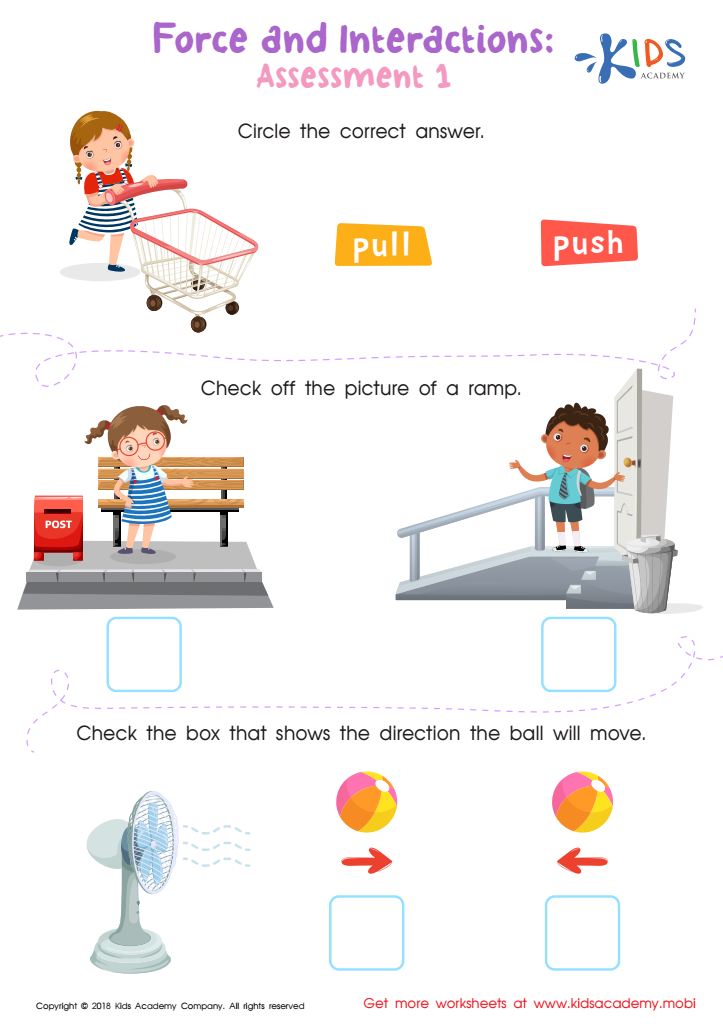
Force and Interactions: Assessment 1 Worksheet
 Assign to My Students
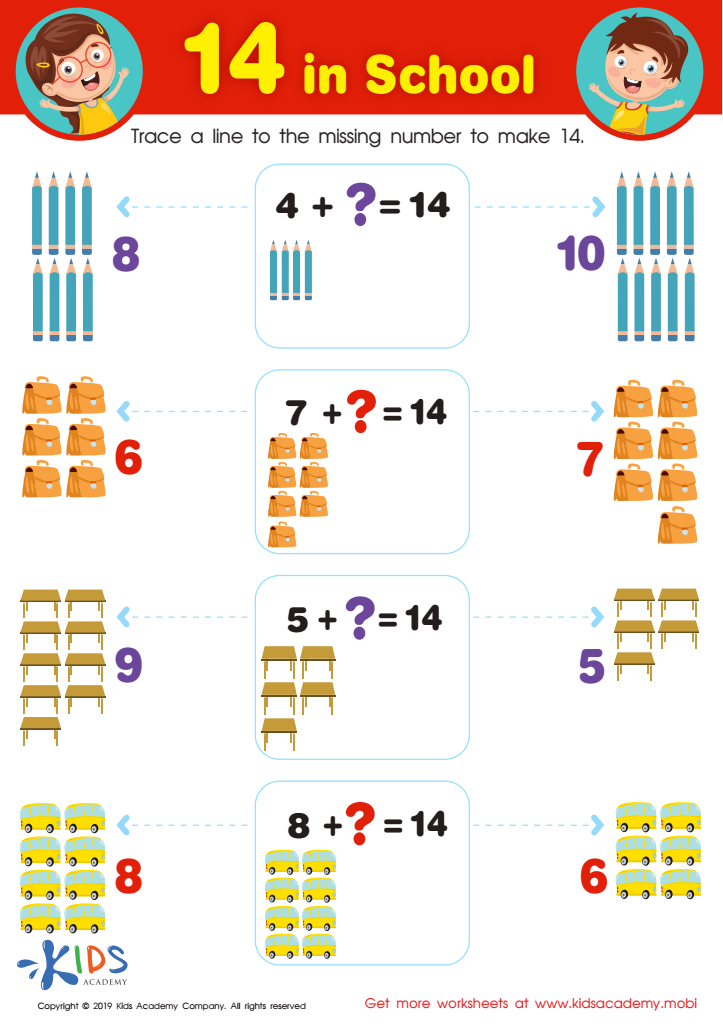
14 in School Worksheet








Recognizing shapes is a foundational skill for 5-year-olds that significantly contributes to their cognitive and perceptual development. Having young children identify and distinguish between different shapes is not merely about recognizing squares, circles, or triangles; it’s about building critical thinking and visual-spatial awareness.
Firstly, recognizing shapes enhances early math skills. It serves as a precursor to geometry, helping children understand the properties and classifications of different shapes. This understanding forms a foundation for more complex mathematical concepts they will encounter later, such as symmetry, fractions, and area calculations.
Secondly, shape recognition is crucial for literacy. Letters and numbers are essentially combinations of various shapes. When children become adept at identifying shapes, they find it easier to learn and differentiate letters and numbers, thereby improving their reading and writing skills.
Moreover, recognizing shapes supports problem-solving abilities. Children develop critical thinking as they learn to sort, classify, compare, and contrast shapes. This conceptual understanding also translates into real-life skills, like identifying objects, navigating spaces, and using descriptive language.
From a developmental perspective, fostering shape recognition enhances fine motor skills. Activities such as tracing, drawing, or playing with puzzles require precision and coordination, which are key for overall physical development.
In essence, emphasizing shape recognition for 5-year-olds equips them with essential skills for both academic success and practical everyday tasks, making it a critical aspect of early childhood education.








