
Rhyming skills development Worksheets for 5-Year-Olds
4 filtered results
Difficulty Level
Grade
Age
-
From - To
Subject
Activity
Standards
Enhance your child's early reading proficiency with our "Rhyming Skills Development Worksheets for 5-Year-Olds." Designed to engage young learners, these worksheets use fun and interactive exercises to help kids identify and create rhyming words. By playing with word patterns and matching similar sounds, children build phonemic awareness—a crucial stepping stone in their reading journey. Perfect for both classroom and home use, our worksheets offer a variety of engaging activities that keep children motivated and excited. Boost your child's literacy skills and set a foundation for future reading success with these captivating learning tools.
Favorites
With answer key
Interactive
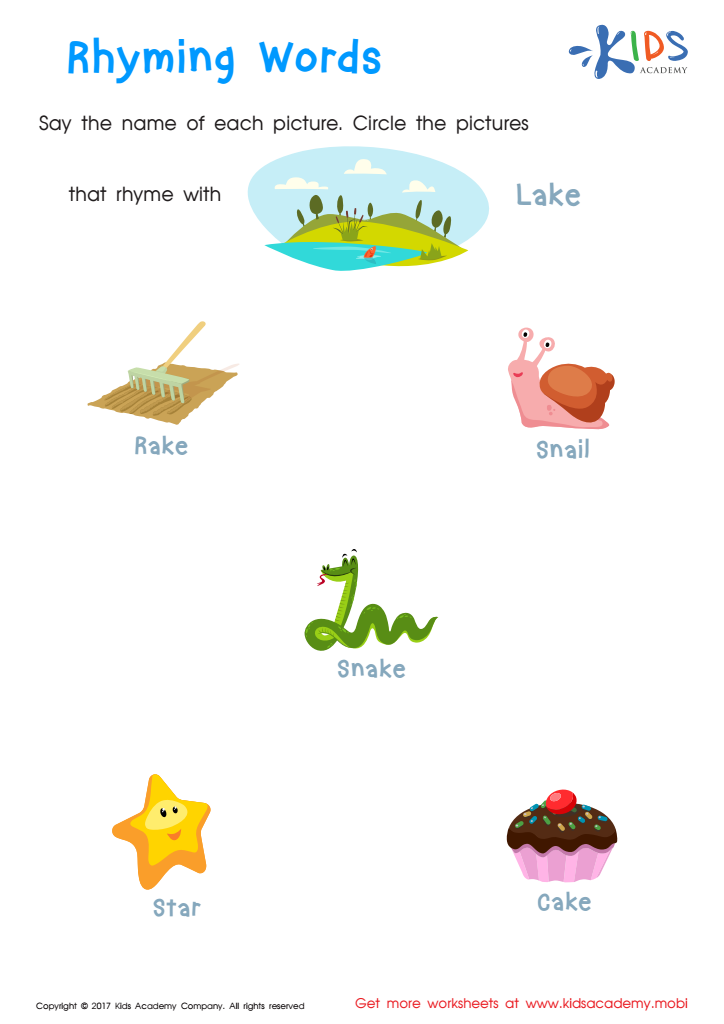
Rhyming Words Rhyming Worksheet
This worksheet is great for honing pre-reading skills. It helps kids make connections between pictures and written words, use problem-solving, and recognize sounds and words that rhyme. Have fun exploring rhyming words with your child, and they'll be rhyming in no time!
 Assign to My Students
Rhyming Words Rhyming Worksheet
Worksheet
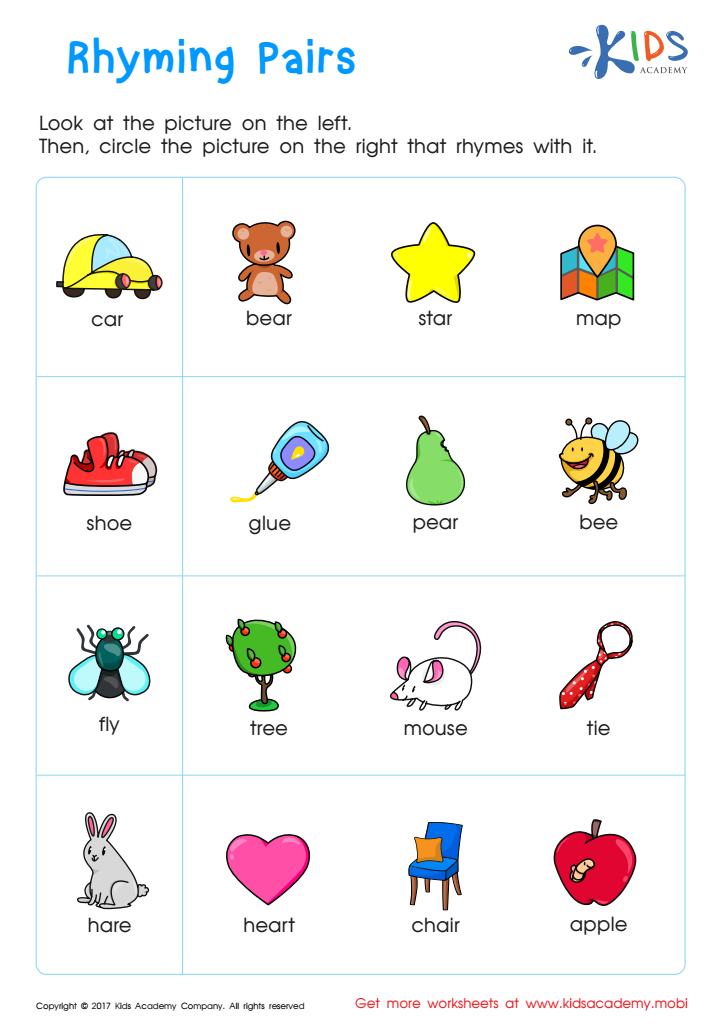
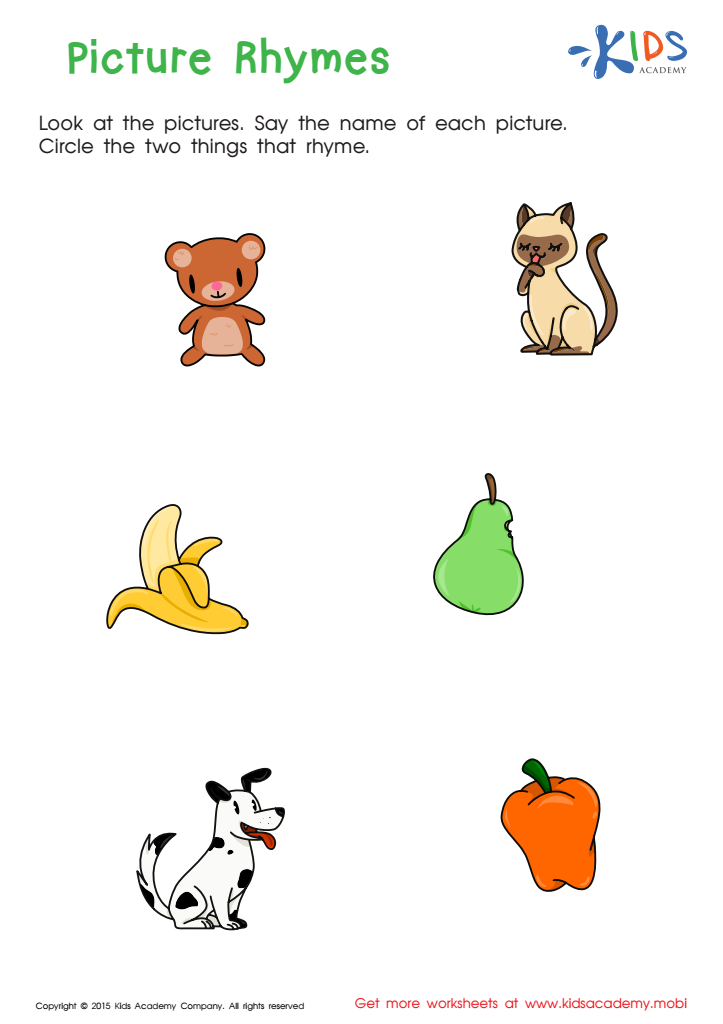
First Words: Picture Rhymes Worksheet
Rhyming helps kids understand language, read and write better. This printable worksheet boosts problem-solving and cognitive skills with vibrant pictures. It teaches kids to identify words, recognize rhymes, complete mental tasks and write words. An extra activity: show them how rhyming words share some of the same letters.
First Words: Picture Rhymes Worksheet
Worksheet
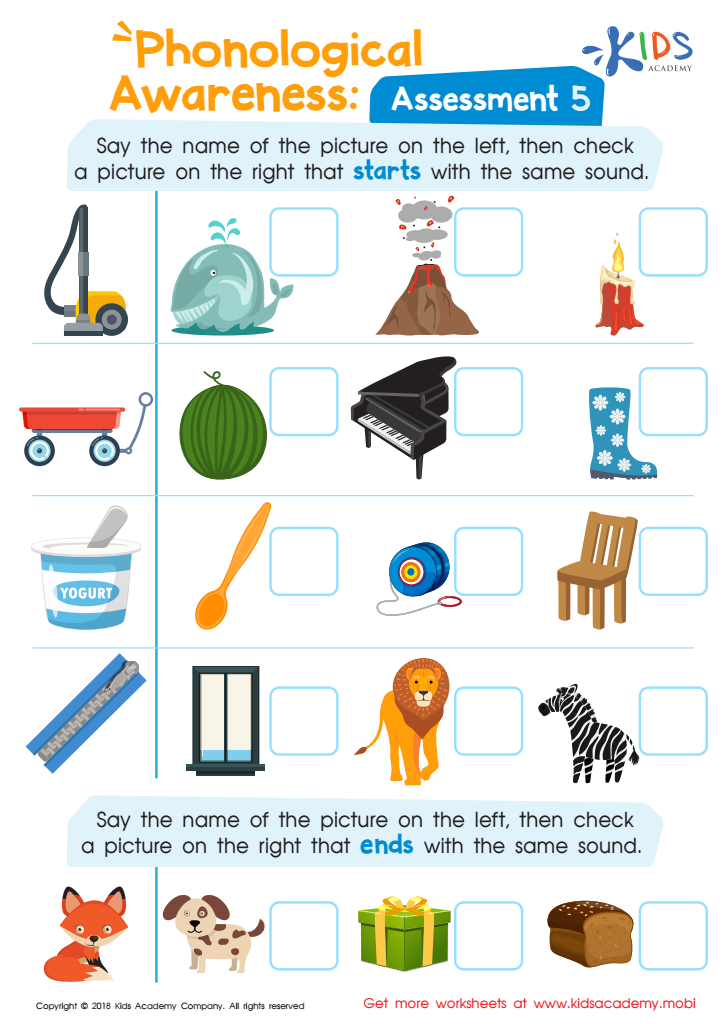
Phonological Awareness: Assessment 5 Worksheet
Repetition is key to success! This worksheet tests kids' ability to match beginning and ending sounds in words. Instruct them to say each word and listen closely to the sounds they make. Focus on the starting sounds for the first four pics, then the last one to hear ending sounds and find the right match!
Phonological Awareness: Assessment 5 Worksheet
Worksheet
Join Kids Academy for Free
Who is primarily going to use this learning content?








Rhyming skills are crucial for the cognitive and linguistic development of 5-year-olds, providing foundational underpinnings for future reading and writing success. Parents and teachers should prioritize rhyming activities as they significantly enhance phonemic awareness, a child's ability to recognize and manipulate the sounds in spoken language. Phonemic awareness is a critical precursor to effective decoding skills, which are necessary for reading proficiency.
Rhyming engages young children in auditory discrimination, helping them discern similarities and differences in word sounds. This skill strengthens their listening abilities and equips them with the tools to detect patterns within words, both vital for spelling and vocabulary acquisition. Furthermore, rhyming games and songs make learning fun, thereby increasing a child's motivation and engagement in literacy activities.
Moreover, rhyming activities bolster memory and recall by creating an association between similar-sounding words, making it easier for children to store and retrieve language information. Engaging in rhymes also aids in the development of speech articulation and fluency, promoting smoother verbal communication.
Incorporating rhyming into early education paves the way for a seamless transition to more complex literacy tasks. Thus, fostering rhyming skills in 5-year-olds nurtures an essential set of auditory and language capabilities that form the cornerstone of their overall literacy development.








