Shape comparison Worksheets for 5-Year-Olds
3 filtered results
-
From - To
Unlock the potential of your child’s geometric cognition with our Shape Comparison Worksheets, specially designed for 5-year-olds! These vibrant, fun activities engage young learners in distinguishing and comparing various shapes, fostering essential early math and spatial reasoning skills. Our expertly crafted worksheets encourage kids to observe, analyze, and identify differences and similarities between shapes—all while having a blast! Perfect for both classroom use and home practice, these printables offer a delightful way to nurture your child's critical thinking and problem-solving abilities. Embark on a geometric adventure with Kids Academy today!
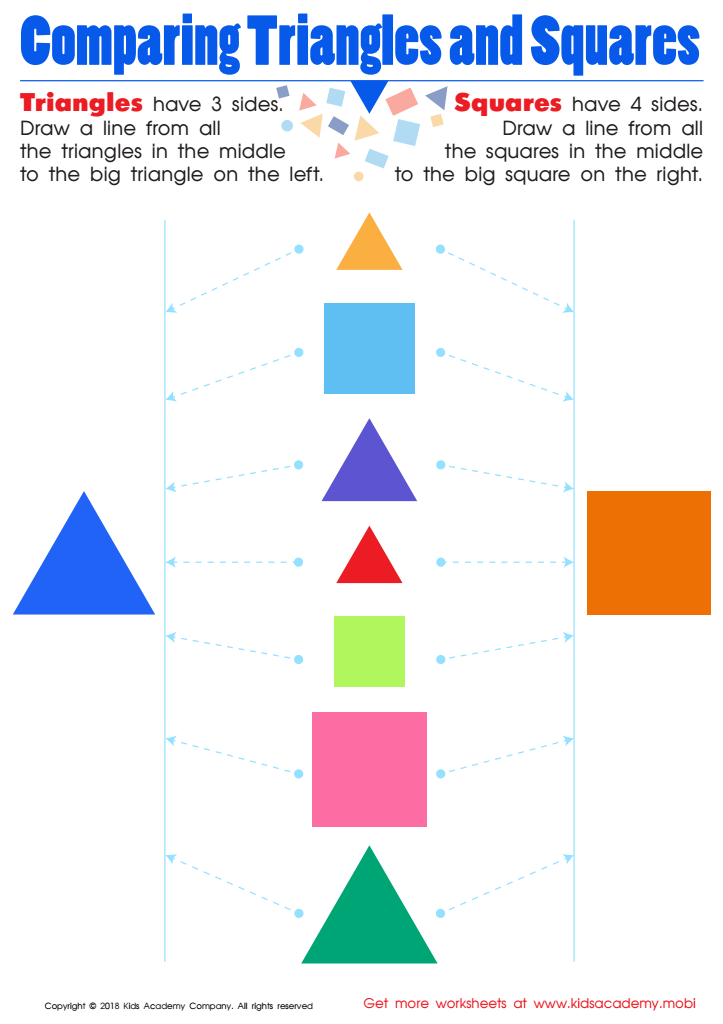
Comparing Triangles Squares Worksheet
 Assign to My Students
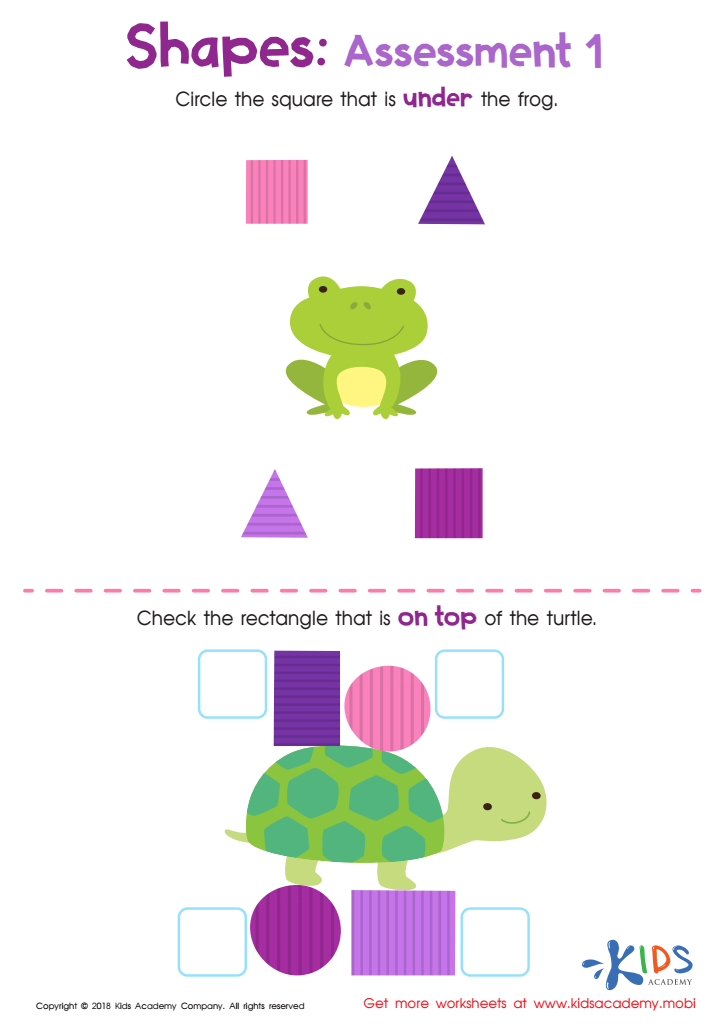
Geometry – Assessment 1 Worksheet
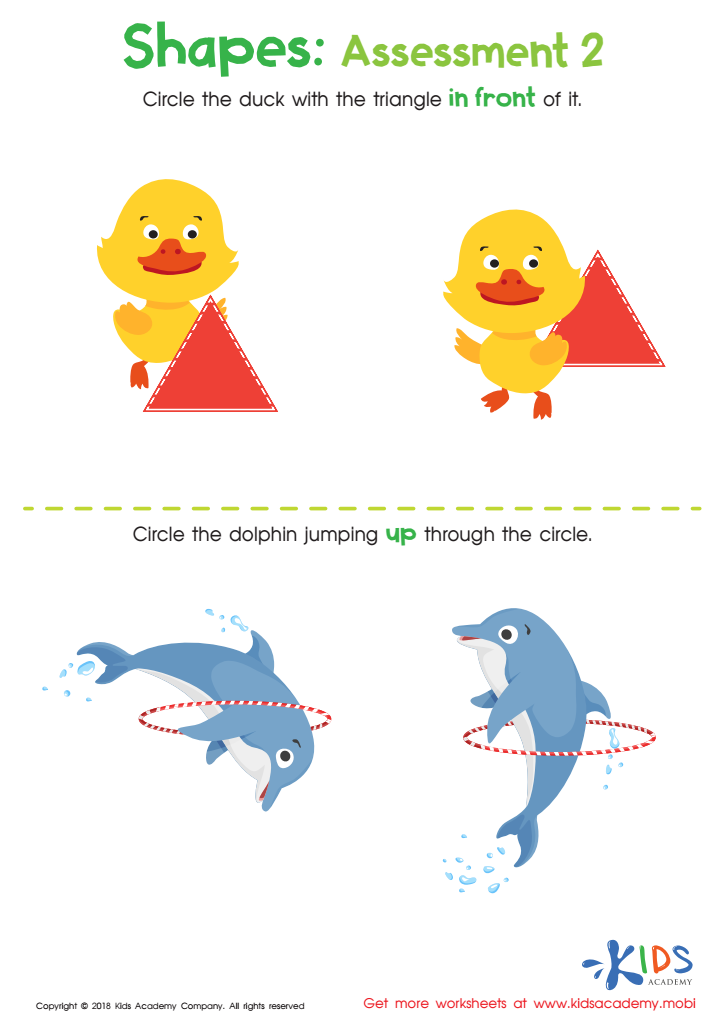
Geometry – Assessment 2 Worksheet







Parents and teachers should prioritize shape comparison activities for 5-year-olds because these activities are foundational for developing critical cognitive and mathematical skills. When young children engage in comparing shapes, they enhance their abilities to observe, analyze, and differentiate between various attributes such as size, color, number of sides, and angles. This practice nurtures their visual-spatial awareness, a key component of not only mathematics but also early literacy. For instance, recognizing that 'A' and 'H' share similar lines aids in alphabet recognition.
Moreover, shape comparison activities bolster problem-solving and logical thinking. By discerning how shapes are alike and different, children learn to categorize and organize information, which are essential skills for math concepts like sorting, patterning, and geometry. Additionally, this correlates with increased readiness for understanding numbers and letters, hence improving their overall academic trajectory.
Beyond cognitive benefits, engaging with shapes supports fine motor development as children draw, trace, and manipulate various forms, suggesting that hands-on interaction is critical. Such activities also foster language development, as discussing shapes stimulates vocabulary growth with terms like “triangle,” “larger,” and “corner.”
In summary, emphasizing shape comparison activities helps build a robust educational foundation, nurturing a child's logical reasoning, mathematical understanding, motor skills, and language—vital components of holistic early childhood development.








