Sound-letter correlation Worksheets for 5-Year-Olds
4 filtered results
-
From - To
Enhance your child's literacy skills with our engaging Sound-Letter Correlation Worksheets designed specifically for 5-year-olds! These interactive activities will help young learners identify letters and their corresponding sounds, fostering a solid foundation in phonics. Our worksheets combine playful illustrations and captivating exercises, making learning enjoyable and effective. Children will practice matching letters with their sounds, completing fun exercises, and building their vocabulary through repetition and recognition. Perfect for at-home learning or classroom use, our sound-letter correlation worksheets aim to inspire a love for reading and enhance early communication skills. Download now and watch your child's confidence flourish as they learn to read!
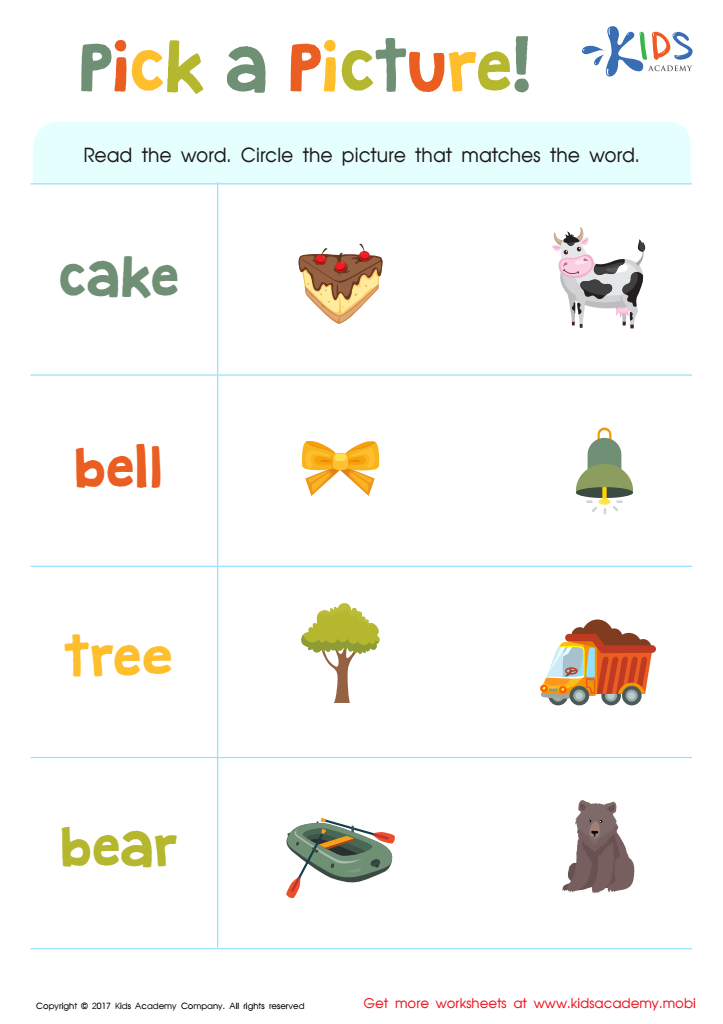
Pick a Picture Word Recognition Worksheet
 Assign to My Students
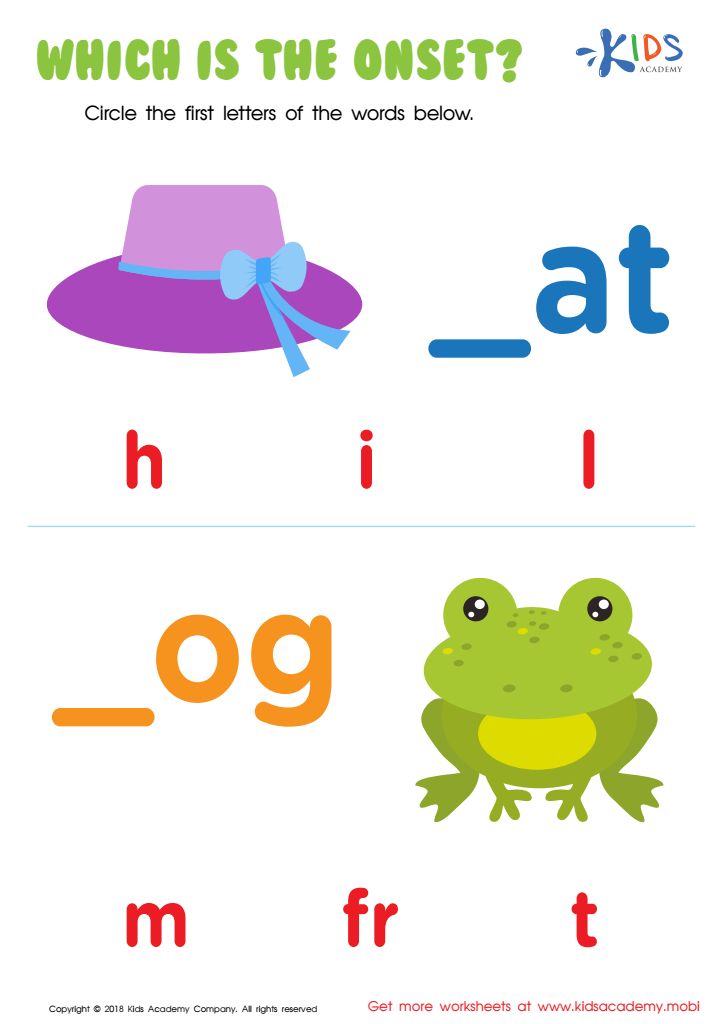
Which Is the Onset? Worksheet
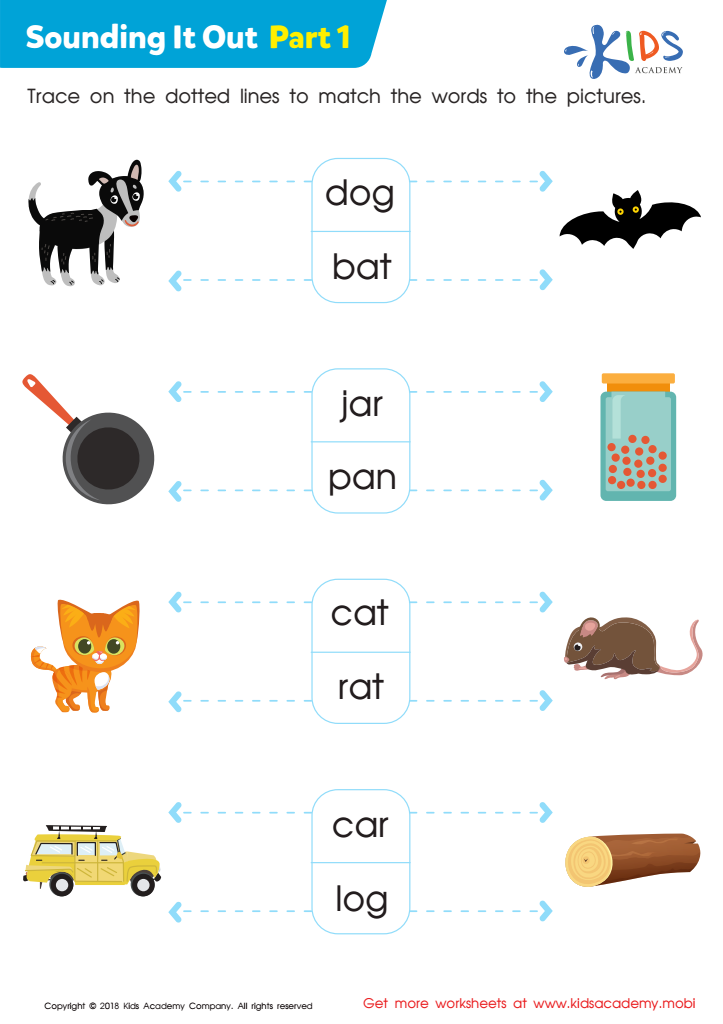
Sounding it Out: Part 1 Worksheet
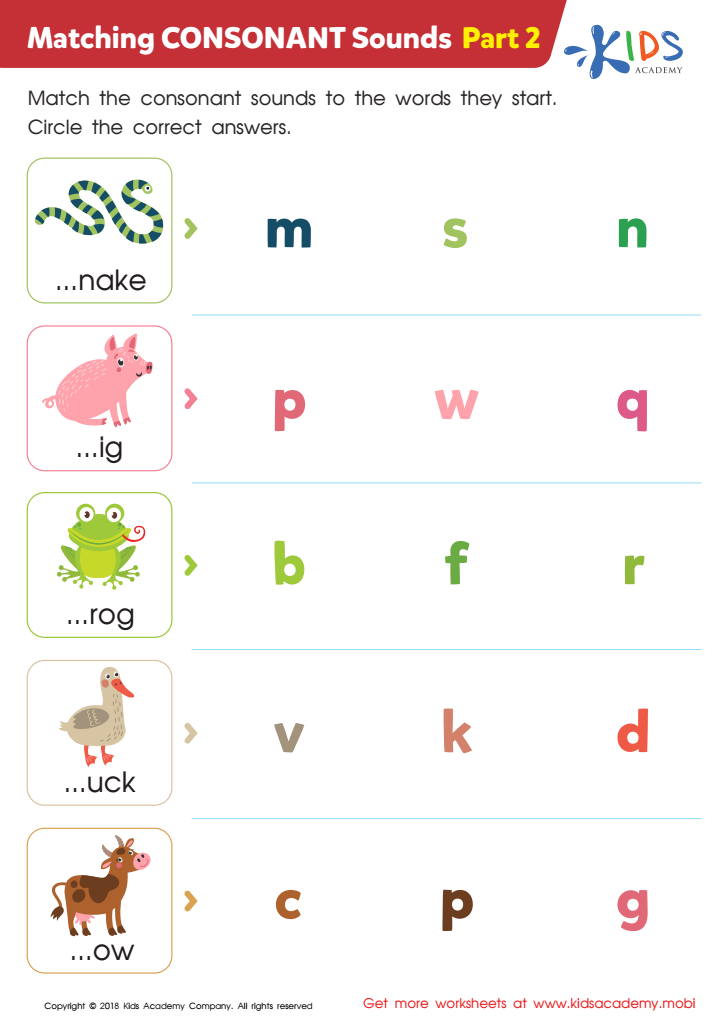
Matching Consonant Sounds: Part 2 Worksheet








Sound-letter correlation, or phonemic awareness, is crucial for 5-year-olds as it lays the foundation for reading and writing skills. At this age, children are beginning to understand that letters represent sounds, a skill vital for decoding words. When parents and teachers focus on sound-letter correlation, they help children recognize that words are made up of individual sounds (phonemes) and that these sounds can be connected to specific letters or letter combinations.
Engaging with sound-letter correlation enhances children's vocabulary, spellings, and overall literacy development. Students who develop a strong grasp of this concept are more likely to become fluent readers, which is essential for academic success. It also makes it easier for children to learn other critical skills, such as listening and comprehension.
Furthermore, an early emphasis on sound-letter relationships fosters a positive attitude toward learning, making children more confident and excited to explore language. Parents can reinforce this at home with fun activities such as singing songs, playing rhyming games, or reading together, while teachers can incorporate interactive lessons and phonics activities. Ultimately, prioritizing sound-letter correlation is investing in a child's literacy journey, setting the stage for lifelong learning and communication skills.








