Understanding communities Worksheets for 5-Year-Olds
3 filtered results
-
From - To
Engage your 5-year-olds with our "Understanding Communities" worksheets, designed to introduce young learners to the concept of community and their roles within it. These fun, interactive worksheets encourage exploration of familiar places such as parks, schools, and neighborhoods, promoting discussion about community helpers and important locations. Featuring vibrant images and age-appropriate activities, kids will develop their critical thinking skills while enhancing vocabulary and comprehension. Perfect for preschool and kindergarten classrooms, these worksheets foster a sense of belonging and community awareness. Download now to enrich your child's learning experience and support their social development!
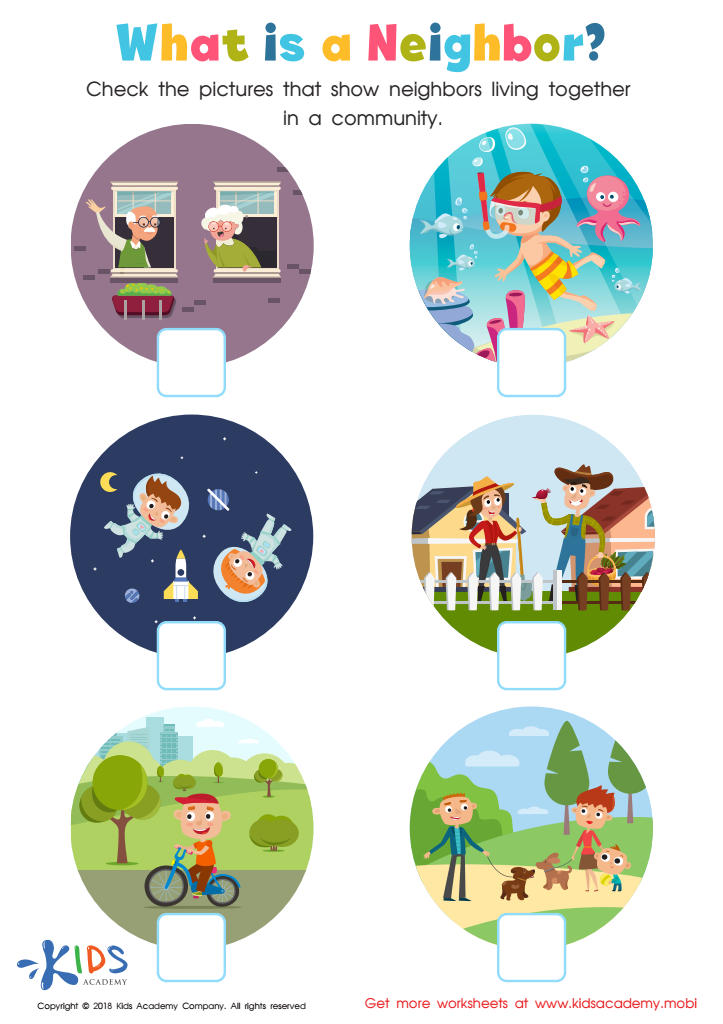
What is a neighbor Worksheet
 Assign to My Students
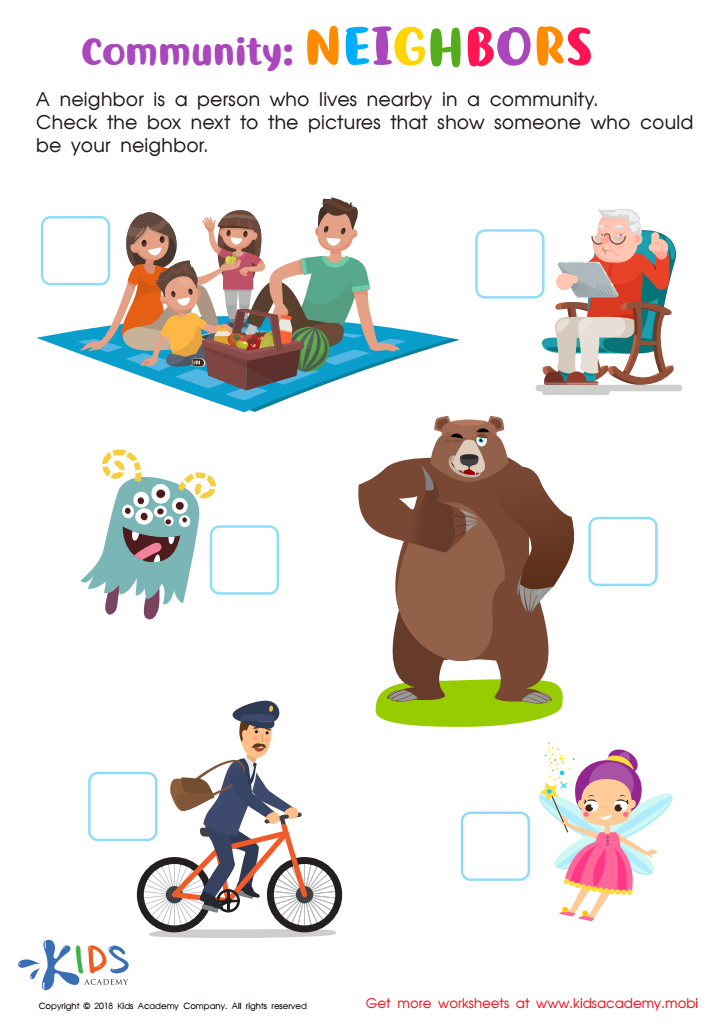
Community: Neighbors Worksheet
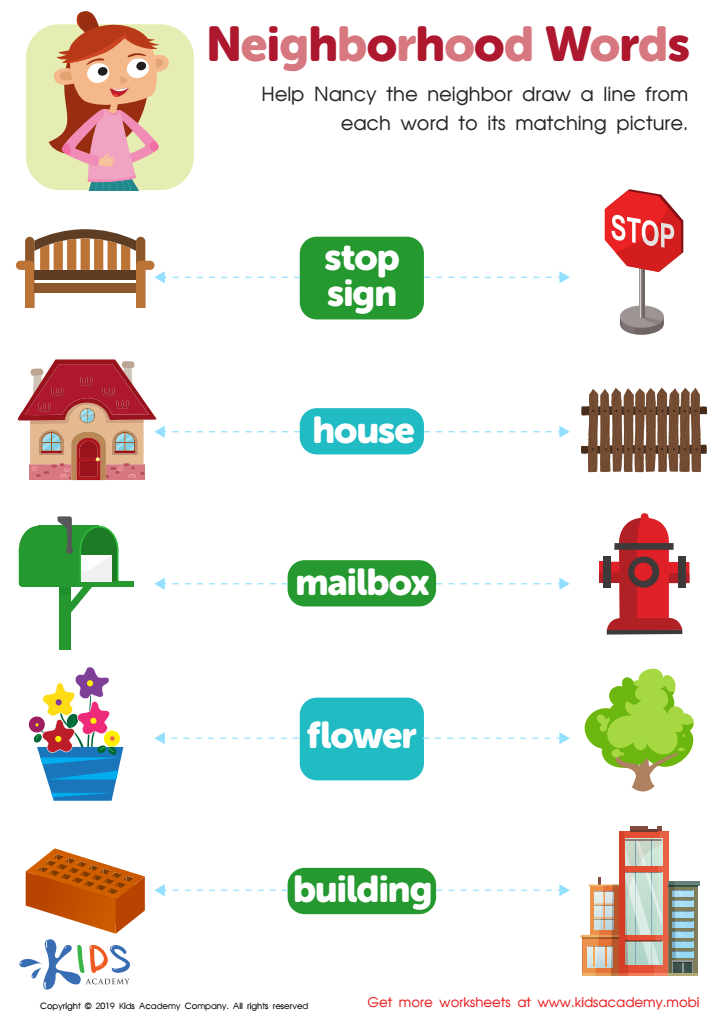
Neighborhood Words Worksheet







Understanding communities is crucial for 5-year-olds, and it's essential for parents and teachers to embrace this concept for several reasons. First, community understanding fosters a sense of belonging. As young children begin to navigate their environments, recognizing the people and places around them helps cultivate their social identity and self-esteem.
Additionally, learning about diverse communities promotes empathy and acceptance. When children are exposed to various cultures, backgrounds, and lifestyles, they develop awareness and respect for differences. This foundational knowledge aids in reducing stereotypes and lays the groundwork for positive relationships throughout their lives.
Engaging children in discussions about community also provides a practical context for multiple subjects. Math concepts can be linked to community numbers or structures (e.g., counting playmates or buildings), while language skills can blossom through storytelling about local heroes or traditions.
Moreover, understanding their immediate environment empowers young learners, as it encourages exploration and curiosity. This enthusiasm is pivotal for a holistic education, which can translate into a lifelong love of learning. By highlighting the importance of communities, parents and teachers not only enrich children’s cognitive development but also contribute to shaping thoughtful, compassionate individuals.








