Understanding currency Worksheets for 5-Year-Olds
5 filtered results
-
From - To
Welcome to our "Understanding Currency Worksheets for 5-Year-Olds" page! Here, young learners can explore the basics of money through engaging activities designed to develop their financial literacy. Our worksheets include colorful images and interactive exercises that introduce children to different denominations, identifying values, and basic counting skills. By making learning fun, we empower kids to grasp essential concepts about coins and bills while enhancing their number recognition and problem-solving abilities. Ideal for home or classroom use, these worksheets serve as a vital tool to cultivate a foundational understanding of currency in early childhood education. Let's make learning about money exciting and enjoyable!
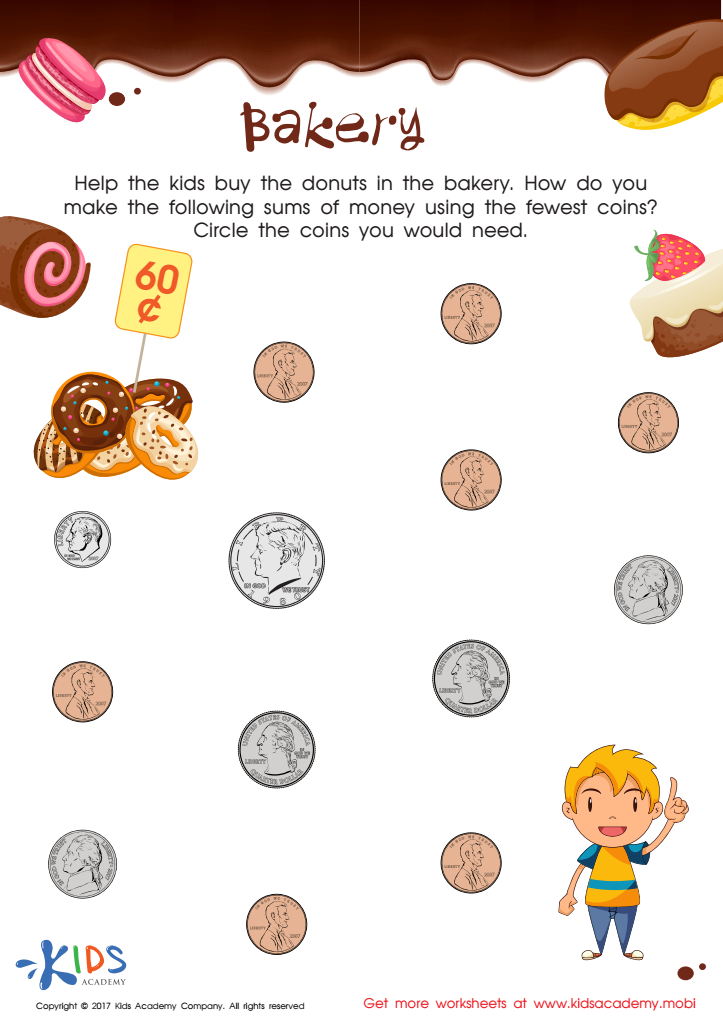
Counting Coins Worksheet
 Assign to My Students
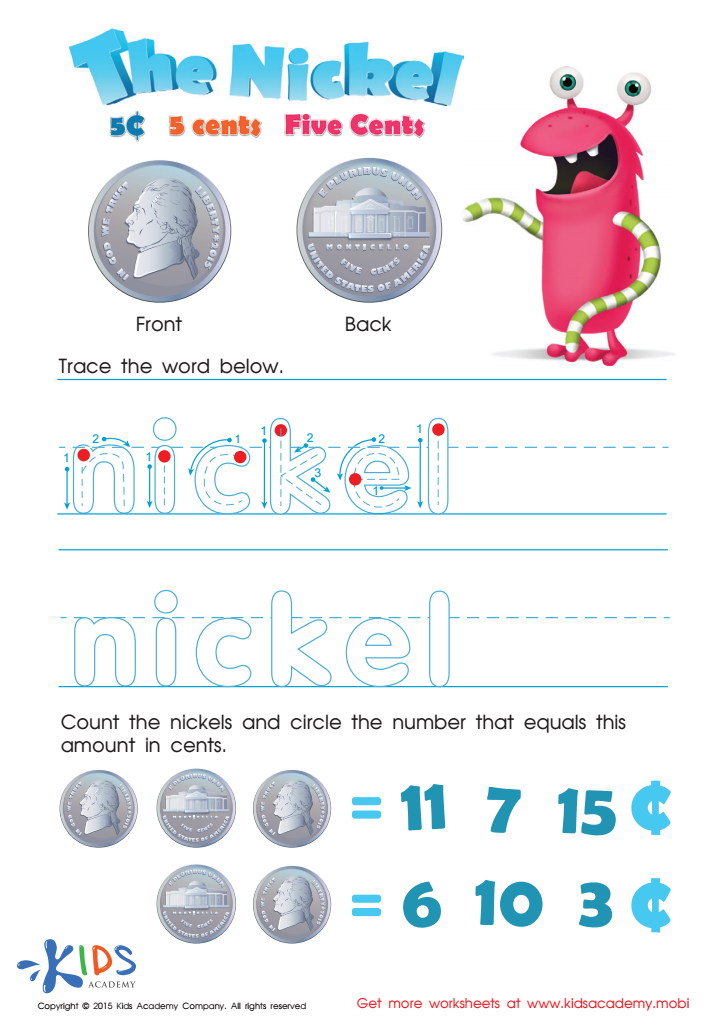
Five Cents or the Nickel Money Worksheet
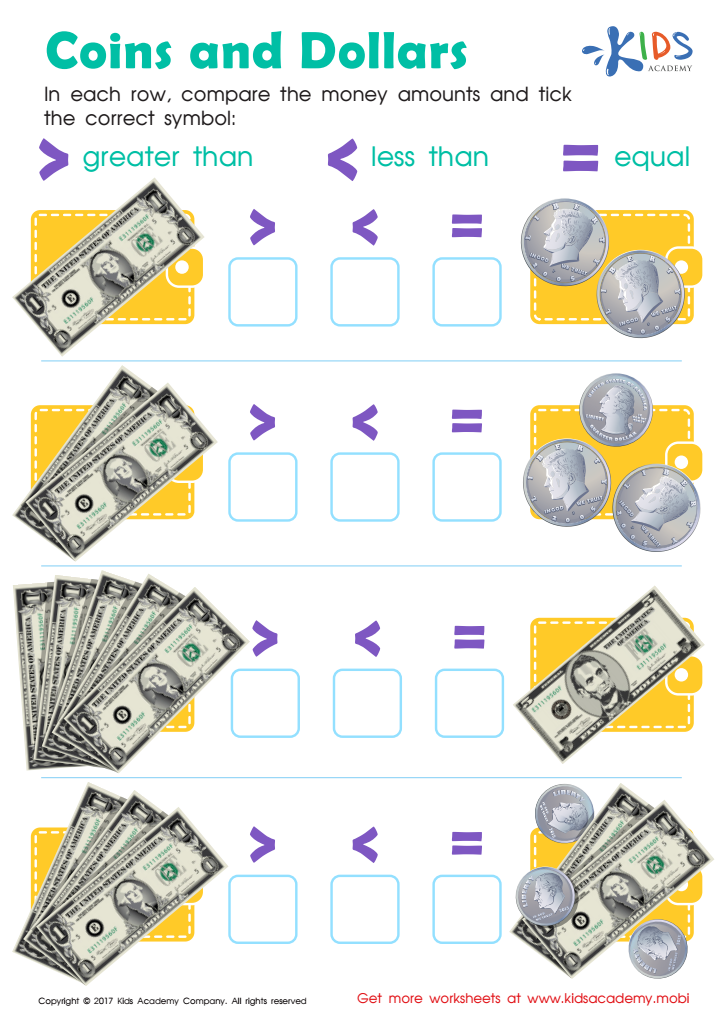
Money: Coins Dollars Printable
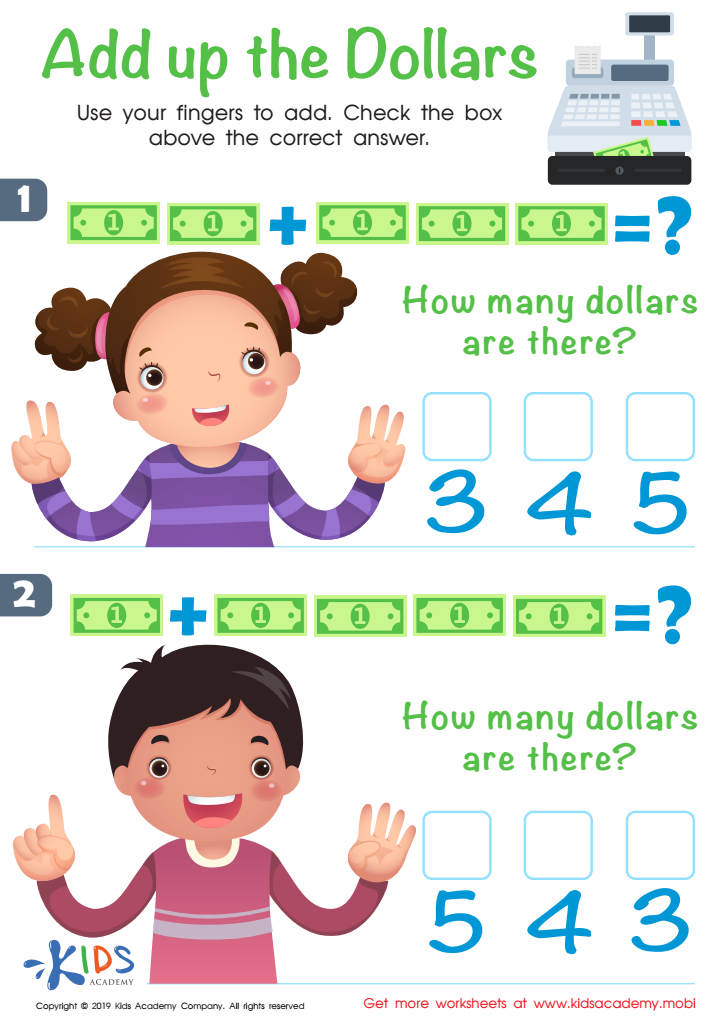
Add up the Dollars Worksheet








Understanding currency is an essential foundational skill for 5-year-olds, as it equips children with their first exposure to finance and critical life concepts. At this age, children are naturally curious and eager to learn about the world around them, making it an ideal time to introduce them to basic monetary concepts. Learning about currency not only enhances their numeracy skills—like counting, sorting, and recognizing values—but also boosts their cognitive development by helping them understand the concept of exchange.
Furthermore, grasping the idea of currency promotes basic economic awareness and can lay the groundwork for future financial literacy. These early lessons foster important life skills, such as responsibility and decision-making, as children begin to associate money with choices and their consequences. Parents and teachers have the unique opportunity to create engaging experiences around currency through playful activities, like using play money for simple transactions during pretend play, or incorporating money-themed games.
Lastly, teaching kids about currency can spark broader discussions about needs versus wants, encouraging critical thinking and helping children develop a strong foundation for when they encounter more complex financial concepts later in life. In short, understanding currency at a young age is a stepping stone to becoming informed, responsible adults.








