Understanding numeracy Worksheets for 5-Year-Olds
4 filtered results
-
From - To
Discover our engaging Understanding Numeracy Worksheets for 5-Year-Olds, designed to enhance foundational math skills through playful learning! These worksheets support young learners as they explore essential concepts such as counting, number recognition, and basic addition. Crafted with vibrant illustrations and interactive activities, each worksheet captures children's attention while fostering critical thinking and problem-solving abilities. Perfect for use at home or in the classroom, our resources provide a structured approach to numeracy that aligns with early childhood education standards. Encourage a love for math and boost confidence in young learners with our thoughtfully designed worksheets aimed at making numeracy fun and accessible!
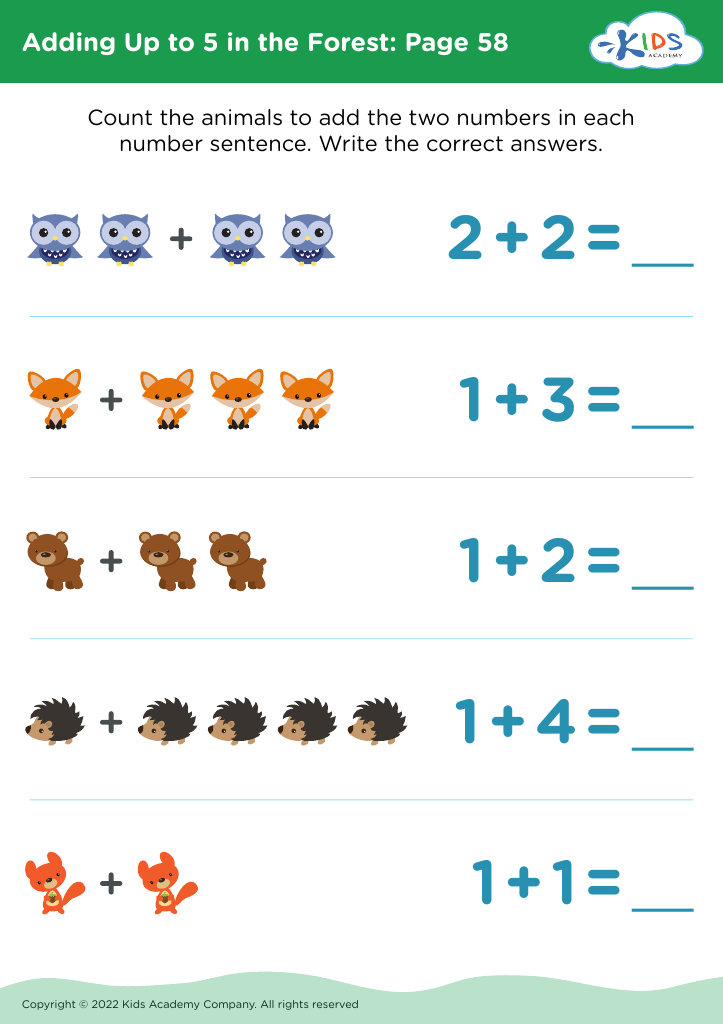
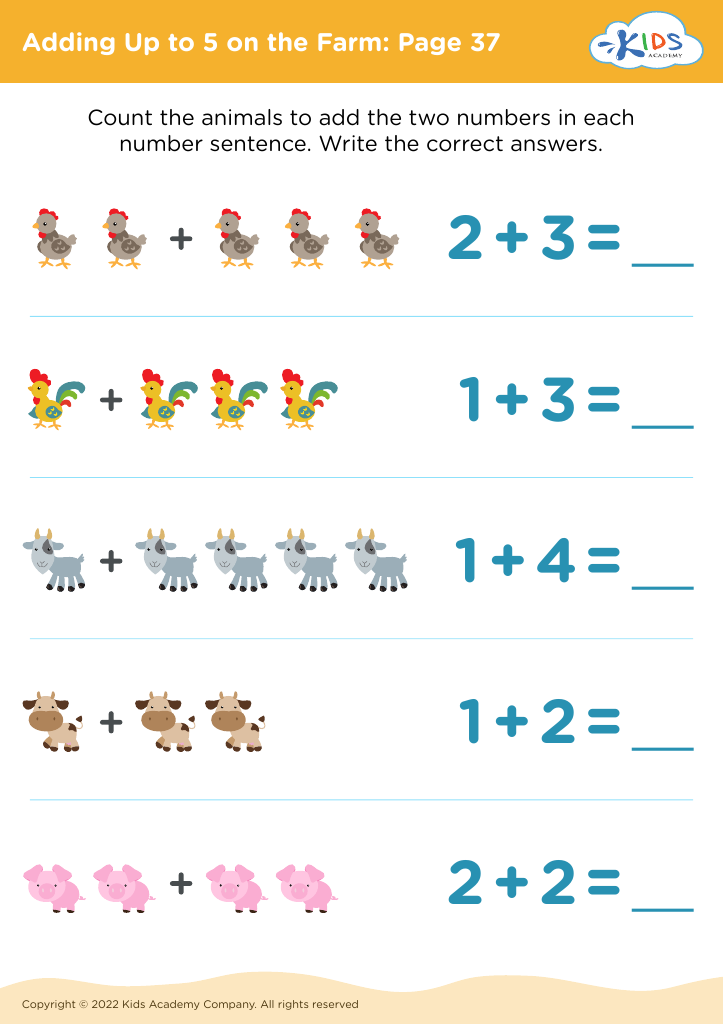
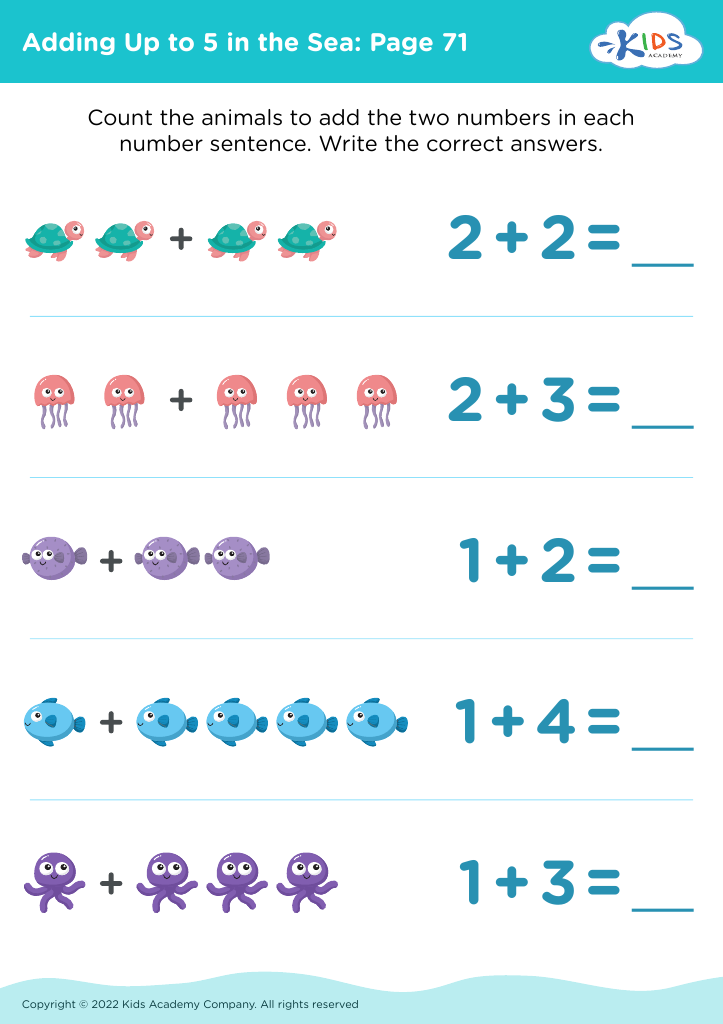
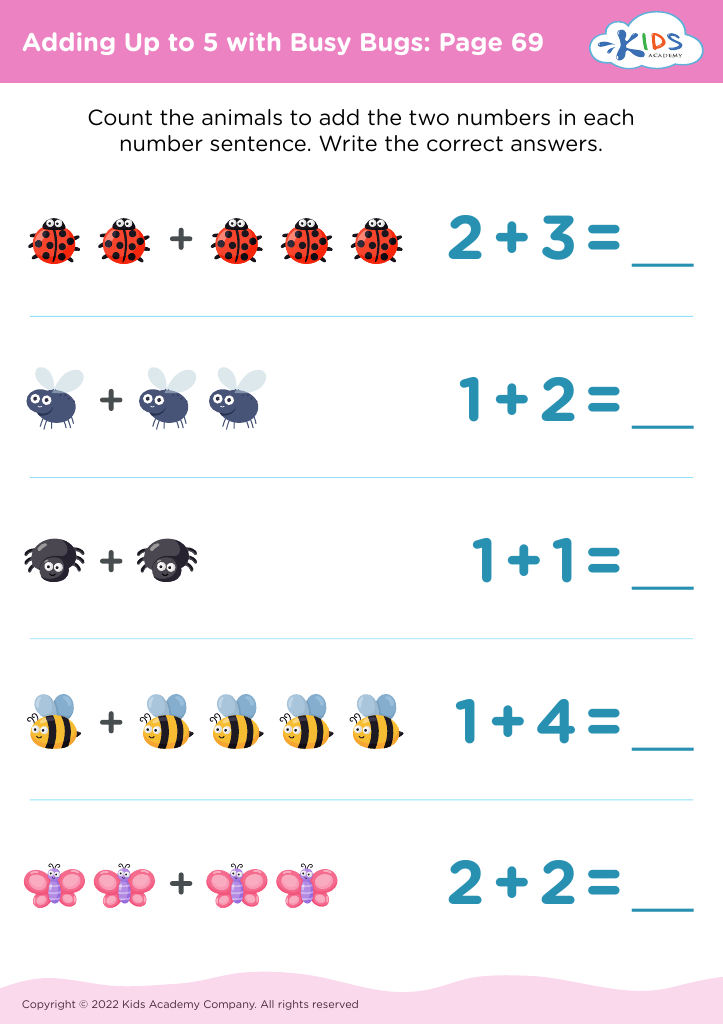








Understanding numeracy for 5-year-olds is crucial as it lays the foundation for a child’s academic journey and overall cognitive development. At this age, children are naturally curious and eager to learn, making it an prime time to introduce numerical concepts through engaging activities. Early numeracy skills, such as counting, recognizing numbers, and understanding basic operations, foster problem-solving abilities and logical thinking.
Incorporating numeracy into daily routines—like counting objects during shopping or measuring ingredients while cooking—makes learning practical and relevant. When parents and teachers prioritize numeracy, they help children develop confidence in math, reducing anxiety around the subject as they progress to higher education levels.
Moreover, a strong numeracy foundation is linked to success in future academic endeavors and often correlates with achievement in various fields. It also equips children with essential life skills, such as budgeting and time management.
In summary, by fostering an understanding of numeracy at an early age, parents and teachers can significantly influence a child’s future success, instill a love for learning, and empower children with essential skills they'll use throughout their lives.








