Uppercase identification Worksheets for 5-Year-Olds
5 filtered results
-
From - To
Unlock the adventure of learning with our Uppercase Identification Worksheets designed specifically for 5-year-olds! These engaging and colorful worksheets provide a fun way for young learners to recognize and identify uppercase letters. Through a variety of interactive activities, children will enhance their alphabet skills, boosting their confidence and preparing them for reading and writing. Each worksheet is thoughtfully crafted to appeal to young minds, making letter recognition an enjoyable process. Perfect for homeschoolers and parents alike, our resources are readily accessible and easy to print. Foster early literacy skills today with our collection of uppercase identification worksheets!
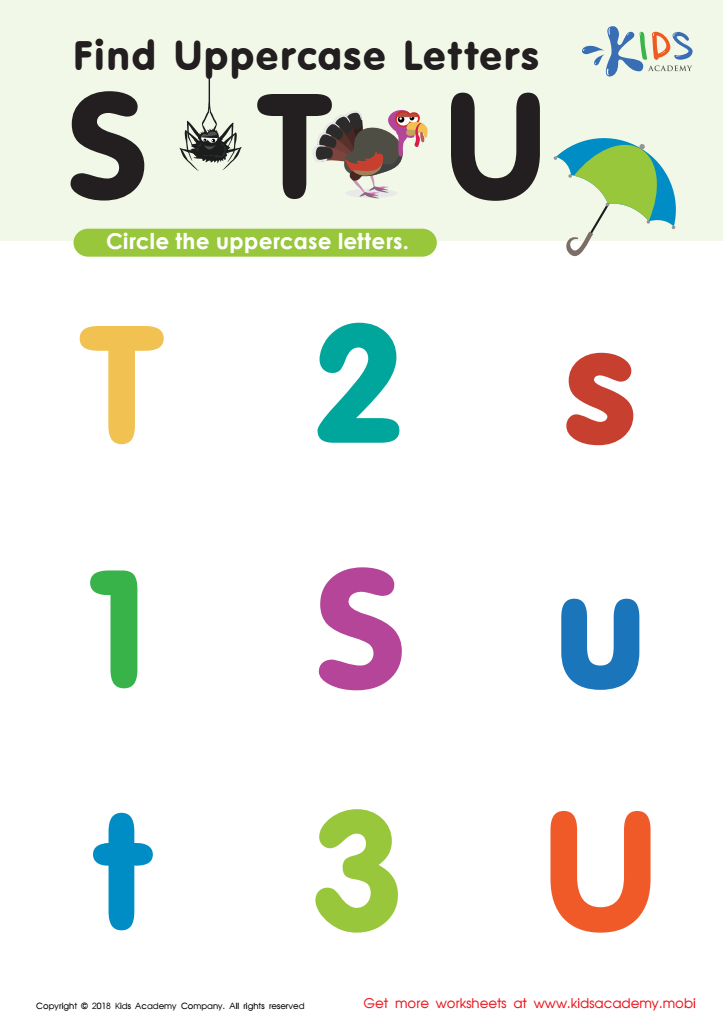
Find Uppercase Letters Worksheet
 Assign to My Students
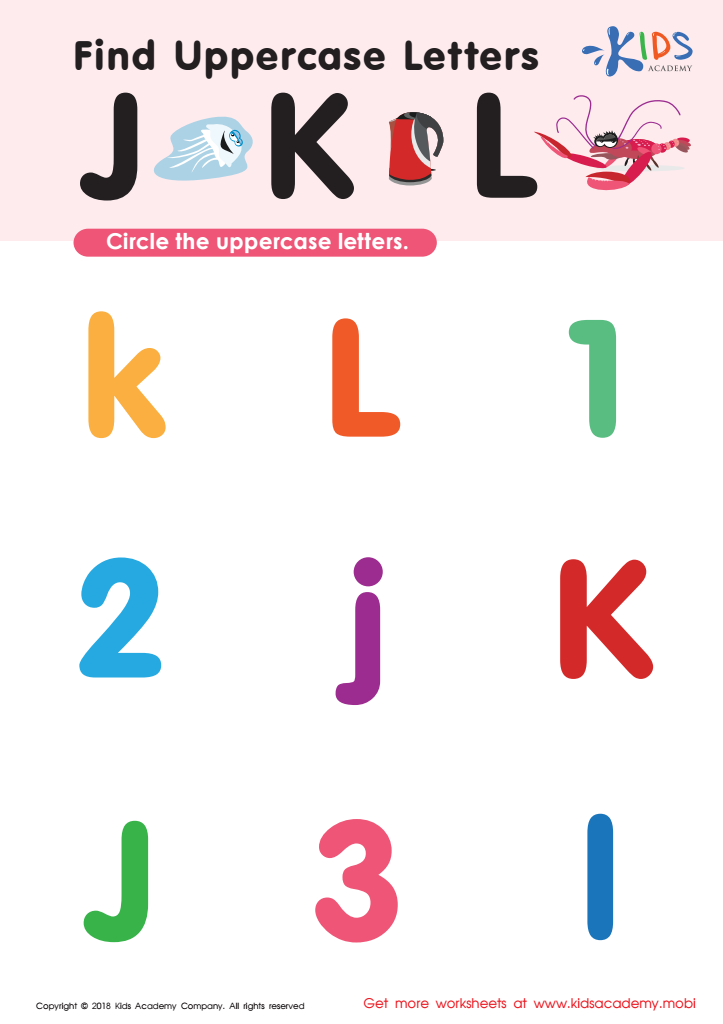
Find Uppercase Letters J, K, and L Worksheet
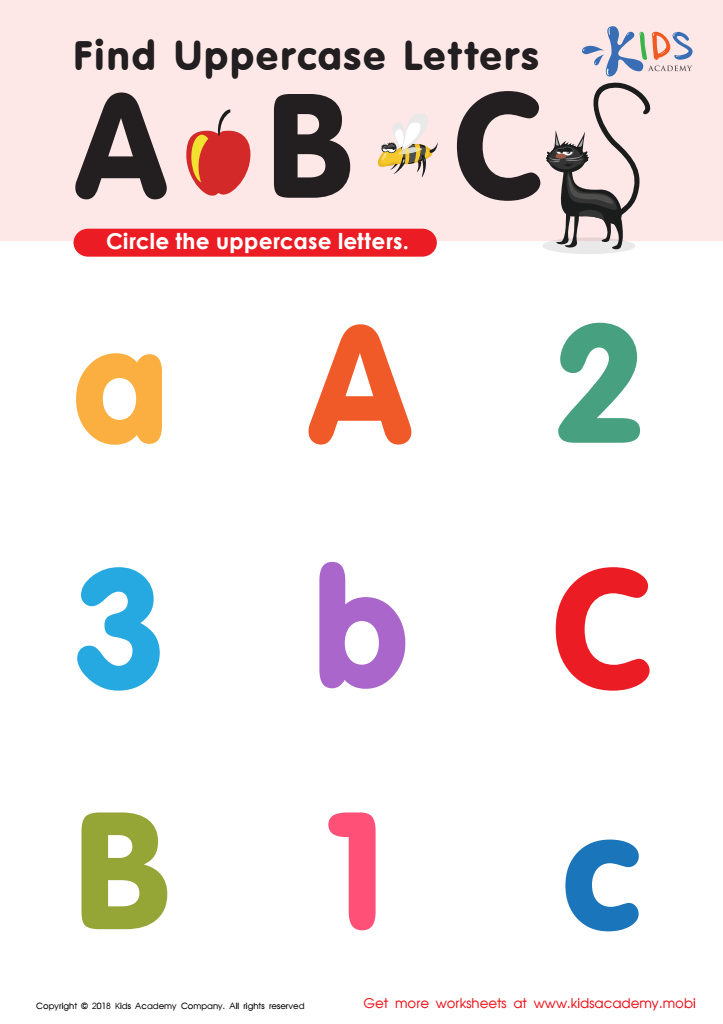
Find Uppercase Letters A, B, and C Worksheet
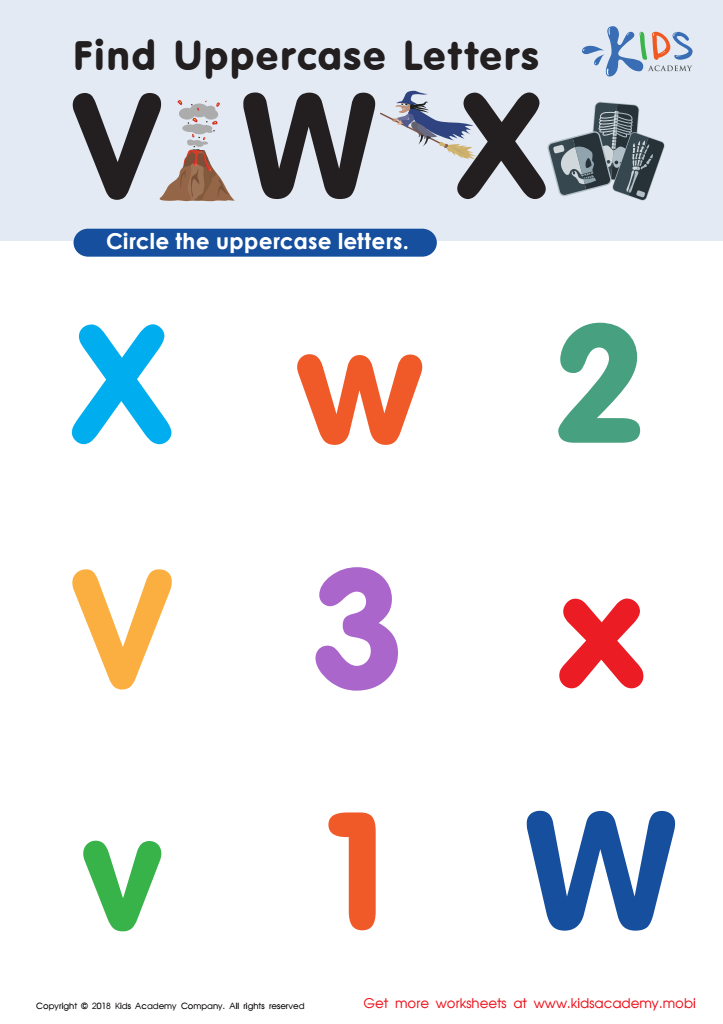
Find Uppercase Letters V, W, X Worksheet
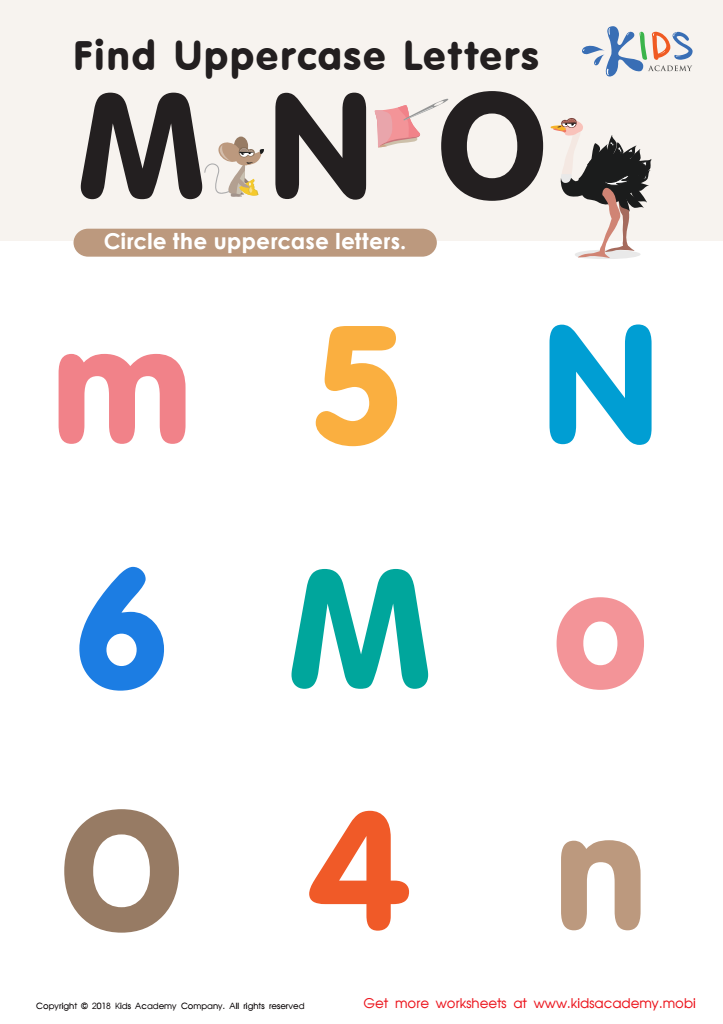
Find Uppercase Letters M, N, and O Worksheet








Uppercase letter identification is a foundational skill that significantly impacts a child's literacy development, making it essential for parents and teachers to prioritize this learning activity for five-year-olds. Recognizing uppercase letters is critical for various reasons. First, uppercase letters are often the first letters children encounter in print, including their names, signs, and labels. Familiarity with these letters builds confidence and eagerness to engage with written materials.
Second, mastering uppercase letters aids in developing phonemic awareness, as children learn to associate sounds with letters. This association is essential for reading and writing skills, which are crucial components of early education. Additionally, recognizing uppercase letters helps children with beginning spelling patterns and sentence structures, which is important as they advance in their literacy skills.
Finally, the ability to identify uppercase letters enhances children's understanding of their environment. They’ll recognize key concepts like titles, proper nouns, and acronyms, fostering comprehension and vocabulary growth. In summary, investing time and resources in teaching uppercase letter identification is key in nurturing confident, proficient readers and writers, laying the groundwork for a lifelong love of learning. By collaborating, parents and teachers can create engaging, enriching experiences that support this skill development.








