Visual-motor skills Worksheets for 5-Year-Olds
4 filtered results
-
From - To
Unlock your child's potential with our engaging visual-motor skills worksheets for 5-year-olds! Designed to support early development, these fun activities promote hand-eye coordination, fine motor skills, and overall visual processing. Children will enjoy tracing, drawing, and coloring, all while enhancing their ability to connect visual cues with motor responses. Perfect for both home and classroom use, our worksheets cater to various learning styles and are easy to print. As your little ones engage in these creative exercises, they'll build essential skills needed for writing and other key academic tasks. Start your journey to success with our visual-motor skills worksheets today!
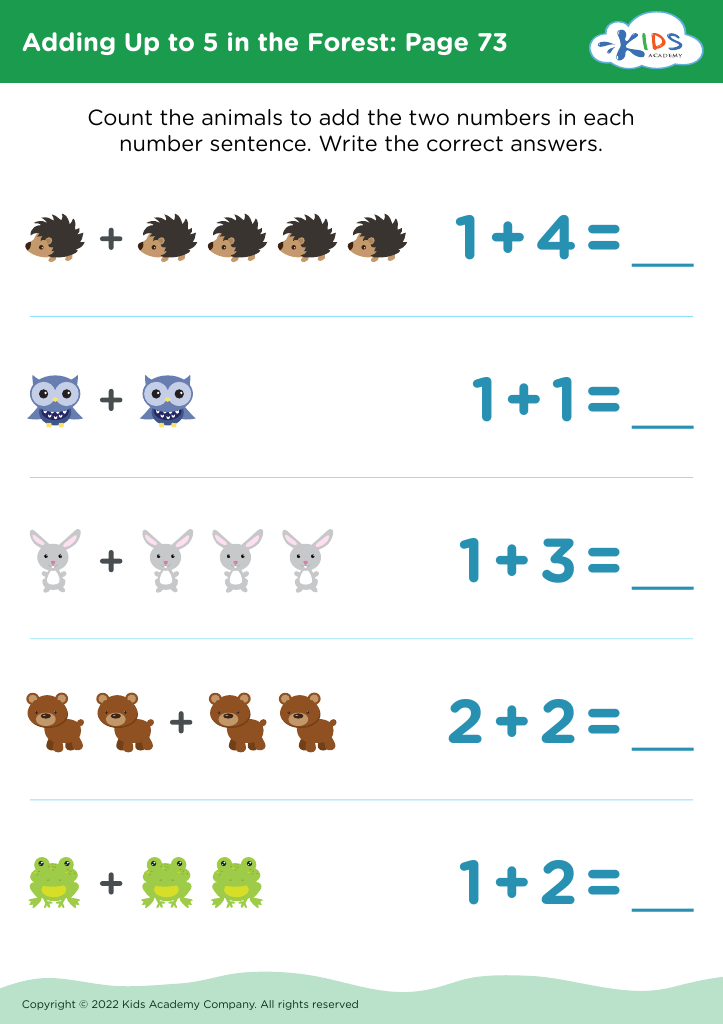
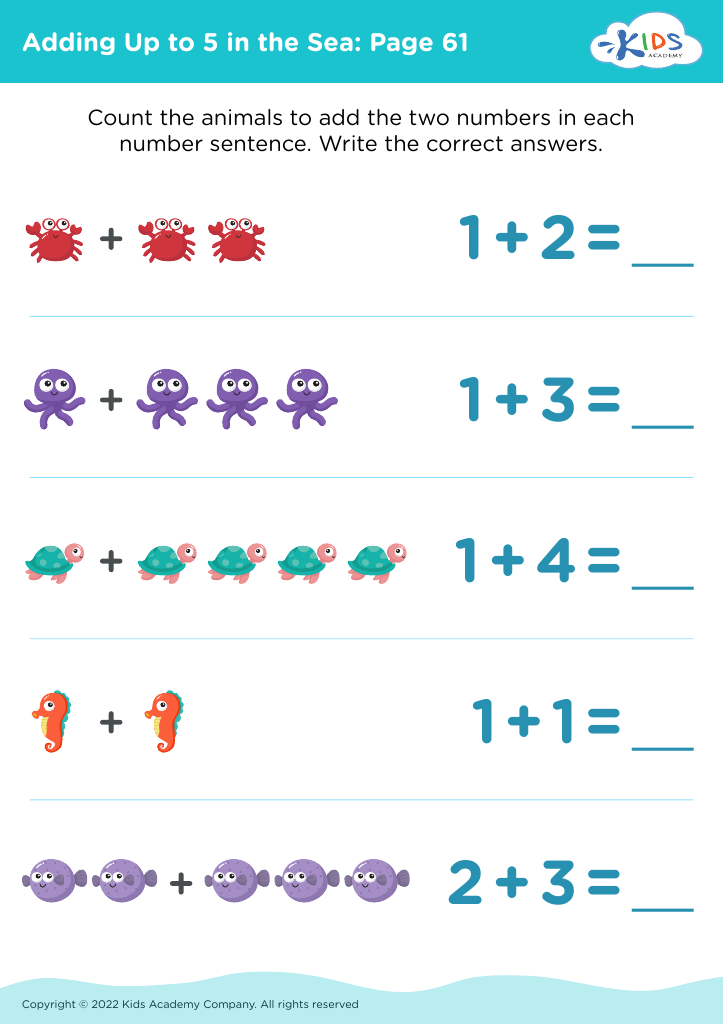
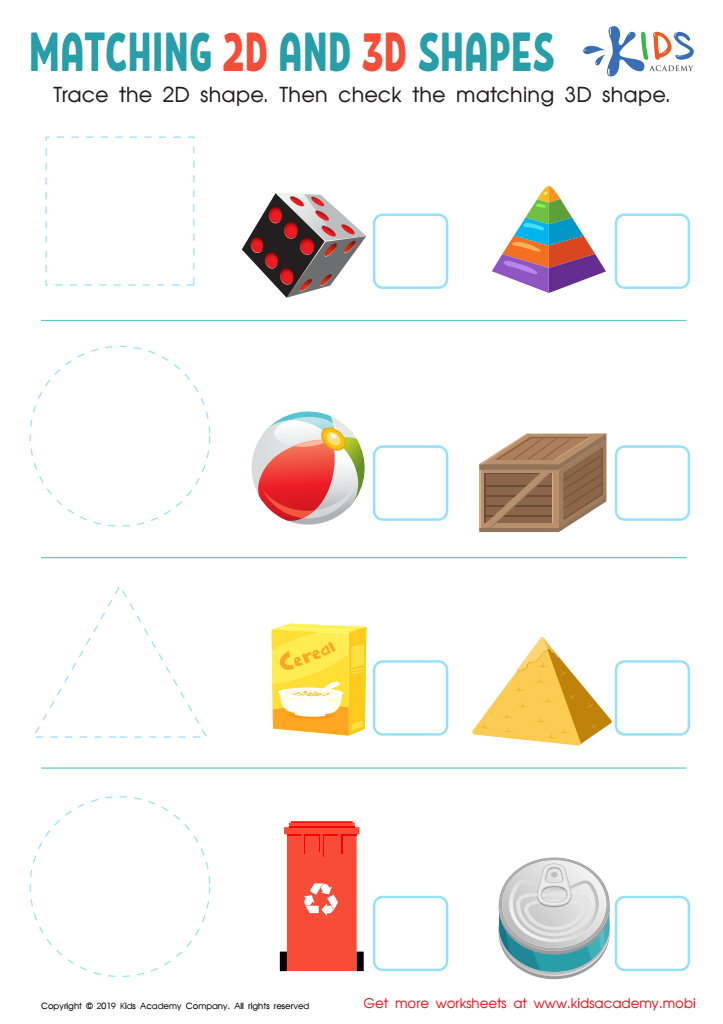
Matching 2D and 3D Shapes Worksheet
 Assign to My Students
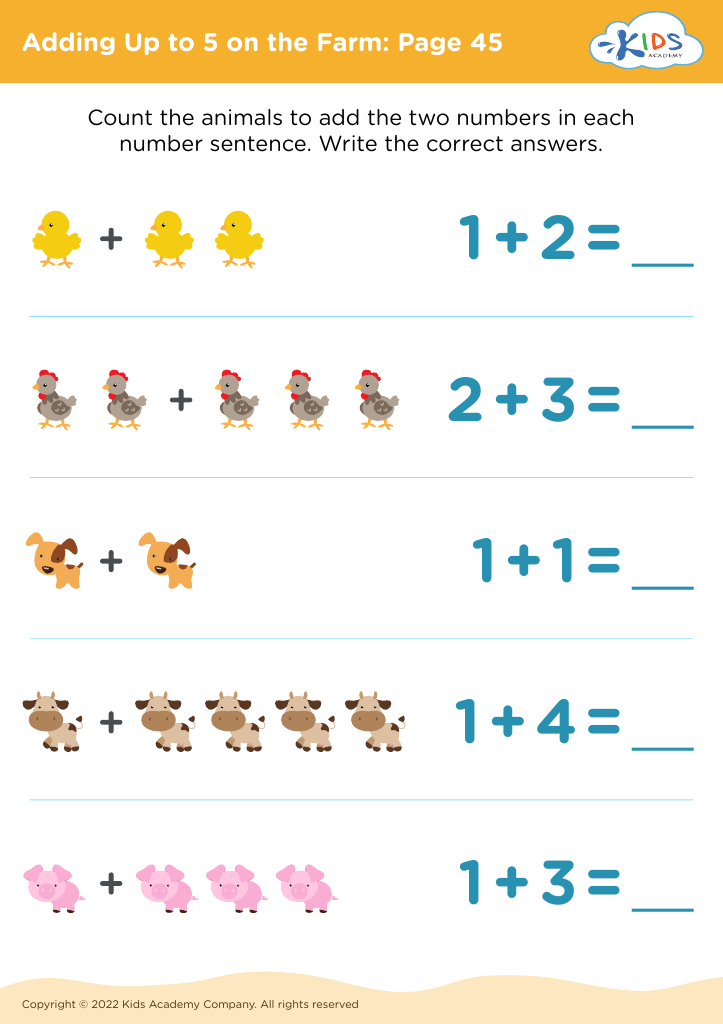







Visual-motor skills are essential for a child's overall development, especially at the age of five. These skills involve the coordination of visual perception with fine motor movements, allowing children to interact with their environment effectively. Parents and teachers should care about visual-motor skills because they form the foundation for critical activities such as writing, drawing, using scissors, and even participating in sports.
At this developmental stage, children are beginning to express their thoughts and creativity, and strong visual-motor skills facilitate this self-expression. They also play a significant role in academic readiness; children with well-developed visual-motor skills tend to find tasks like writing letters and numbers easier, which can enhance their confidence in a classroom setting.
Additionally, weak visual-motor skills may lead to frustration and hinder a child's enjoyment of learning activities. By addressing this skill set early, parents and teachers can provide targeted support, ensuring children develop the necessary competencies as they transition into more structured learning environments. Investing time in enhancing visual-motor skills promotes not just academic success, but also fine motor development and overall self-esteem, setting a positive trajectory for future learning and growth.








