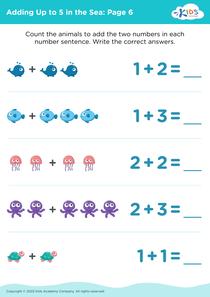
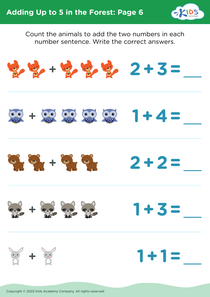
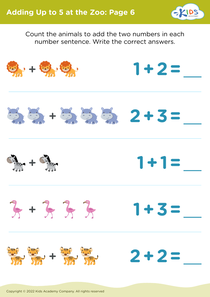
Addition skills Adding on the Farm Worksheets for 5-Year-Olds
7 filtered results
-
From - To
Welcome to our "Addition Skills: Adding on the Farm" worksheets designed specifically for 5-year-olds! These engaging and fun-filled activities introduce young learners to basic addition concepts while immersing them in a delightful farm setting. Through colorful illustrations and easy-to-follow exercises, children will count farm animals, vegetables, and other farm-related items, making math both enjoyable and relatable. Our worksheets not only promote essential addition skills but also enhance problem-solving abilities and boost confidence in young mathematicians. Discover the joy of learning with these interactive worksheets, perfect for at-home practice or classroom use! Start adding fun to your child's learning journey today!
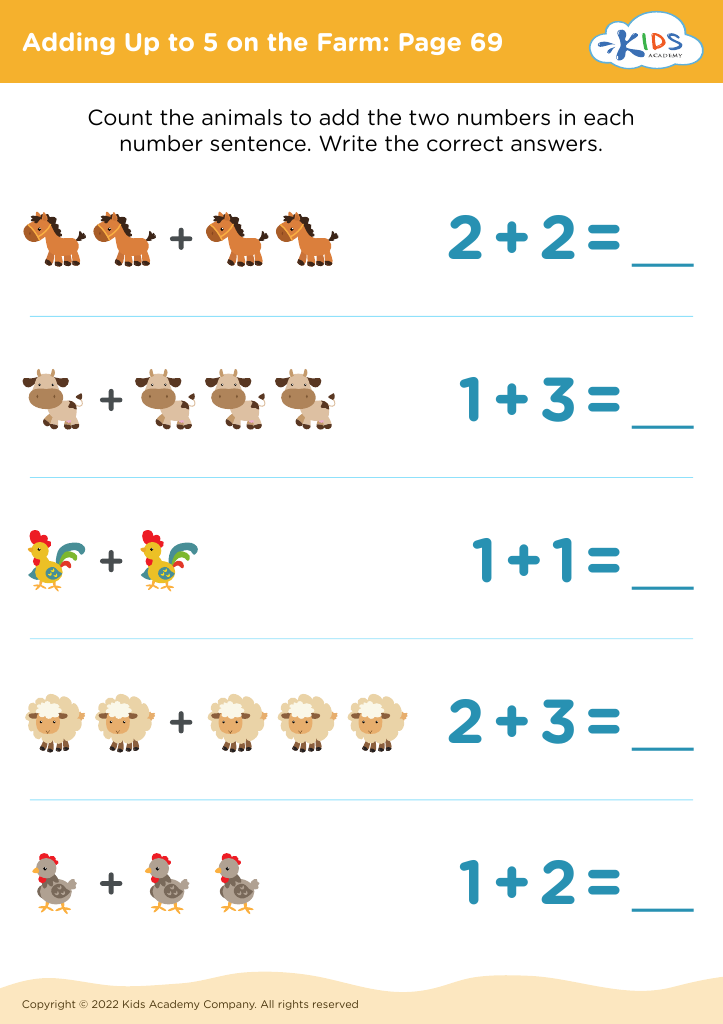
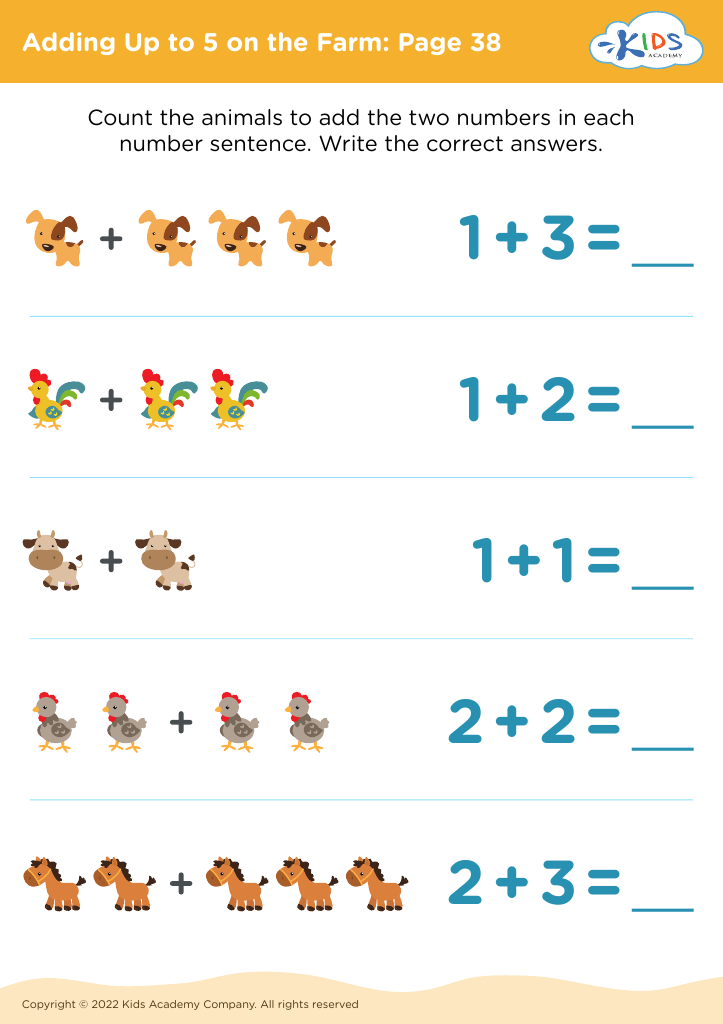
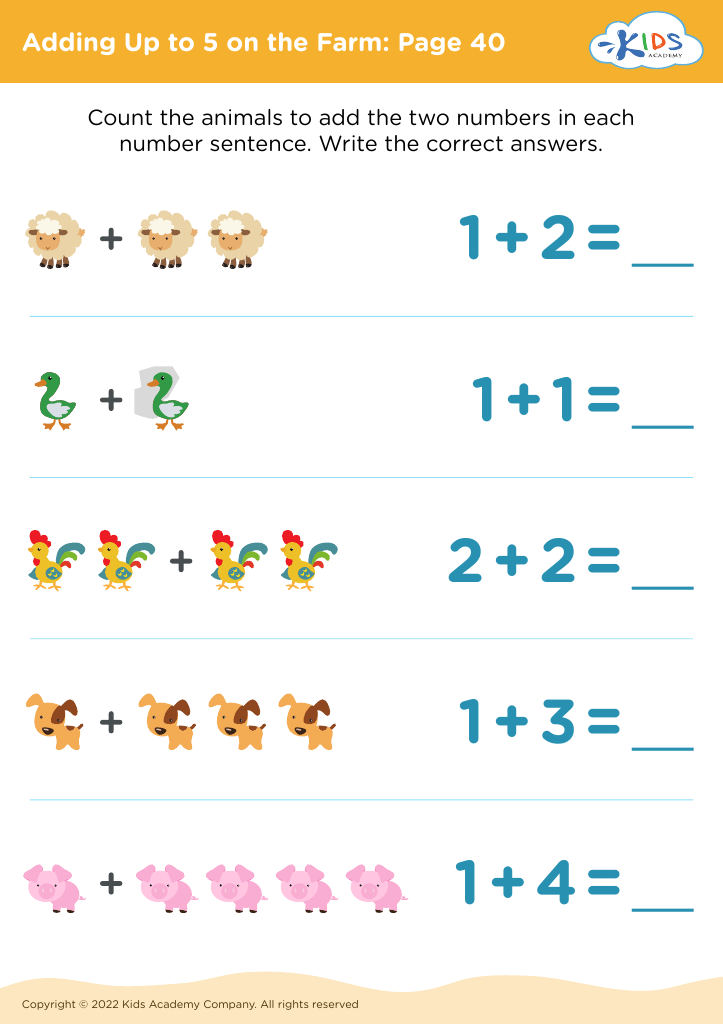
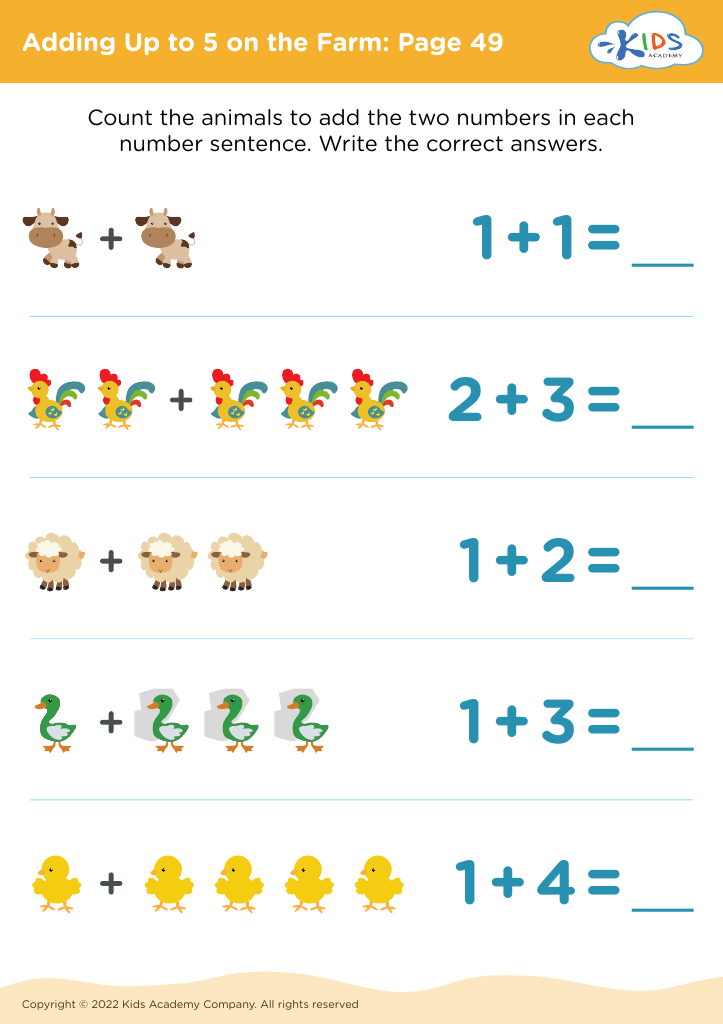
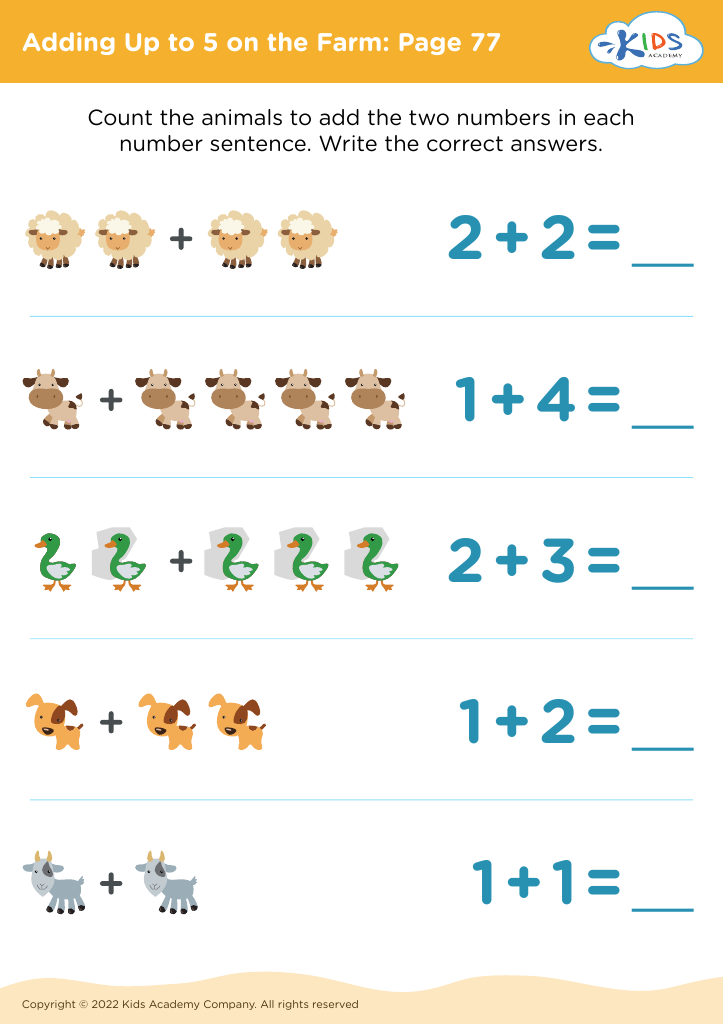
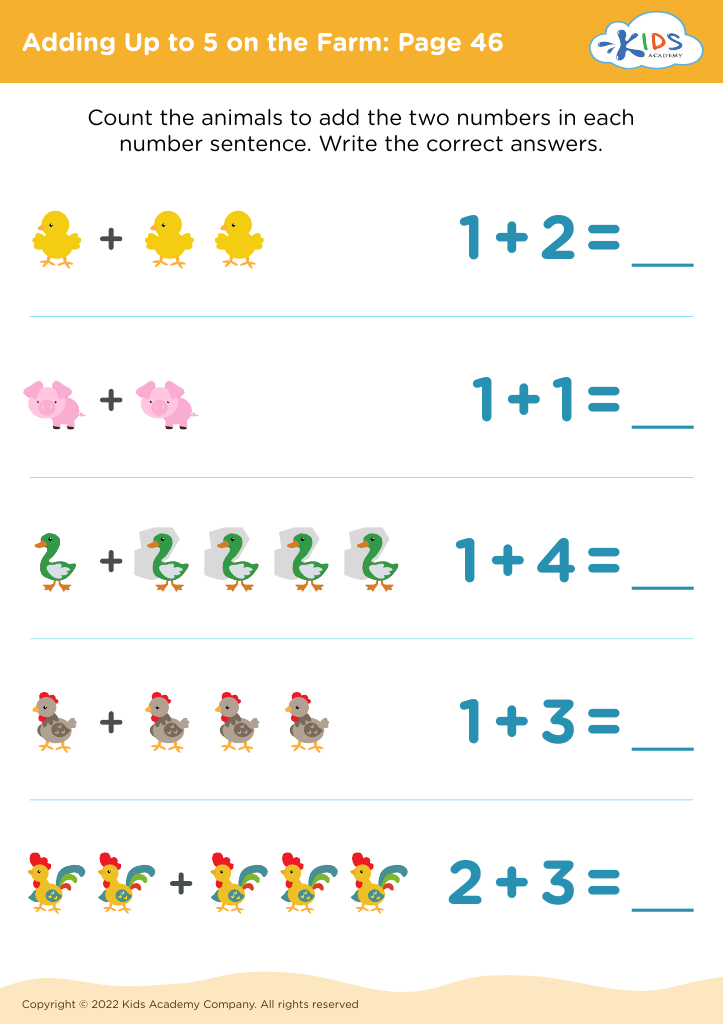
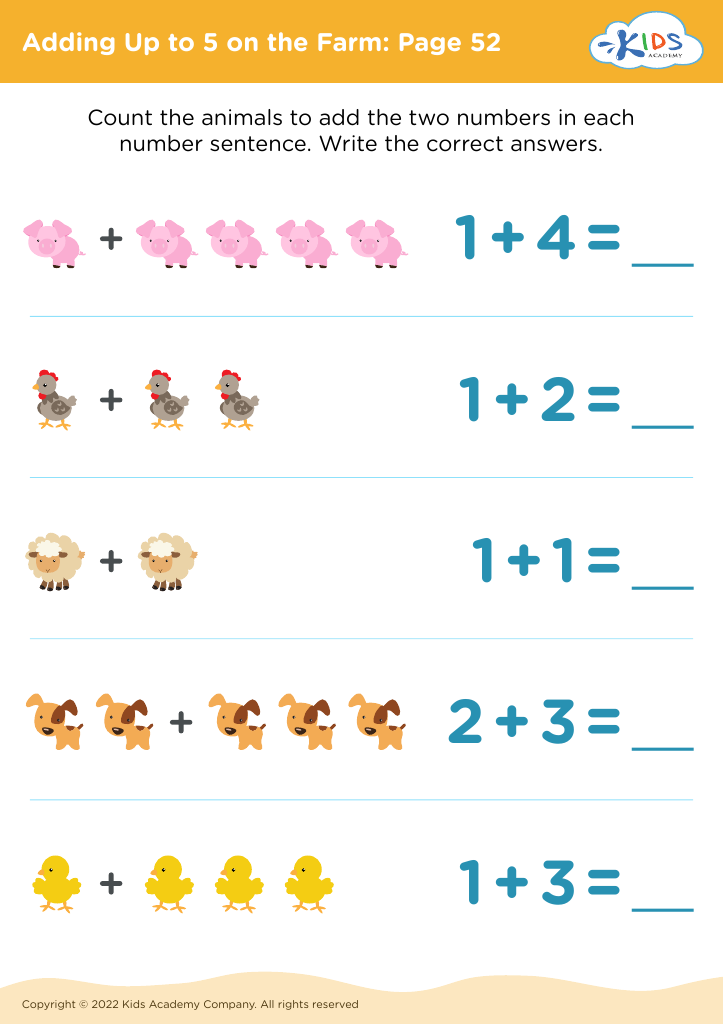



Addition skills are crucial for 5-year-olds as they form the foundation for future math learning and overall cognitive development. "Adding on the Farm" provides a fun, relatable context by integrating mathematical concepts with familiar experiences. Young children are naturally curious, and incorporating themes from the farm helps spark that curiosity, making learning more engaging and meaningful.
Practicing addition in this enjoyable setting can enhance comprehension. For instance, counting animals, crops, or tools can illustrate adding together different groups and help children understand the social aspects of collaboration and sharing. Mastering these skills fosters problem-solving techniques and logical thinking as children distinguish quantities and work with numbers.
Furthermore, developing addition skills at a young age promotes confidence in their mathematical abilities. As children add with activities like farm-related counting games, they build critical thinking skills and the ability to connect ideas establish lasting connections to math. This is essential not only for their academic success but also for real-life situations as they grow.
Ultimately, engaging children in activities like "Adding on the Farm" nurtures enthusiasm for learning while equipping them with essential life skills, making it crucial for teachers and parents to prioritize and support these experiences.