Addition up to 5 Adding Up to 5 Worksheets for 5-Year-Olds
4 filtered results
-
From - To
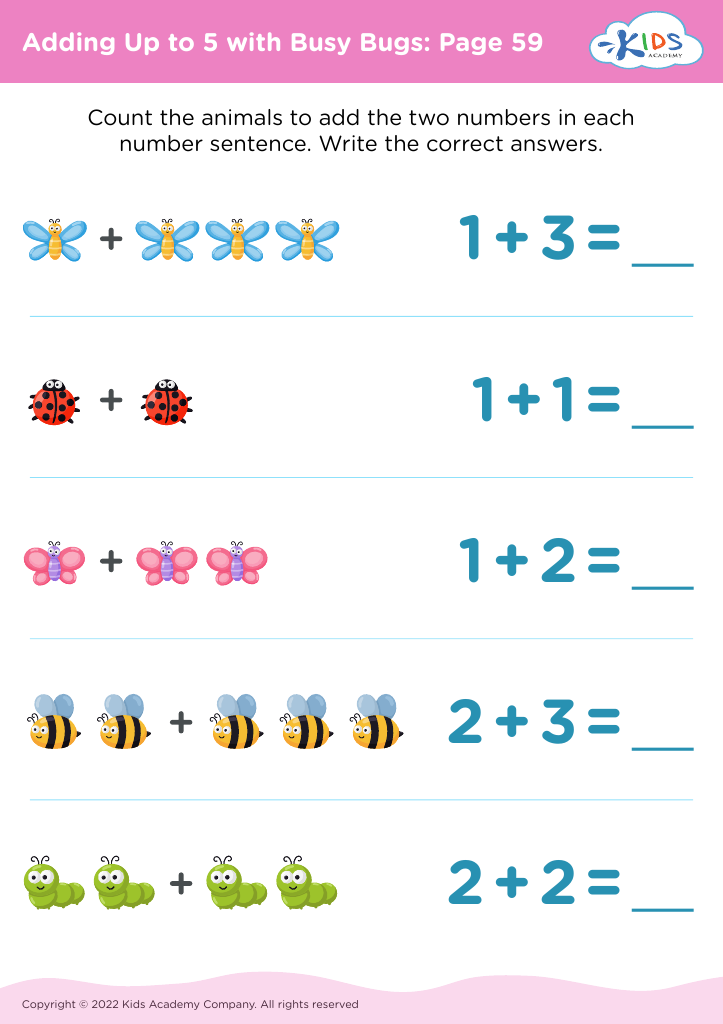
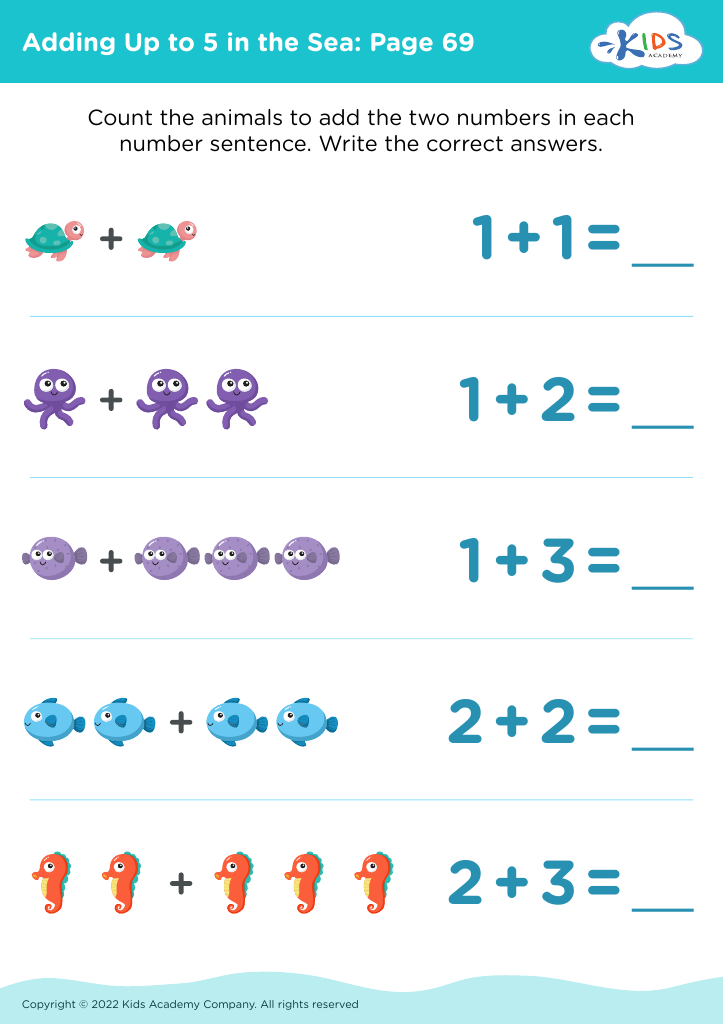
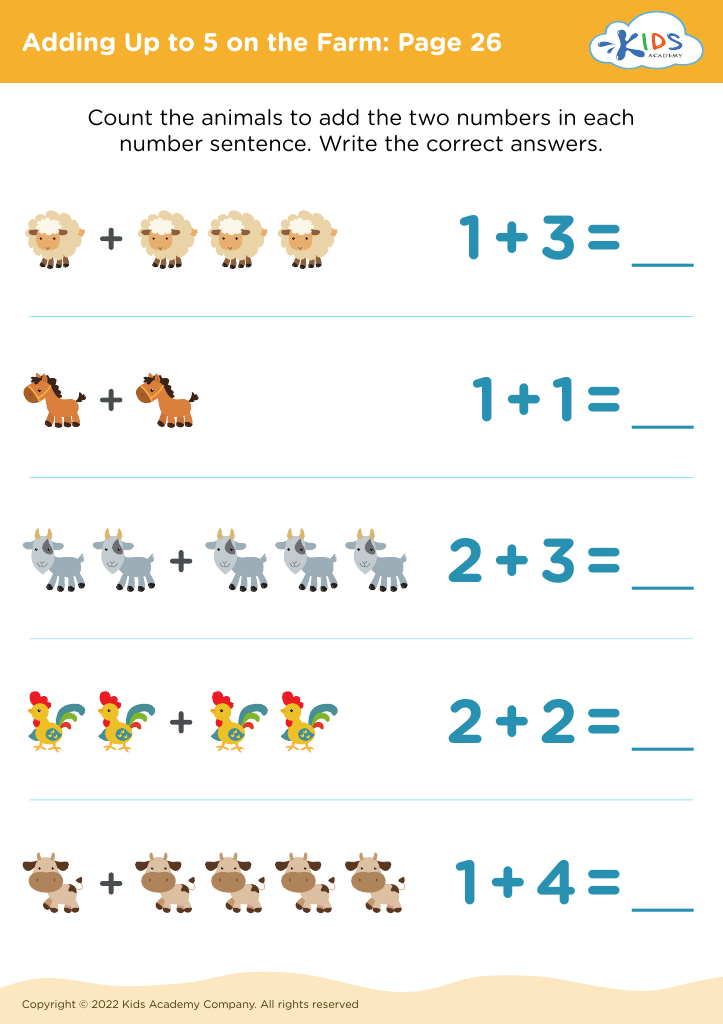
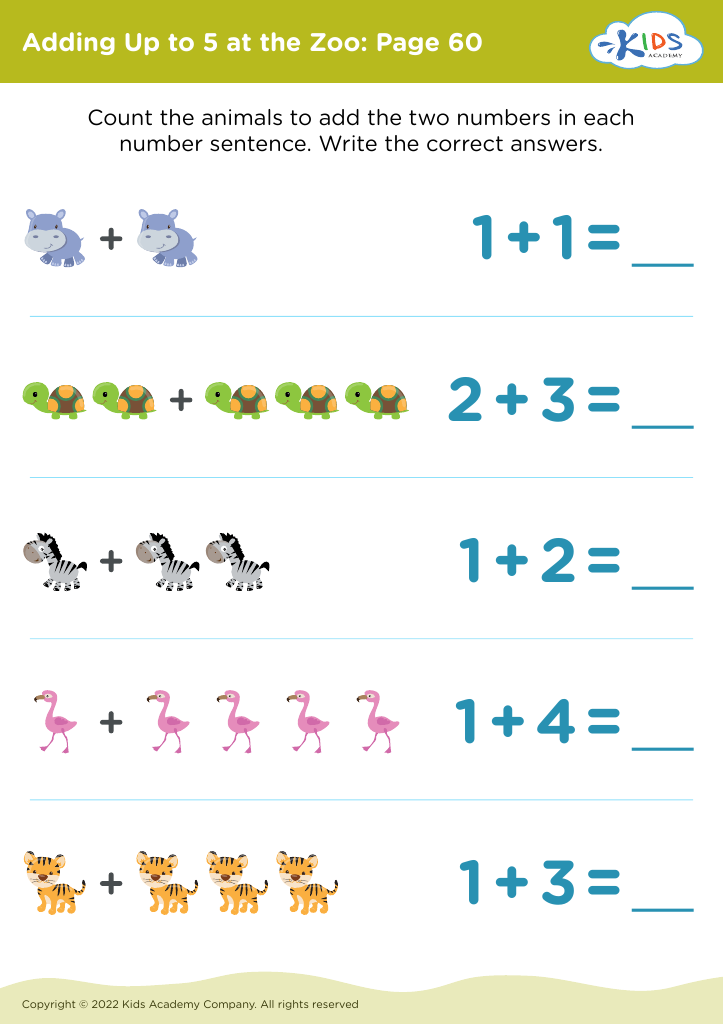
Welcome to our Addition up to 5 Worksheets designed specifically for 5-year-olds! These engaging and colorful worksheets help young learners develop foundational math skills through fun activities focused on adding numbers up to 5. Perfect for classroom use or at-home learning, our resources promote early numeracy by encouraging kids to practice simple addition in an interactive way. Each worksheet is aligned with educational standards, ensuring that your child builds confidence and understanding in math. Explore our variety of exercises and watch as your little one enjoys mastering addition through play! Get started today to make learning math a delightful experience!



%20(1).jpg)



.jpg)
Teaching addition up to 5 for 5-year-olds is crucial for several reasons. Firstly, this foundational skill helps young learners develop a strong numerical understanding, which is essential as they progress in math. At this age, children's cognitive abilities are rapidly evolving, making it an ideal time to introduce basic math concepts. Addition helps reinforce counting, number recognition, and problem-solving skills.
Moreover, learning to add small numbers fosters confidence in young children. When they successfully solve simple addition problems, they gain a sense of accomplishment, which encourages a positive attitude towards math. This early confidence can diminish math anxiety later in life.
Additionally, addition plays a significant role in daily scenarios, like sharing toys or counting snacks. These practical applications make the learning process relatable and enjoyable, allowing children to see the relevance of math in their everyday experiences.
Lastly, parents and teachers can promote collaboration by engaging in fun activities that employ addition, such as games and hands-on activities. This not only strengthens the child’s understanding but also supports social interaction and communication skills. In sum, mastering addition up to 5 lays the groundwork for future math success while nurturing a child's overall development.








