Filters

95 filtered results

Clear all filters
Favorites
With answer key
Interactive

95 filtered results

Difficulty Level

Grade


Check out this FREE Trial Lesson on Adding Up to 5 for age 5!

L

Favorites
With answer key
Interactive
  • 5
  • Cognitive Development
  • Adding Up to 5
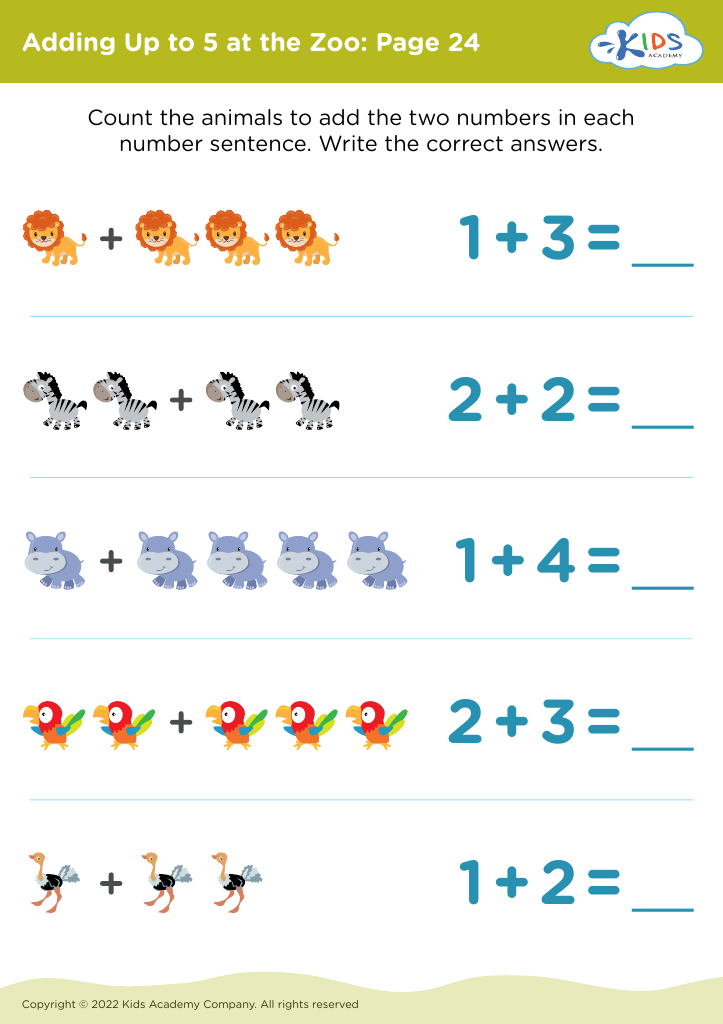
Adding Up to 5 at the Zoo: Page 24
Worksheet
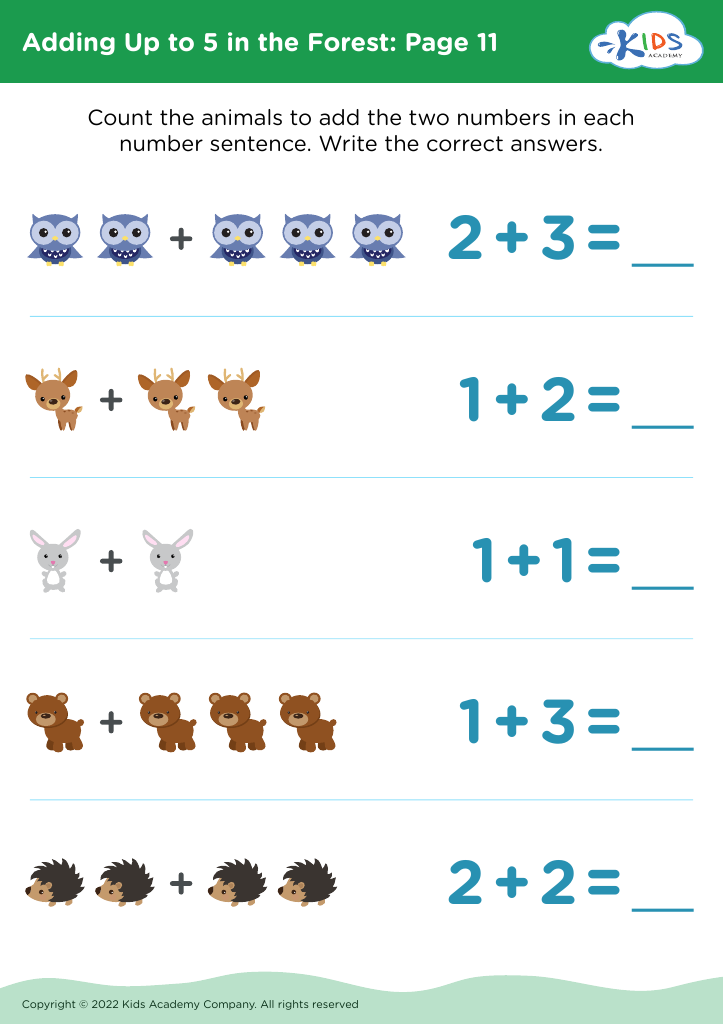
Adding Up to 5 in the Forest: Page 11
Worksheet
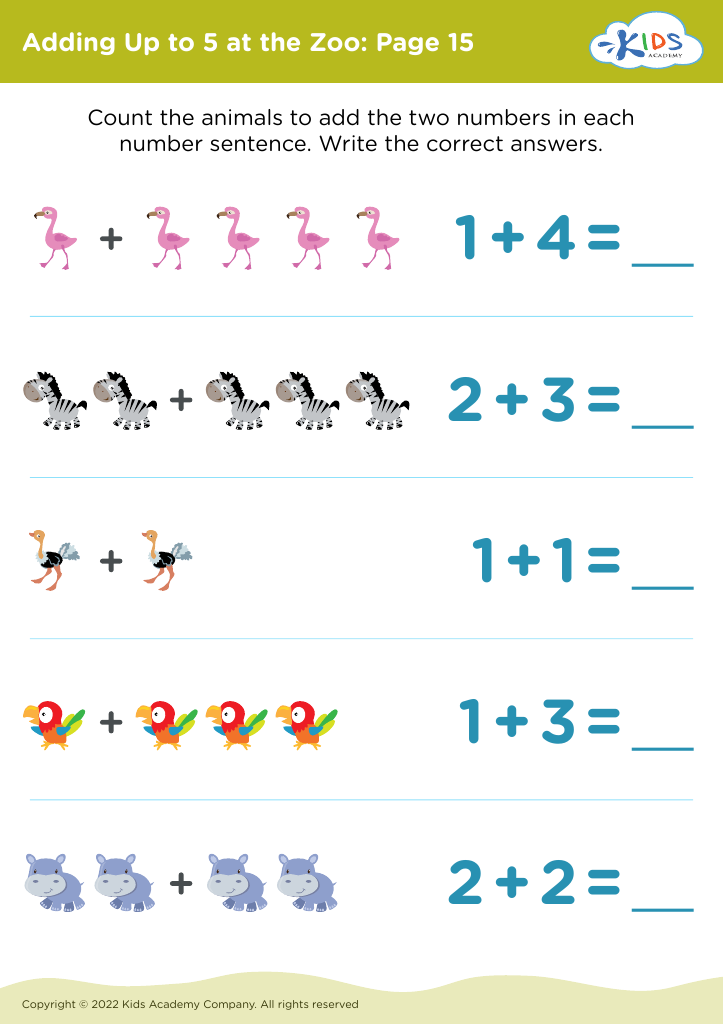
Adding Up to 5 at the Zoo: Page 15
Worksheet
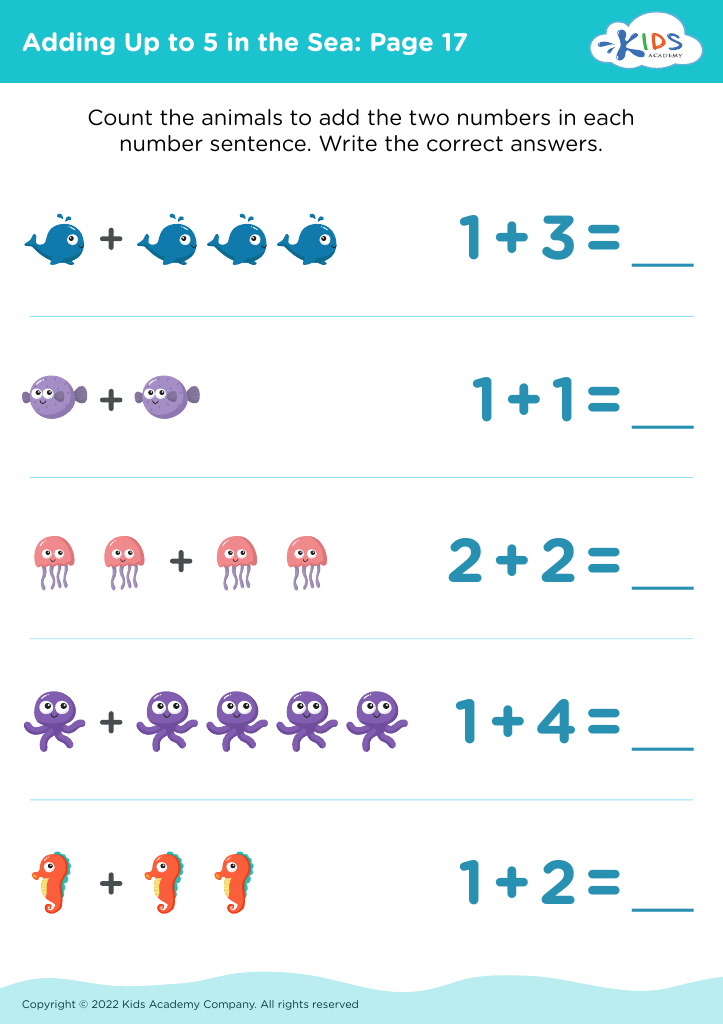
Adding Up to 5 in the Sea: Page 17
Worksheet
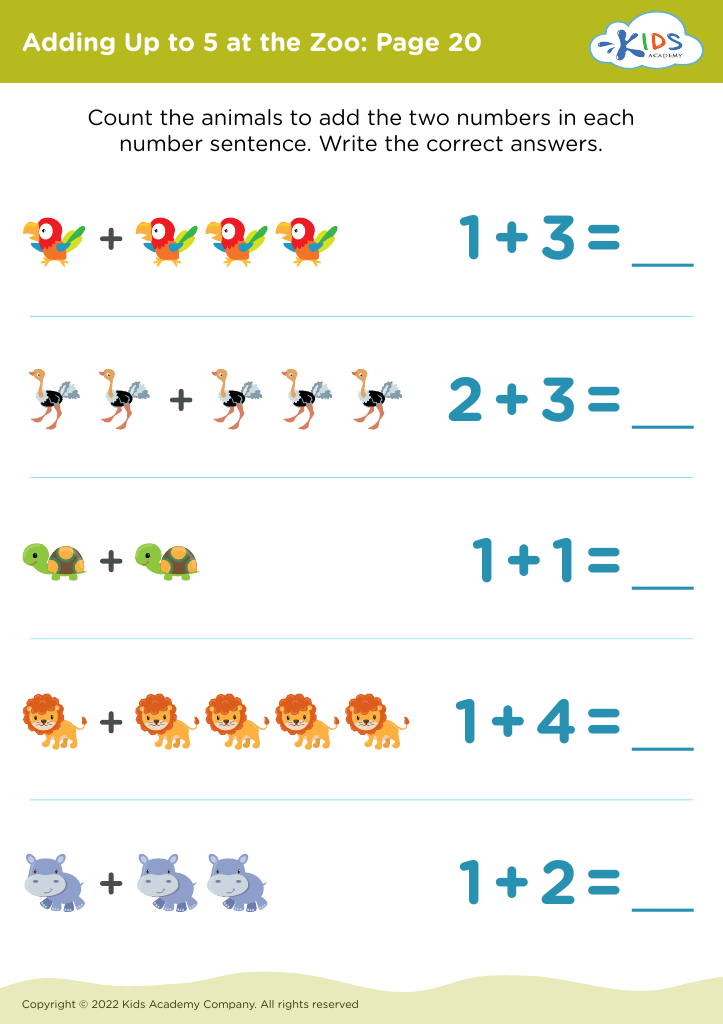
Adding Up to 5 at the Zoo: Page 20
Worksheet
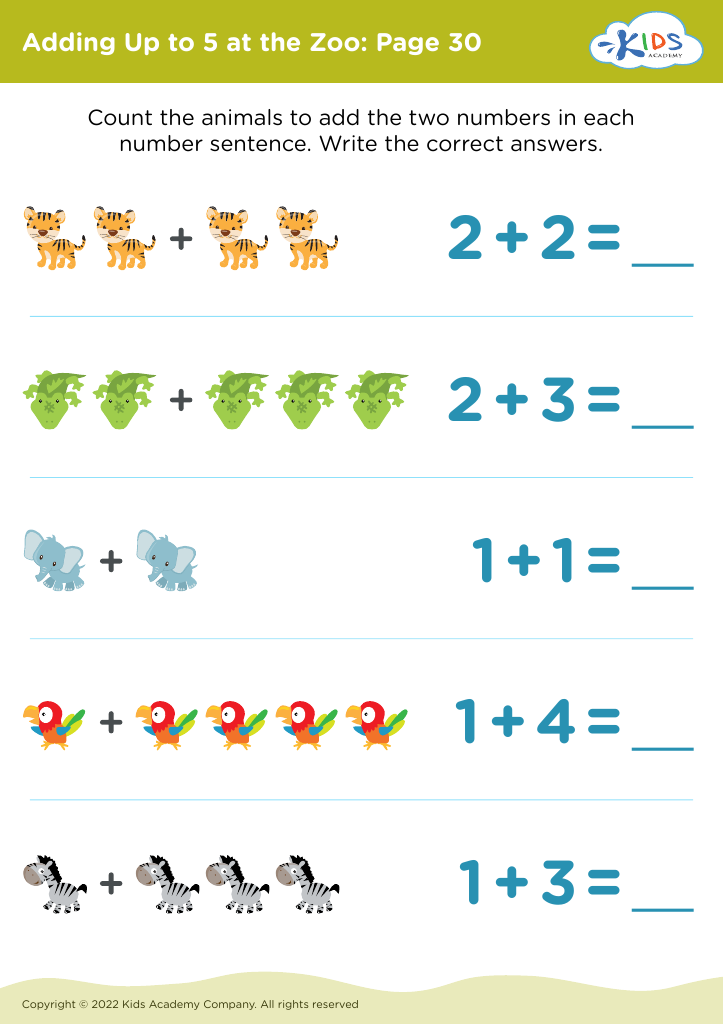
Adding Up to 5 at the Zoo: Page 30
Worksheet
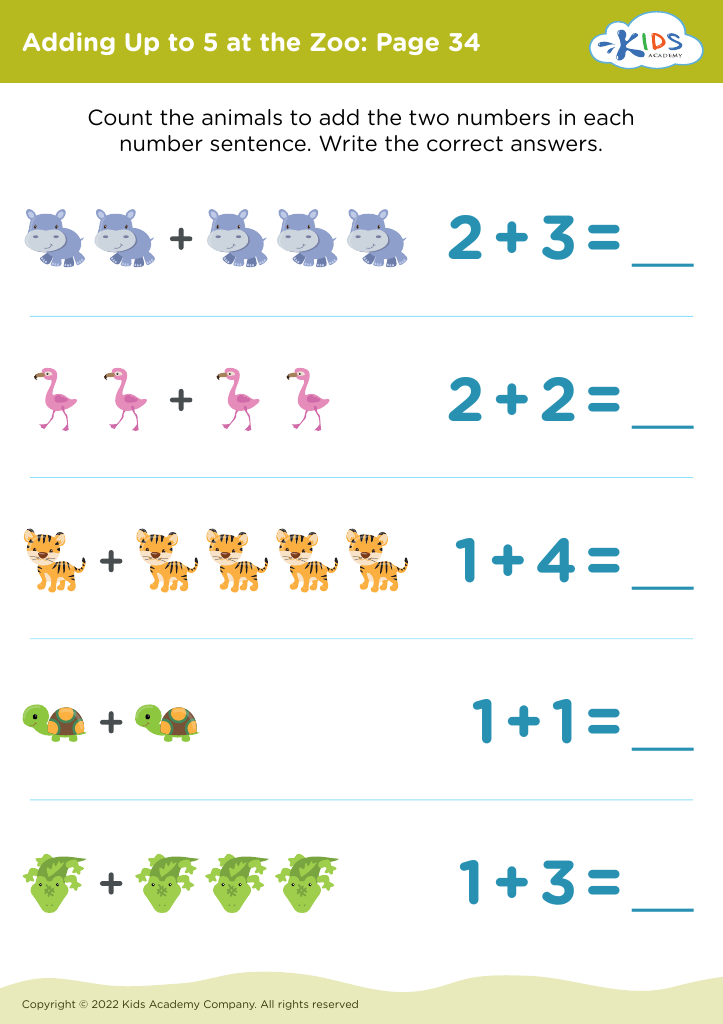
Adding Up to 5 at the Zoo: Page 34
Worksheet
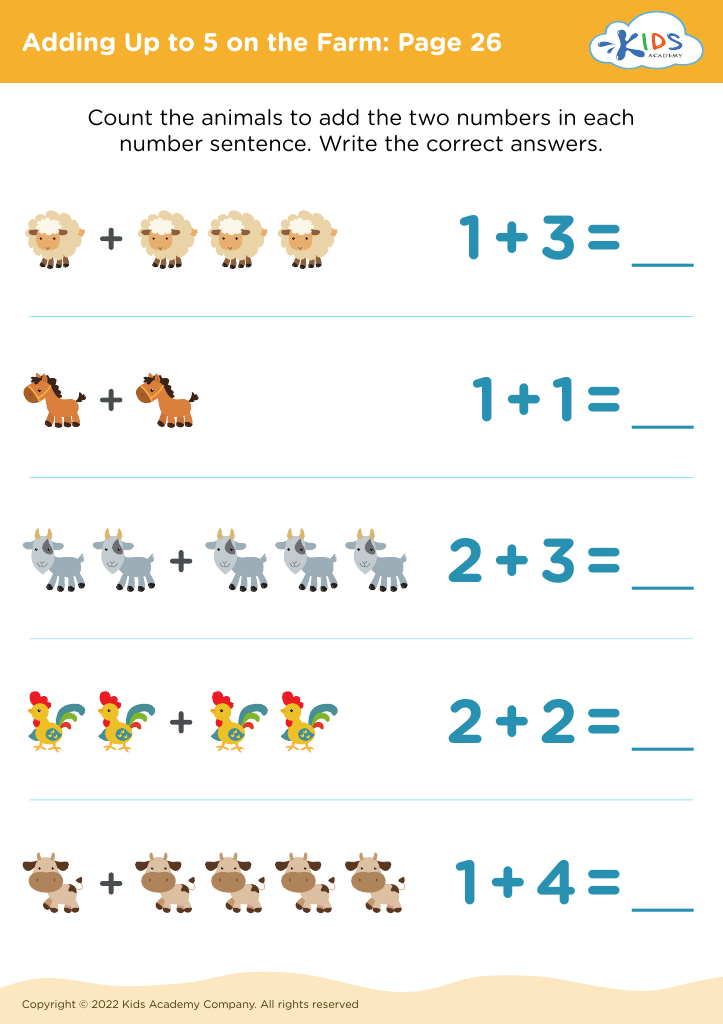
Adding Up to 5 on the Farm: Page 26
Worksheet
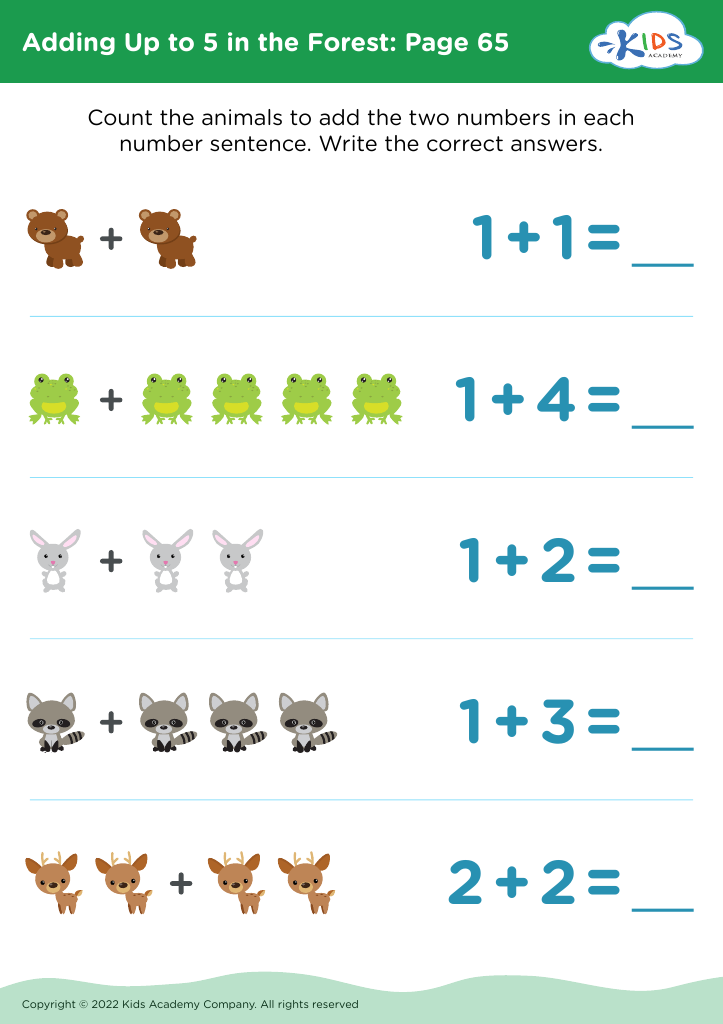
Adding Up to 5 in the Forest: Page 65
Worksheet
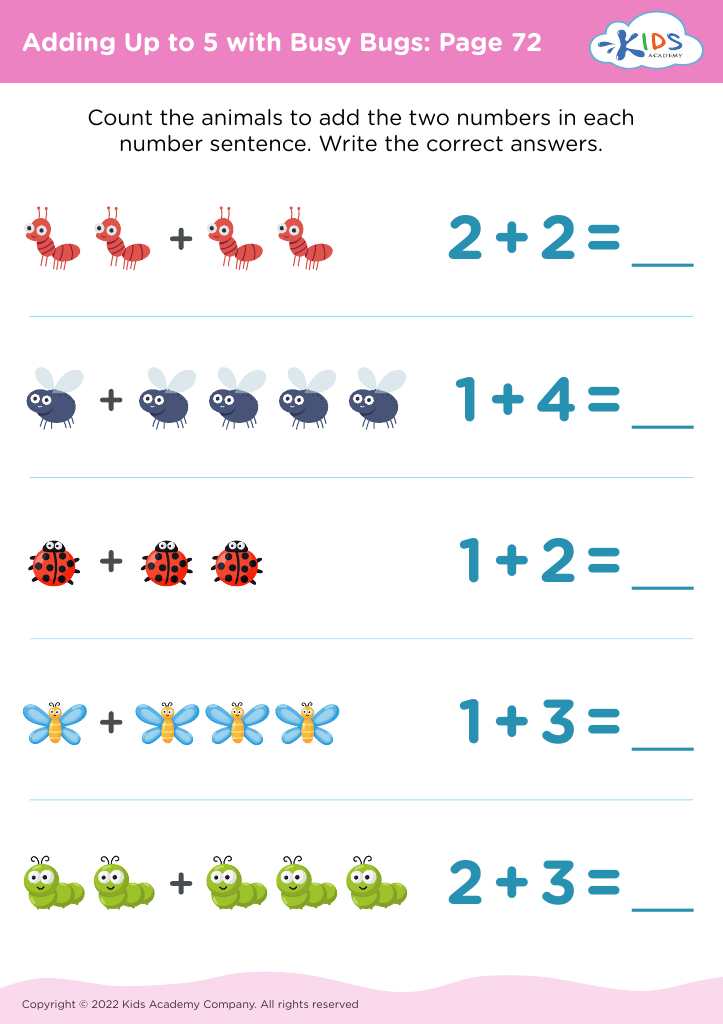
Adding Up to 5 with Busy Bugs: Page 72
Worksheet
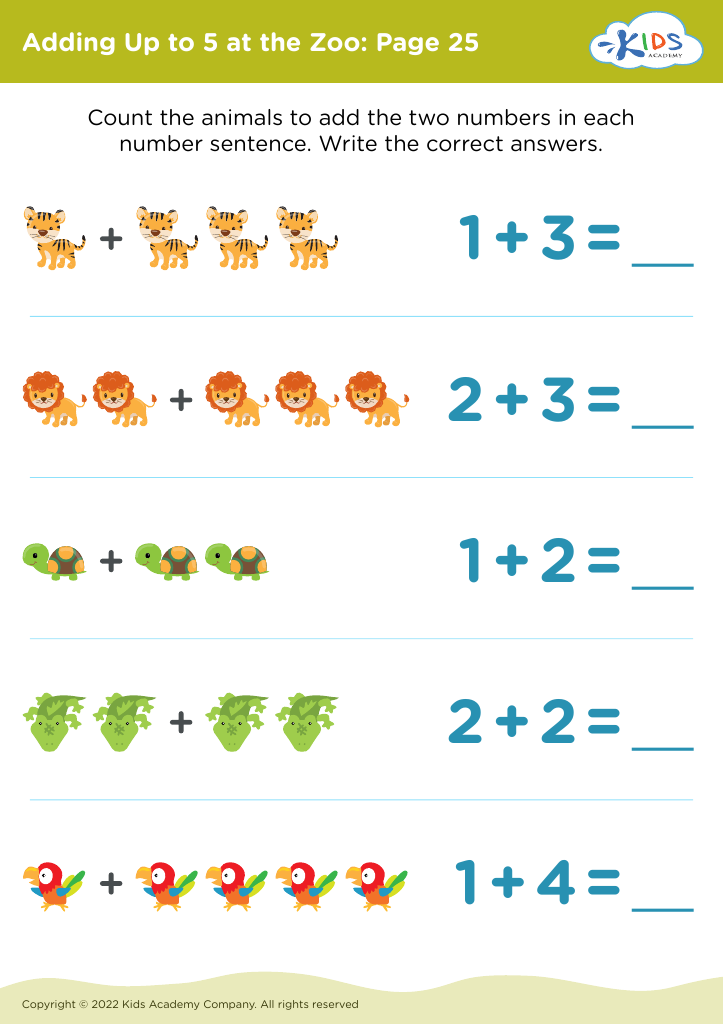
Adding Up to 5 at the Zoo: Page 25
Worksheet
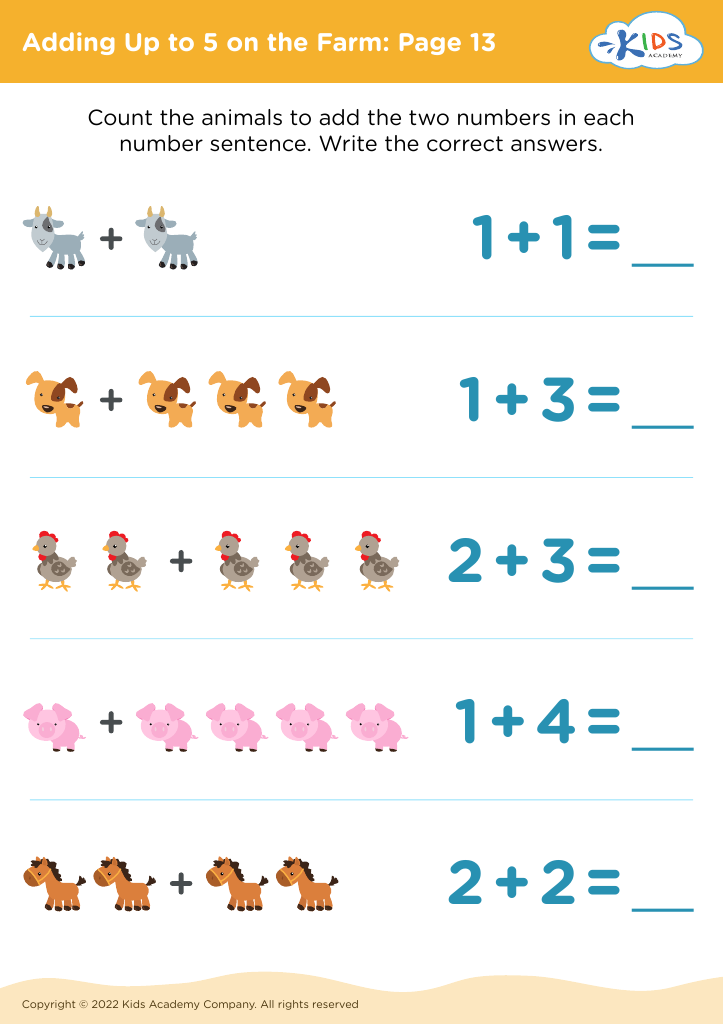
Adding Up to 5 on the Farm: Page 13
Worksheet
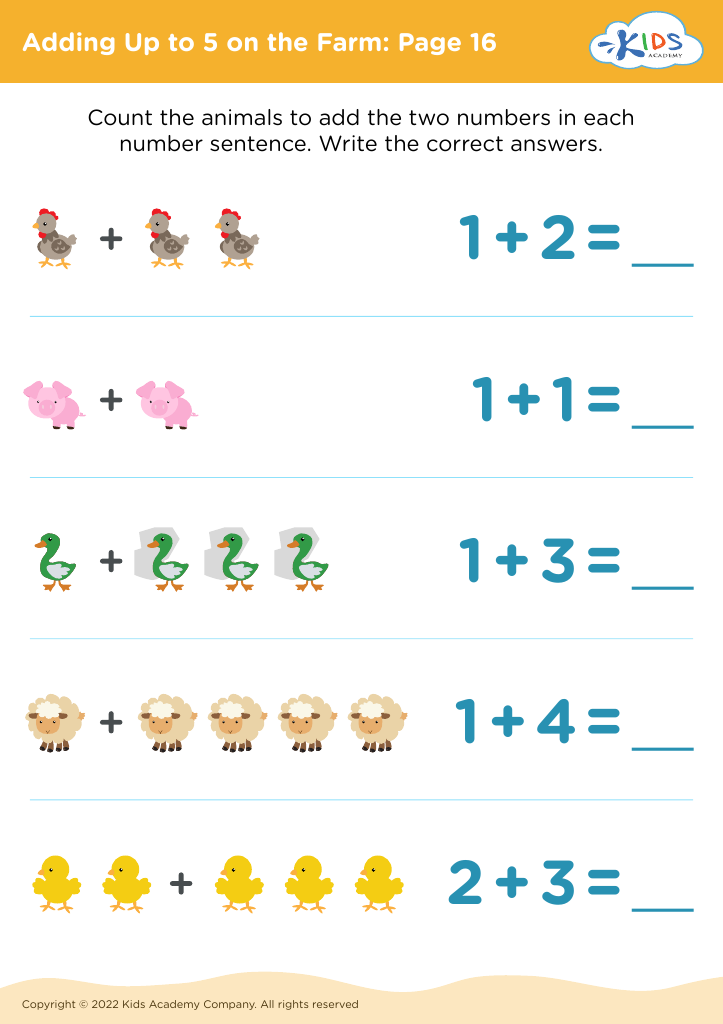
Adding Up to 5 on the Farm: Page 16
Worksheet
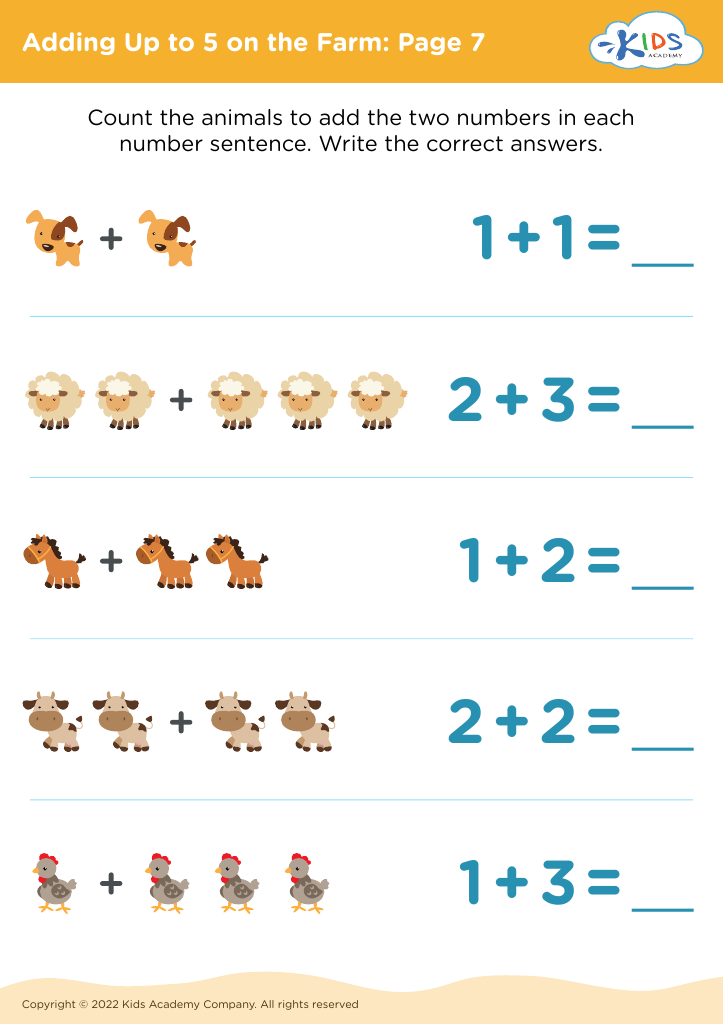
Adding Up to 5 on the Farm: Page 7
Worksheet
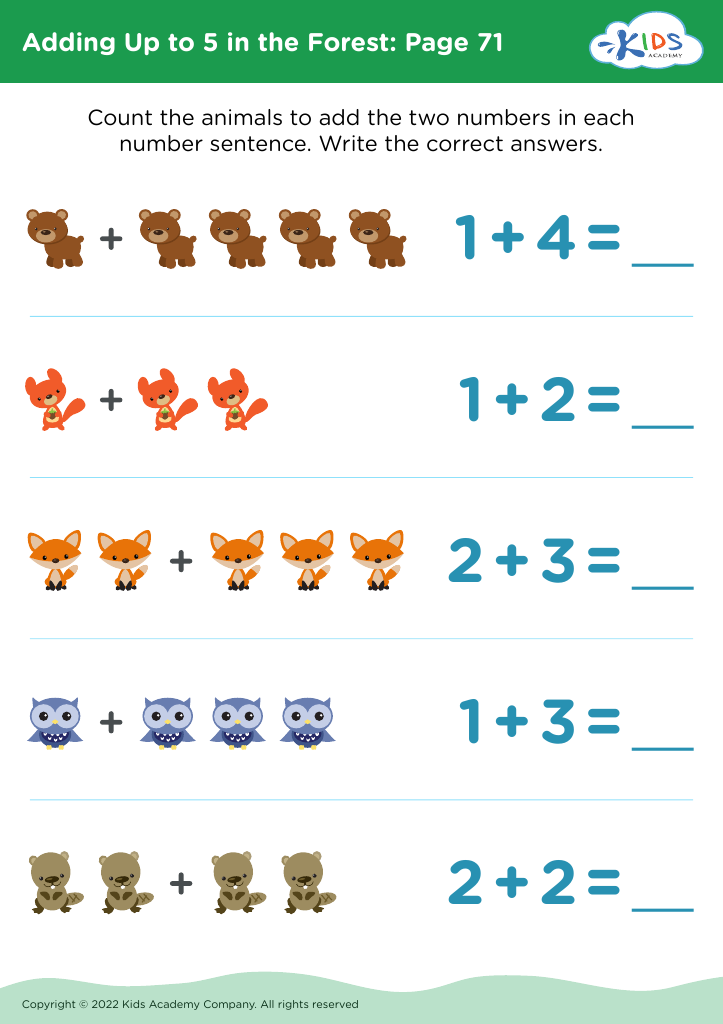
Adding Up to 5 in the Forest: Page 71
Worksheet
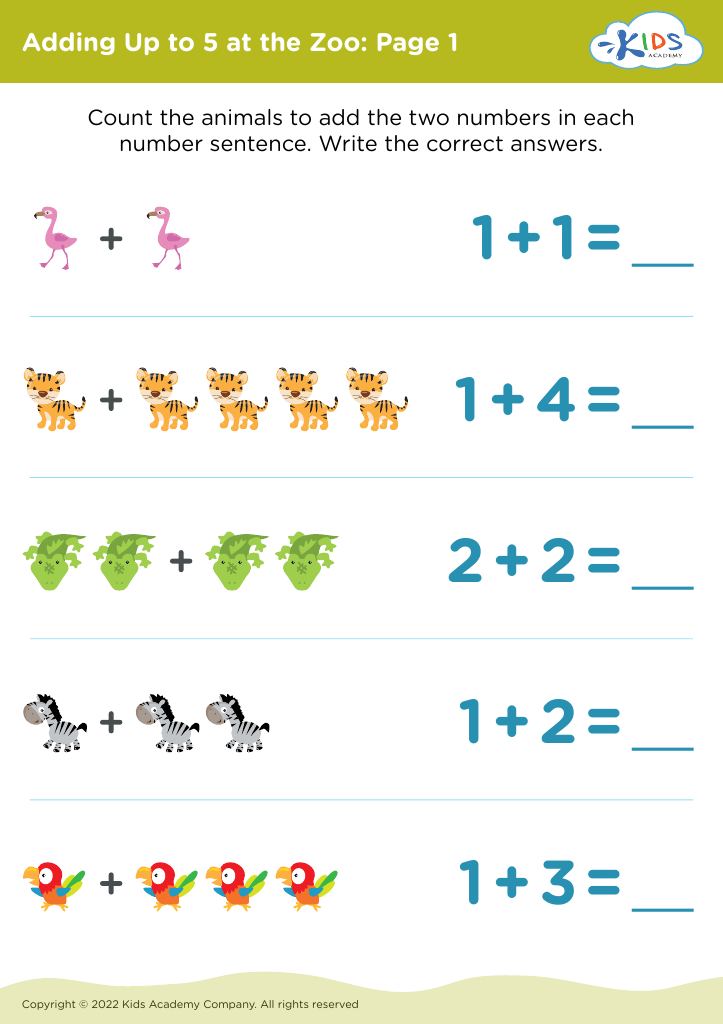
Adding Up to 5 at the Zoo: Page 1

Adding Up to 5 at the Zoo: Page 1

Adding Up to 5 at the Zoo: Page 1
Worksheet
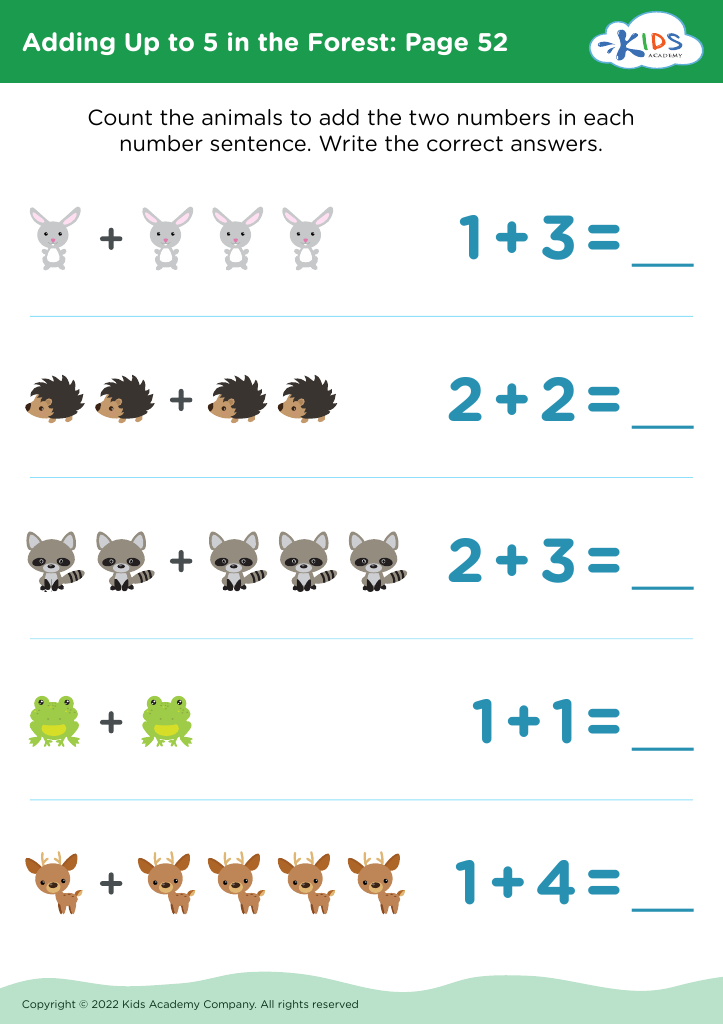
Adding Up to 5 in the Forest: Page 52
Worksheet
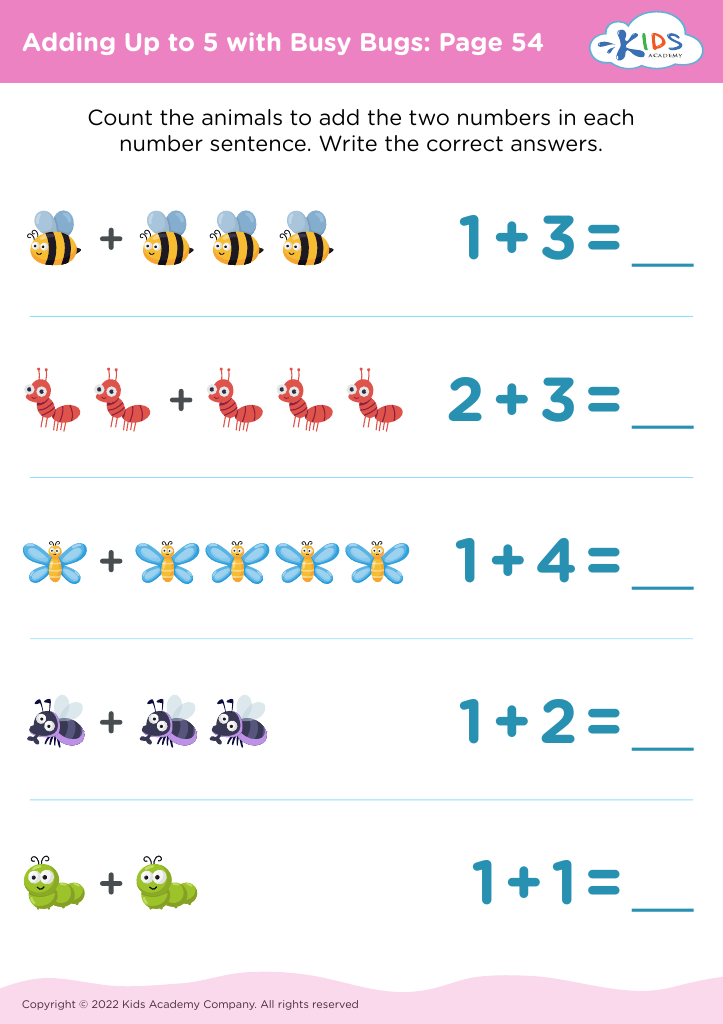
Adding Up to 5 with Busy Bugs: Page 54
Worksheet
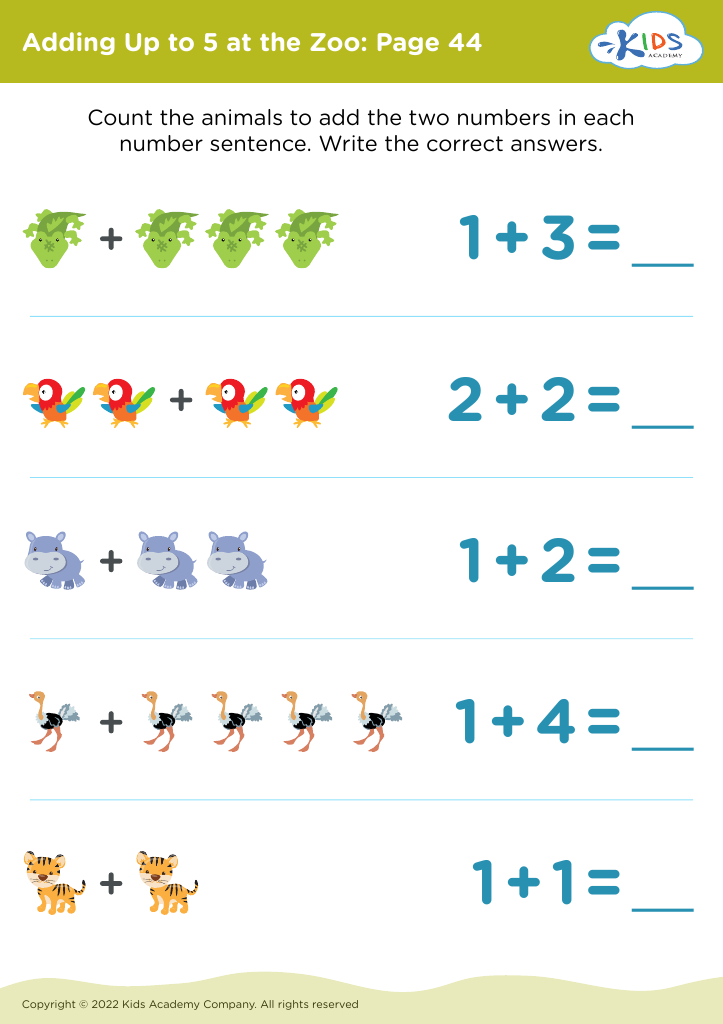
Adding Up to 5 at the Zoo: Page 44
Worksheet
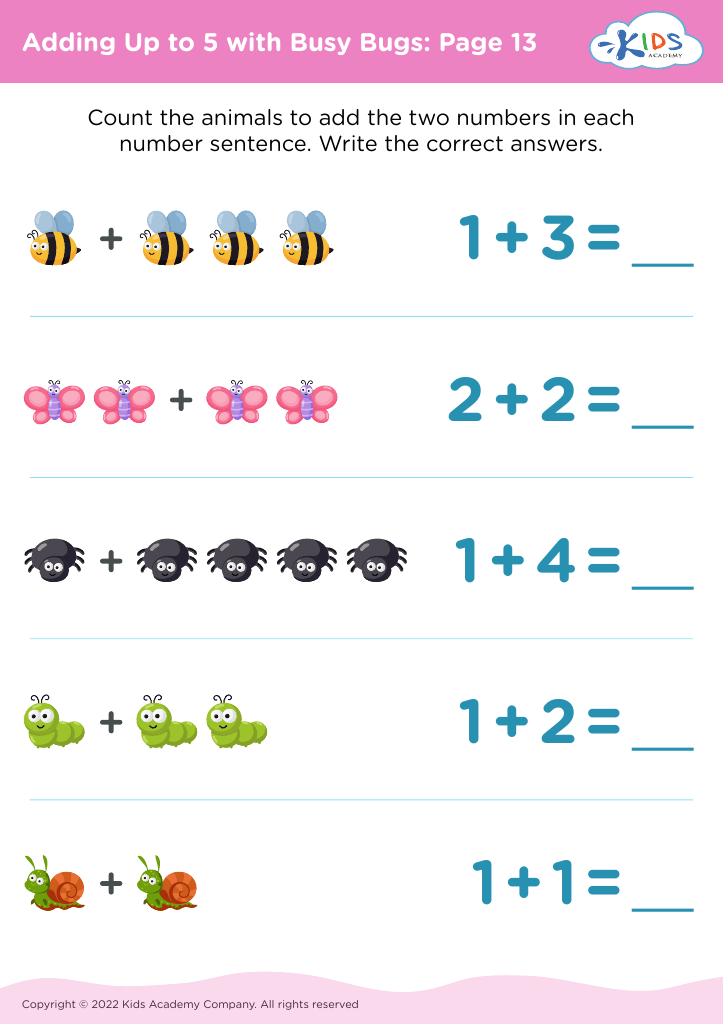
Adding Up to 5 with Busy Bugs: Page 13
Worksheet
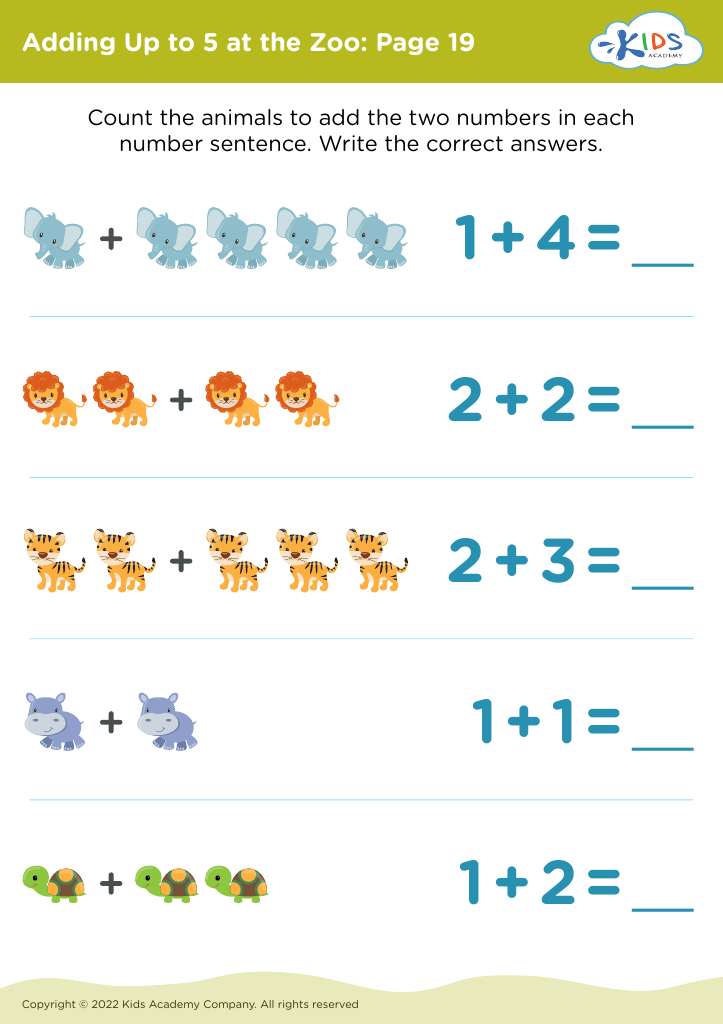
Adding Up to 5 at the Zoo: Page 19
Worksheet
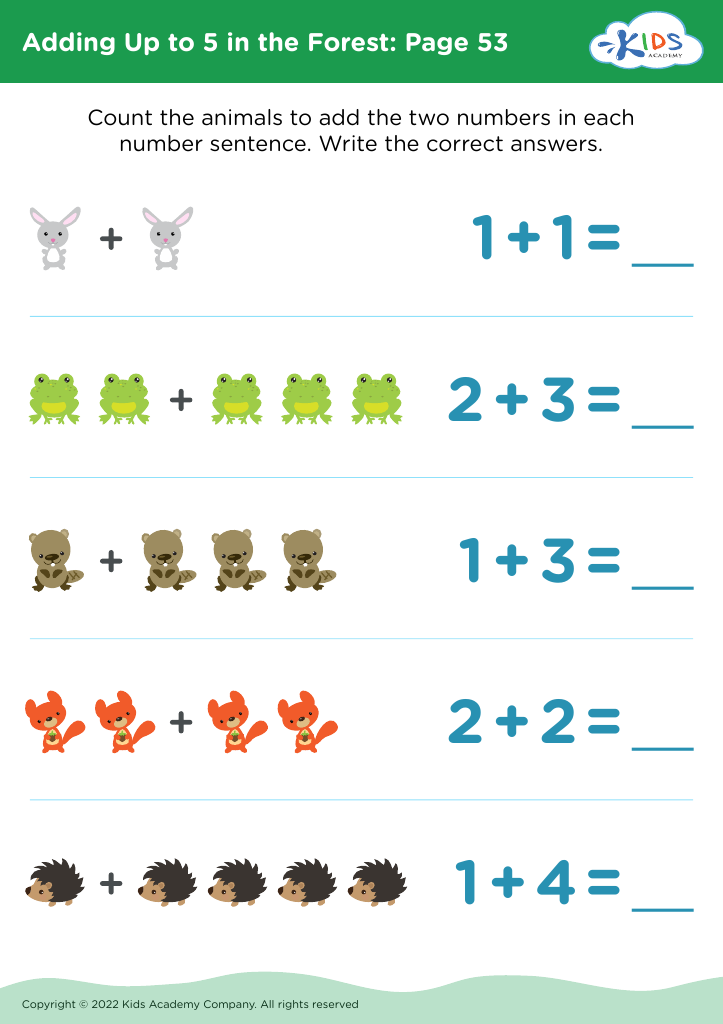
Adding Up to 5 in the Forest: Page 53
Worksheet
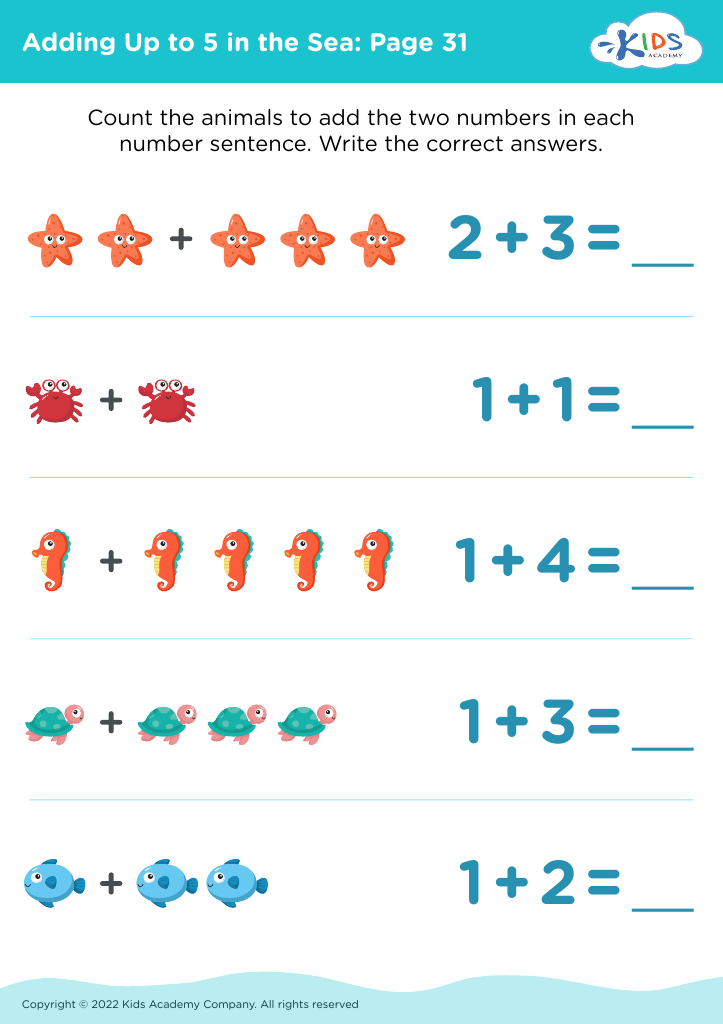
Adding Up to 5 in the Sea: Page 31
Worksheet
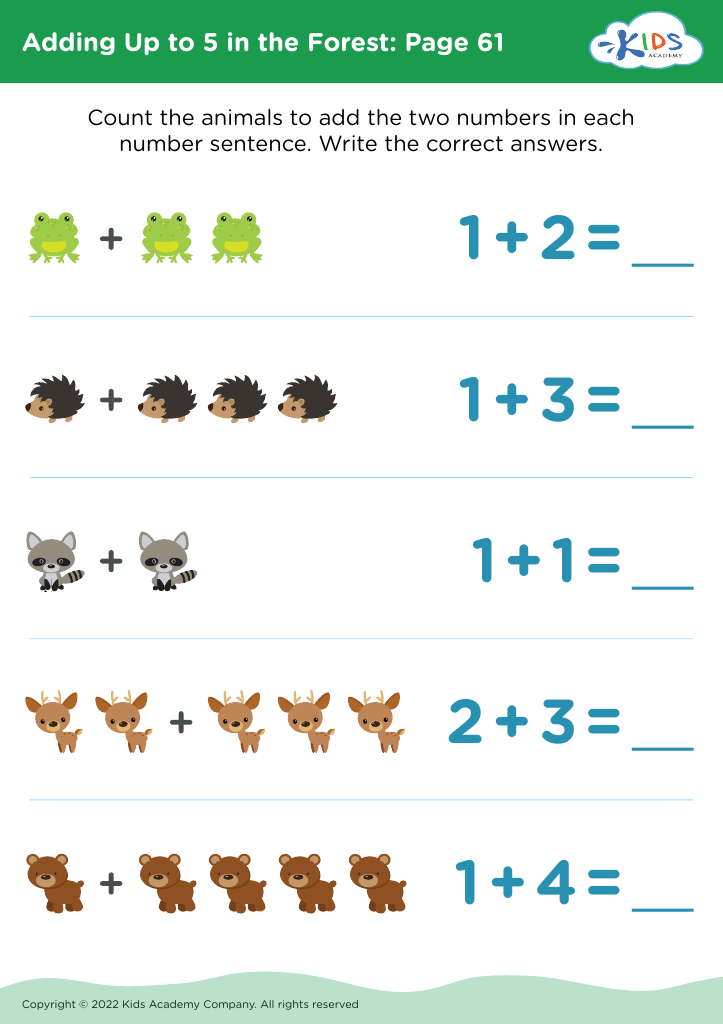
Adding Up to 5 in the Forest: Page 61
Worksheet


Caring about a 5-year-old's cognitive development, specifically in adding up to 5, is crucial because it fosters foundational math skills that are vital for future academic success. At this age, children's brains are highly receptive and are developing critical thinking and problem-solving abilities. Mastery of simple addition helps them comprehend the basic principles of math, boosting their confidence and preparing them for more complex concepts.

Early math skills are tied to later achievements in life. Research indicates that children with strong early math abilities tend to excel in other academic areas, including literacy. Addition exercises help children recognize numerical patterns, understand the concept of quantity, and develop fine motor skills as they write numbers or manipulate objects to add.

Moreover, engaging kids in adding up to 5 nurtures a positive attitude towards learning. Fun, interactive activities like counting with toys or using visual aids make learning engaging and enjoyable, encouraging a lifelong enthusiasm for education. Parents and teachers play pivotal roles in creating a supportive learning environment.

By prioritizing cognitive development in math, they lay the groundwork for children’s success, not only in school but in everyday life. This focus helps children build the confidence and intellectual tools needed to face future challenges with curiosity and competence.