Filters

232 filtered results

Clear all filters
Favorites
With answer key
Interactive

232 filtered results

Difficulty Level

Grade


Check out this FREE Trial Lesson on Adding Up to 5 for age 5!

H

Favorites
With answer key
Interactive
  • 5
  • Counting practice
  • Adding Up to 5
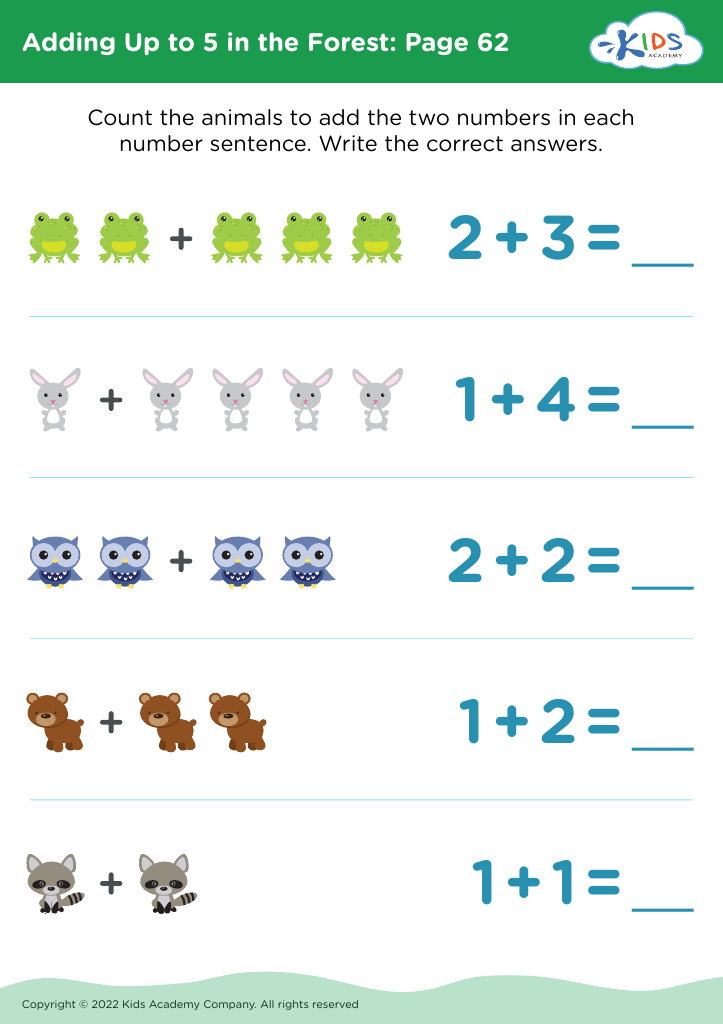
Adding Up to 5 in the Forest: Page 62
Worksheet
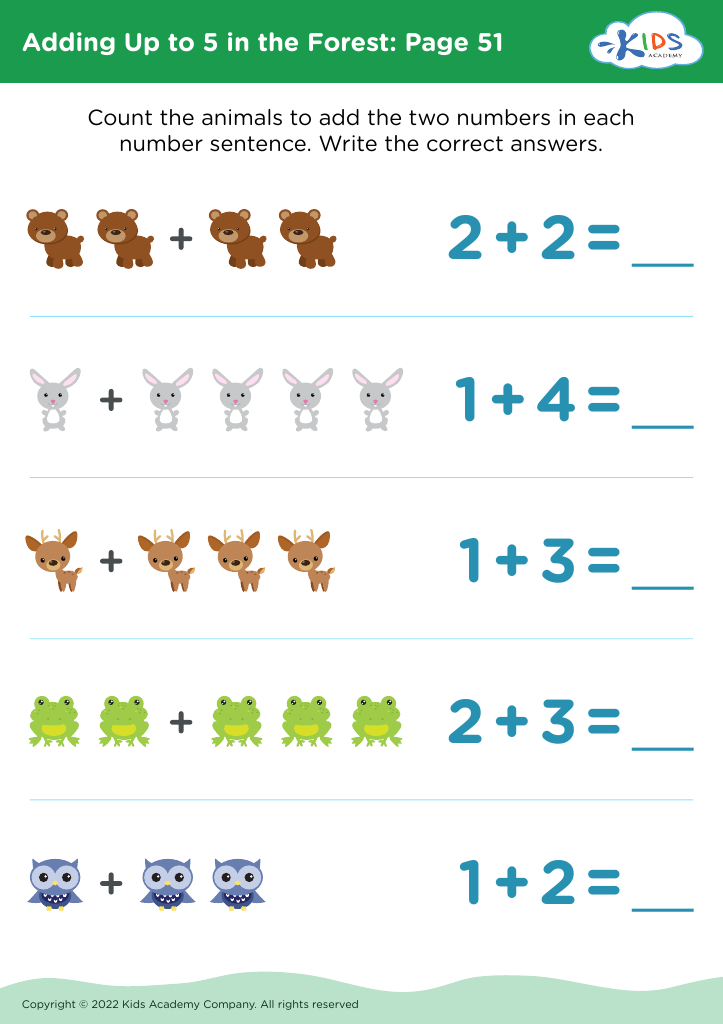
Adding Up to 5 in the Forest: Page 51
Worksheet
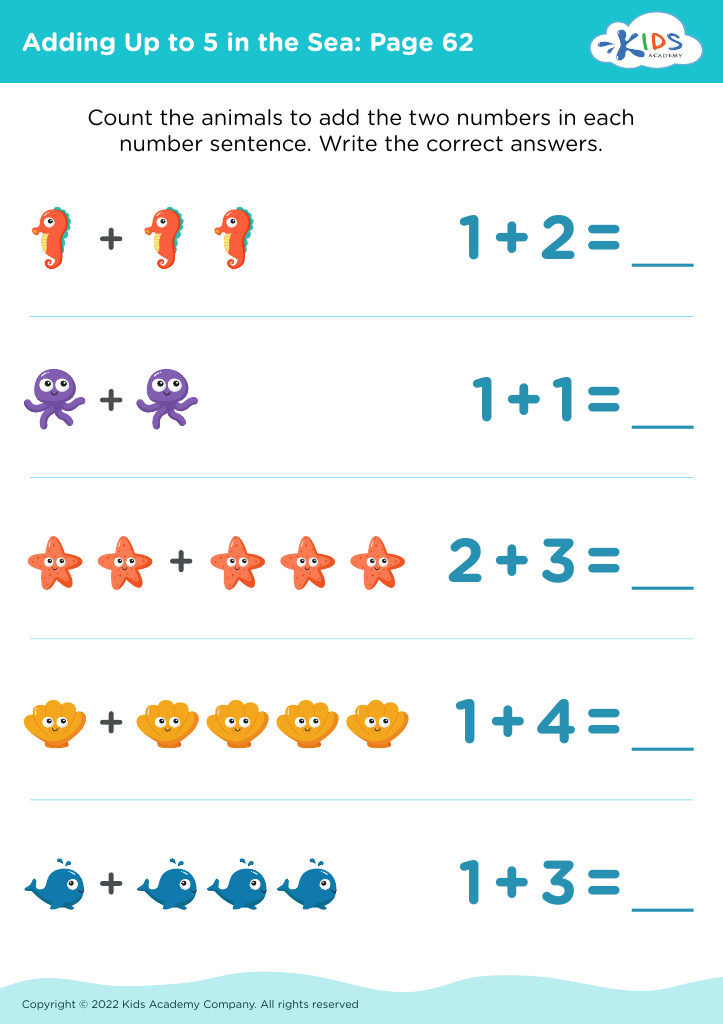
Adding Up to 5 in the Sea: Page 62
Worksheet
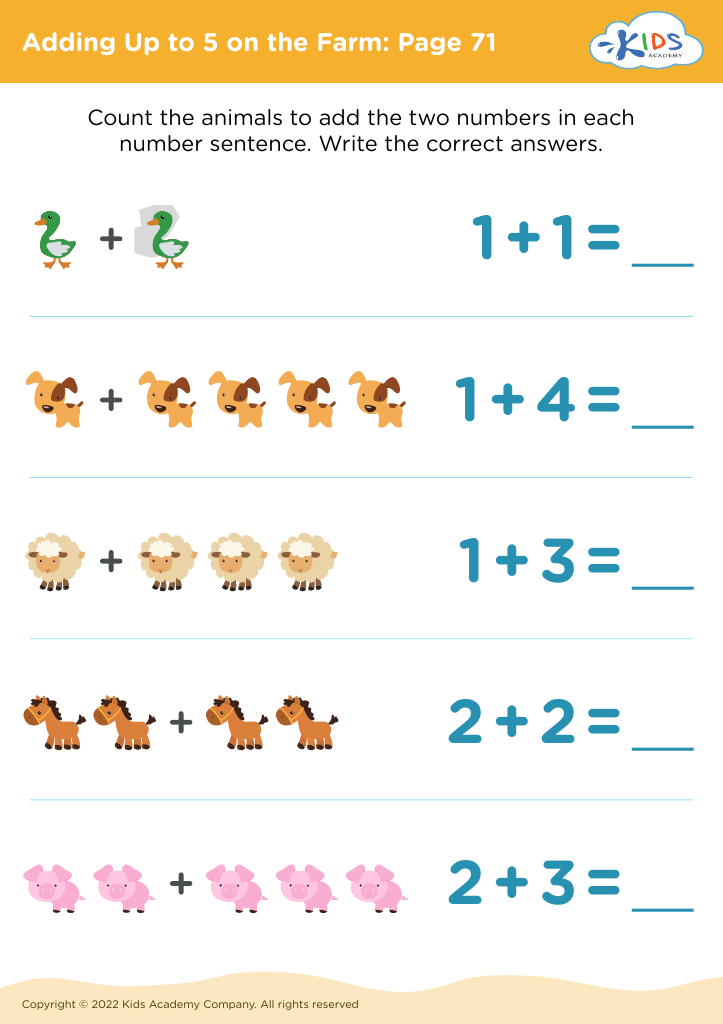
Adding Up to 5 on the Farm: Page 71
Worksheet
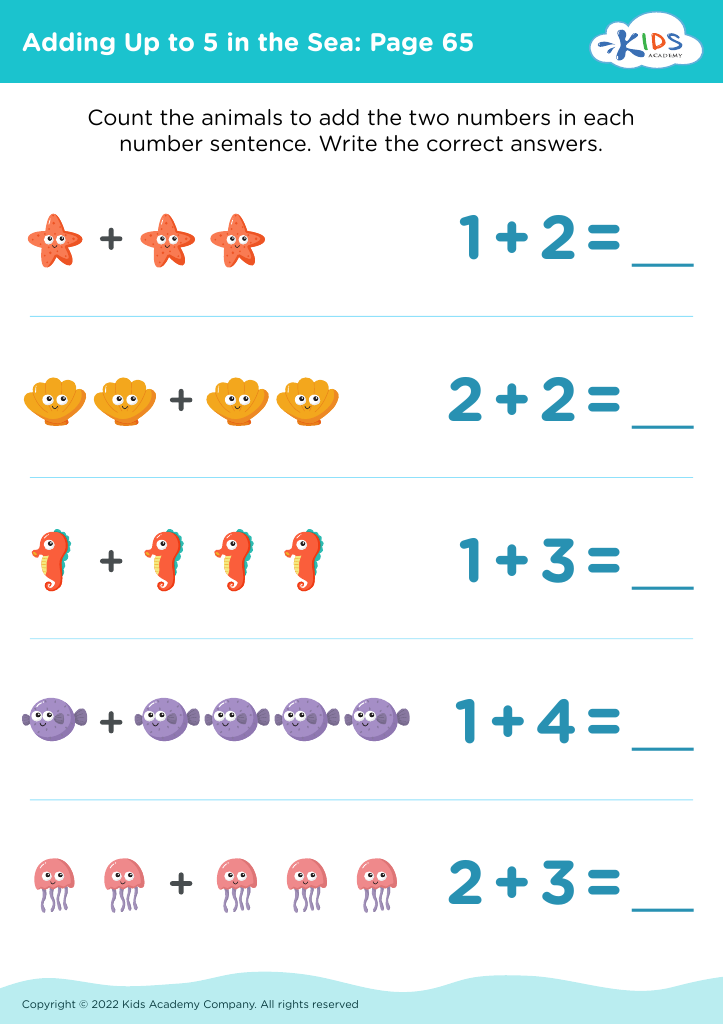
Adding Up to 5 in the Sea: Page 65
Worksheet
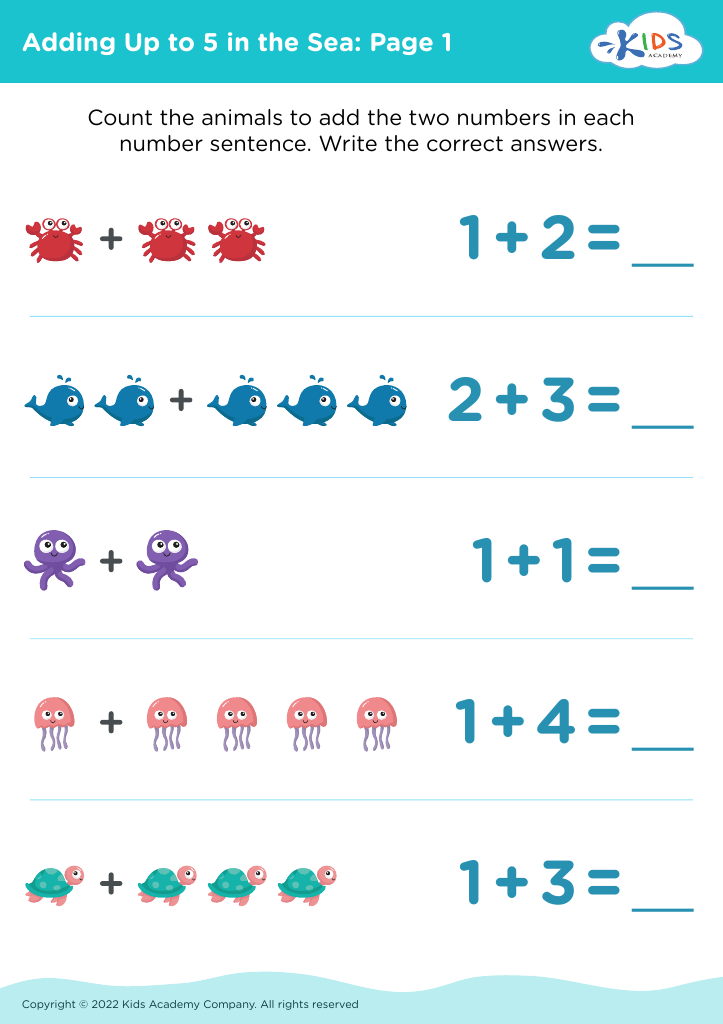
Adding Up to 5 in the Sea: Page 1

Adding Up to 5 in the Sea: Page 1

Adding Up to 5 in the Sea: Page 1
Worksheet
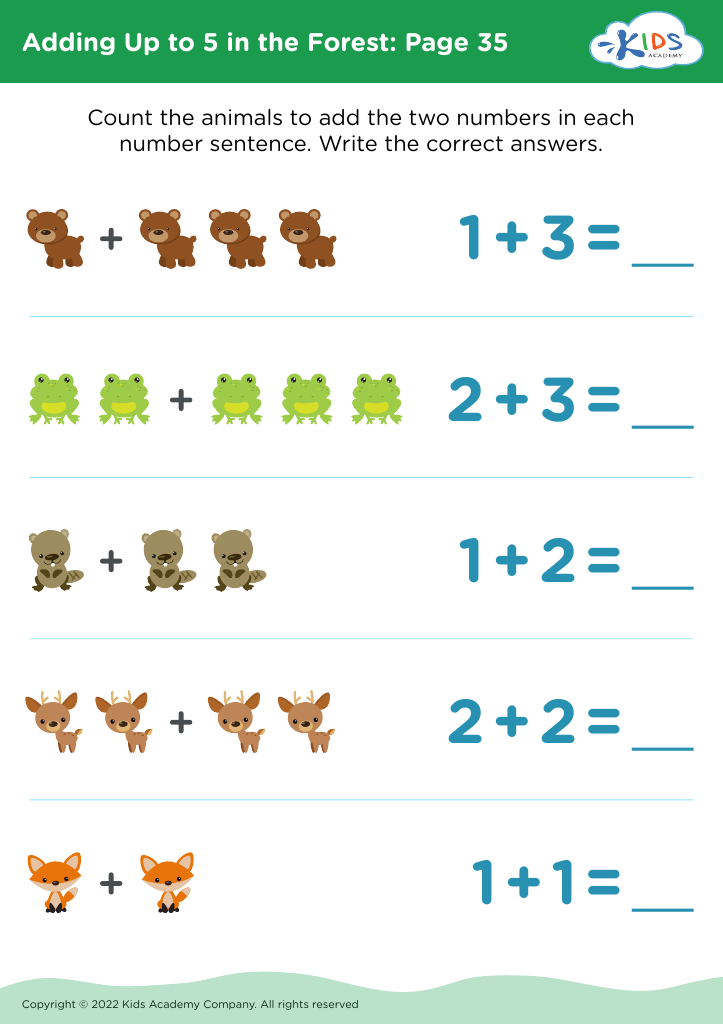
Adding Up to 5 in the Forest: Page 35
Worksheet
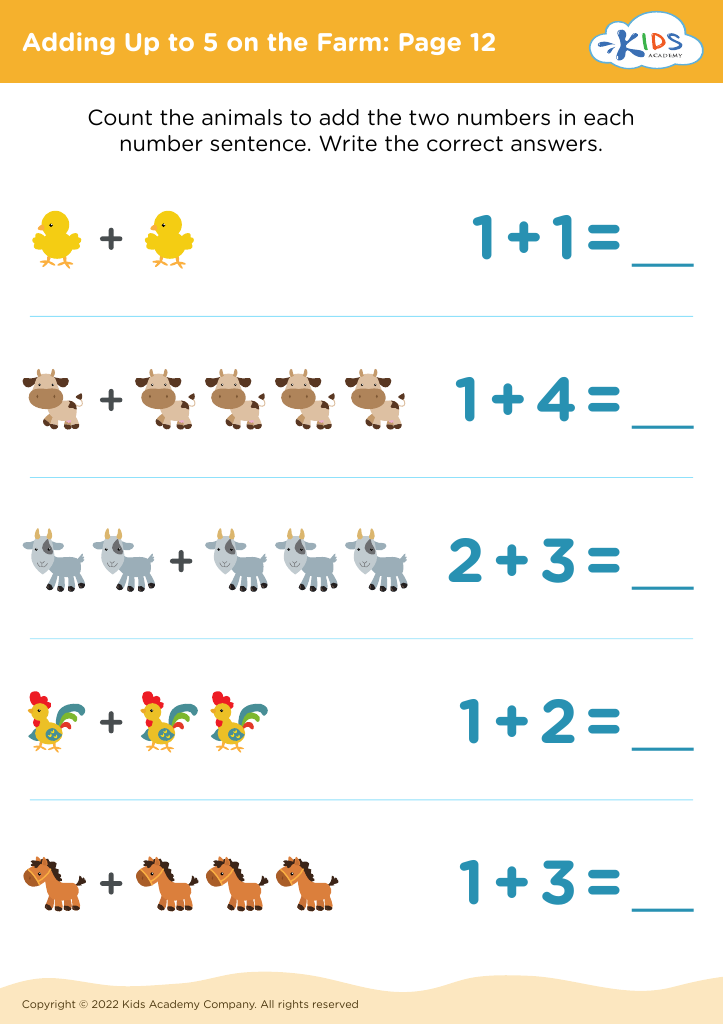
Adding Up to 5 on the Farm: Page 12
Worksheet
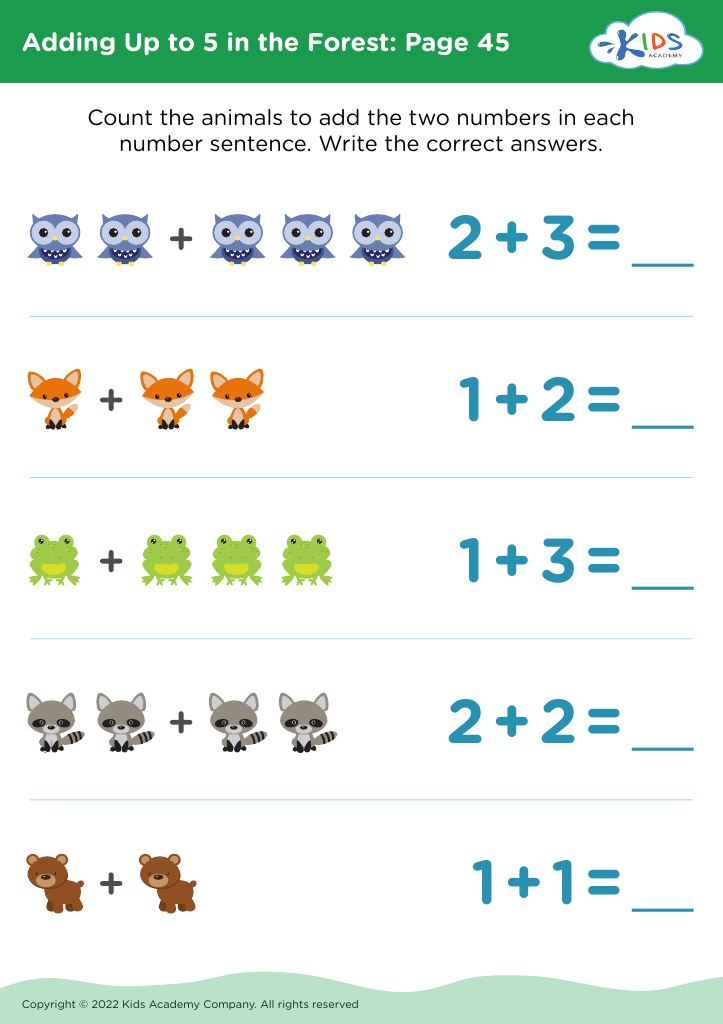
Adding Up to 5 in the Forest: Page 45
Worksheet
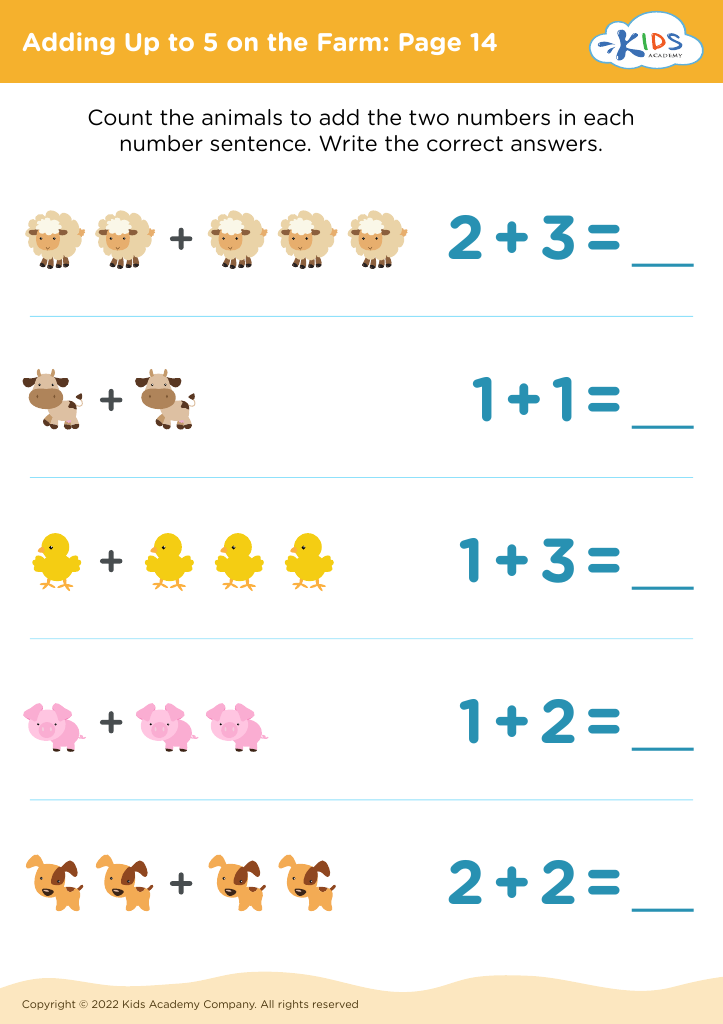
Adding Up to 5 on the Farm: Page 14
Worksheet
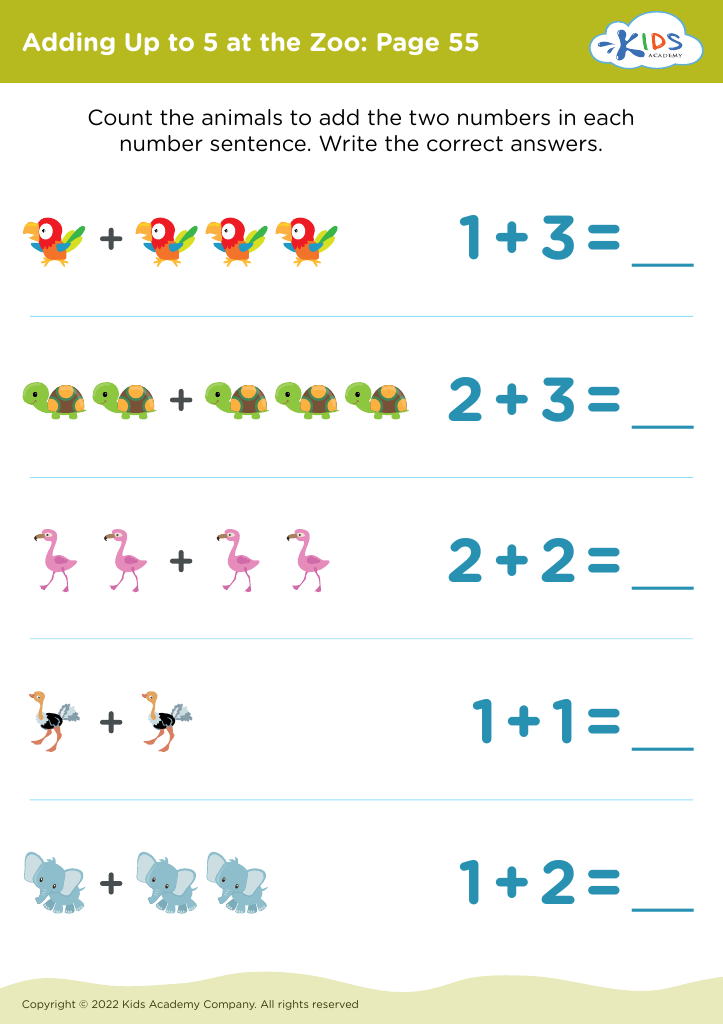
Adding Up to 5 at the Zoo: Page 55
Worksheet
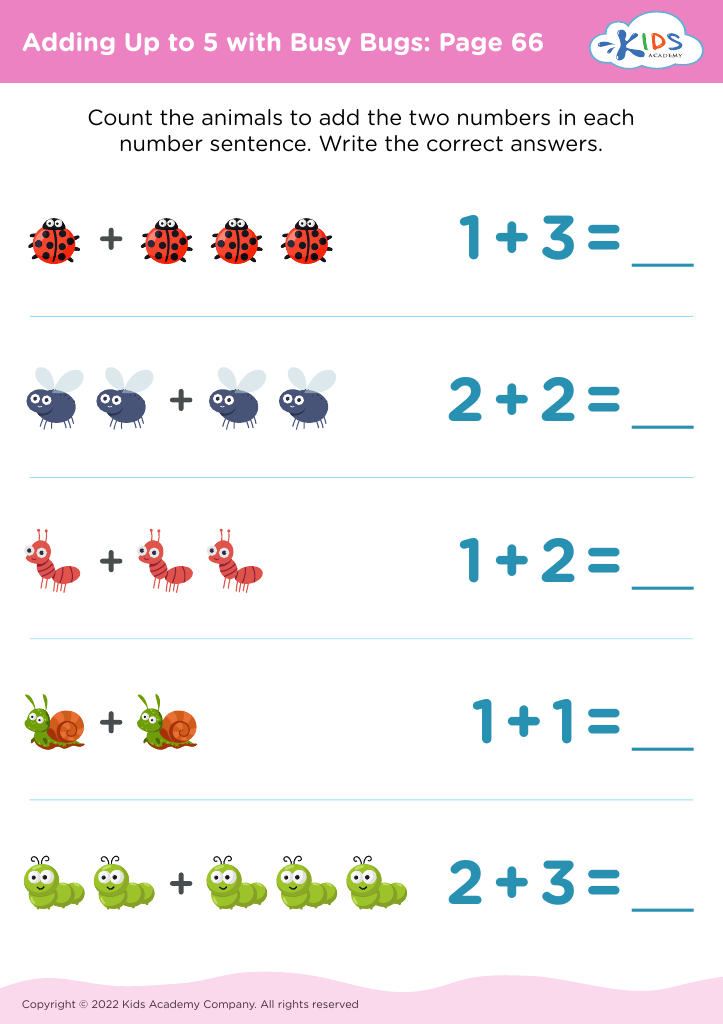
Adding Up to 5 with Busy Bugs: Page 66
Worksheet
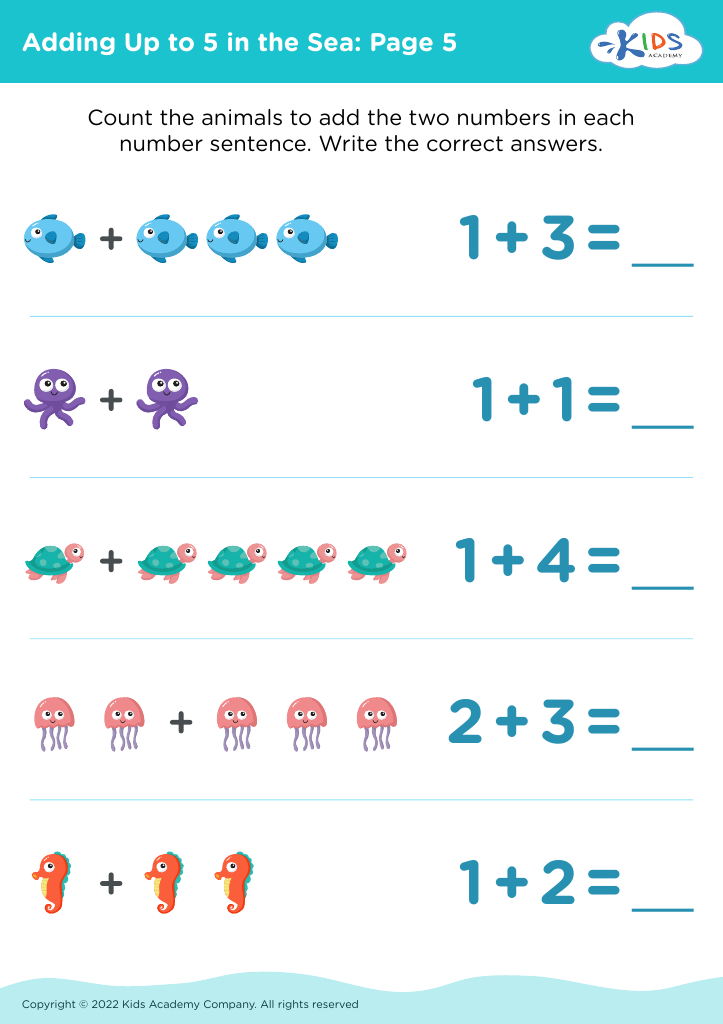
Adding Up to 5 in the Sea: Page 5

Adding Up to 5 in the Sea: Page 5

Adding Up to 5 in the Sea: Page 5
Worksheet
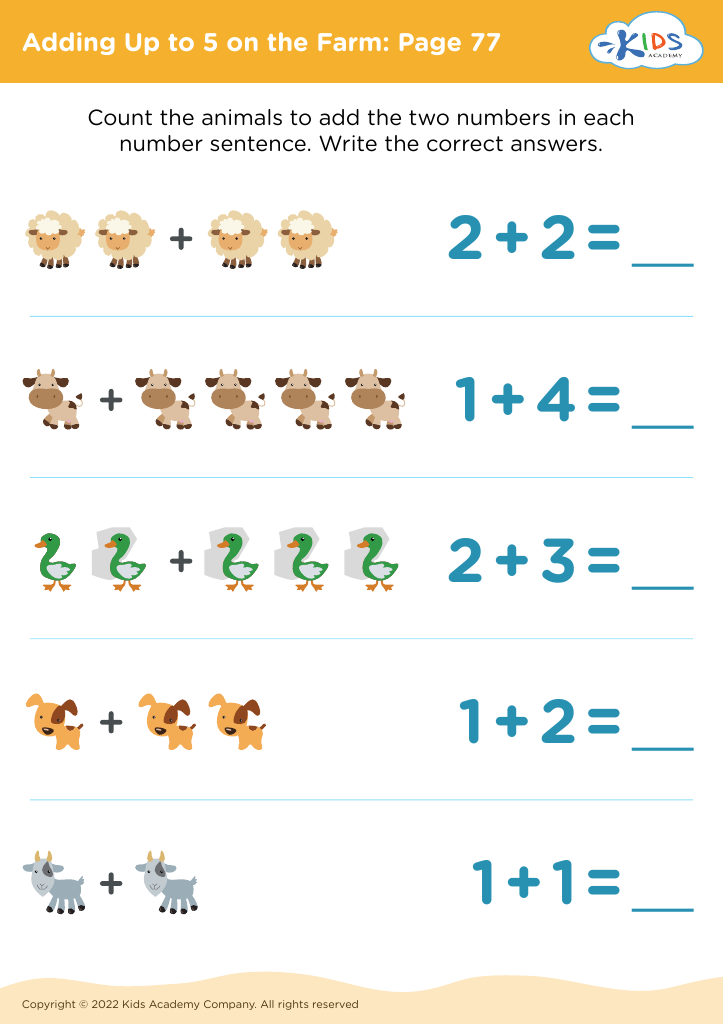
Adding Up to 5 on the Farm: Page 77
Worksheet
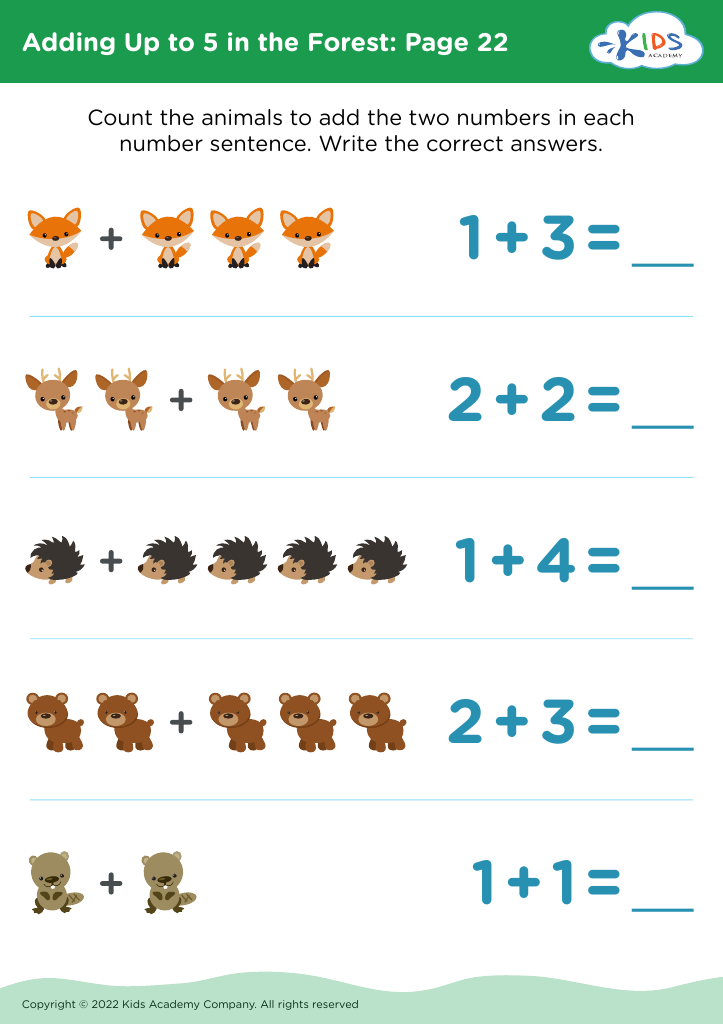
Adding Up to 5 in the Forest: Page 22
Worksheet
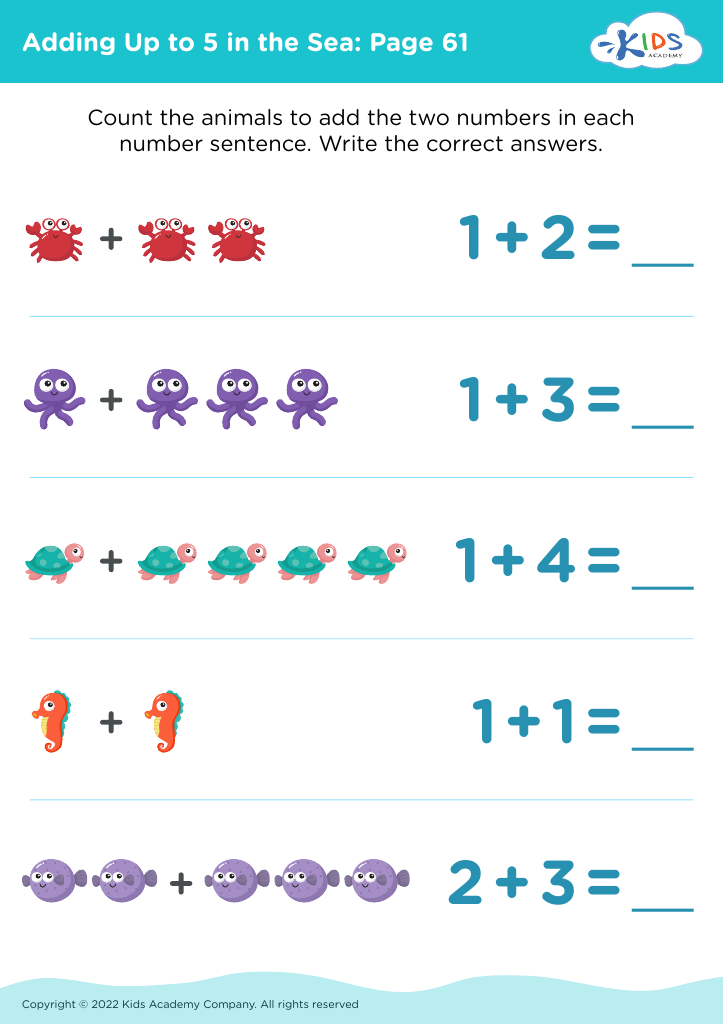
Adding Up to 5 in the Sea: Page 61
Worksheet
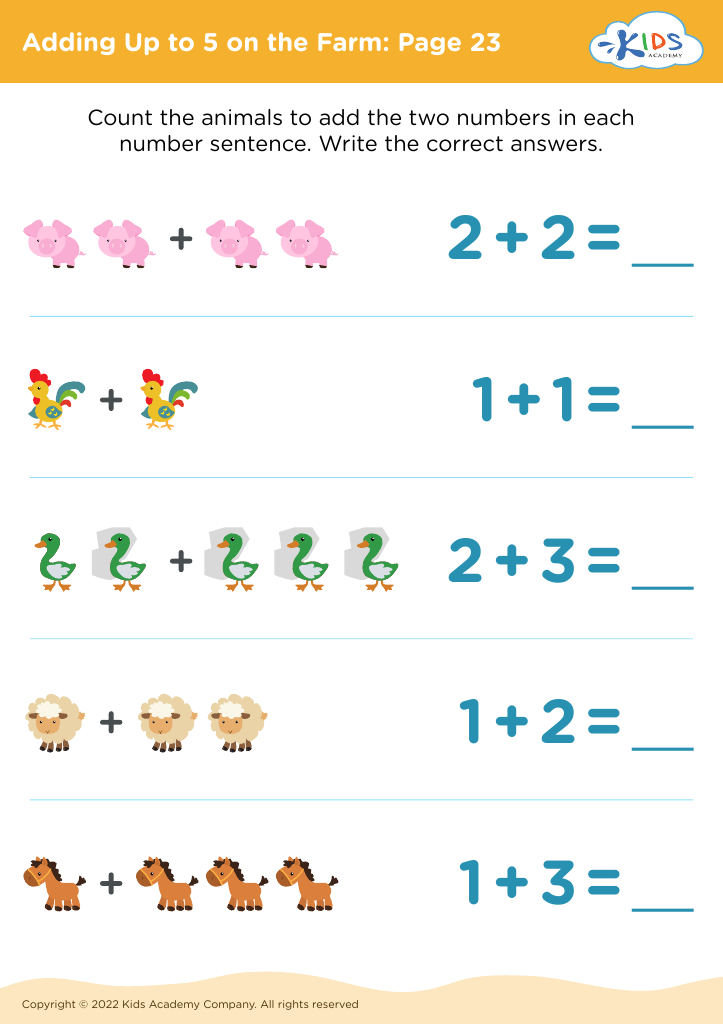
Adding Up to 5 on the Farm: Page 23
Worksheet
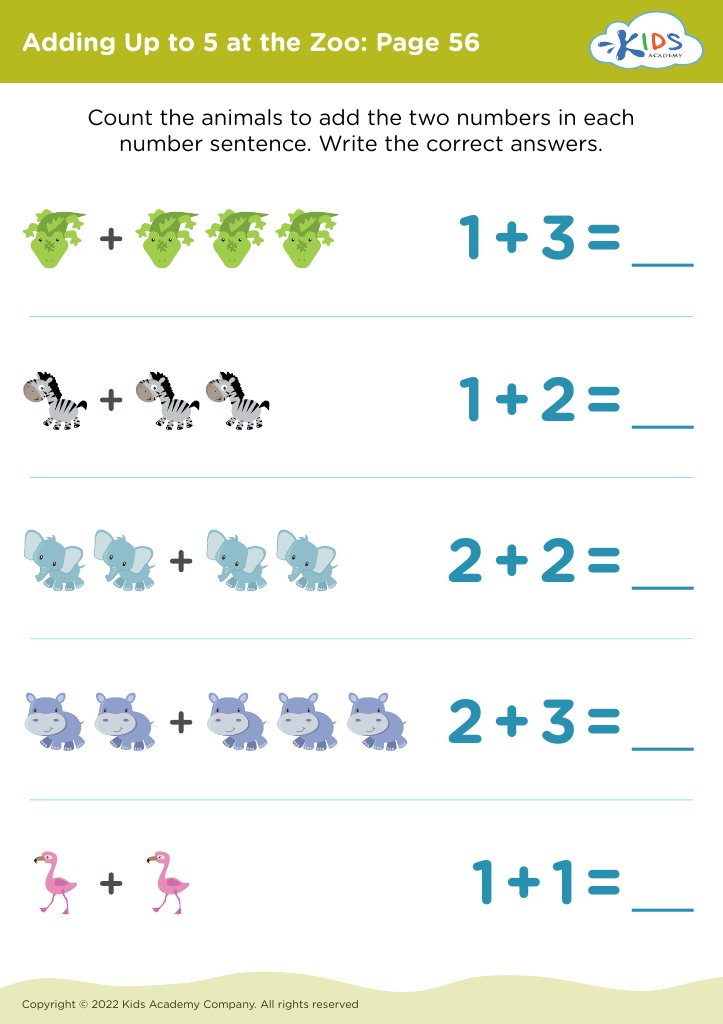
Adding Up to 5 at the Zoo: Page 56
Worksheet
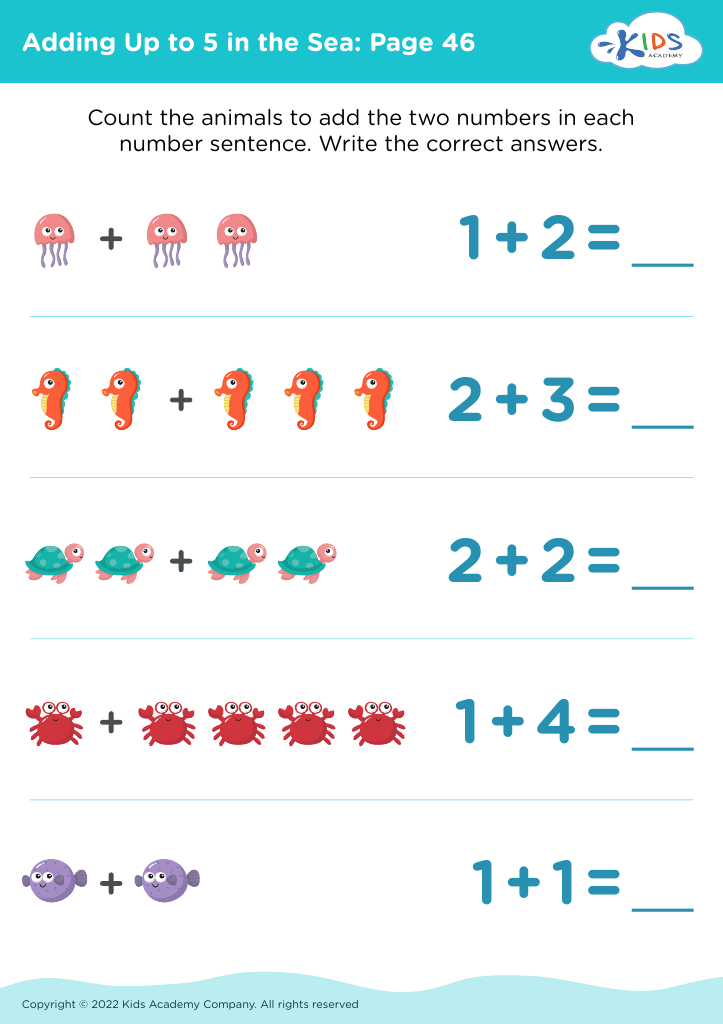
Adding Up to 5 in the Sea: Page 46
Worksheet
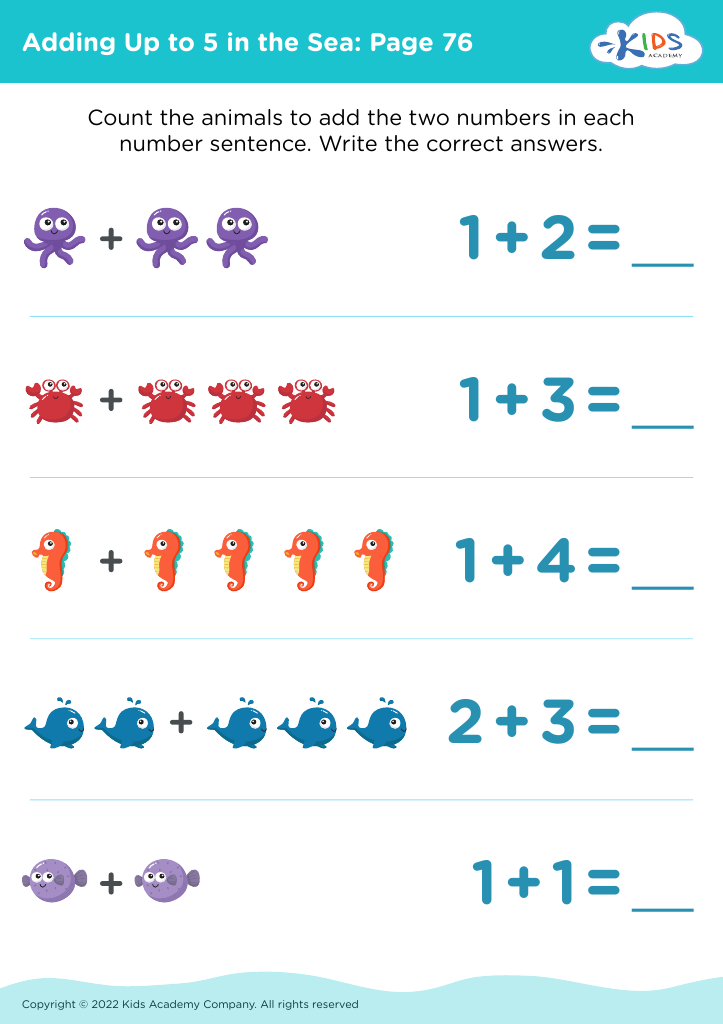
Adding Up to 5 in the Sea: Page 76
Worksheet
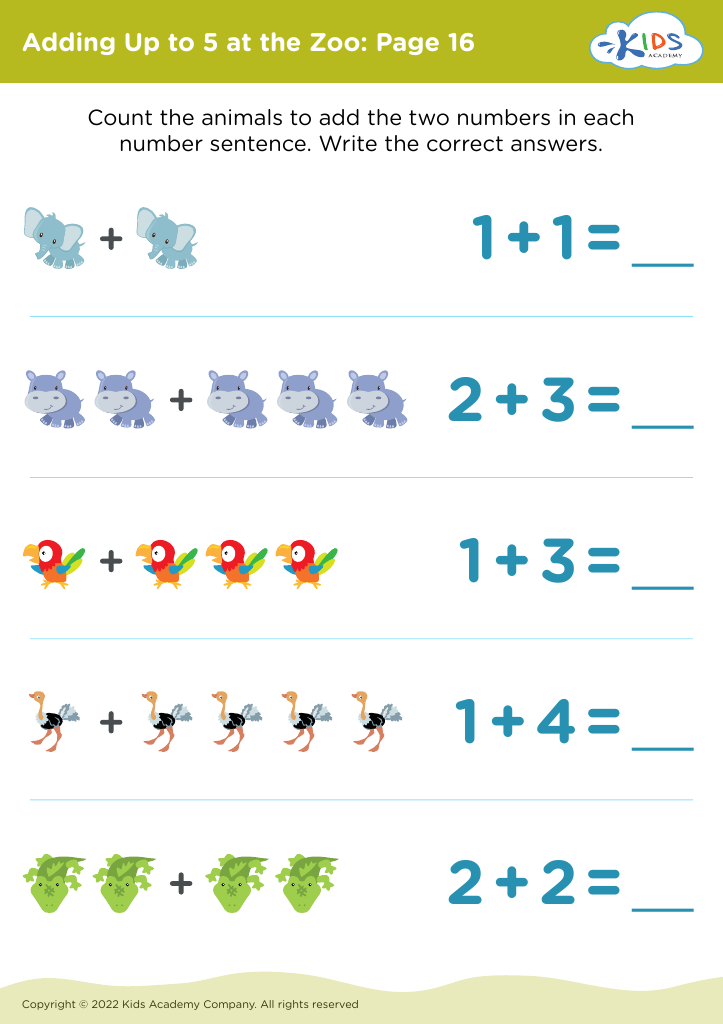
Adding Up to 5 at the Zoo: Page 16
Worksheet
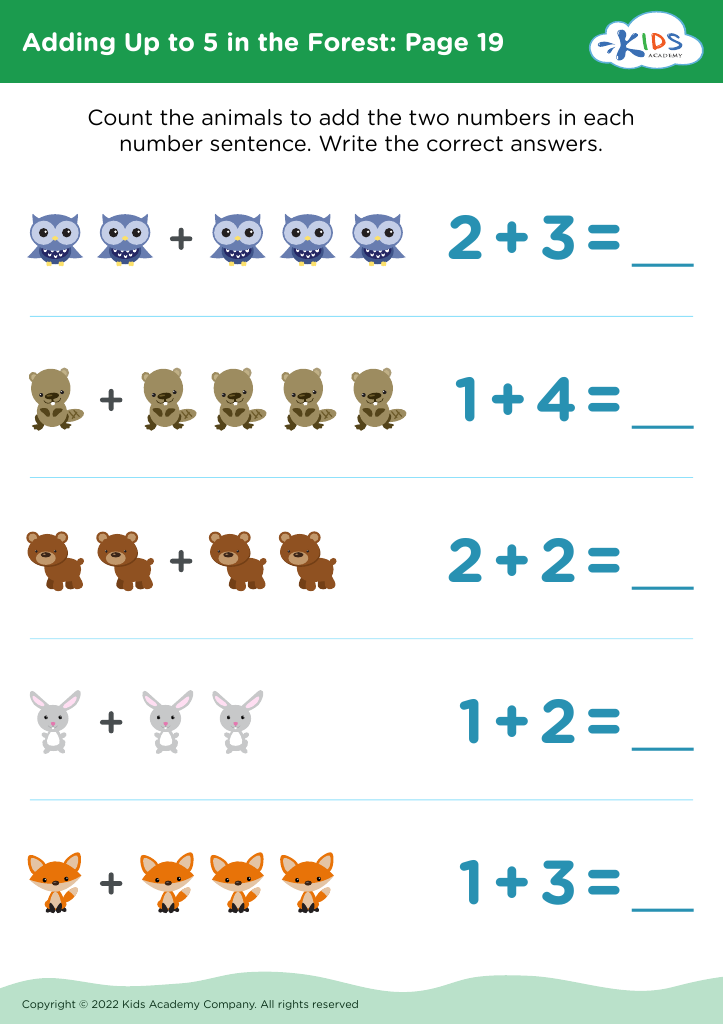
Adding Up to 5 in the Forest: Page 19
Worksheet
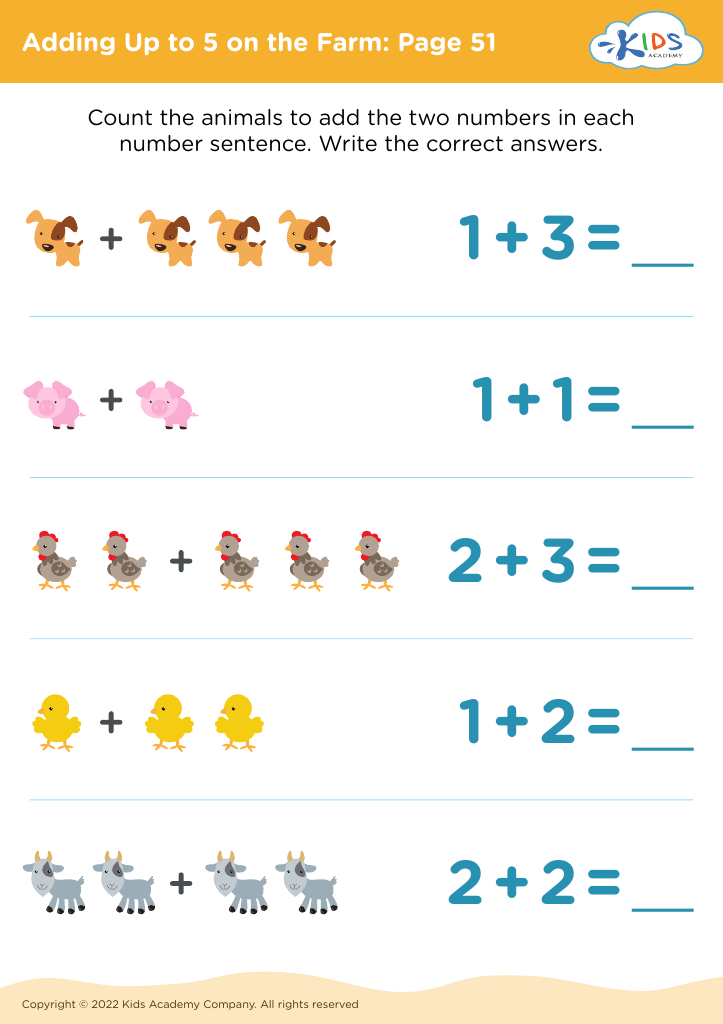
Adding Up to 5 on the Farm: Page 51
Worksheet
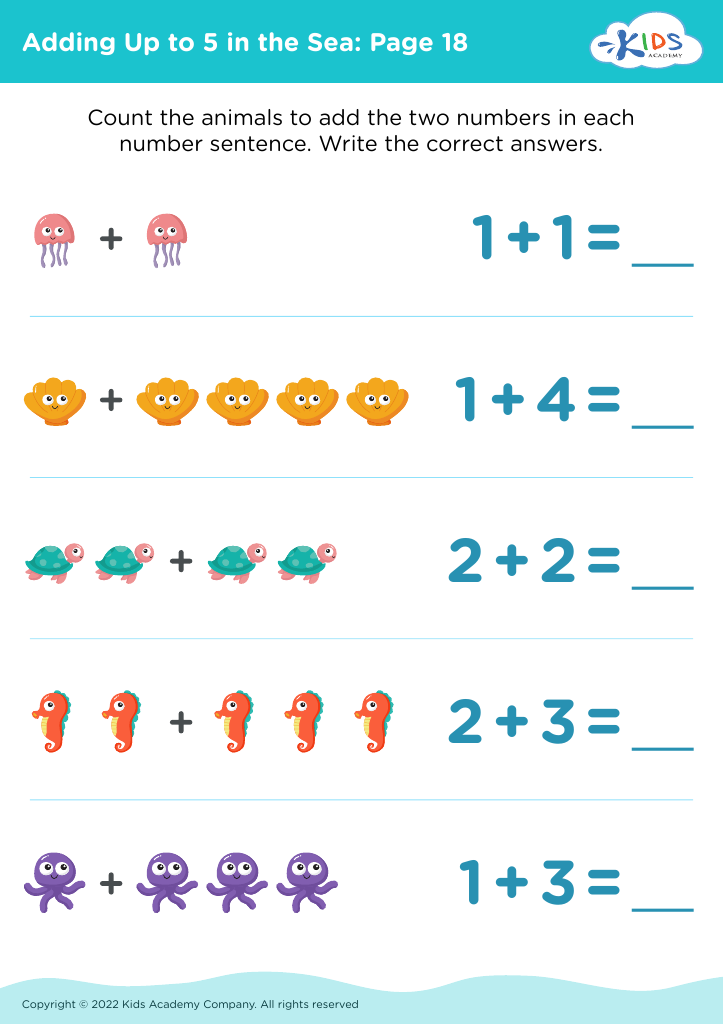
Adding Up to 5 in the Sea: Page 18
Worksheet


Counting practice, especially adding up to 5, is essential for the mathematical development of 5-year-olds. At this age, children build foundational skills crucial for their future learning. Engaging in counting activities helps young learners recognize numbers, understand quantity, and develop a sense of resilience when solving problems.

By practicing simple addition, children become familiar with mathematical concepts and learn to associate numbers with physical quantities. This leads to improved confidence in their abilities—a critical component in fostering a lifelong love for math. Moreover, counting to 5 fosters number sense and enhances cognitive skills such as memory and reasoning.

Parents and teachers play a vital role in this developmental phase. They can create supportive learning environments that make math enjoyable, using games, visual aids, and everyday situations to reinforce these concepts. Involving children in dialogues about math encourages their engagement and promotes critical thinking.

Ultimately, prioritizing counting in early education not only lays the groundwork for more complex math skills later on but also helps children become problem-solvers and critical thinkers, essential skills in an increasingly mathematical world. Fostering these abilities early nurtures a positive attitude towards learning, setting the stage for academic success.