Fine Motor Skills (coloring) Adding Up to 5 Worksheets for 5-Year-Olds
3 filtered results
-
From - To
Explore our engaging "Fine Motor Skills (Coloring) Adding Up to 5 Worksheets" designed specifically for 5-year-olds! These interactive worksheets not only enhance children's fine motor coordination through fun coloring activities but also reinforce mathematical skills by introducing basic addition concepts. As young learners color in vibrant illustrations, they'll practice adding numbers up to 5, promoting early math fluency. Perfect for home or classroom use, these worksheets provide a creative and educational experience that encourages independent thinking and concentration. Foster your child's developmental skills while making learning exciting and enjoyable! Start your child's educational journey today with our downloadable resources!
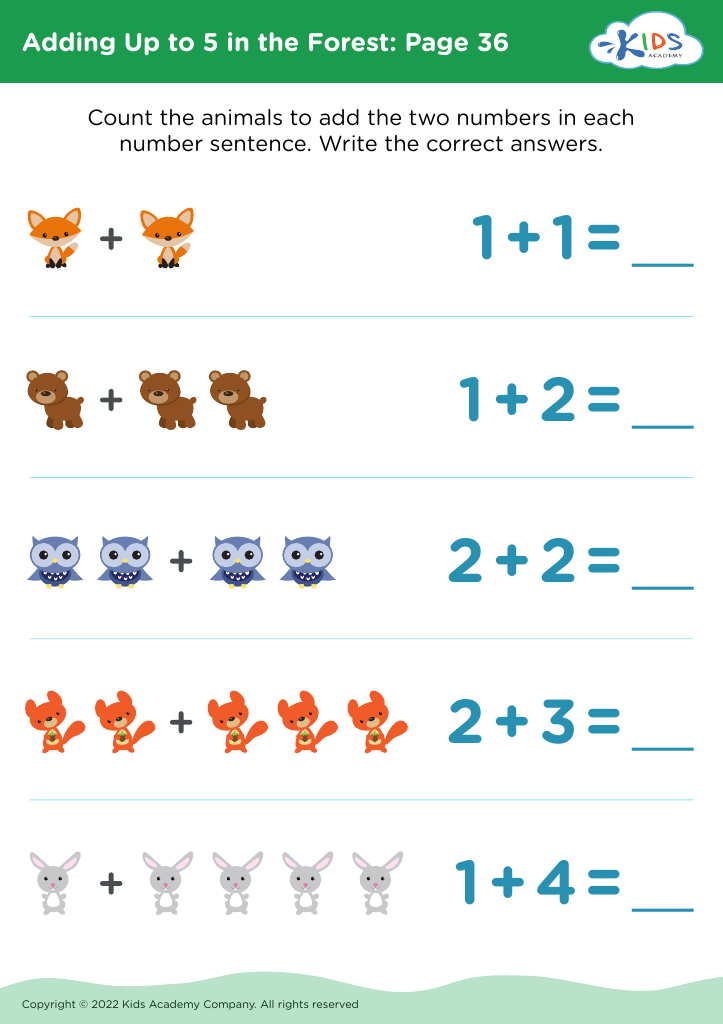
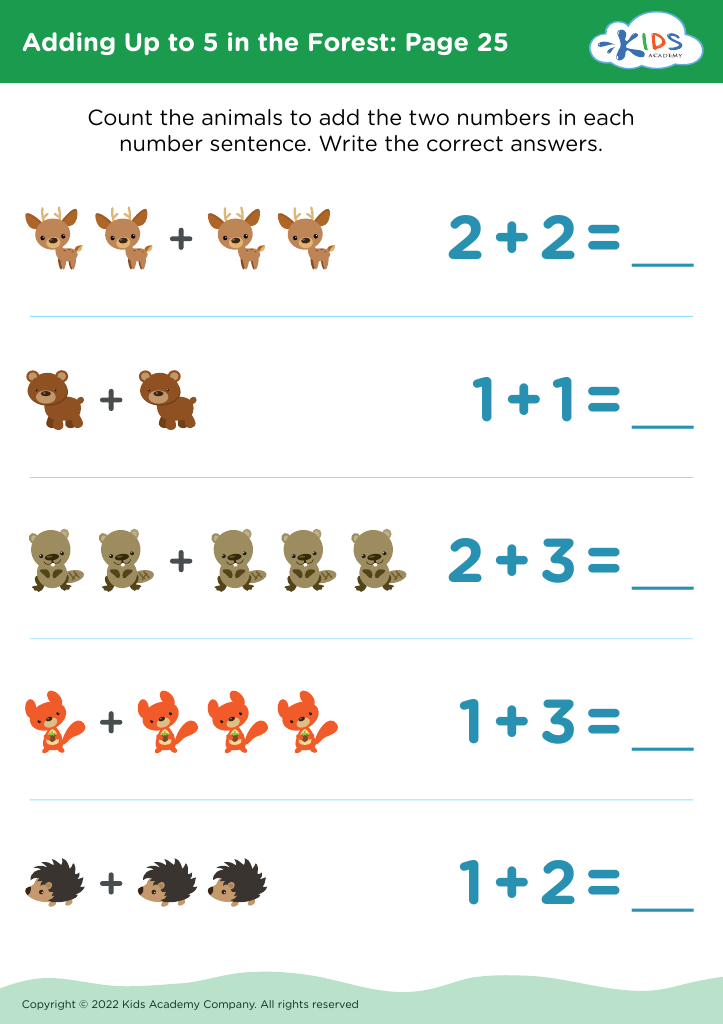
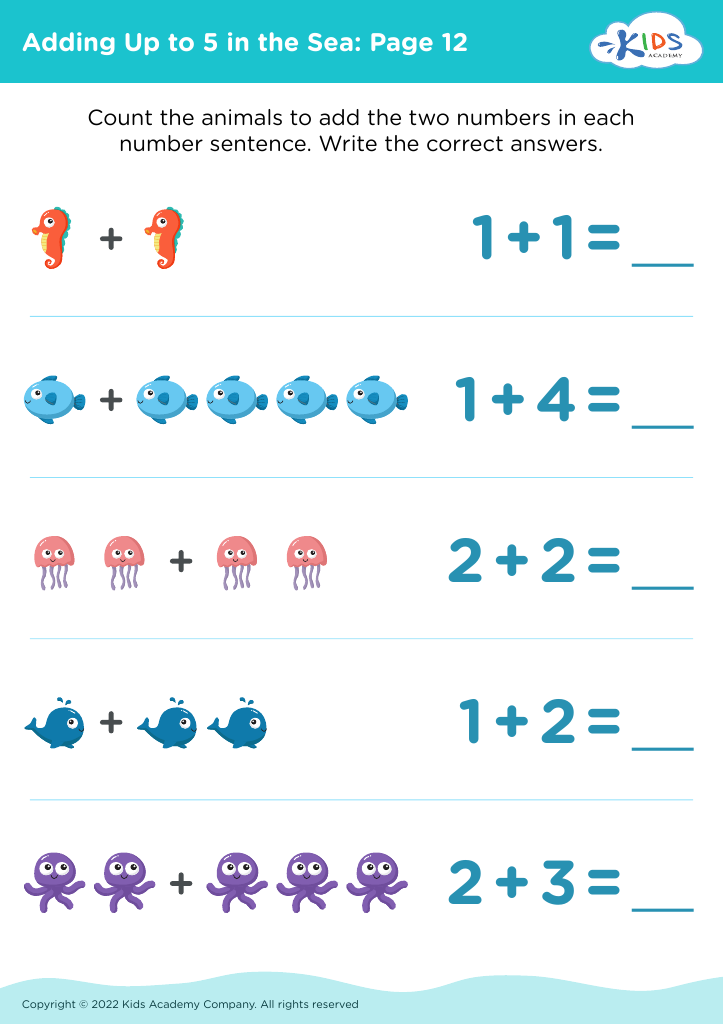








Fine motor skills and early math concepts are crucial for 5-year-olds, forming the foundation for future learning and development. Coloring activities greatly enhance fine motor skills by encouraging the use of hand-eye coordination, finger strength, and dexterity. These skills are essential for tasks such as writing, typing, and performing everyday activities.
When children engage in coloring, they learn to control their movements, which aids in developing their handwriting abilities later on. As they color within lines or choose colors, they also practice decision-making and self-expression, nurturing their creativity.
Simultaneously, introducing the concept of adding up to 5 strengthens early math skills. Learning to count and perform simple addition helps children grasp number relationships, fostering a sense of number sense and confidence in math. This foundational knowledge is essential as they progress to more complex mathematical concepts in school.
Moreover, activities that combine fine motor skills with math, like coloring objects and counting them, make learning engaging and enjoyable. By valuing these development areas, parents and teachers can support a holistic approach to learning, ensuring children are well-equipped for academic success and self-confidence in their abilities. Overall, fostering fine motor skills and early math concepts significantly contributes to a child's overall development.








