Understanding Quantities Adding Up to 5 Worksheets for 5-Year-Olds - Page 2
36 filtered results
-
From - To



.jpg)




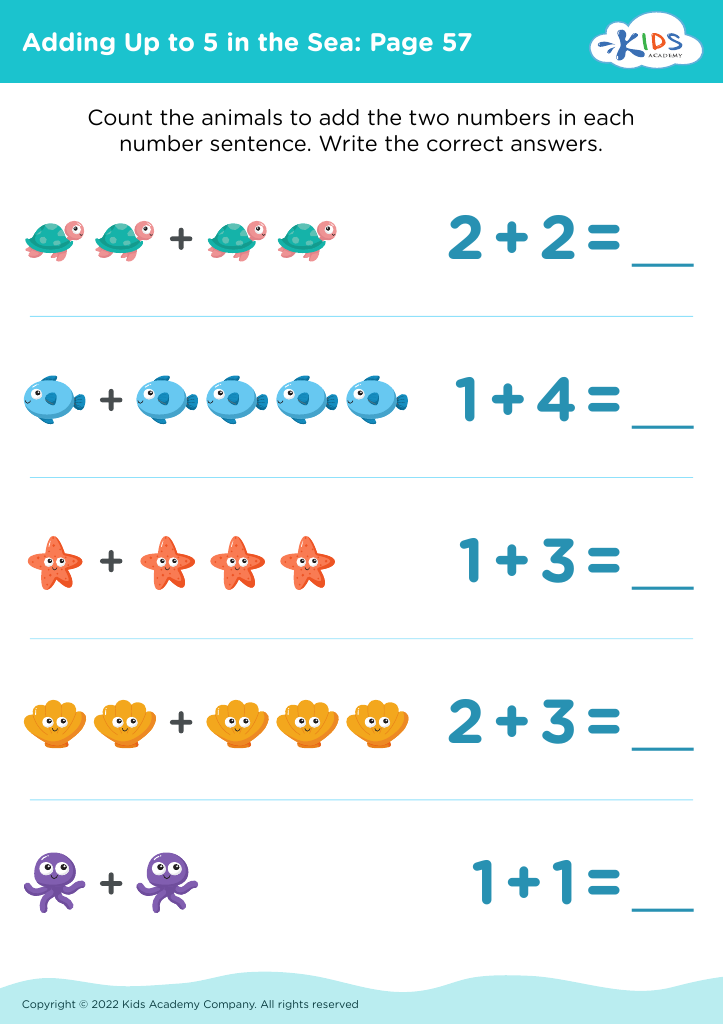
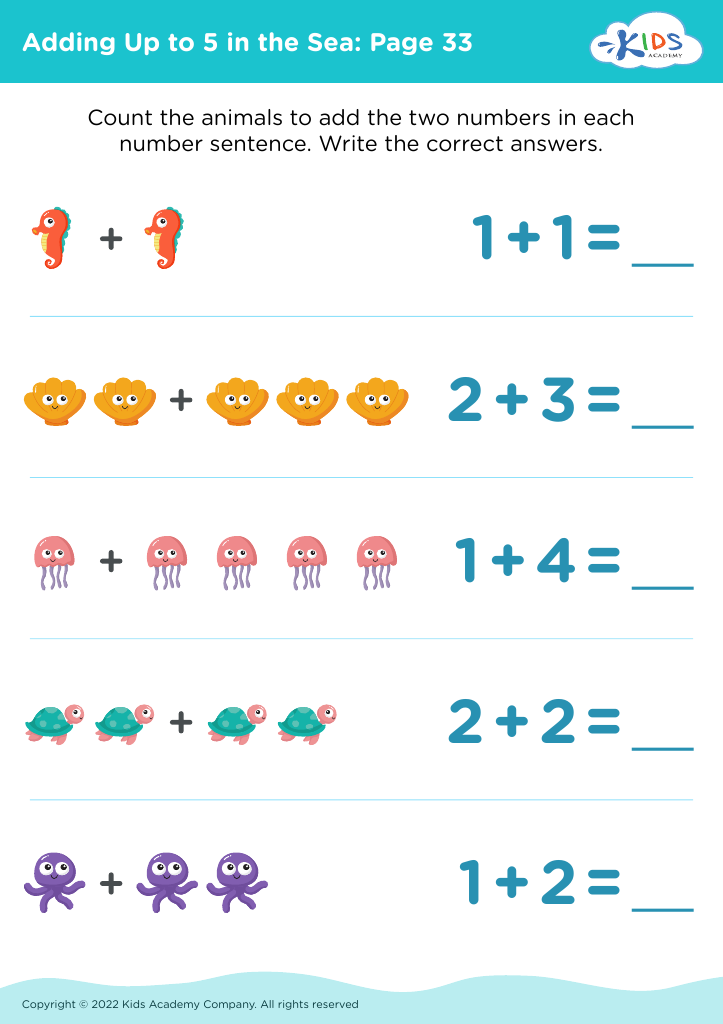
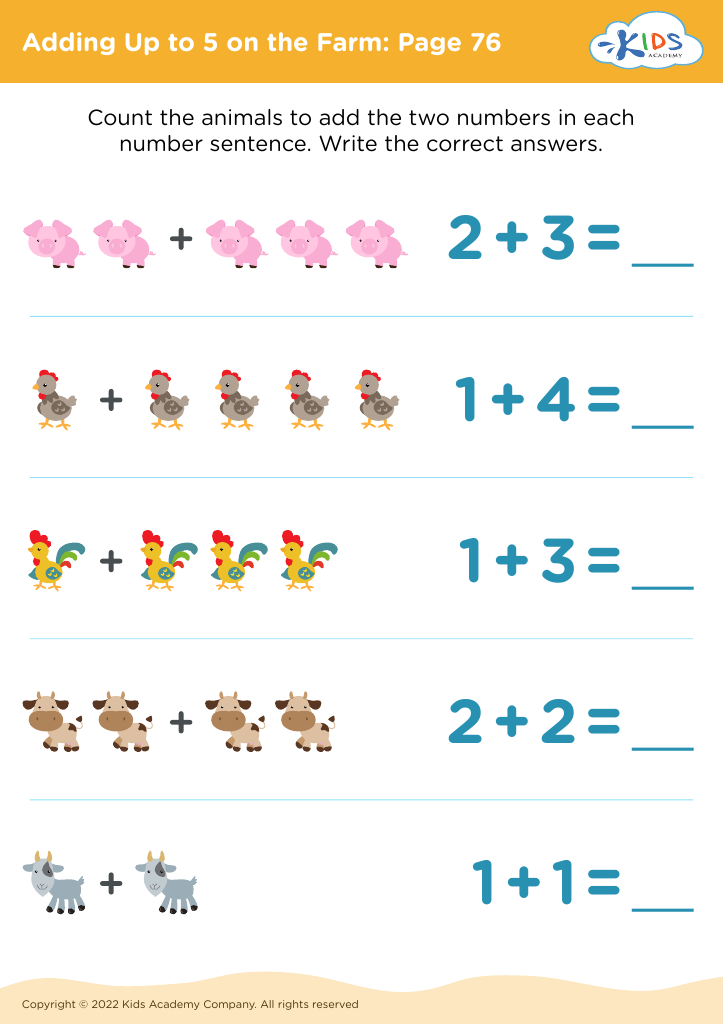
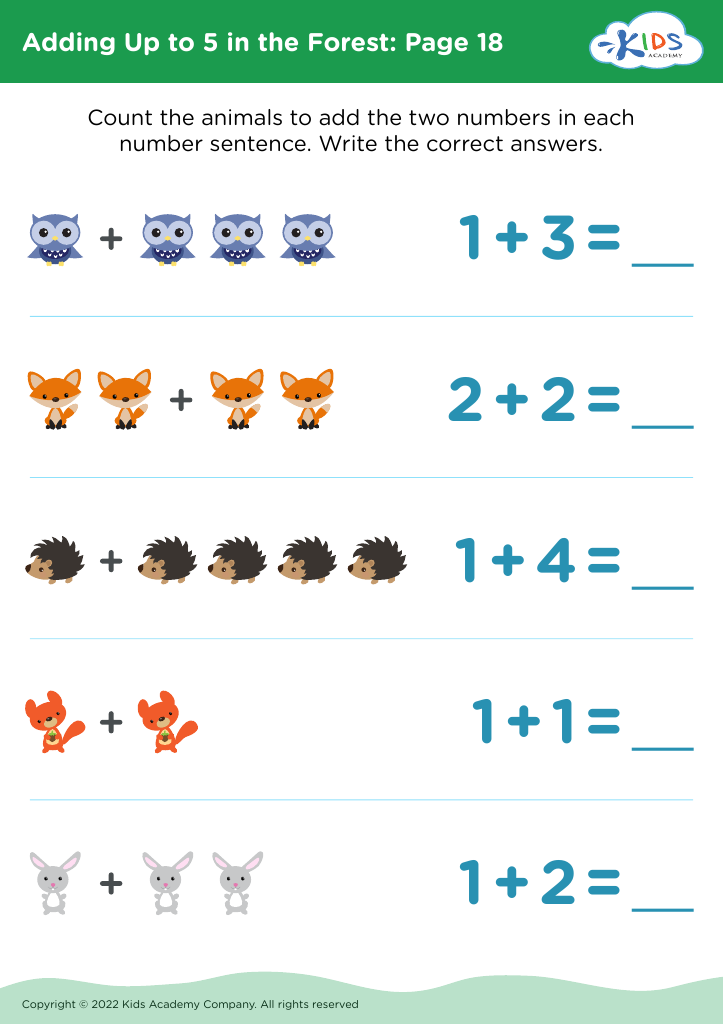
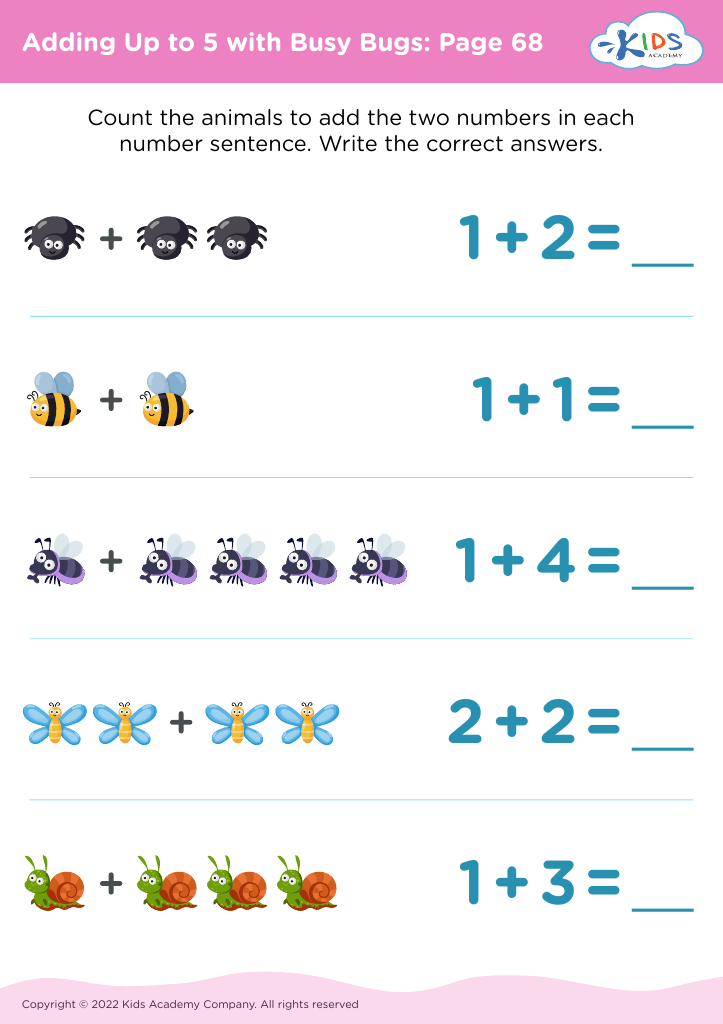
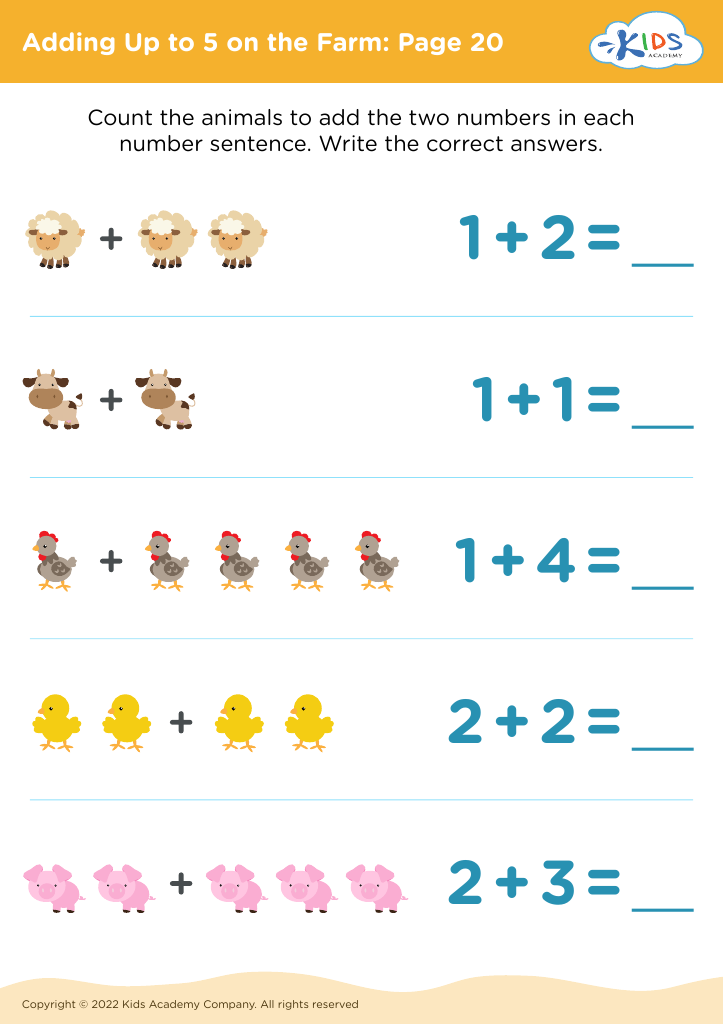
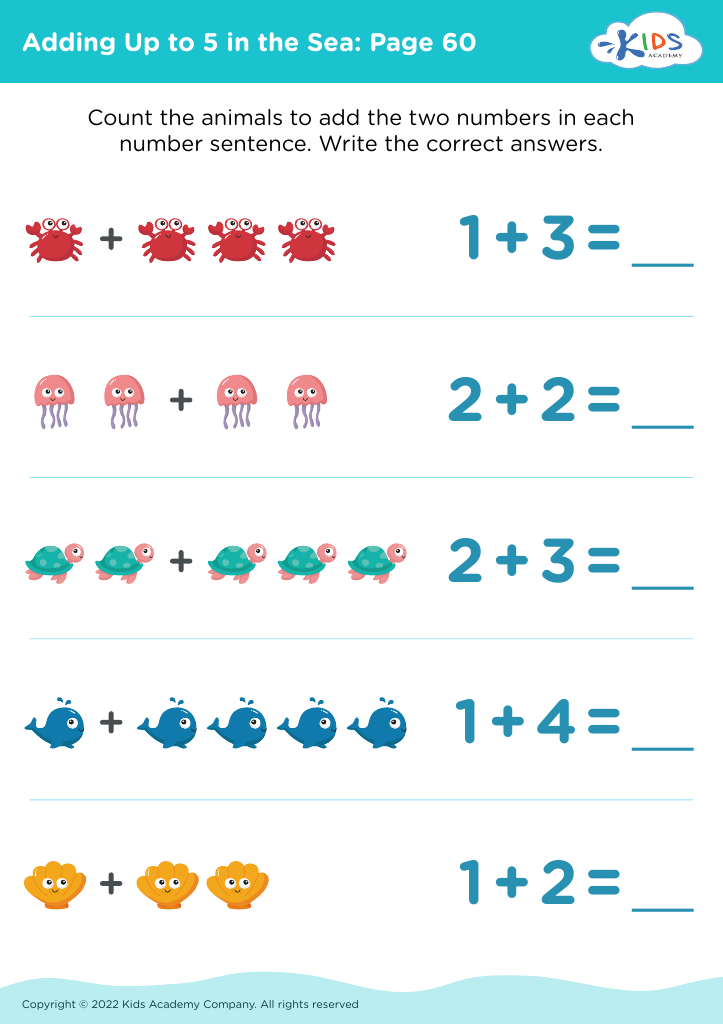
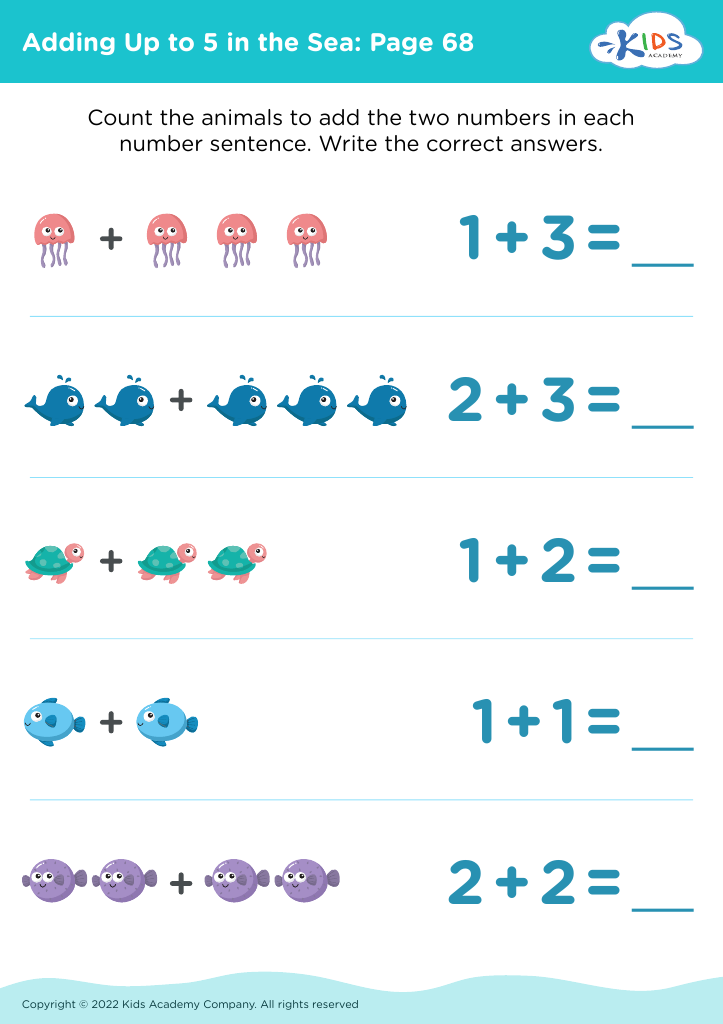
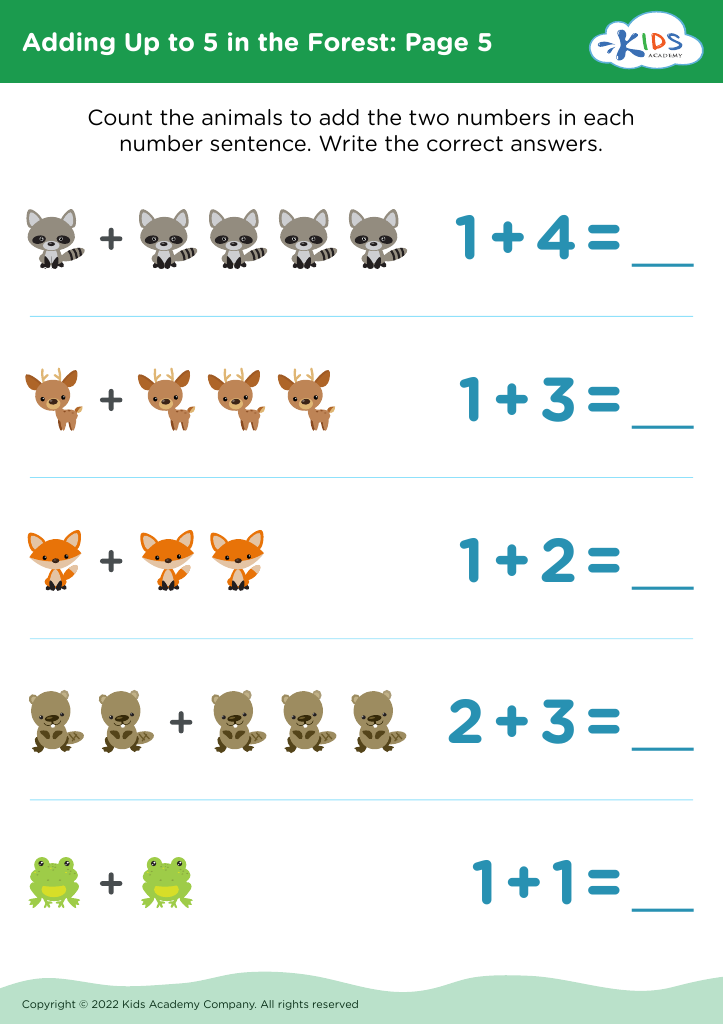
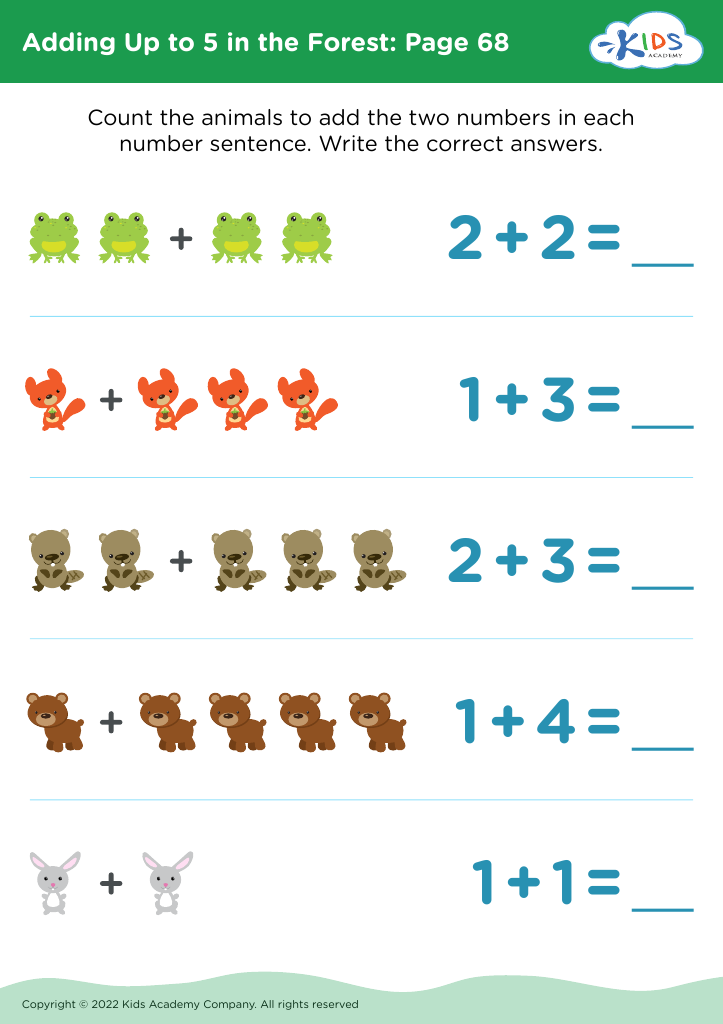
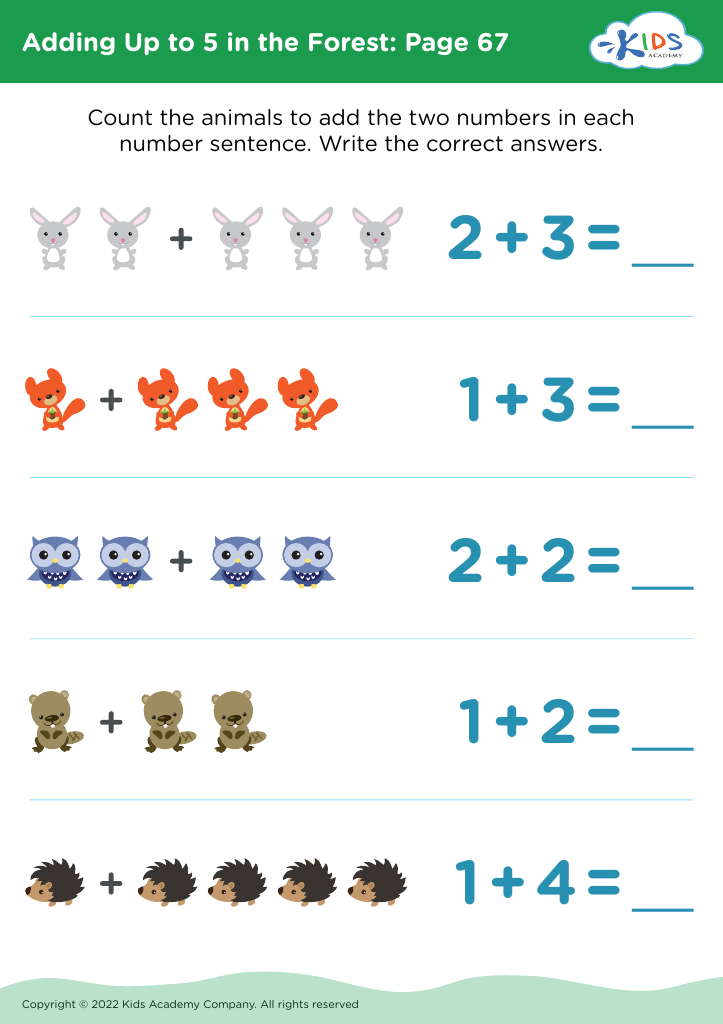
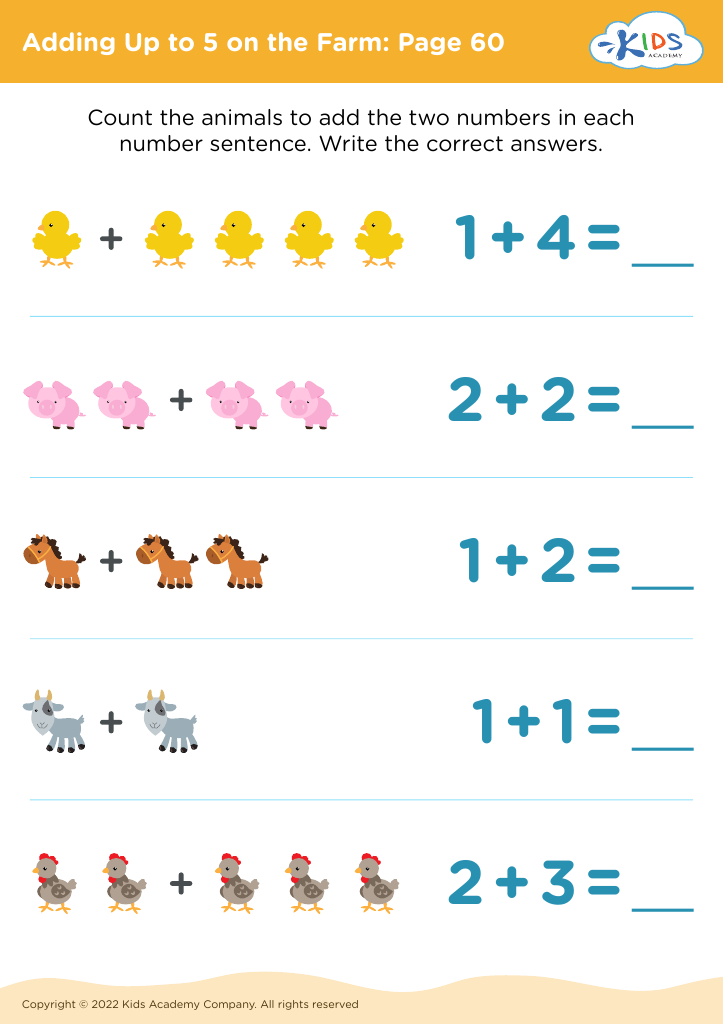
Understanding quantities adding up to 5 is a fundamental concept in early childhood development that lays the foundation for future mathematical learning. For 5-year-olds, grasping this concept is crucial because it not only prepares their brains for more complex arithmetic but also enhances their cognitive skills such as memory, problem-solving, and logical thinking.
When children learn to comprehend and manipulate quantities up to 5, they build a core understanding of number sense, which is the ability to recognize, relate, and work with numbers. This basic skill is vital as it supports the learning of addition and subtraction, which are the building blocks for all subsequent mathematical education. For instance, recognizing that 2 and 3 make 5 is an introductory step to understanding that 5 minus 2 leaves 3.
Furthermore, understanding small quantities helps children in everyday contexts, such as sharing toys, understanding time (like counting minutes or seconds), and even following recipes that parents might use at home. Teachers and parents who foster strong, early numeracy skills contribute to the child's confidence and positive attitude towards math, which is essential for their academic success and general life skills.
Investing in these early concepts encourages a child's curiosity and enthusiasm for learning, setting a solid foundation that will support their educational journey and practical life skills long into the future.








