Underwater animal identification Adding Up to 5 Worksheets for 5-Year-Olds
3 filtered results
-
From - To
Dive into learning and fun with our "Underwater Animal Identification Adding Up to 5 Worksheets for 5-Year-Olds"! These vibrant, sea-themed worksheets are designed to help young learners practice basic addition while discovering fascinating underwater creatures. Each activity combines colorful illustrations with simple math problems, encouraging kids to count, identify, and add up to five. Perfect for preschool and kindergarten students, these engaging exercises will enhance early math skills, boost number recognition, and foster a love for ocean life. Parents and educators will find these printables a valuable resource for making math enjoyable and educational.
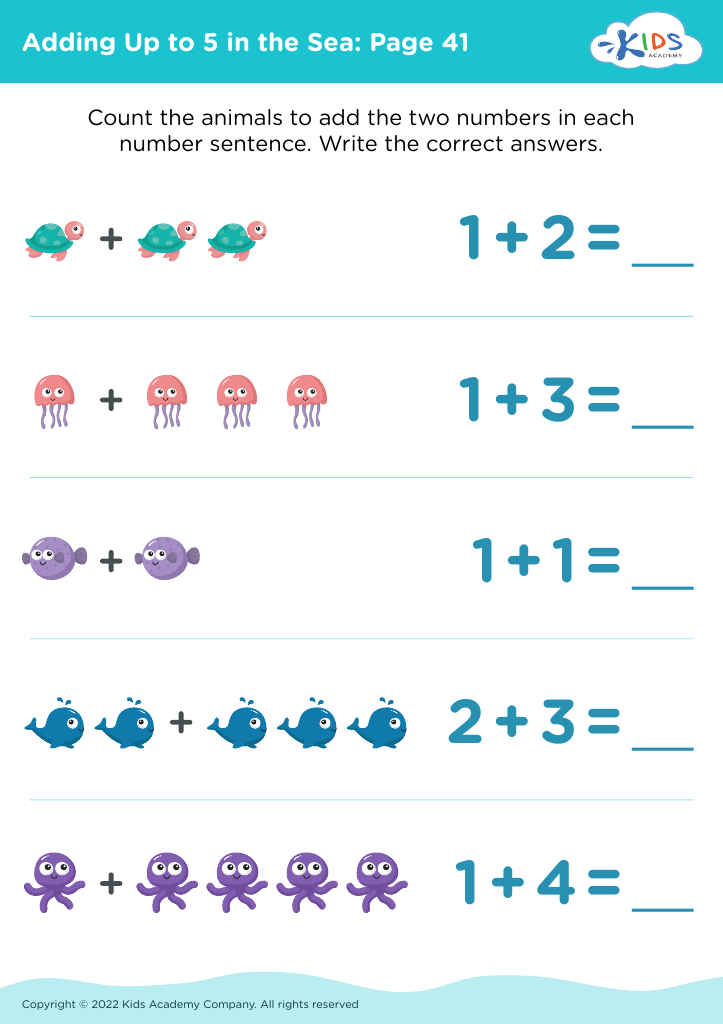
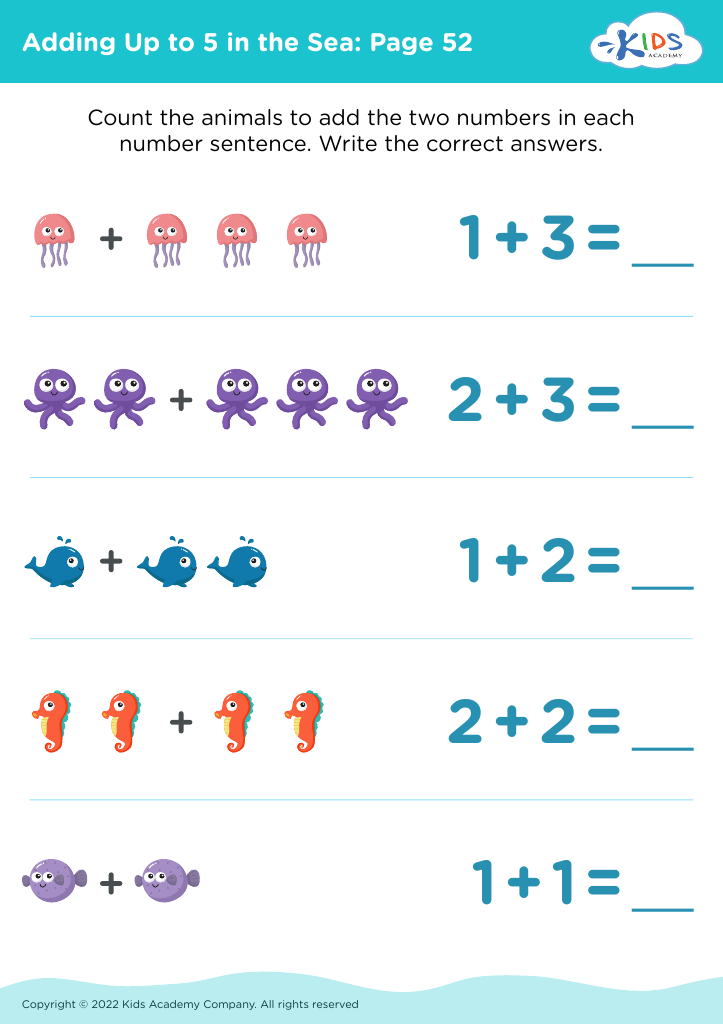
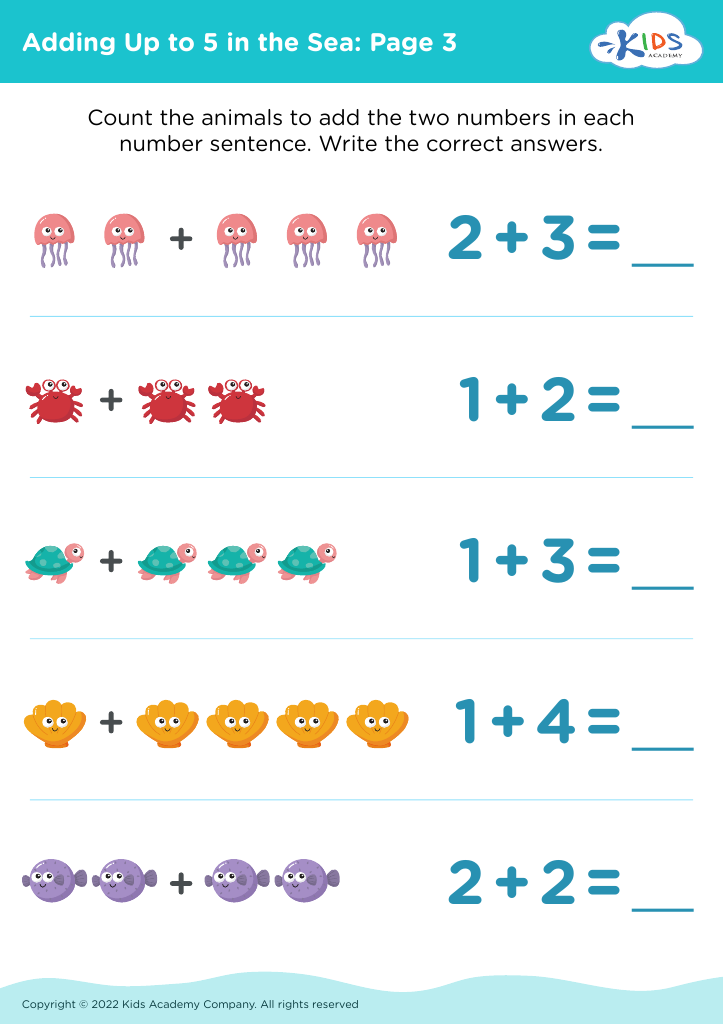








Parents and teachers should care about underwater animal identification combined with adding up to 5 for 5-year-olds because it integrates critical early childhood development skills in a playful and engaging manner. At this age, children are naturally curious about the world around them, and underwater animals spark imagination and wonder. This curiosity can be harnessed to teach fundamental skills such as counting and simple arithmetic.
Learning to identify different underwater animals enhances a child's vocabulary and knowledge of marine biology, providing a foundation for scientific learning. It encourages observational skills and attention to detail as children differentiate between various species. Coupling this with counting and basic math adds a layer of cognitive development. Integrating numbers with something tangible and interesting, like sea creatures, makes abstract concepts more concrete, understandable, and enjoyable for young learners.
Moreover, these activities can foster a love for learning and boost cognitive development. As children recognize and count the creatures, they engage in problem-solving and critical thinking. Such activities can also contribute to a sense of achievement and confidence. By linking marine life to math, parents and teachers can provide a balanced and enriching educational experience that adheres to the natural learning rhythms of preschoolers, setting the stage for future academic success.








