Visual comprehension Adding Up to 5 Worksheets for 5-Year-Olds
7 filtered results
-
From - To
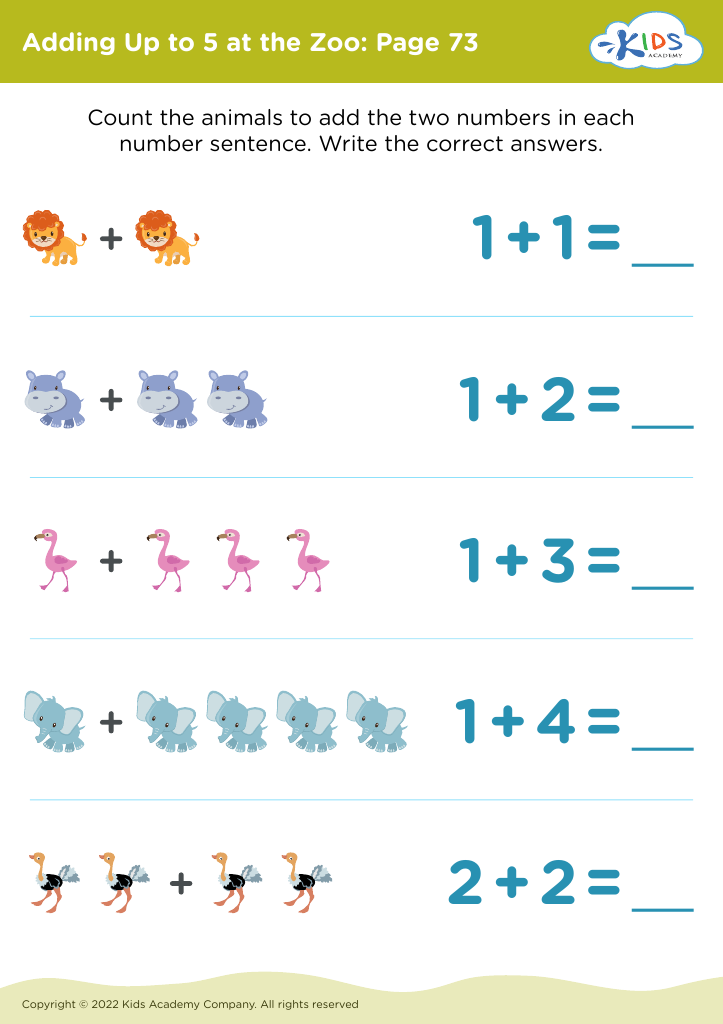
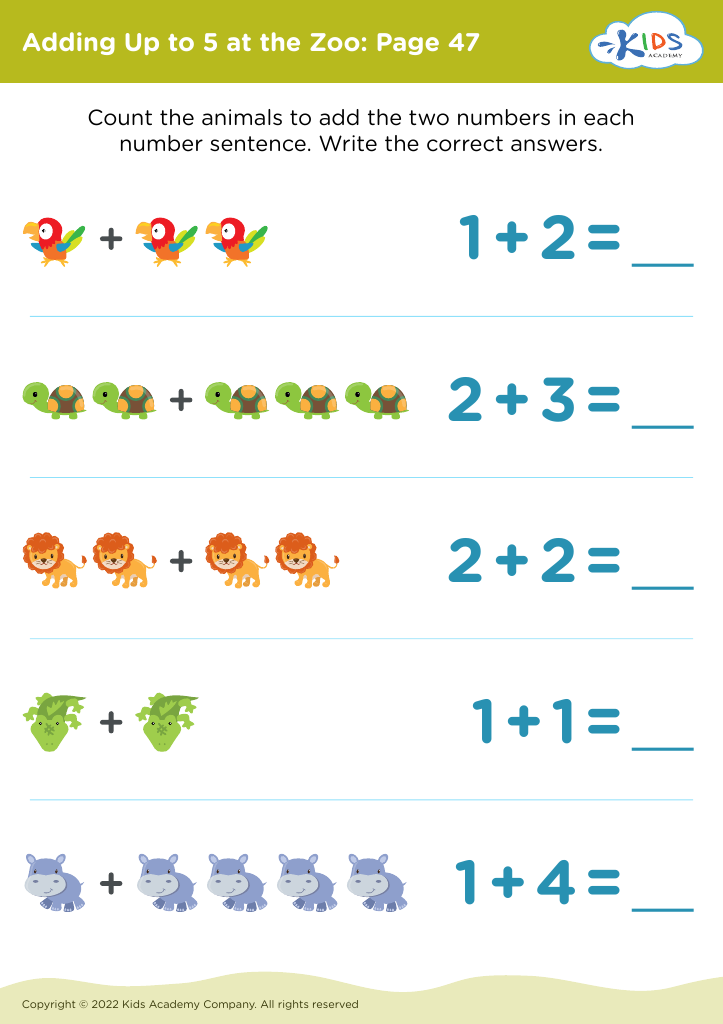
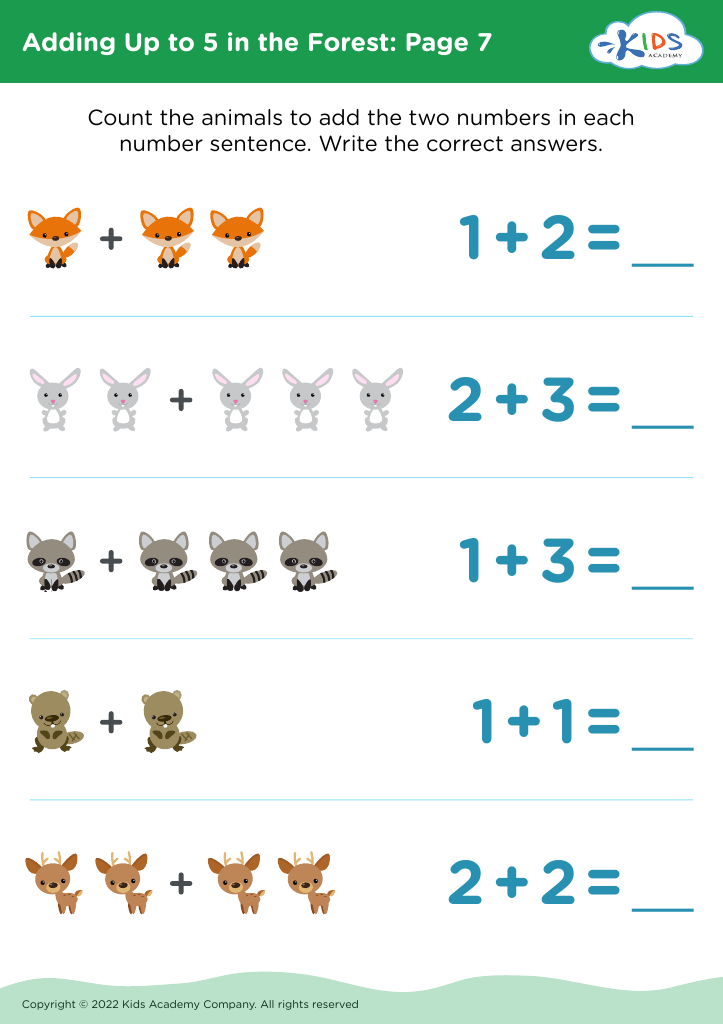
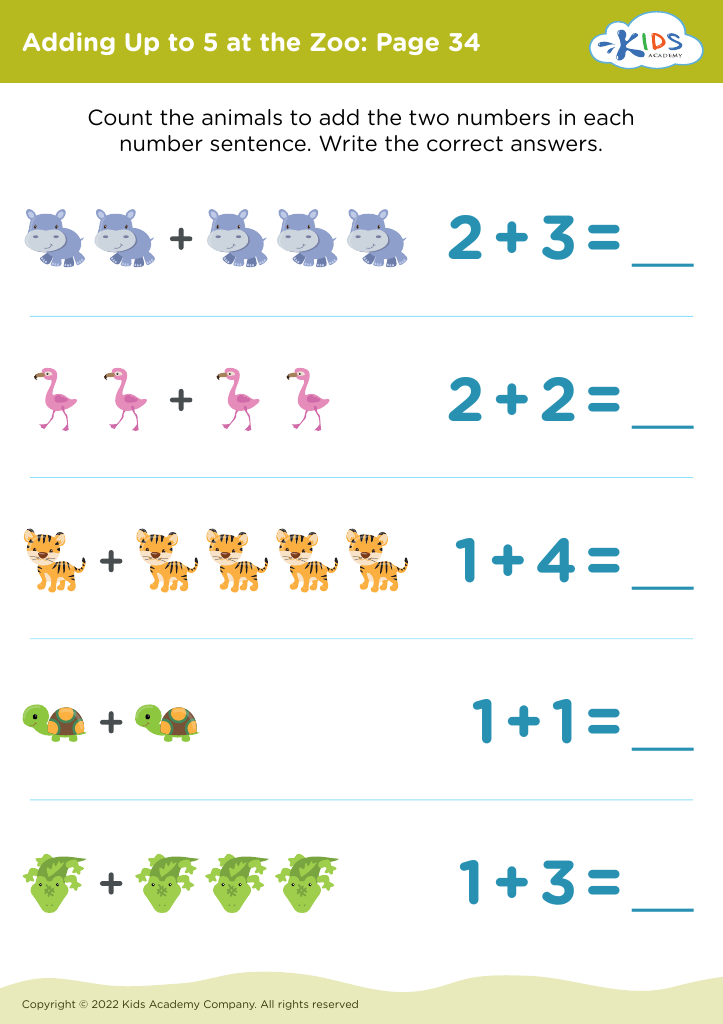
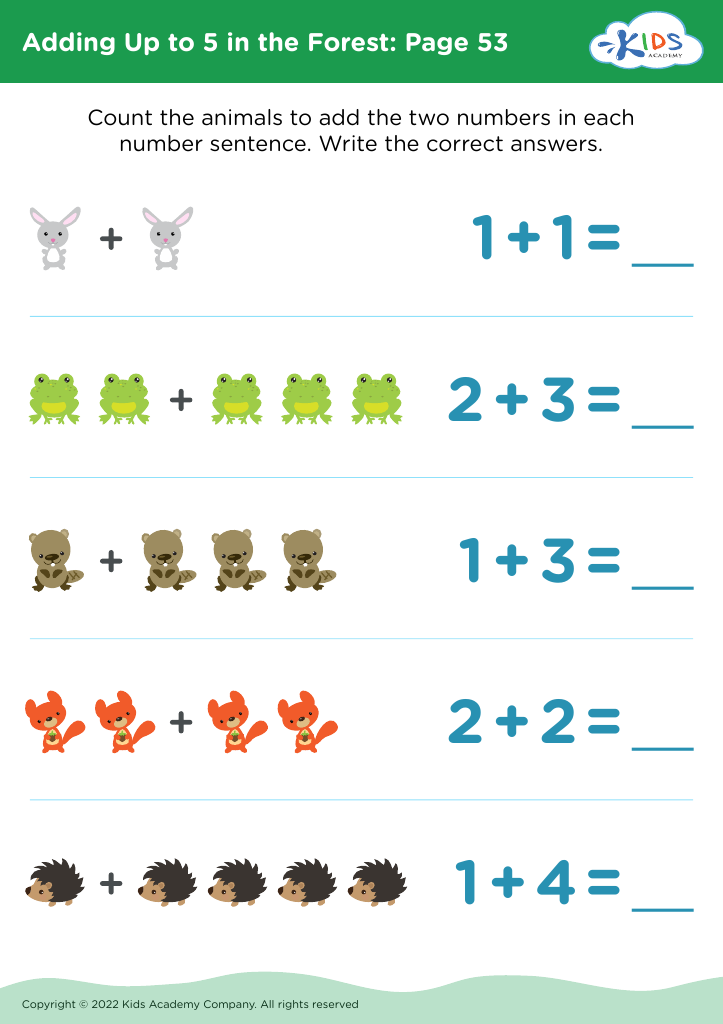
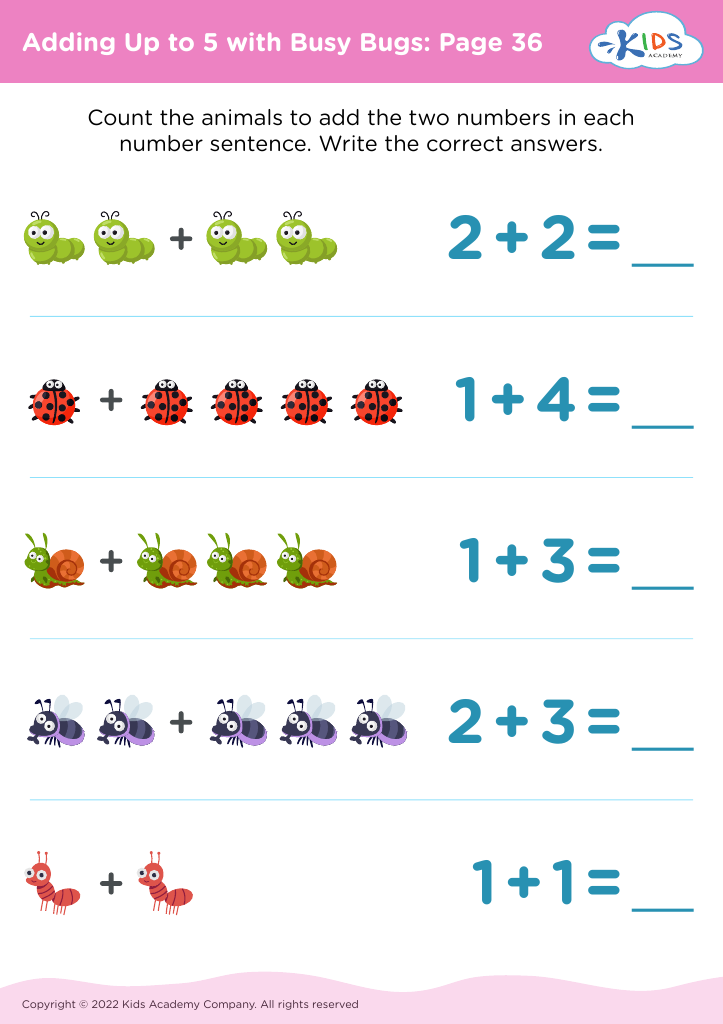
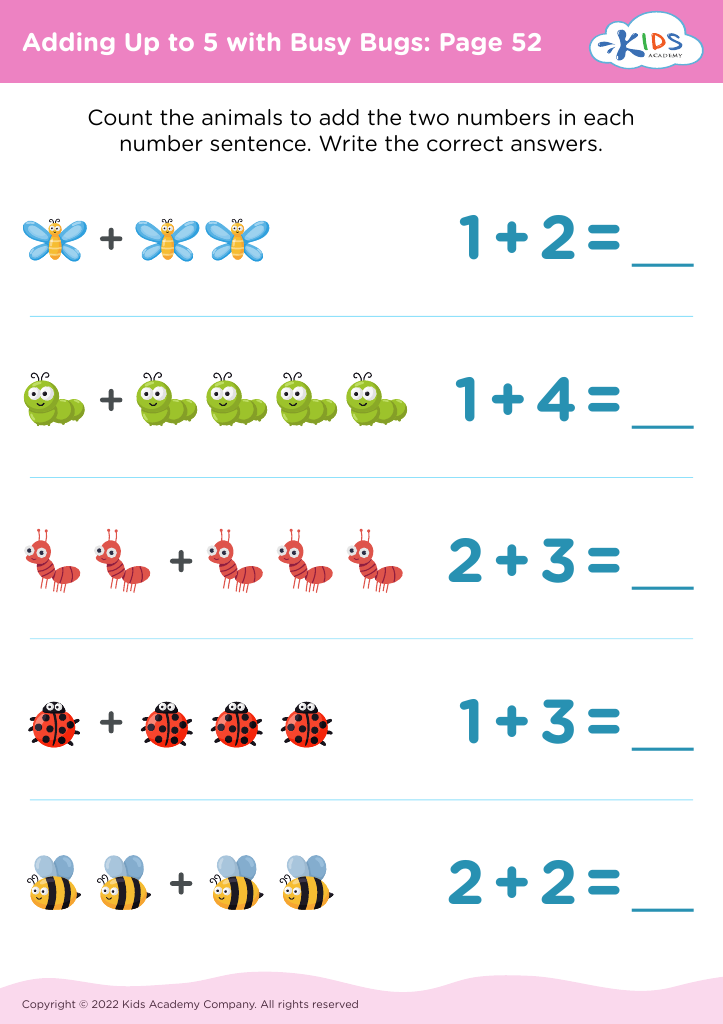
Enhance your 5-year-old's learning journey with our "Visual Comprehension Adding Up to 5 Worksheets." Designed to make math engaging, these worksheets focus on helping young learners grasp the concept of addition visually. Through colorful illustrations and interactive exercises, children will practice counting and adding numbers up to 5, building a strong foundation for future math skills. Each worksheet encourages critical thinking and visual recognition, making math fun and accessible. Perfect for at-home learning or classroom activities, these worksheets are a wonderful way to nurture early numeracy skills while keeping little ones entertained. Download now and add excitement to learning!





.jpg)


Visual comprehension is a crucial skill for early learners, particularly when it comes to concepts like "Adding Up to 5". For 5-year-olds, visual comprehension allows children to interpret and manipulate visual information, which helps them grasp basic mathematical concepts more effectively. Engaging with visual aids, such as counters, number lines, or colorful shapes, can create a more concrete understanding of numbers and addition.
Parents and teachers should prioritize this because it serves as a foundational aspect of a child's education. When young learners can visualize numbers, they are more likely to retain the information and develop confidence in their mathematical abilities. Additionally, fostering visual comprehension can enhance problem-solving skills, encouraging children to think critically and creatively in a variety of contexts.
Moreover, mastering addition through visual means can lead to smoother transitions into more complex arithmetic concepts in the future, ultimately contributing to overall academic success. By providing opportunities for visual learning, we can cater to different learning styles and spark a love for math early on, ensuring that 5-year-olds are well-prepared for the educational challenges that lie ahead. Supporting visual comprehension in this way equips children with essential skills they will use throughout their educational journeys.








