Visual learning reinforcement Adding Up to 5 Worksheets for 5-Year-Olds
5 filtered results
-
From - To
Discover fun and effective Visual Learning Reinforcement Worksheets designed for 5-year-olds to master adding up to 5! Our vibrant worksheets combine engaging images, interactive activities, and clear instructions to make learning addition enjoyable. These specially crafted exercises boost mathematical skills by offering ample practice, encouraging children to recognize number patterns while building confidence. Ideal for parents and teachers, our resources ensure that young learners achieve a strong foundational understanding of basic arithmetic, setting the stage for future success. Transform math learning into an exciting adventure with our expertly developed addition worksheets and watch your child's skillset flourish!
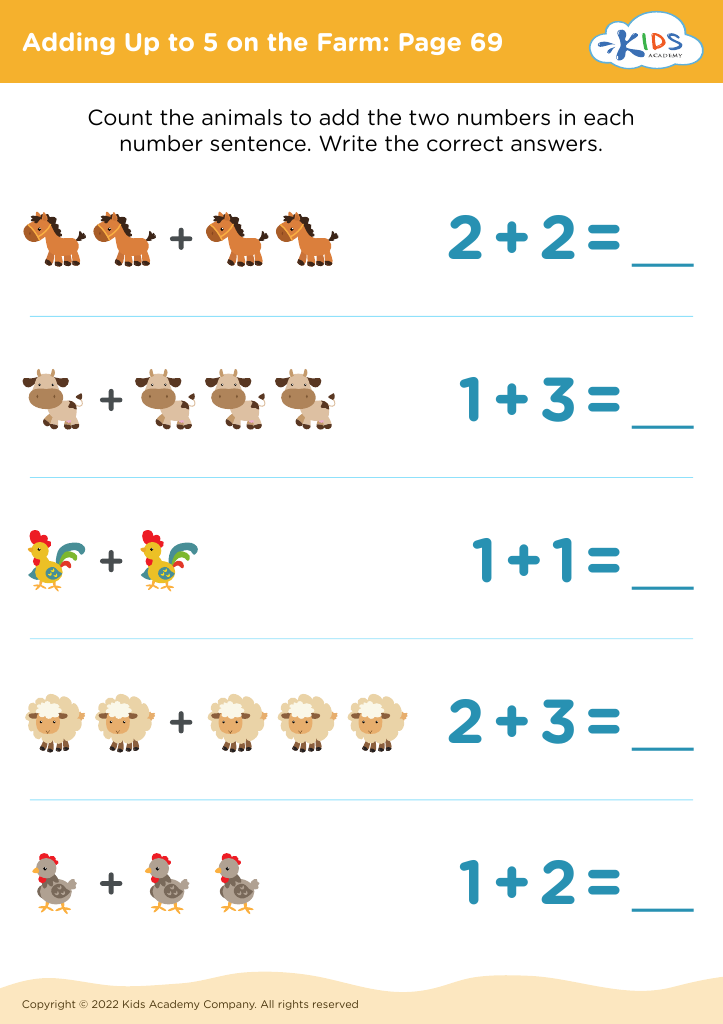
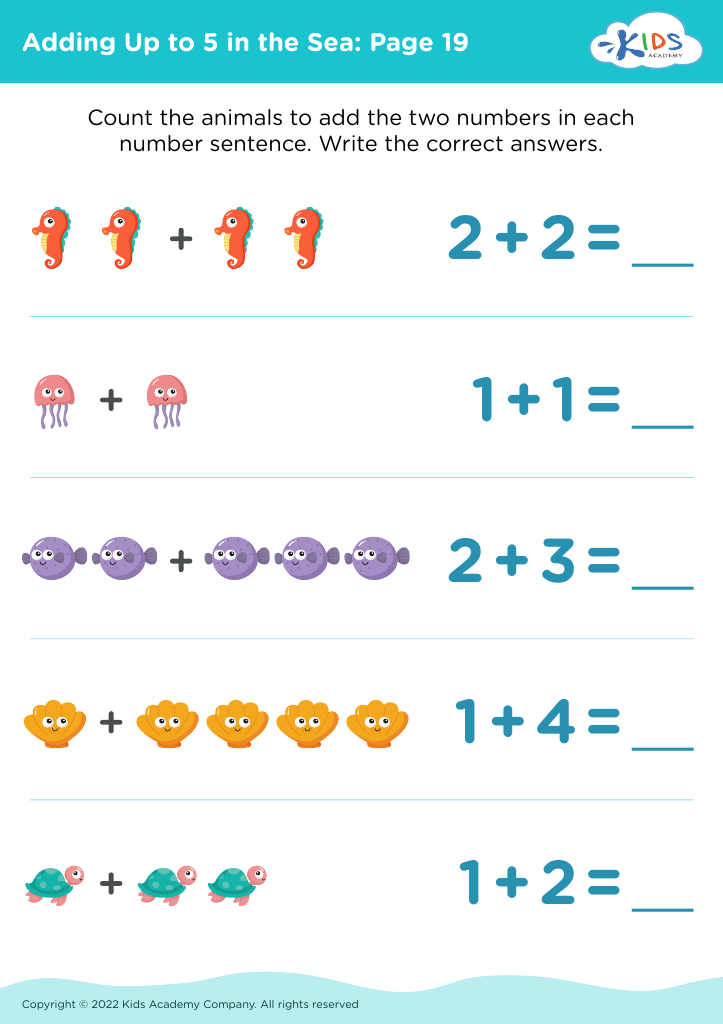
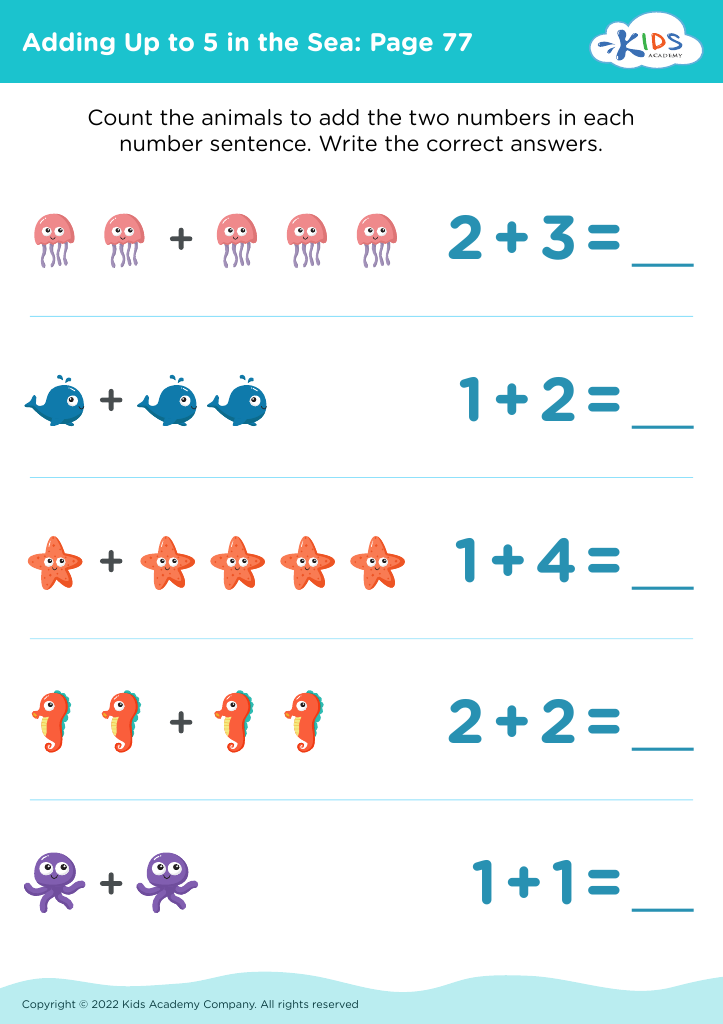
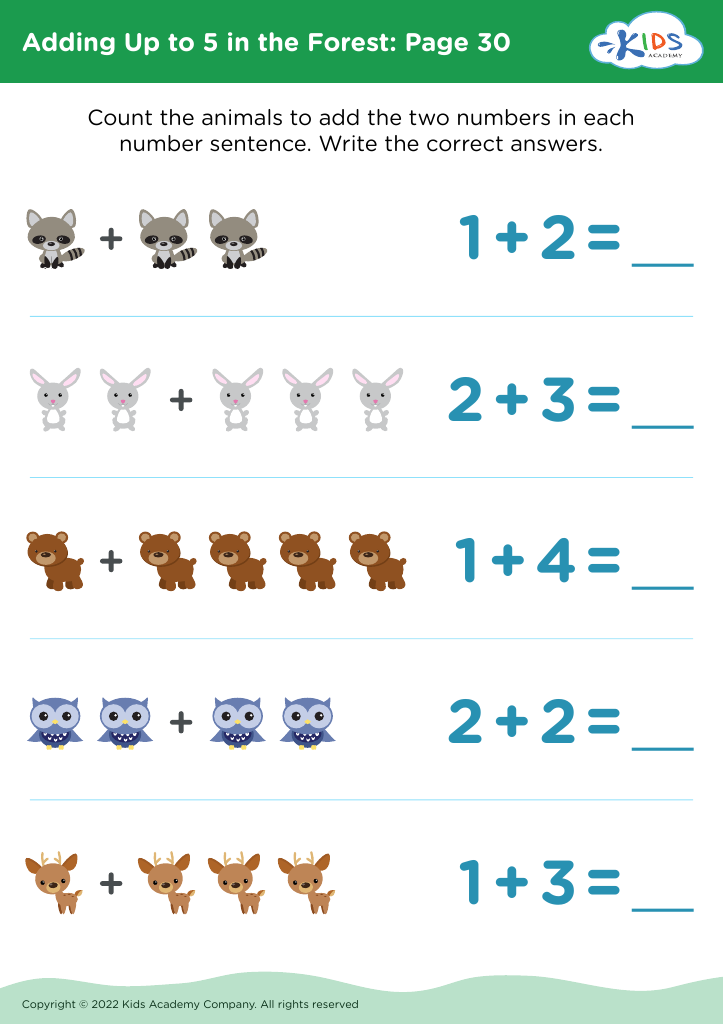
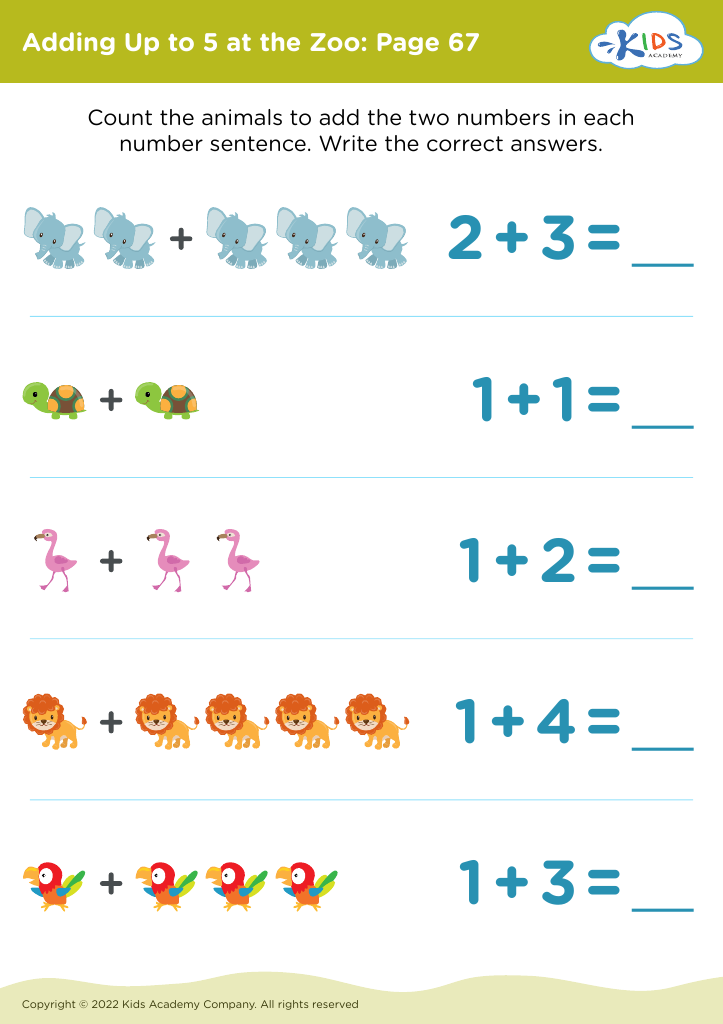








Parents and teachers should care about visual learning reinforcement for basic math concepts, such as adding up to 5, for 5-year-olds because it harnesses the natural strengths of young children's learning processes. At this age, children are highly visual and are able to understand and recall information better when it is presented in a graphical or pictorial format. Visual aids—like number lines, counting blocks, or interactive apps—make abstract math concepts tangible and engaging.
Through visual reinforcement, children can see the quantities being added, facilitating a more concrete understanding of numbers and basic addition. This sets a strong foundation for future math skills, as early mastery of basic concepts builds confidence and reduces anxiety towards learning more complex topics later on.
Moreover, integrating visual elements caters to different learning styles. While some children excel through verbal instructions, others may need the visual context to grasp concepts fully. Engaging multiple senses through visual aids can facilitate better retention and recall, aiding long-term educational development.
In sum, visual learning reinforcement transforms abstract numbers into concrete, understandable elements, facilitating a deeper and more enjoyable learning experience for young children. By prioritizing this method, parents and teachers can effectively nurture a child’s confidence, enthusiasm, and competence in mathematics.








