Basic Addition Skills Adding with Busy Bugs Worksheets for 5-Year-Olds - Page 2
34 filtered results
-
From - To
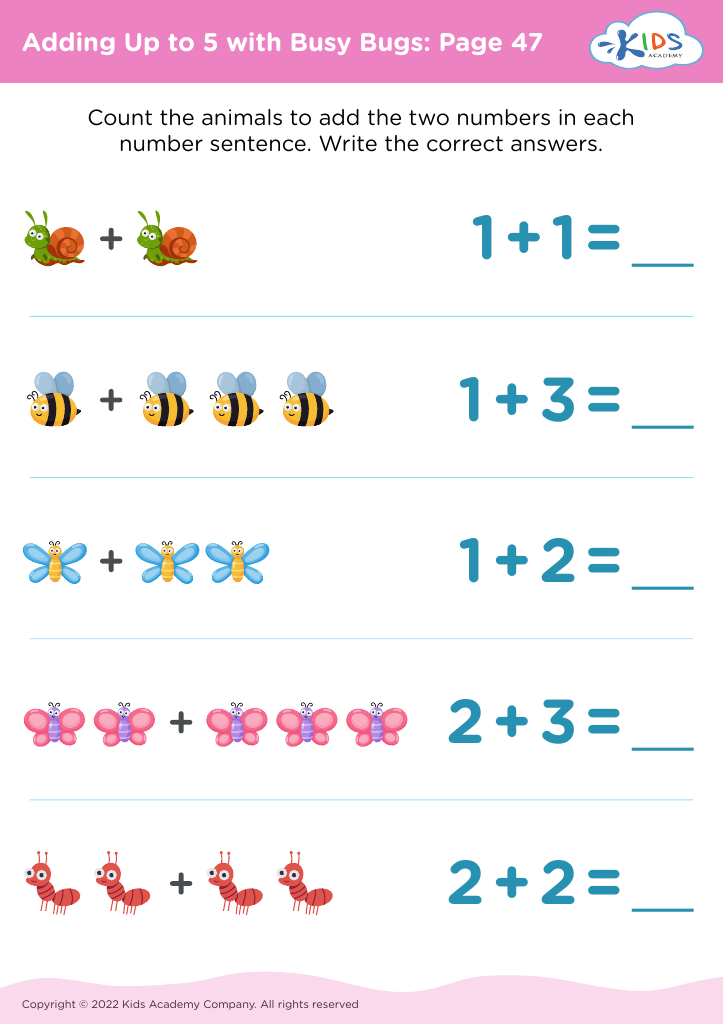
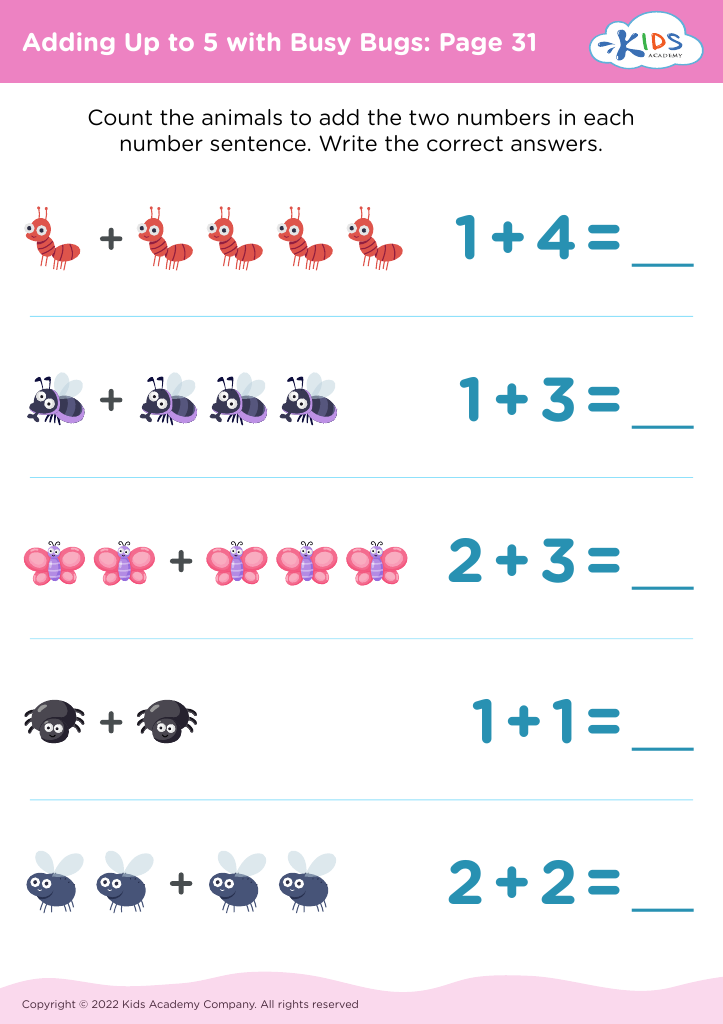
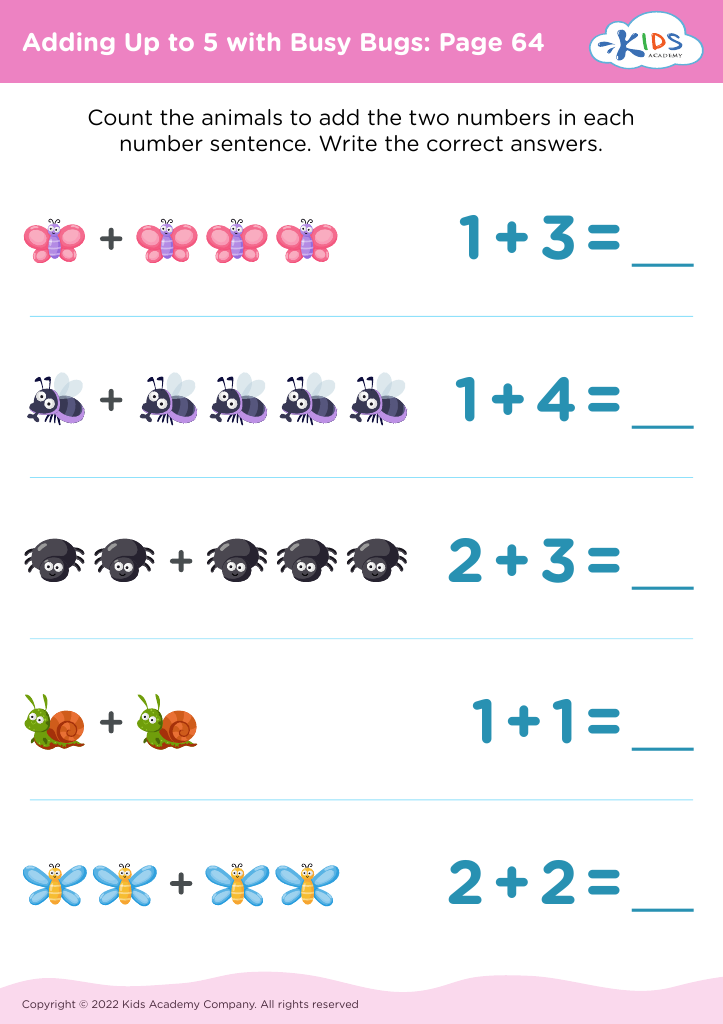
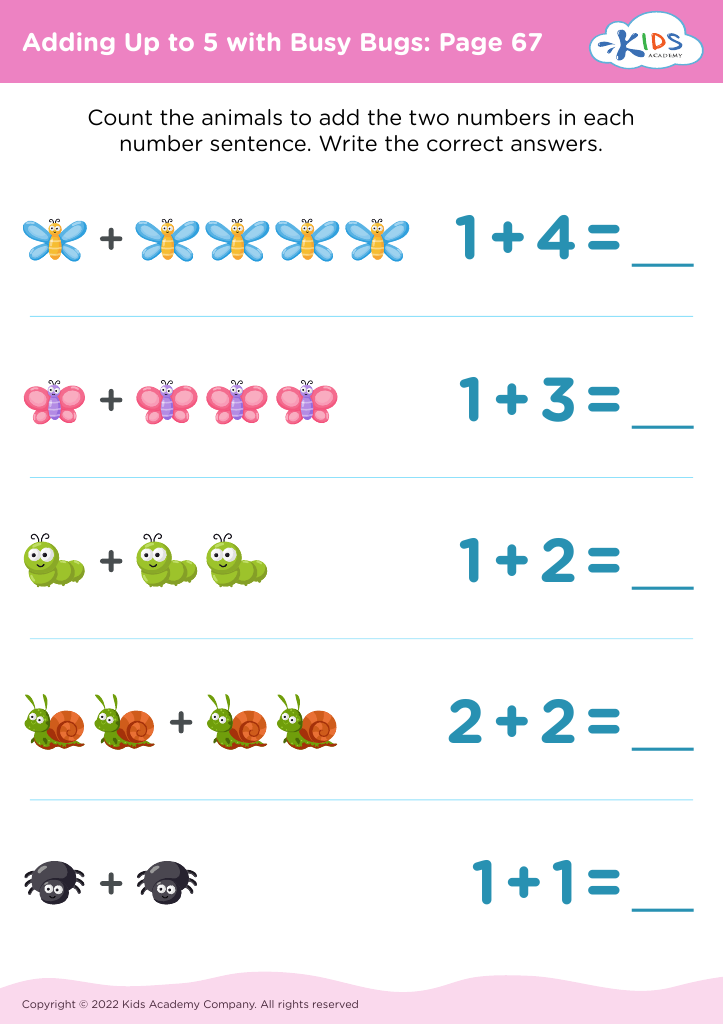
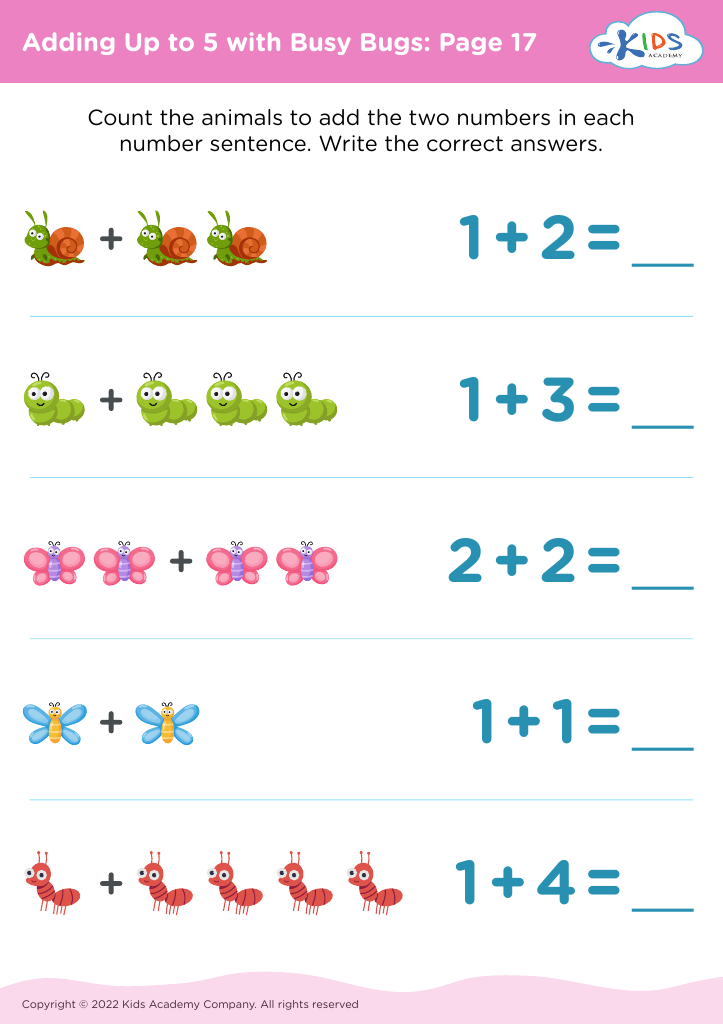
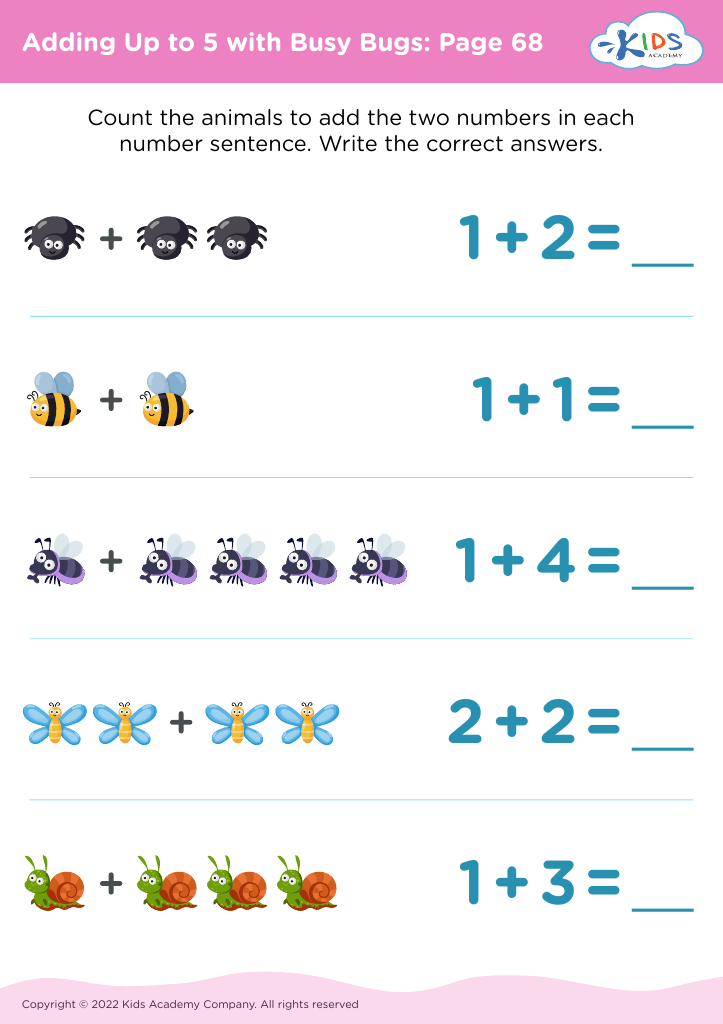
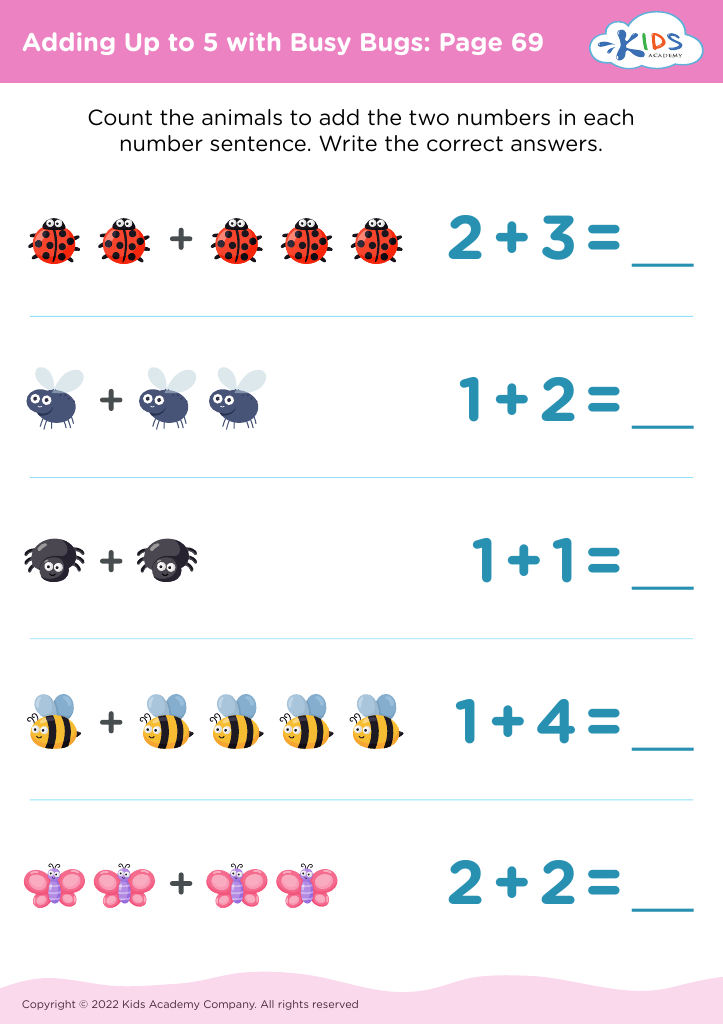
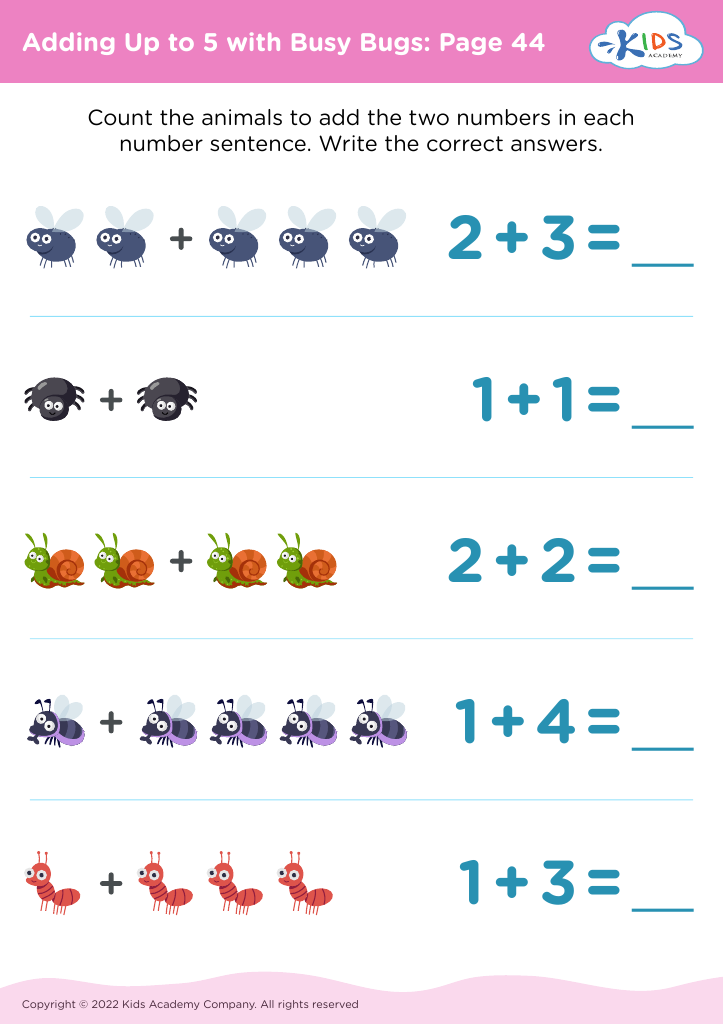
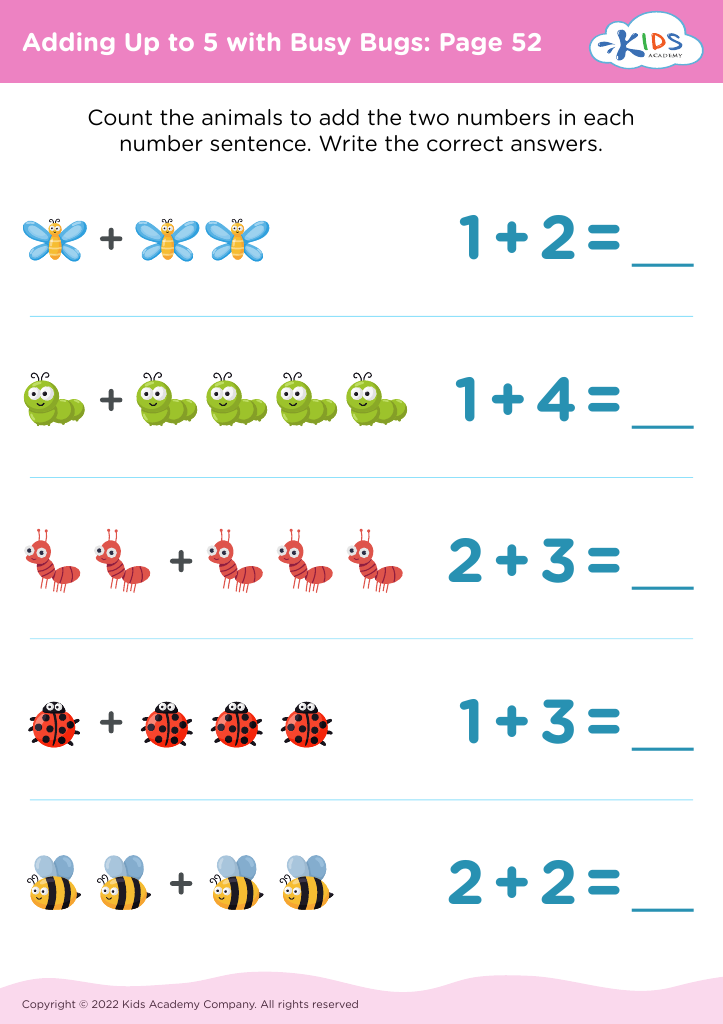
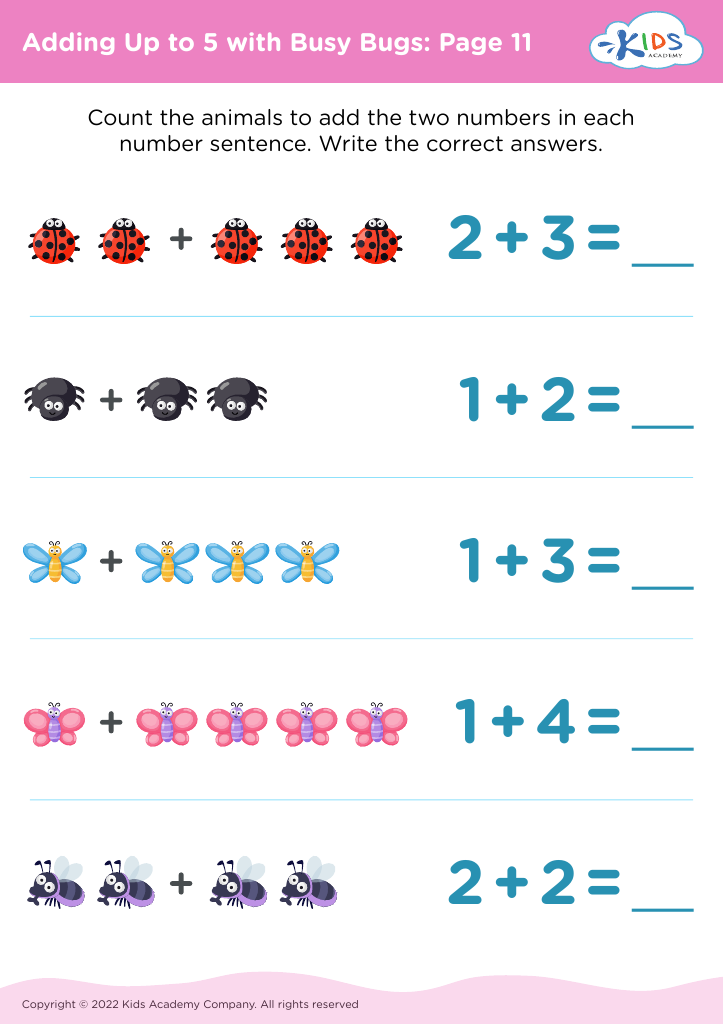



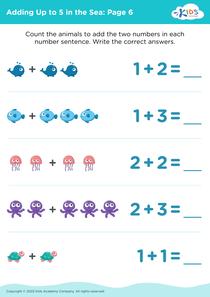
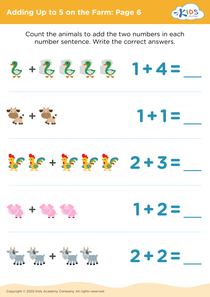
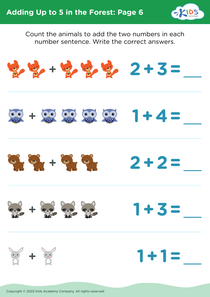
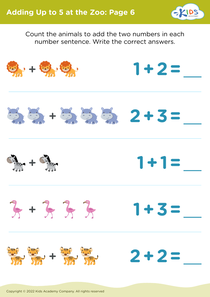
Parents and teachers should care about "Basic Addition Skills Adding with Busy Bugs" for 5-year-olds because it provides a fun and engaging way to introduce young children to foundational math concepts. At this formative age, children are naturally curious and absorb information quickly, making it the ideal time to develop critical cognitive skills.
Basic addition serves as the cornerstone upon which more complex mathematical concepts are built. By using colorful and interactive elements like busy bugs, the learning process becomes enjoyable and less intimidating for children. Visual aids and playful characters can hold their attention longer, ensuring they remain engaged while practicing new skills.
Moreover, mastering basic addition at an early age boosts a child's confidence and helps them develop a positive attitude towards mathematics, which is crucial for their future academic success. It also reinforces abilities in problem-solving, logical thinking, and pattern recognition, skills that are essential not only in math but in everyday situations.
Finally, incorporating such activities supports parents and teachers in providing diverse, effective instructional methods tailored to young learners' needs. This holistic approach promotes a well-rounded educational experience, ultimately preparing children for more advanced subjects and nurturing a lifelong love of learning.